Can Constant ADAS Warnings Desensitize the Driver?
Share This Page
Yes, constantly sounding ADAS alerts can desensitize the driver; this phenomenon is called alert fatigue. When the same warning is triggered needlessly over and over, the brain treats it like background noise, and reaction times lengthen even in a moment of real danger. That is why it is vitally important to take frequently triggered lane and blind spot alerts seriously, rather than turning them off.
Key Takeaways
- Alert fatigue is defined as the mental exhaustion a person experiences from repeated, low-priority alarms.
- Blind spot monitoring systems have been found effective at preventing lane change accidents when all severity levels are taken into account.
- Lane keeping and collision warning systems can cause some drivers to brake later; collision rates still decline.
- ADAS technologies are projected to help prevent 249,400 deaths and 14,138,000 injuries between 2021 and 2050.
- Starting in 2026, safety rating organizations are encouraging smarter systems that respond to the driver's actual level of engagement.
Now, a question for you: Have you gotten so tired of the beeping in your car that one day you reflexively ignored it the moment you heard it? If your answer is yes, you are not alone, and the situation is more serious than you think. The blind spot warnings, lane keeping alerts, and collision systems surrounding modern vehicles genuinely save lives. But when those same systems activate dozens of times a day, our brain silently mutes them without our awareness. Precisely at the moment the danger is real.
What Exactly Is Alert Fatigue?
The concept comes not from automotive, but from workplace safety literature. The definition is roughly this: Mental and operational exhaustion caused by an abundance of low-priority and false alarms. Think of it this way: If your phone sends an unnecessary notification every five minutes, one day you will scroll past even a truly important message without looking. In-car warnings fall into exactly the same trap. This condition is also called overalerting in the literature; a response that manifests itself as the individual growing tired and brushing alerts aside.
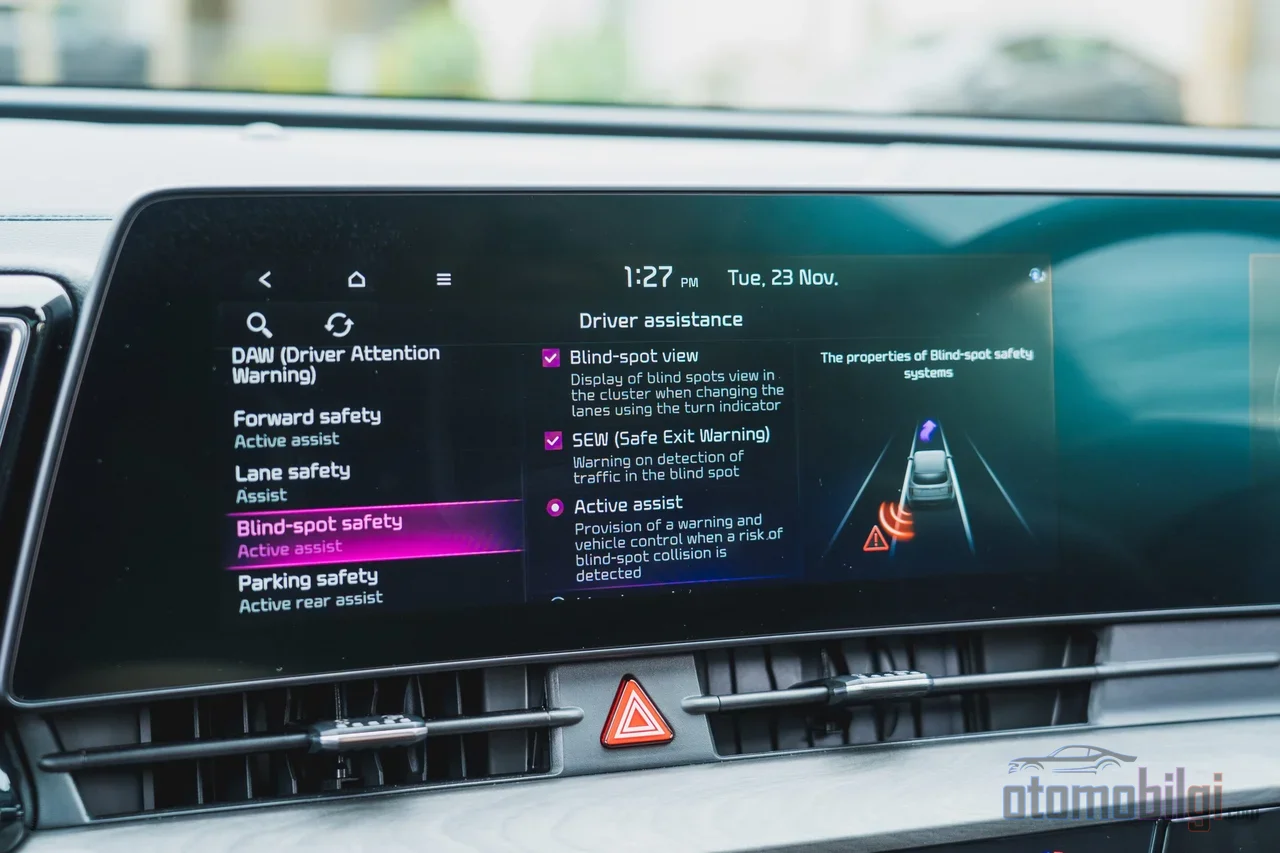
On the ADAS side, the most frequently triggered systems will sound familiar: Lane Keeping Assist Warning, Forward Collision Warning, Pedestrian Collision Warning, Blind Spot Warning, and Rear Cross Traffic Warning. Each one is valuable on its own. But if they all go off one after another in the same drive, especially in heavy traffic, the driver's ears grow numb over time.
The Timing Dilemma: Why Is an Early Warning Ignored?
This is the subtlest part of the whole matter. A warning given too early can easily be dismissed, because the driver has not yet perceived the danger. A poorly timed alarm, on the other hand, can itself undermine the driver's safety. A late warning is not a remedy either; the danger has already happened, and the alert is useless. Exactly where manufacturers should set the threshold is the fundamental design problem of the field.
When we examine how drivers respond to ADAS warnings over time, a distinct behavioral pattern emerges. A driver who gets used to the systems unconsciously softens and delays their response to warnings. According to a widely discussed study, active lane keeping and collision warning systems can actually cause drivers to brake later. That sounds contradictory, doesn't it? But here is the important part: Collision rates are still falling. So the system is doing its job, even if in slow motion; it is our reflexes that are slowly dulling.
Which Alarms Are Easier to Ignore?
Not every warning wears out in the same way. If we compare common ADAS alerts by how often they trigger and their false alarm rates, the picture looks like this:
| Warning Type | When It Triggers | Risk of Being Ignored |
|---|---|---|
| Lane Keeping Warning | When approaching a lane line without signaling | High; frequently triggered on narrow roads and construction lanes |
| Blind Spot Warning | When there is a vehicle in the adjacent lane | Medium-high; false alarms from barriers, wet surfaces and vegetation reduce trust |
| Forward Collision Warning | When the distance to the vehicle ahead is closing | Medium; but when triggered falsely, the driver approaches the next one with suspicion |
| Rear Cross Traffic Warning | When reversing with an approaching vehicle nearby | Lower; its seriousness is preserved because it rarely triggers |
The logic is simple: The more often it goes off, the more it is taken for granted. Lane warnings are the most typical example of this, because they sometimes kick in without any real danger, just on a narrow lane or faded lines. Rarer alerts like the rear cross traffic warning still feel fresh to most drivers.
How Do False Alarms Erode Trust?
The best-known weakness of blind spot sensors is this: They can give faulty warnings next to barriers and guardrails, on wet surfaces or inside dense vegetation. Drivers usually attribute this to a sensor or software problem. Another concrete example: In some vehicles, the lane keeping warning only works within a certain speed range and while the turn signal is off; so the system is not on watch under every condition, and this puts distance between expectations and reality.
The scientific side is not empty either. A 2017 traffic injury prevention study documents that false alarms from less reliable systems reduce driver trust. Another study from 2024 shows that drivers demanded increased system precision, fewer false alarms, and an improved user interface. Research out of the University of Michigan offers an interesting comparison: Both false alarms and missed alarms affect human perception, and a driver who does not trust the system at an appropriate level cannot benefit from its advantages.
There is also a danger in the opposite direction: A false sense of confidence. It was found that regular users of these systems develop excessive confidence in what the technology can do. According to expert organizations, false expectations about ADAS can lead to misuse of the technology or driver distraction. So both extremes are dangerous: Neither ignoring the alerts nor surrendering yourself entirely to the machine.
The Real Cost to Safety: Systems That Shut Off and Drivers Who Tune Out
This is where warning fatigue delivers its most expensive bill. According to the IIHS, some systems shut themselves off if the driver fails to respond to repeated warnings. Wait a second, think carefully about the scale of this: If the driver is out of capacity and the system has shut itself off, there is no one on watch on the road. Neither the machine is engaged nor the human. It is emphasized that ADAS deactivation in partially autonomous vehicles has significant safety consequences; and driver disengagement from the system is a separate research topic.
Let's look at the numbers. ADAS technologies are projected to help prevent 249,400 deaths and 14,138,000 injuries between 2021 and 2050. In-vehicle digital alerts are measured to reduce speed variability by 43%. In commercial fleets, driver warning systems can improve risk response time by approximately 41.6%. So the technology is definitely not sounding off in vain. The problem lies in the quality of the alerts and how we respond to them.
How Are Manufacturers Trying to Strike the Balance?

The industry is fighting alarm fatigue on multiple fronts:
- Trust scoring: In radar-based ADAS, trust scoring aims to make alerts rare, relevant and reliable; otherwise, ignored warnings and reduced safety become inevitable.
- Graduated intervention: In some truck systems, if the driver ignores the warning and wants to change lanes by signaling, the system can trigger an additional intervention.
- Driver monitoring: Advanced inattention warning systems detect signs of inattention and issue an immediate alert. The point to watch is not merely detection accuracy; it is the driver's trust in the system in the face of false alarms and alarm fatigue.
- Rating pressure: From 2026 onward, ANCAP is encouraging smarter systems that respond to the driver's actual level of engagement, as well as driver monitoring systems.
There is also a practical detail that should not be forgotten: ADAS calibration, especially after a windshield replacement or a collision, is mandatory for features such as lane assist and emergency braking to work correctly. When sensor alignment is off, false warnings increase; so before your car wears you out, a misaligned sensor can speed that up. In a vehicle that has been calibrated, the alerts are more accurate and fatigue develops more slowly.
Is Turning Off the Warnings Safe? What Should We Do?
The answer is clear: No, it is not safe. The manufacturers state this explicitly as well; systems like blind spot steering assist don't replace normal driver attention or steering control; the driver must always actively use the steering wheel. Interestingly, the features most often disabled are the ones meant for comfort and convenience. In other words, people prefer to turn off the annoying comfort systems rather than the safety warnings that are actually dangerous; that's good news, but desensitization to safety warnings is still a separate risk.
So what should you do in practice? Here's a short checklist:
- Don't turn off the warning sound and intensity completely; changing the warning type in the settings is often a smarter solution.
- Learn why each warning triggers: Lane warning catches unsignaled lane changes, blind spot warning watches outside your field of view.
- Not all features may always detect motorcycles, bicycles, and similar vehicles; never retire the shoulder check.
- Don't neglect ADAS calibration after a windshield replacement or a collision.
- Even if it rarely goes off, take every warning seriously; that sound isn't ringing to annoy you, it's ringing to save you.
Blind spots are estimated to contribute to more than 800,000 crashes and nearly 300 deaths each year. Facing this picture, putting up with a few unnecessary beeps isn't a bad bargain, in my opinion. What do you think about this? Which warning in your car wears you out the most?
Sources
- Alarm fatigue
- What Is Alert Fatigue? | IBM
- Opting Out: Over-Alerting and Warning Fatigue in the Era of Automation
- Drowsy and Fatigued Driver Warning, Counter Measures and Assistance
- Behavioural adaptation in Advanced Driver Assistance Systems
- Disuse of advanced driver assistance systems (ADAS)
- Automated systems need stronger safeguards to keep drivers focused on the road - IIHS
- Driver trust in five driver assistance technologies - Kidd et al. 2017
- Analysis of ADAS for Safe and Efficient Driving - Neumann et al. 2024
- Comparing the Effects of False Alarms and Misses - Azevedo-Sa et al. 2020
- Drivers Rely Too Heavily on New Vehicle Safety Technologies - AAA
- ADAS Data Details - NSC Injury Facts
- Effects of blind spot monitoring systems on lane-change crashes - PubMed
- Blind Spot Warning - My Car Does What
- ADAS and Safety Features Drivers Don't Use
- Understanding ADDW systems - Seeing Machines
- Blind Zone Steering Assist - Chevrolet
- University of Illinois Study: Digital Alerts
- Driver Alert System Market 2026
- The Trust Problem in Driver Monitoring
- ADAS Calibration for Safety