LiDAR, Camera and Radar: What Does Each One Do in ADAS?
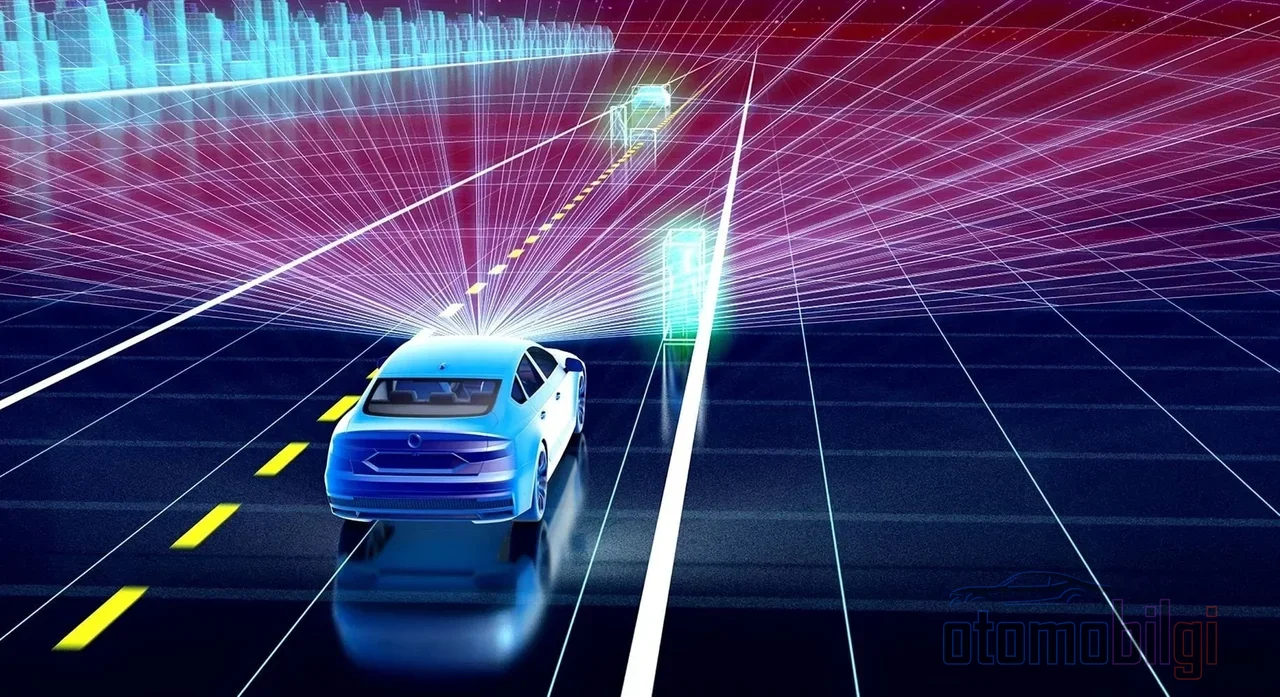
You're driving along a road at night, in the rain. Adaptive Cruise Control is on, following the car ahead. But have you ever wondered how the vehicle actually sees that car? Is it a camera looking, a radar measuring, or an invisible laser doing the scanning? Most sensor comparisons keep going on about camera versus radar; but the third player, LiDAR, rarely gets talked about. Yet the most interesting story is right there: the world's most expensive sensor once cost 75,000 dollars, and today it has dropped to as low as 200 dollars - the game has completely changed.
On this page, I'll explain how LiDAR works differently from camera and radar, when it saves lives and when it struggles, and why some manufacturers still stay away from it. If you're ready, let's begin, because this topic is really cool.
How LiDAR Works: The Logic of Echolocation with Lasers
The logic of LiDAR is actually the same as a bat's; it just uses laser instead of sound. The system sends out short laser pulses and measures how long each pulse takes to bounce off an object and return. Since light travels at about 300,000 km/s, a 1 km round trip takes roughly 0.000006 seconds. Yes, distance is calculated from an unimaginable interval of six millionths of a second. This technique is called time-of-flight, or Time-of-Flight (ToF) measurement.
The real magic here lies in timing precision. If the signal drift between the illumination unit and the sensor is just 10 picoseconds, the distance measurement shifts by 1.5 mm. So incredibly sharp timing is required for accurate distance. And what you get in return is valuable: measurement accuracy is typically around 1 percent of the distance, and data can be captured at up to 160 frames per second. That makes it quite suitable for real-time driving applications.
When all these measurements come together, the result is what's called a point cloud: a three-dimensional map of the vehicle's surroundings with centimeter-level precision. This map can individually identify lane edges, pedestrians, and obstacles.
Three Sensors, Three Characters: LiDAR, Camera and Radar Side by Side
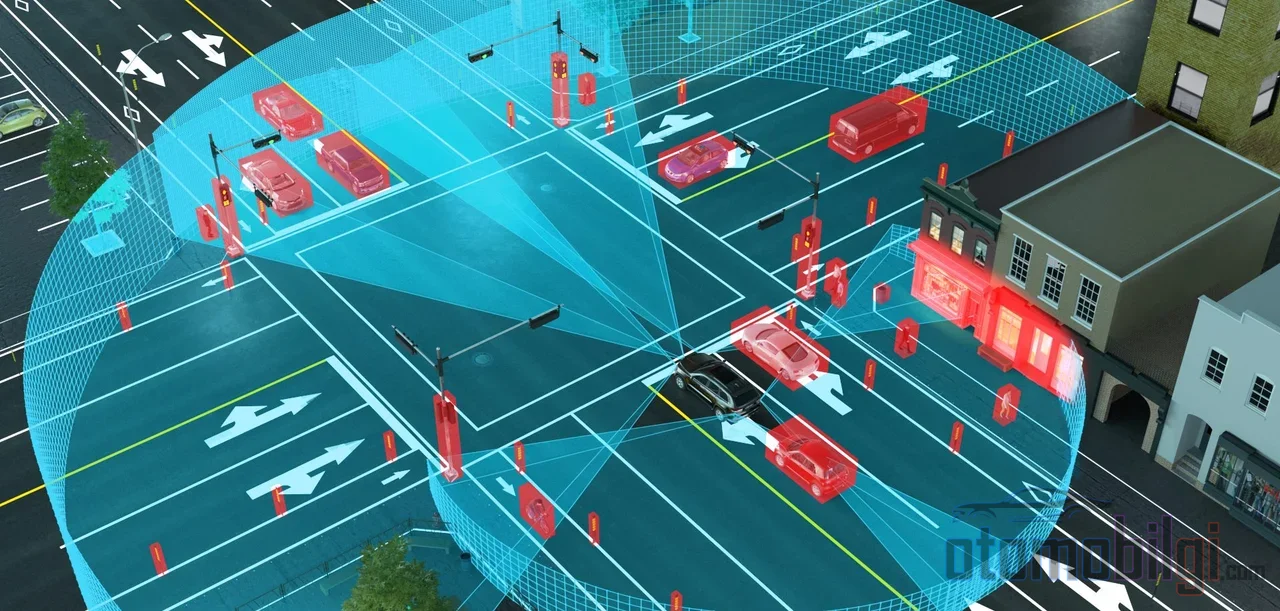
The fundamental difference between the three sensors lies in the type of wave they use. Radar uses radio waves on the centimeter-millimeter scale, LiDAR uses near-infrared light, and the camera processes the light the eye sees. This single difference defines each one's character. Let me sum it up in a short table:
| Feature | Camera | Radar | LiDAR |
|---|---|---|---|
| Wave type used | Visible light | Radio waves | Near-infrared laser |
| Distance precision | Indirect, software-dependent | Lower resolution | Centimeter level |
| Typical detection range | Variable | Over 250 m | Up to 200 m |
| Night performance | Weak | Very reliable | Very good |
| Bad weather resilience | Affected | Most resistant | Performance drops |
| Interpretation (color, signs) | Best | None | Limited |
As you can see, no one is a champion at every job. The camera is unrivaled in interpretation: reading signs, distinguishing colors, recognizing traffic lights - all the camera's job. Radar is unshakable at long range and in bad weather. LiDAR, on the other hand, is the sharpest tool for measuring shape and depth, and for building a three-dimensional world.
Highlights
- LiDAR measures the return time of laser pulses; accuracy is typically around 1% of the distance.
- Since LiDAR does not depend on ambient light, it works far more reliably than the camera at night and in low light.
- In heavy rain, snow and dust, LiDAR performance drops noticeably; in such weather, radar stands its ground.
- The price of LiDAR fell from 75,000 dollars in 2015 to as low as 200 dollars by 2026.
- Manufacturers like Nissan are using camera + radar + LiDAR sensor fusion in their new driving systems.
Moments Where LiDAR Shines: Night, Low Contrast, Stationary Obstacles
A sensor that carries its own light in the dark
A camera alone cannot see in the dark; that is its rule of physics. LiDAR, on the other hand, emits its own laser pulses, so it is hardly dependent on ambient light at all. On a night journey, even an obstacle that the headlights do not illuminate is cast into LiDAR's point cloud. It is even reported that vehicles can continue to produce usable data in light and moderate fog, where cameras cannot see objects at 50 meters.
Low contrast and stationary objects
Radar has an interesting weakness: it can confuse moving objects with stationary ones. An object standing on the road is sometimes perceived in radar's filters as something like a roadside embankment and gets dismissed. LiDAR, on the other hand, maps the environment point by point, giving it an advantage in detecting stationary obstacles along with their shapes. Moreover, against a white truck that suddenly appears ahead or a low-contrast object, the camera's eye can easily be mistaken; distance data with centimeter-level precision is invaluable in such situations. Systems like Adaptive Cruise Control and automatic emergency braking rely precisely on this data to make the right decision: when radar adds the vehicle's own speed information, the following distance is safely maintained, and LiDAR's pre-crash detection catches the final moments before a collision.
The Weather That Challenges LiDAR: Rain, Snow, Dust
Now the other side of the coin. Particles suspended in the air - that is, rain, snow, fog and dust - weaken LiDAR perception; this is a finding consistent with both academic studies and field experience. The reason is simple: the laser beam hits every drop, every flake of snow, scatters, and false data returns to the sensor.
Snow is particularly problematic, because snowflakes are much larger than the tiny water droplets of fog and reflect the laser back much more. Heavy rain lowers performance by the same logic. So the myth that "LiDAR is useless in heavy precipitation" is not exactly true; the system continues to work in light and moderate conditions, but it can be blinded in extreme conditions. This is exactly where radar comes into play: even in the weather where LiDAR's performance collapses, radio waves keep working. According to manufacturer data, a LiDAR operating at 10 percent reflectivity at 200 meters improves its performance by one third compared to one operating at the same reflectivity at 150 meters; in other words, range and condition tolerance are directly linked to each other.
That is exactly why single-sensor hero stories do not last very long in this industry. The real question is not "LiDAR or camera"; it is the question of "LiDAR + camera + radar together, or camera only".
Why Is Tesla Going with Cameras, While Others Go with Fusion?
Tesla has been working on a fully camera-based approach in its Full Self-Driving package since 2022; it does not use ultrasonic sensors, radar, or LiDAR in this system. The rationale for this approach is cost and simplicity: a camera system is cheaper and simpler. There is also a technical argument put forward: the claim that when different sensors contradict each other, it becomes blurry which one the system should trust. Researchers from Cornell had also shown that object detection with accuracy close to LiDAR could be achieved using LiDAR-free methods at a much lower cost.
The opposing camp, however, stands very clearly: Nissan's next-generation ProPILOT uses camera, radar, and LiDAR together for more advanced driving on highways and in cities. In 2026, systems like Mobileye's EyeQ6H-based Surround ADAS are entering mass-market vehicles and offering expanded hands-free highway driving. So the fusion camp is growing, not shrinking.
The debate between the two camps occasionally gets heated; those critical of dropping radar accuse the other side of ignoring the laws of physics, while those who trust cameras say the extra sensor creates complexity. An interesting detail: there is an assessment that Tesla may be using its high-resolution radar as an accuracy reference, i.e. ground truth, in AI training. In other words, even the camera-based system may be fed somewhere in the background by high-precision measurement.
The Cost Curve: From 75,000 Dollars to 200 Dollars
The single biggest reason LiDAR could not become widespread has always been its price. Between 2016 and 2018, premium mechanical LiDAR systems were selling for 75,000 dollars and above. Today? Unit prices have dropped to as low as 200 dollars, and the 100 dollar target was already being discussed at CES 2026. MicroVision is developing a 200-dollar-per-unit solid-state LiDAR planned to launch in 2029, and company management notes the price could drop to 100 dollars.
Solid-state designs are also more durable: with fewer moving mechanical parts, they are more resistant to wear and better suited to the demanding requirements of autonomous driving. The market is also witnessing this momentum: according to estimates from different research firms, the automotive LiDAR market starting at roughly between 1 and 1.7 billion dollars in 2026 and exceeding 6.5 billion dollars by the mid-2030s means growth of around 30 percent per year is expected. Although the figures vary from firm to firm, the direction is always the same: upward.
The Short Answer: How Does LiDAR Differ from Camera and Radar?
The summary of the summary is this: LiDAR measures the return time of laser pulses to produce a three-dimensional distance map with centimeter-level accuracy; the camera interprets meaning but goes blind in darkness, radar offers long range and weather resistance but low resolution. LiDAR is the most reliable distance source at night and in low contrast, but weakens in heavy rain, snow and dust; that's why the modern approach is to use all three together.
You actually feel this at the wheel: automatic braking easily spotting a pedestrian crossing the road at night, Adaptive Cruise Control maintaining its following distance in bad weather conditions, or quite the opposite, the system suddenly braking unnecessarily... All of these are the result of what the sensor behind it can see at that moment. As sensors get cheaper and fusion becomes widespread, these behaviors will gradually become more predictable. In other words, the next few years will be a quiet but rapid revolution in how cars see the world. I will keep watching; you should watch too.
Sources
- Time-of-flight camera - Wikipedia
- An in-depth comparison of LiDAR, Cameras, and Radars - Outsight
- The Strengths and Limitations of Camera, Radar, and Lidar - Hesai Tech
- How Weather Really Affects LiDAR Performance - Yellowscan
- Survey on LiDAR Perception in Adverse Weather Conditions - arXiv
- Tesla's Big Bet: Cameras over LiDAR - Vik's Newsletter
- Researchers back Tesla's non-LiDAR approach - The Robot Report
- Lidar costs for autonomous trucks are dropping fast - FleetOwner
- The Great Sensor War Behind Self-Driving Cars - MotorTrend
- Lidar's Critical Role in Next Gen Autonomous Driving - MicroVision