ADAS on Bumps: Where Do the Systems Fail?
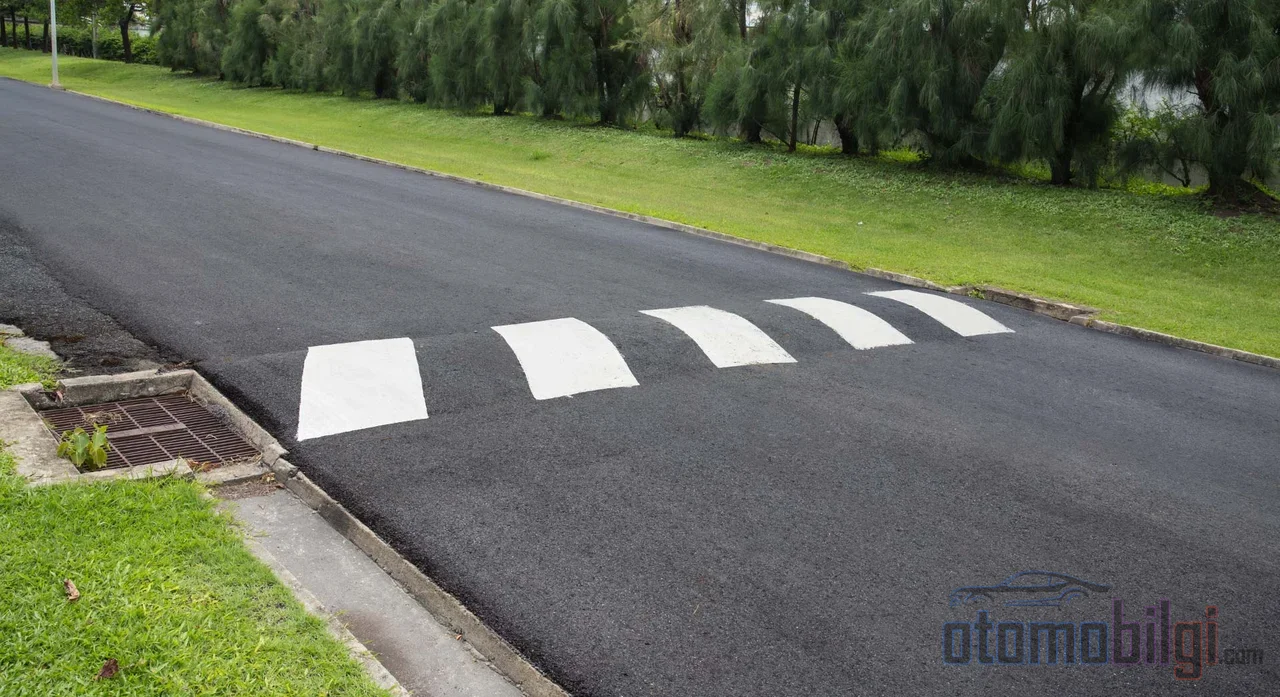
Speed bump or hump? Both are versions of those asphalt craters that make you spill your tea, but in the ADAS world there is a much deeper story. Your car reads the road ahead like a radar operator sweeping the room with radar waves; sometimes it detects the vehicle ahead from 160 meters away. So what happens if what's in front of you is not a vehicle but a 10-centimeter asphalt wave? Does Adaptive Cruise Control brake thinking the hump is an obstacle, or does it not see it at all? What does lane keeping assist do at a hump crossing where the lines disappear? Does automatic emergency braking kick in too late when approaching a pedestrian crossing over a hump?
Let me give you an honest spoiler (but don't tell anyone): the answers to these questions aren't even properly written in most owner's manuals. Because standard driver support systems are not designed to detect humps on the road surface. If you set out knowing this, you'll also know when the system will leave you halfway. Let's get started.
How Do ADAS Sensors See a Hump, or Rather, Why Don't They See It?
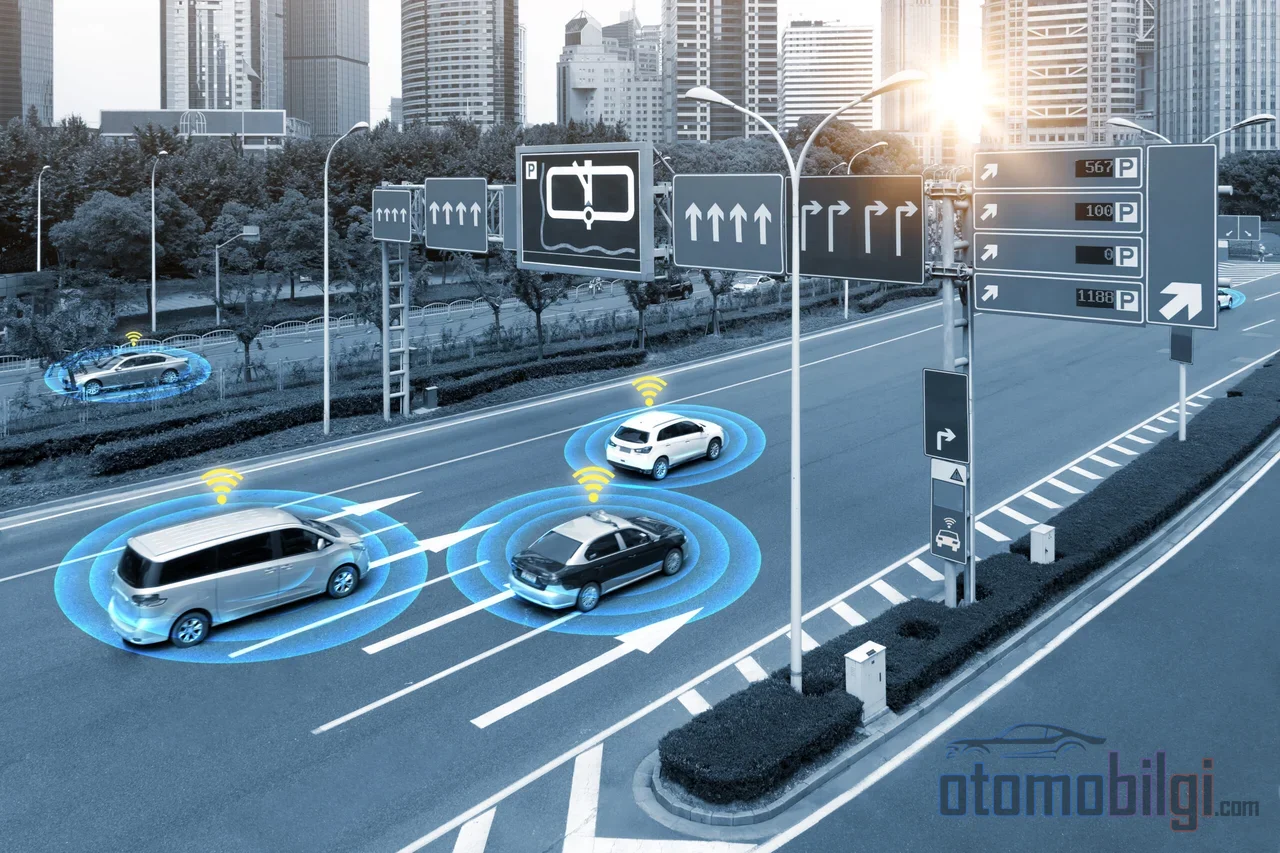
First, let's clarify this: The systems in your car are not fortune tellers; they are products of engineering. Adaptive Cruise Control, or ACC, exists to maintain a safe following distance from the vehicle ahead. In new-generation vehicles, forward-looking camera and radar sensors do this job together. Radar-based systems send 24 GHz or 77 GHz radio waves and calculate distance from the signal's return time; they can make accurate measurements even at distances exceeding 160 meters. The camera-based system works differently: it doesn't measure distance directly; it derives distance and closing speed from the size of the object in the image and the movement between frames.
Sounds perfect, doesn't it? But there is a critical detail here: these sensors are tuned to see vehicles and pedestrians on the road, not the road surface. A 3-4 centimeter hump rising from the asphalt usually remains as ordinary as background noise in the system's radar window. Hump detection has now become a separate branch of engineering: A 2025 LiDAR study shows that humps can be reliably detected up to 15 meters away, at a rate of roughly 18 frames per second. Studies from 2024 and 2023 based on image processing and deep neural networks are also developing separate solutions for speed bump and pothole detection. So the short answer: standard ADAS packages have no hump sensor; this technology has not yet been integrated into mass-production vehicles.
Highlights
- Standard ACC and lane keeping systems are not designed to detect road surface humps.
- Radar-based ACC can measure distances of up to 160 meters, but it is noted that it may fail to detect the vehicle ahead on uneven roads.
- Experimental LiDAR-based hump detection works up to 15 meters, at a rate of 18 frames per second.
- According to the NHTSA's 2024 rule, pedestrian automatic emergency braking is effective at speeds below 88 km/h.
- ACC is a system that is not recommended for use on bumpy and winding roads; the decision is always the driver's.
Why Does the Difference Between a Speed Bump and a Speed Hump Matter?
Let's take a quick vocabulary break here, because these terms get confused. A speed hump is usually 3.5-4.2 meters wide and 8-10 centimeters high; a much longer wave compared to a speed bump. A speed bump is much smaller: 30-90 centimeters wide, and it is generally used in parking lots and residential areas. Data from 26 speed humps examined by the United States highway administration shows that the effect of these measures on fast-moving vehicles is strikingly significant.
From the sensor's perspective, the situation is completely reversed: the wider and smoother the surface change, the less the danger; the sharper and smaller the bump, the harsher the jolt. This applies both to the driver and to ADAS. Crossing a narrow speed bump quickly is torture for both your suspension and the system's calibration expectations.
What Does Adaptive Cruise Control Do When It Reaches a Speed Hump?
Now let me say it without beating around the bush: the behavior of ACC specifically regarding speed humps, that is, whether it detects them as an obstacle, has not been directly measured and explained in manufacturer documentation. But when you look at the system's operating logic and official usage restrictions, the picture becomes clear.
The System's Limits Are Highly Instructive
ACC's braking capacity is limited and the system does not perform steering control. More importantly: it may not react to parked, stationary, or very slowly moving vehicles. Manufacturer user manuals clearly warn: this system should not be used on winding or bumpy roads, on highway entrance and exit ramps, or when towing a caravan; because under these conditions there is a possibility of failing to detect the vehicle ahead. A street with speed humps fits exactly this description: bumpy, narrow, with variable speed. When the vehicle ahead slows down to avoid hitting a speed hump, ACC may read this slowdown not as a danger signal but as ordinary following data, and the braking response may be delayed.
There is also the opposite side of the story: some drivers report that the system is more sensitive than necessary, that it brakes even for a pedestrian left at the edge, and that this can create a risk of being rear-ended. So we are oscillating between two extremes: braking too late is a problem, and braking suddenly is also a problem. It is not the sensor that strikes the balance, it is you.
How Do You Deactivate the System?
It's very simple and you need to memorize this: touching the brake pedal, pressing the Cancel button, or using the On/Off switch cancels ACC. Pressing the accelerator pedal temporarily disables automatic braking. If you want to manage the system yourself as you approach a speed hump, simply touching the brake pedal is enough.
What Does the Lane Keeping Assistant Do in Speed Hump Zones Without Lane Markings?
The lane keeping assistant, abbreviated as LKA, monitors the vehicle's position within its lane using a camera and makes a slight correction when you get too close to the edge. What is the backbone of this entire system? Painted lane markings. In speed bump and hump zones, the lines are often faded, and moreover the lines jump out of your field of view as you pass over the hump. Faded or missing lane lines, along with snow, rain and dense fog, are the system's main error triggers.
What happens when the lines disappear? The system either suspends itself and displays an unavailable message on the screen, or it shuts down with a warning beep. Worst of all, it may silently disengage without any warning: in that case, you suddenly feel as if the car is driving itself. On a humped crossing without lines, you need to have taken the wheel out of the assistant's hands; at that moment, LKA is not your helper, it's your guest.
Does Automatic Emergency Braking React Too Late on Speed Bumps?
Automatic emergency braking, or AEB, is the last line of defense that kicks in when a collision becomes inevitable. There are P-AEB versions that also detect pedestrians, and these systems were put under federal regulation in the United States in 2024: NHTSA's final rule limits pedestrian AEB activation to speeds below 88 km/h (55 mph). At higher speeds, the system is stated to be inapplicable.
The speed bump-AEB relationship has not been specifically measured, but a picture emerges when you reason it out: speed bumps placed before pedestrian crossings already force the car to low speeds, which is exactly within AEB's effectiveness window; that's the good news. The bad news is this: the system's braking thresholds and activation strategies are still being developed. A 2025 study shows that pedestrian AEB activation thresholds can be improved by drawing on takeover data from safe drivers. And a 2026 evaluation emphasizes that pedestrian AEB should not be overly relied upon at night or at high speeds. The speed bump slows you down, but the system's eyes are not equally sharp in every condition.
What the Driver Should Do: ADAS Survival Guide for Speed Bump Zones
Since the systems were not designed for the speed bump scenario, the ball is in your court. Here's a practical short list:
- Before entering a speed bump or hump zone, disengage ACC: touch the brake pedal or press the Cancel button.
- At narrow crossings where the lines have faded, take the wheel yourself; LKA being suspended is normal, no panic.
- At pedestrian crossing and speed bump combinations, lower your speed yourself; think of the 88 km/h limit where AEB is effective as a roof, not a guarantee.
- Read the system limitations in your car's owner's manual; manufacturers write warnings precisely for these kinds of conditions.
- If the system disengages with a warning beep, it's not a malfunction, it's how it works; you take over control.
Why Is Driver Involvement Essential?
There is a fact, and I need to lay it bare: ADAS supports the driver, it does not do the driving. In the automation classification, ACC is mostly at level 1; combined with lane centering, it only reaches level 2. level and in both of these cases continuous driver monitoring is mandatory. On the legal front, things are clear as well: even in vehicles said to be driverless, drivers can be held responsible for failing to monitor the system or failing to step in when needed.
The long-term picture is also noteworthy: a study published in 2026 reveals that ADAS use can lead to deterioration in manual driving skills, increased risk-taking, and reduced cognitive engagement. In other words, getting used to these systems can make you a worse driver in a world without them. A bumpy street is exactly where these skills are put to the test: there, the radar merely accompanies you.
Short and Clear Answer: Can You Trust ADAS on Speed Bumps?
The summary of the summary is this: Adaptive Cruise Control does not by design recognize speed bumps and humps as obstacles; on undulating roads it may fail to detect the vehicle ahead or may not react to slow objects. Lane-keeping assist suspends itself in speed bump zones without lane markings; although the bump-specific delay of automatic emergency braking has not been measured, the system's effectiveness depends on speed, light, and conditions. In a speed-bump area, the decision-maker is not the driver but the sensor; the one that touches the brake pedal and takes the system out of action should be the sensor.
Next time you get in your car, think about that small moment no one sees as you approach that speed bump: you touch the brake, and your car quietly thanks you. Maybe it doesn't, but that's how I imagine it, and you should too.
Sources
- How to Use Adaptive Cruise Control - Chevrolet
- Adaptive cruise control - Wikipedia
- Final rule: Automatic Emergency Braking Systems for Light Vehicles - NHTSA (2024)
- Speed bump detection on LiDAR point cloud - Journal of Engineering and Applied Sciences (2025)
- Research on Visual Perception of Speed Bumps for Intelligent Vehicles - PMC (2024)
- Speed Bump and Pothole Detection Using Deep Neural Networks - MDPI Applied Sciences (2023)
- Lane-Keeping Assist: Everything You Need to Know - Kelley Blue Book
- Lane Keeping Assist Unavailable: Causes - SparrowCar
- Radar Speed Signs vs. Speed Humps - Carmanah
- Leveraging Safe Drivers' Takeover Data to Improve P-AEB - IRCOBI (2025)