Which Sound and Light in Your Car Indicates Which ADAS Warning?

My car is beeping at me, but I can't figure out which system is shouting or why. Stop, I said, this actually has a language of its own. And it really does. The beeps, warning lights, and steering wheel vibrations you encounter when you get into a modern vehicle are not randomly invented noises; each one is a message coming from a different driver assistance system (ADAS) with its own level of urgency. The problem is that some drivers start driving without ever learning this language. That's why on this page we decode and explain the warning languages one by one: the difference between yellow and red lights, the distinction between intermittent beeps and a continuous tone, which direction of danger the vibration you feel in your seat is pointing to, and most importantly, what is expected of you in response to these warnings. If you're ready, let's begin, because your dashboard is trying to tell you something.
The color code of warning lights: what do yellow, red, and green mean?
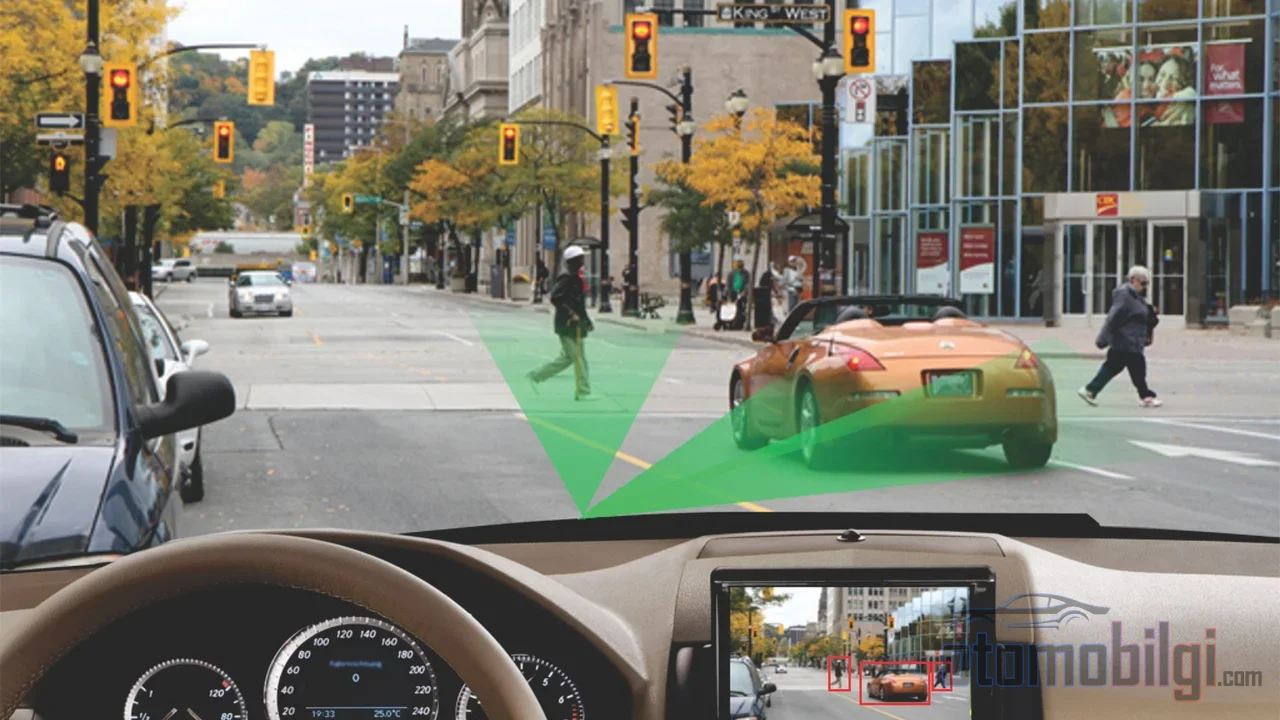
Think of the dashboard as a traffic light; the logic is exactly the same and this analogy really does the job. A red light means a critical situation where you need to take immediate action: problems that usually require stopping safely are shown in this color. Yellow or orange lights, on the other hand, want to get your attention, but there's no need to panic; they indicate situations that need to be checked or monitored. Green and blue tones are the side we all love: they tell you that the system is working at that moment, and is ready or active. In short, color is the first messenger of urgency.
There's also a nice detail in lane keeping assistant symbols: the icon changing from white to green shows that the system has gone beyond just being ready and has actually kicked in. So if that little lane drawing on the panel changes color, it means the system is working with you at that moment. That's why making a habit of glancing at the panel is essential; because it's not just one thing conveying the status of the same system - several channels are speaking at once: light color, sound pattern, and vibration. The next step is decoding the sounds.
Highlights
- A red light indicates critical situations requiring a safe stop; a yellow light is used for situations that only need to be monitored.
- A continuous tone usually means critical or very close range; an intermittent beep is heard for less urgent warnings.
- Directional seat vibration tells you which side the collision risk is on; steering wheel vibration mostly comes from lane and blind spot systems.
- ADAS does not drive the car for you; the driver is always fully responsible for control of the vehicle.
A dictionary of beeps: which pattern comes from which system?
Here's the part that confuses everyone, because the sounds are similar but their meanings are different. The general rule is very clear, so let it sink in right away: an uninterrupted, continuous sound usually means a critical situation or dangerous proximity, while an intermittent, choppy beep is a less urgent warning. This principle is so universal that it works the same way even in systems from very different fields: a smoke detector's continuous beep emergency signal, while the occasional single chirp indicates a maintenance need. ADAS warnings in cars are designed with the same logic; research on sound design shows that different sounds are crafted to correspond to different levels of severity and urgency.
As a concrete example, looking at the manuals of leading luxury models makes the sound vocabulary quite clear:
| Sound pattern | Its meaning | Expected response |
|---|---|---|
| Sharp, urgent triple beep | Forward collision warning | Prepare to brake immediately, open up the distance |
| A thump-like low sound | Lane change without signaling, lane departure warning | Return to your lane or signal |
| Soft double tone | Vehicle detected in the blind spot | Check your mirror before changing lanes |
| Rising musical tone | Adaptive Cruise Control locked onto the vehicle ahead, adjusting speed | Carry on, monitor the system |
| Increasingly frequent beeps, then a continuous tone | Parking distance is shrinking; the continuous tone means closer than about 30 cm | Stop or finish reversing |
| Continuous chime | Seatbelt not fastened | Fasten your seatbelt |
Pay attention, the parking sensor's sound uses exactly this logic: as the distance shortens, the beeps become more frequent, and when it drops to dangerous proximity, the sound turns into a continuous single tone. When the active parking assistant kicks in, you hear a tone arranged in a low-high pattern; this is the system letting you know it is turning the steering wheel itself. In some models, you cannot completely turn off critical safety warnings; the volume can only be adjusted to a limited extent. This is not a flaw, it is a deliberate design: the system does not abandon its duty just because you got tired of the warning.
Vibration language: your seat or steering wheel is talking to you
Sounds are a quick solution, but they can get lost in cabin noise. That is why some manufacturers use a second channel: haptic, in other words, warnings you feel. One of the most interesting examples is safety warning seats that work with small motors integrated into the seat. The subtlety here is this: the vibration pulse can be felt only on the left, only on the right, or on both sides at once, and this directionality introduces to you which side the potential collision is coming from. So if you feel a pulse on your left hip, it means danger is looking in from the left. You can think of it as your body whispering the directional information that the audible warning cannot convey.
Steering wheel vibration, on the other hand, is mostly the job of lane keeping and blind spot systems. In blind spot monitoring, the warning escalates in stages: first the visual indicator on the side mirror lights up, if the danger grows the indicator starts flashing rapidly, and an audible chime or steering wheel/seat vibration kicks in. In other words, the system warns you gently once, and if you do not listen, it raises the tone. This staged structure is actually telling you something: the first warning being mild does not mean it is unimportant, it simply has lower urgency.
Let's see it with a scenario: the warning came, what are you going to do now?
The theory is nice, but in real life you make decisions within seconds. Let's go through a few scenarios.
Scenario 1: A sudden sharp triple beep
Forward collision warning (FCW) is an active safety system that detects objects ahead of your vehicle and warns you in advance of a potential collision. When you hear a sharp, urgent triple beep, the expected response is clear: maintain or increase brake pressure. The timing of this warning is crucial; if the alert comes too late or at an unexpected moment, the driver's trust in the system is undermined and its effectiveness drops. So if the system is doing its job properly, don't dismiss that beep.
Scenario 2: The orange warning in the mirror started flashing
There is a vehicle in your blind spot, but you haven't changed lanes yet. The visual indicator is enough; stay calm, cancel your signal, and postpone your lane change. If the warning starts flashing rapidly and a sound or vibration is added, the danger is more concrete: driver assistance systems are trying to detect the vehicles beside and behind you, so check your mirror and shoulder and wait.
Scenario 3: What happens if you ignore the warning?
This is where the dark side of the coin comes in. Studies show that drivers who regularly ignore warnings experience reduced overall alertness, with the risk increasing especially in high-risk situations where the system's feedback could prevent a collision. This is called behavioral adaptation and is one of the current research focuses on the subject. Whatever its name, the logic is familiar from everyday life: if you get used to your home smoke detector's chirping, your response is delayed in a real fire too. If the system gives a warning, that warning has a purpose.
What if it gives a false alarm?
Since we've explained that we need to trust warnings, let's be realistic: these systems are not flawless. One of the most discussed topics on user forums is the false alarm problem; systems can occasionally issue unnecessary warnings. Also common ground in the discussions is that responsibility for the distance remains with the driver. What should you do? Instead of ignoring the warning, verify it yourself: check your mirrors, look around, and intervene if necessary. A one-time false alarm is not a reason to discard all of the system's messages; but it is not a reason for blind obedience either. The healthy relationship is this: the system gives you a signal, you verify it, and the decision is yours.
So is ADAS driving my car? (The real answer on this page)
No. Beneath everything we describe on this page, this sentence should be underlined: ADAS is an assistant that helps the driver with warnings and limited automatic interventions; it cannot drive the car for you. Even at the most basic level, meaning the level of automation where the driver is solely responsible, the situation is the same. The system is an assistant that alerts you and supports you with brief interventions when necessary; it supports you in recognizing and reacting to dangerous situations but never assumes responsibility. This is the real meaning of learning the warning languages: a beep, a light, and a vibration are an invitation to cooperate. The driver who listens to the panel both uses the system's true power and knows its limits. The next time you hear a sound in your car, instead of getting annoyed, try asking: which system is it, how urgent is it, and what does it want from me? You already know the answer.
Sources
- Range Rover: How To Identify Warning Sounds And What To Do?
- How to read your dashboard lights - AAA
- Car Dashboard Symbols & Meanings: A Complete Guide - Cupra
- Safety Alert Seat - Chevrolet
- What Is a Safety Alert Seat? - JD Power
- ADAS Alarm Sound Design for Autonomous Vehicles - MDPI Applied Sciences
- Alarm timing, trust and driver expectation for forward collision warning - Applied Ergonomics
- Behavioural adaptation in ADAS - Applied Ergonomics 2026
- Understanding Blind Spot Monitoring - Clement Auto Group
- ADAS – Reducing collisions - Nationwide