How Does ADAS Detect a Vehicle Coming from the Opposite Direction?
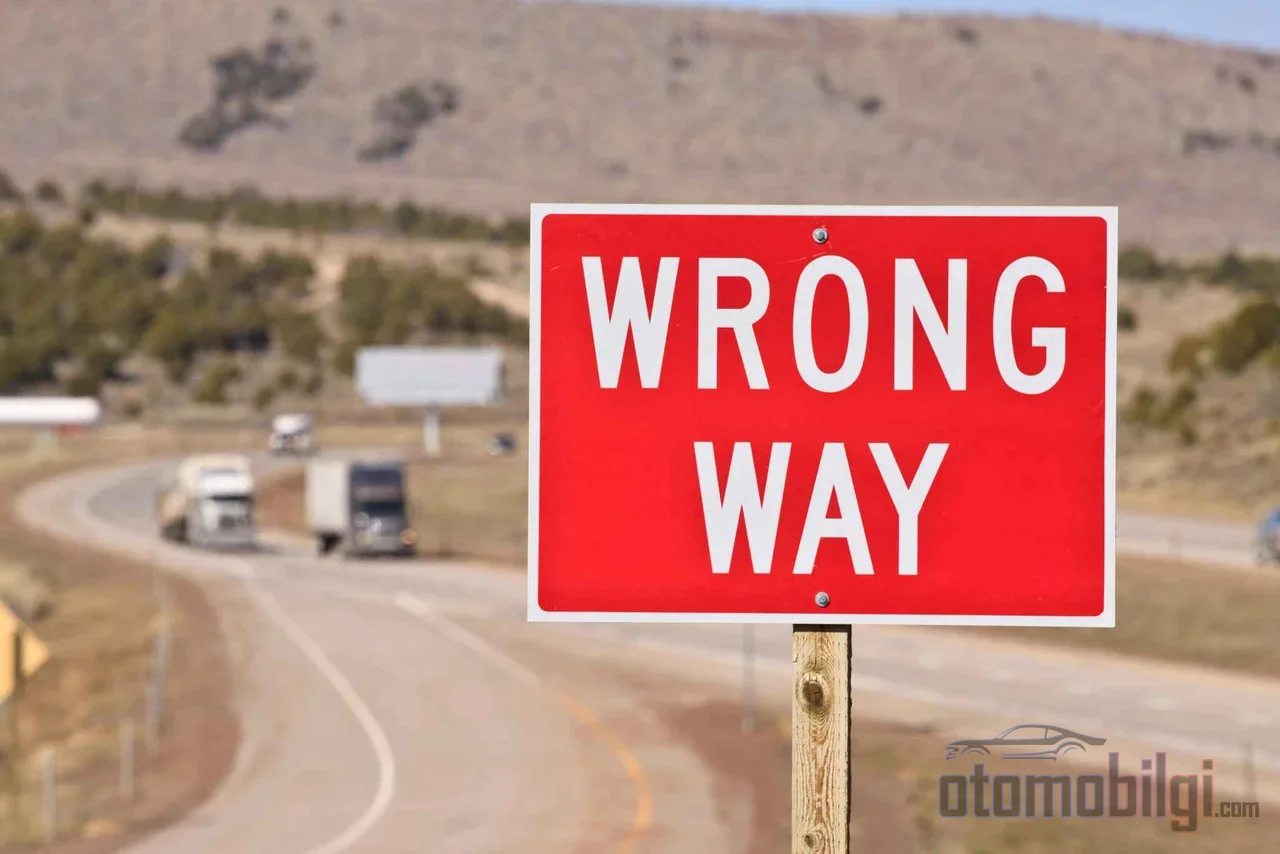
It's midnight on the highway, you're in the right lane, looking ahead with slightly drowsy eyes, when a pair of headlights appears coming from the opposite direction. The first reaction is usually 'what on earth is that', and the second reaction is panic. So what is your car doing at that moment? Can the radars and cameras in modern vehicles really detect this monster coming the wrong way, warn you, or even hit the brakes? The answer to this question is more interesting than you might think - because it's not just your car involved, but the road itself.
Why Is Wrong-Way Driving Such a Deadly Scenario?
Let's first talk about how serious the situation is. According to US data, wrong-way crashes claim hundreds of lives every year; although different definitions and measurement methods are used, the annual toll ranges between 350 and 500 people. The frightening part is this: more than half of those killed in wrong-way crashes - about 53% - are the wrong-way driver themselves. So the system is trying to save not only innocent passersby, but also the person who took the wrong ramp.
The classic scenario is the kind that could happen to anyone: while trying to enter the highway, the driver dives into an exit ramp instead of an entry ramp. Mental fatigue, overreliance on GPS, darkness, and confusing ramp geometry make it easier; according to research, alcohol is also on the table in nearly half of these crashes. The timing is eerily consistent: the vast majority of incidents occur between eight in the evening and six in the morning, with a considerable portion happening between two and four at night. Precisely the hours when cameras struggle the most.
Key Takeaways
- About 53% of wrong-way crash fatalities are the wrong-way drivers themselves.
- Most incidents occur between 10:00 PM and 6:00 AM; the very hours when cameras struggle the most.
- Infrastructure detection systems enable drivers to correct themselves at rates of up to 80% with warnings.
- Euro NCAP's 2026 protocol made the 'wrong-way driver' scenario a separate scoring item.
- Automatic emergency braking reduces head-on collisions by half, but it doesn't replace the driver.
How Does the Road Itself Know? Infrastructure-Side Detection Systems
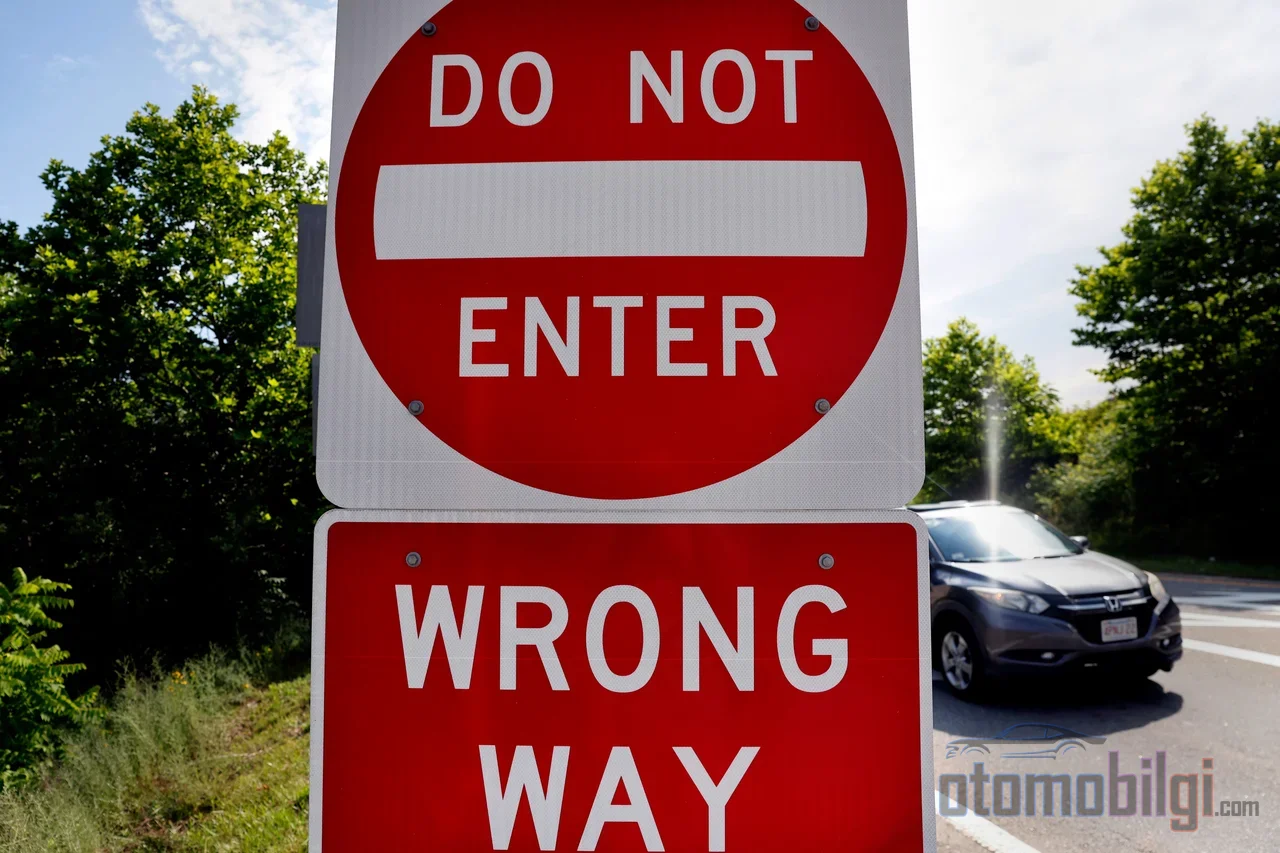
Before moving on to your car, you should know this: the first line of defense against the wrong-way danger is actually the road itself. Many highway management authorities install radar, thermal cameras, video analytics, and classic loop detectors on ramps. The system works like this: the moment a vehicle enters an exit ramp in the wrong direction, the radar unit catches it, and the high-brightness LED signs and flashing lights at the start of the ramp kick in. The goal is simple - for the driver to correct themselves before even entering the highway.
If the driver doesn't correct course, the matter escalates all the way to the police. HD cameras verify the wrong-way vehicle with analytics software, and an alert goes instantly to the traffic management center and state police; the variable message signs on the road start warning oncoming drivers. Some systems use a three-stage logic: first a warning zone, then a correction zone where the driver can change direction, and finally an alarm zone that sends a high-priority notification to the authorities. Think of it as an escape staircase, step by step - each step gives the driver one more chance.
So, do these systems actually work? Yes, measurably so. Nevada's experimental system with LED light bars showed up to 80% effectiveness in stopping wrong-way drivers; Connecticut, too, turned back roughly 80% of wrong-way drivers safely with the systems it installed. In Texas, a 22-month study showed LED-supported signs reduced wrong-way incidents by 38%. In contrast, there is a striking lesson in the same picture: In Arkansas, when only sign and road paint improvements were made, there was no significant drop in the number of accidents. In other words, a static measure alone is not enough; detection and instant warning need to be part of the equation.
So, What Does Your Vehicle See? The Logic Behind ADAS Catching a Wrong-Way Vehicle
Now let's get to the real question: how does the radar and camera ahead detect a vehicle coming from the opposite direction? The detection logic of in-vehicle systems is built on three pieces of data: distance, speed and trajectory. Radar measures how fast the oncoming vehicle is approaching you; the camera interprets the object's shape and position. At the point where these two combine with algorithms, the system calculates the collision risk. If the driver does not react in time, automatic emergency braking kicks in and applies the brakes - the goal is not necessarily to prevent the collision entirely, but to reduce the impact speed, in other words to soften the outcome.
Bosch's cloud-based wrong-way warning system is a great example of this approach: it warns not only the driver going the wrong way, but also the other drivers in the path of that dangerous vehicle, and it can work together with automatic emergency braking. So it is not 'the car is steering for me' as you might imagine, but rather 'the car sees the danger, shouts about it, and reaches for the brakes when necessary'. Lightly touching the brake and gas pedals signals to most systems that control is back in your hands; that is why pressing the pedal carefully in a moment of panic is vital.
Another figure confirms how much importance the industry places on this scenario: In Euro NCAP's 2026 safety protocol, 'wrong-way driver' began to be scored as a separate test scenario. Vehicle manufacturers now have to improve their systems to avoid losing points in this scenario as well. What's more, the new protocol brings cloud and vehicle-to-vehicle connectivity, meaning one vehicle announcing the danger it sees to the others, into the evaluation. In tests conducted with connected vehicle technology, drivers around a wrong-way vehicle can be warned up to ten kilometers in advance - an advantage that goes beyond the camera's range of view.
In Real-World Use, What Does the System Tell You?
Let's make it concrete: imagine a driver who has entered the highway going the wrong way from an exit ramp. Infrastructure systems instantly detect the entry onto the ramp and warn with LED signs; most drivers turn back at exactly this point. If the vehicle manages to enter the highway and comes toward you, your car's forward collision warning kicks in - usually an audible and visual warning first, followed by automatic braking if the driver doesn't respond. In the US, automatic emergency braking is becoming mandatory on all new light vehicles in the coming years under a federal safety standard adopted in 2024; so this capability is no longer a luxury, it is becoming standard.
As for how early the system warns, honestly the answer varies by make and model. There is no universal measure of exactly how many meters in advance an in-car system detects a wrong-way vehicle; the clearest early warning data comes from roadside and connected vehicle systems. So instead of saying 'my car handles everything,' it is a much healthier mindset to think 'my car buys me a few valuable seconds.'
| System Layer | How It Detects | What It Does |
|---|---|---|
| Infrastructure (radar, camera, LED signs) | Detects wrong-way entry onto a ramp instantly | Warns the driver, sends an alert to the police |
| Lidar-based detection | Measures 3D trajectories with its own laser light | Works even in darkness and bad weather |
| Connected vehicle warning | Broadcasts the hazard via radio signal | Warns surrounding drivers kilometers in advance |
| In-car ADAS | Calculates the risk with radar and camera | Issues a warning, applies automatic braking if necessary |
Night, Curves and Other Blind Spots: What the System Cannot See
Here is the crucial part of the matter: most wrong-way accidents happen at night, and camera-based systems lose accuracy precisely in low light, bad weather and obstructed visibility. This is not a contradiction, but it is a serious risk equation. On the infrastructure side, sensors that work with their own light, such as lidar, and thermal cameras that see through temperature differences overcome the darkness problem; still, every technology has blind spots - a thermal camera may not see a dark-colored vehicle, and radar alone may mistake a swaying tree branch for a vehicle. What we call sensor fusion, meaning multiple sensors communicating at the same time, is important precisely for this reason.
On the in-car side, the limits are real too. The system cannot see beyond a curve, cannot see a vehicle behind a hill; the few seconds it provides at high speed are often not enough. Let us also recall the problem that drivers going the wrong way dislike most: false warnings, in other words ghost braking. A system that engages unnecessarily undermines the driver's trust and can lead to delayed reactions at the moment of real danger. Dark environments, intersections and high speed are among the conditions cited as increasing accident liability in vehicles with driver assistance systems - the system is not a reliable pilot under every condition.
As a Driver, What Should You Expect in This Scenario, and What Should You Not?
Let us sum up the clear answer to the question: the car's ADAS detects the oncoming vehicle using distance, speed and trajectory data from radar and camera; it first warns, and if the driver does not respond, it applies automatic braking to prevent the collision or mitigate the impact. But this is not an autopilot; it is a support layer that works like a seatbelt. Vision decreases at night, on curves and in bad weather; when the warning will come varies from vehicle to vehicle; touching the brake or accelerator can interrupt the system from engaging.
So the list of things you should do is short and clear: take the audible and visual warning seriously right away, check your mirror to confirm your lane, and pull over safely to the right and stop if necessary. The things you should not expect are just as clear: the system steering for you, seeing the wrong-way vehicle in every condition and at every distance, or working flawlessly in bad weather. Research says automatic braking reduces front-to-rear collisions by about half - that is a spectacular figure, but it is not 100%. Rather than relying on reflexes, knowing the right intervention is the most life-saving skill in this scenario. Wrong-way danger is a system problem in itself, but the solution is a shared job between the driver and technology: the system buys you seconds; using those seconds correctly is up to you.
Which do you think is more valuable: a radar that works at night, or a driver who takes a warning seriously the moment it first sounds? The answer, as you might guess, is both - and both will come in handy on your next journey.
Sources
- Wrong Way Warning Systems | Ohio Department of Transportation
- Righting the wrong-way driving problem - Southwest Research Institute
- Wrong Way Vehicle Detection System - Carmanah
- Tackling Wrong-Way Driving with 3D Lidar - Ouster
- Wrong Way Driver (WWD) Detection Systems - AASHTO Innovation Initiative
- Evaluation of Wrong-Way Driving Detection Technologies - Texas A&M Transportation Institute
- Evaluation of Wrong-Way Driving Detection Technologies - ROSA P
- Cloud-based wrong-way driver warning - Bosch Mobility
- Driver Assistance Technologies - NHTSA
- Euro NCAP announces 2026 protocol changes