Can AEB Detect Animals?
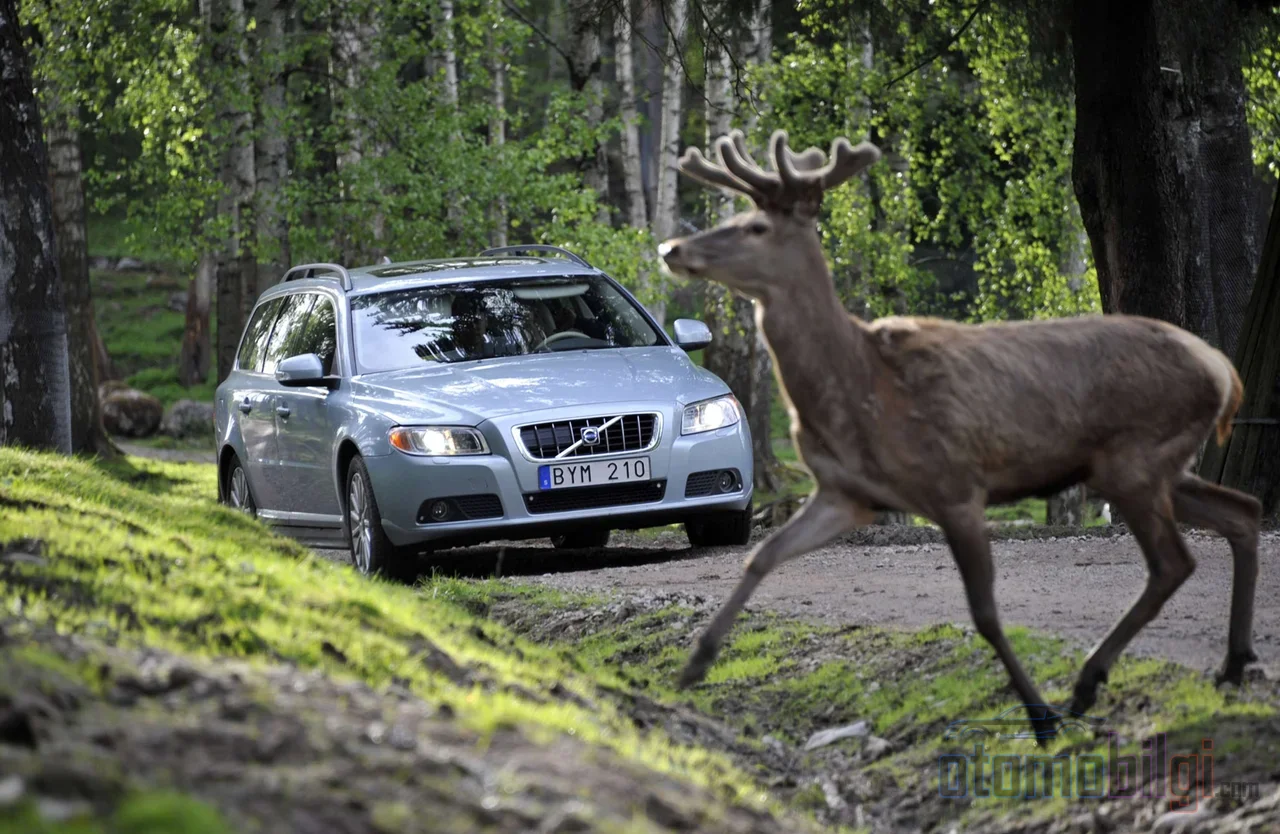
Night, a rural road, and a deer suddenly appears right at the edge of the range illuminated by your headlights. Your foot is on the brake pedal, but you ask the first question that comes to mind: "Will this car stop on my behalf?" The automatic emergency braking (AEB) systems we see in advertisements mostly boast about pedestrian and vehicle-ahead scenarios. So what happens the moment a deer steps into the road? Get ready, because the answer is far more complicated than you think.
In this article, we will discuss how well AEB systems actually detect animals, which sensors can see what, and who is still responsible at the wheel on a rural road. Spoiler: It is not as rosy a picture as in Tesla's promotional videos.
What Does AEB Actually See, and What Does It Not See?
First, let's get down to the basics, because what we call "AEB" is not a single technology. Each vehicle's system is different from one another: basic-level AEBs can all detect the vehicle ahead, versions with pedestrian detection recognize people, and some add cyclists, and occasionally even pets, to their list. But animal detection? That is an entirely separate and seriously limited capability.
Think of it this way: AEB works like a student, and it must answer every question on the exam correctly in order to brake. The sensor must see the target clearly in its field of view, classify it correctly, and the collision conditions must be met. If even one condition is missing, there is no braking. So if the deer on the road is in "half of the field of view," the system may remain silent by rule.
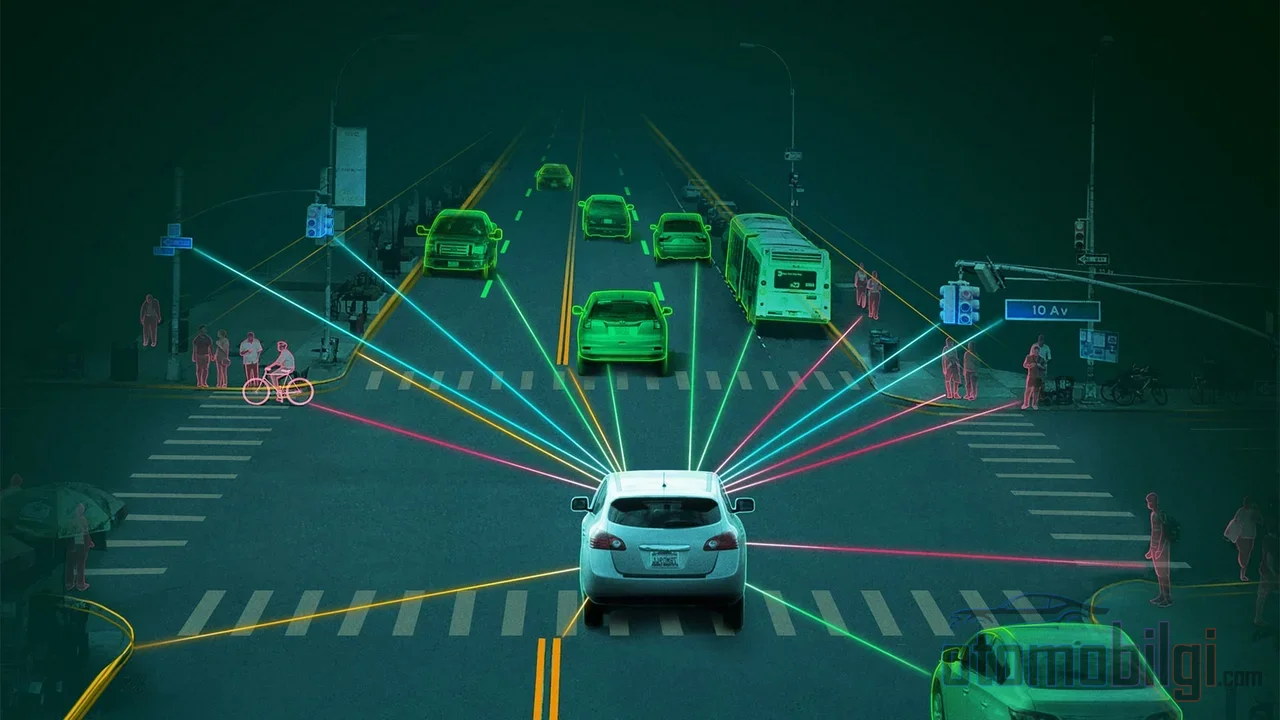
On the sensor side, there are three players: radar that works in every weather condition, a camera that is precise but can be affected by weather, and LIDAR, which is strong at distance measurement. In modern vehicles, these are combined through sensor fusion; one sensor compensates for another's weak moment. In fact, AI-supported systems can classify and track a pedestrian's movement. In one example scenario, the sensors detect a child pedestrian in 2.3 seconds, first issuing a warning and then switching to automatic braking in 2.4 seconds. That sounds good, doesn't it? But "pedestrian" and "deer" are not the same thing, and this is exactly where things get complicated.
Highlights
- Standard AEB systems perform vehicle and pedestrian detection; animal detection is a separate and limited capability.
- Thermal animal detection systems detect the deer family best, and the pig family with low performance.
- On-vehicle detection technologies see only large animals directly in front of the road and ignore those at the roadside.
- NHTSA's 2029 AEB mandate covers vehicle-to-vehicle and pedestrian scenarios; animal detection is not required in the rules.
- Deterrents like deer whistles have not been proven effective in any study.
How Well Do Thermal Cameras See Animals?
The most promising area of animal detection is thermal imaging. The California Department of Transportation's 2016 preliminary study examines two notable systems on the market: FLIR PathFindIR II and Wuhan Guide N-Driver. Both are primarily focused on pedestrian detection; animal detection falls into the "possible but not guaranteed" category. What's more, there is not yet any independent, solid third-party evaluation of these systems - meaning you have no choice but to trust the manufacturer's word.
What Does the FLIR PathFindIR II Detect?
FLIR's user manual is honest about the details. In rural mode, the conditions required for likely accurate detection are as follows: the animal should be from the deer family (such as deer, reindeer, mountain goat, cow, horse), standing upright, moving, and most of its body should be visible. Animals from the pig family, and animals whose heads are not visible, fall into the "low performance but probably correct" detection group. If most of the animal is not visible? Expecting accurate detection is not realistic.
There is also the other side of the coin: false positives. Objects that resemble an animal in heat signature or shape, such as warm rocks, building and vehicle parts, and street lamps, can fool the system and trigger unnecessary alerts. The manual clearly states that, depending on ambient temperature, the detection algorithms may perform poorly during daytime hours, or may not work at all. On the price side, the system costs around 2,500 dollars; it has a narrow 24-degree field of view, and its bulky camera makes it unsuitable for small vehicles.
Guide N-Driver and Autoliv's Night Vision
On the Guide N-Driver side, the picture is a bit different: the system automatically marks pedestrians and animals larger than 50 cm (the animal recognition function is still in development), and offers a range of up to 300 meters in good visibility; in bad weather, this range shortens. It also switches modes according to speed: at over 80 km/h it detects at 90-120 meters, while below 5 km/h pedestrian detection shuts off completely.
On the manufacturer side, Autoliv offered the "Night Vision" thermal animal detection system it introduced in 2013 in Audi, BMW and Daimler vehicles; it was introduced as the world's first system of its kind. The system gives an audible warning, and if the driver does not change their route or brake, a stronger warning kicks in. Note carefully: this is not a braking system, but a system that alerts the driver.
Do Sensors Really See the Deer?
This is the most crucial part of the matter. Michigan Technological Institute is examining the radar and LIDAR signatures of deer to understand how well current sensors used in ADAS and collision avoidance systems can see them. The mere fact that such a study is being conducted is a message in itself: deer detection remains limited in current standard sensors.
The author of a 2013 University of Minnesota study summarizes the situation clearly: vehicle-mounted detection technologies only passively detect deer or large animals directly in front of the road, and ignore those at the roadside. In other words, the system does not "know" in advance about a deer that will leap out of the brush; it can only see a target that has already entered the road, right in front of it. If you consider that the thing you most need on a rural road is exactly the animal in that thicket, the system's limitation really does stand out, doesn't it?
There is also a different approach on the roadside side: buried cable animal detection systems, when properly installed and calibrated, can detect about 99% of large animal crossings - but 80% of the false positives also turn out to be baseless. Such systems are also designed not to keep animals away from the road, but to warn the driver when collision risk increases. This is an infrastructure solution, not a feature fitted to the vehicle.
The False Positive: The Deadly Face of Unnecessary Braking
The system failing to see an animal is one problem; "seeing" an animal that isn't there and braking suddenly is a completely different problem. In NHTSA's final rule, false positive braking that creates a non-safety hazard is treated as a defect matter, and manufacturers are held responsible for reducing it. In other words, regulators take this risk seriously too.
Heavy vehicle drivers in particular have come to the fore with complaints of false positive braking. An unnecessary emergency braking on snow or icy road is far more dangerous than usual; a sudden stop at highway speeds with a truck behind you, in one commentator's words, "can be deadly." Even the test methods proposed for heavy vehicles show how fragile the issue is: systems are driven over steel road plating plates to measure false alarm response.
The balance here is delicate: if the system is sensitive it misses animals and pedestrians, if it is aggressive it brakes for imaginary targets. Manufacturers are trying to chart a course between these two extremes, and animal detection unfortunately comes at the top of the victims of this balance - because nobody wants a vehicle stopping suddenly on the highway because of a deer that isn't there.
Does the Legislation Cover Animals?
NHTSA's final rule published in April 2024 covers all passenger vehicles and light trucks under 10,000 pounds gross weight by 2029: these vehicles must be able to stop themselves to avoid a collision with the vehicle ahead at speeds up to 62 mph (about 100 km/h). On the pedestrian side, the requirement is that the system be able to stop itself from speeds up to 45 mph (about 72 km/h) when it detects a pedestrian. For heavy vehicles, a rule proposal mandating AEB for new trucks over 10,000 pounds is also on the table.
But here is the critical point: these mandates focus mainly on vehicle-to-vehicle and pedestrian scenarios; animal detection is not explicitly required in the rules. So the AEB that will become standard in the coming years carries no guarantee of stopping for a deer. Consumer evaluations point in the same direction: leading consumer organizations require standard AEB, pedestrian detection, and operation at highway speeds to make their best-vehicle lists - animal detection is nowhere on the list.
What Should a Driver Do on a Rural Road?
Now we come to the part you will need the most. IIHS's message is clear: AEB reduces pedestrian collisions, but drivers should not blindly trust these systems. This principle applies doubly on rural roads. Whether the system saw the animal or not - you can never know; so the one who brakes first is you.
What Should You Do When an Animal Crosses Your Path?
- Don't panic; brake in a controlled and safe manner.
- Avoid making a sudden steering maneuver (swerve); turning could lead to crashing into another vehicle or losing control.
- Keep in mind that the rest of the herd may follow; deer rarely travel alone.
- Braking for a small animal can endanger other road users and may not be legally justified; not all drivers are aware of the animal's presence, and while you prepare to stop, the one behind you may be unprepared.
- animal detection is possible only in some systems equipped with thermal cameras and special hardware - and under fairly strict conditions. no study has proven them effective, and no matter how loud the sound, the result doesn't change.
The calendar can also work in your favor: deer collisions increase noticeably in autumn, and in the US, 40% of deer collisions fall between October and December. If it's November, it's time to be extra alert on rural roads. Let's not forget the general risk of rural roads: Between 2017 and 2021, on US rural roads alone, more than 83,000 people lost their lives.
So, Can AEB Detect Animals?
Here's the clear answer I promised: Standard AEB systems detect vehicles, and most pedestrian-capable versions detect people; animal detection, on the other hand, is only possible in some systems with thermal cameras and special hardware - and under quite strict conditions. If you're lucky, you'll get a warning for an animal from the deer family, in an upright posture, with most of its body visible; but even if the system fails to do so, the responsibility lies with the driver.
Because the legal and practical reality is this: AEB is a driver assistance system, not a replacement for you. Even in a luxury vehicle with night vision thermal systems, what happens when faced with a dog or wild boar darting onto the road depends largely on the sensor suite, your speed, and luck. The one making the braking decision, holding the steering wheel, and remaining the true AEB of that rural road is you.
Sources
- Use of Vehicle-Mounted Heat Detection Systems to Reduce Animal-Vehicle Collisions - Caltrans
- Final Rule: Automatic Emergency Braking Systems for Light Vehicles - NHTSA
- Signature Study for Vehicle-Animal Collision Avoidance (VACA) - Michigan Tech
- Autonomous Emergency Braking systems - IRCOBİ
- Automatic Emergency Braking Struggles to Stop for Pedestrians - Consumer Reports
- Road Safety and Small Wildlife - TIRF
- Buried Cable Animal Detection System - ITS Knowledge Resources
- Rural Roadway Safety - USDOT
- False-positive reports suggest AEBs not ready for prime time - Overdrive