Why Are Manufacturers Abandoning Their Electric Targets?
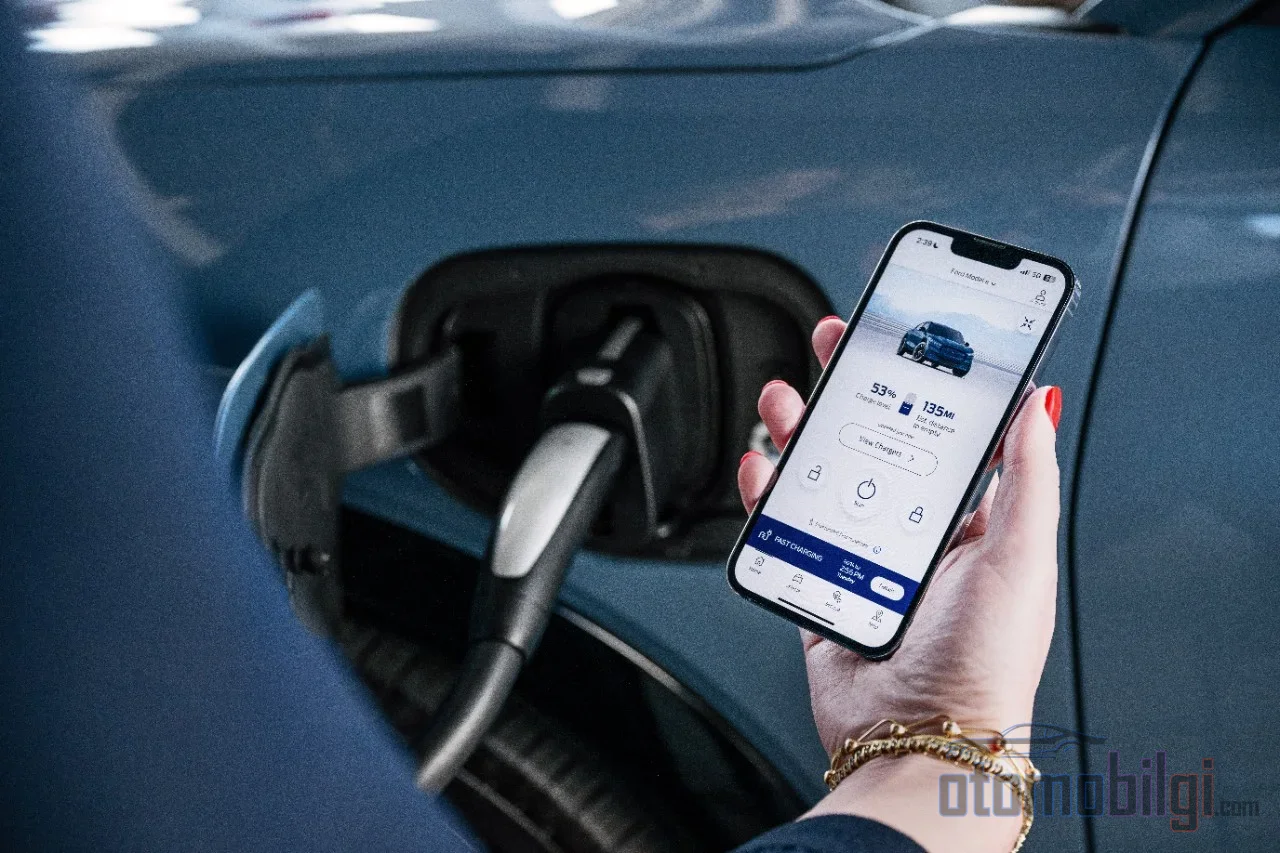
Promises were made just a few years ago: Fully electric by 2030, farewell to the internal combustion engine by 2033, growth in the targets. Yet when we look at the picture today, we see those same manufacturers quietly backing away from one another. Volvo shelved its fully electric target, Mercedes-Benz pushed its 50% target back by five years, and Detroit's giants announced write-downs in the tens of billions of dollars. So what changed? Were the promises wrong, or was reality harsher than expected? Let's take a look one by one - because this story is far more interesting than you might think.
What Do the Numbers Say? The 2026 Picture of the EV Market
Let's start with the picture, because the numbers tell half the story. Electric vehicle sales in the US fell 27% year-on-year in the first quarter of 2026; the number of vehicles sold in the quarter dropped to 216,399, which corresponds to only 5.8% of the new vehicle market. California - historically the US's EV stronghold - saw its share drop from 21% in 2025 to 13.7% in the first quarter of 2026. Tesla's sales in that state declined by 24%.
The interesting part is this: Globally, the picture is not bad at all. In 2025, one in every four new vehicles sold worldwide was electric; in 2024, that figure was one in five. So electrification continues to grow on a global scale. The problem is not the direction of growth - it's where the growth is happening and how fast. While growth in China is expected to slow to 1% due to a new sales tax and subsidy cuts, the US market is forecast to shrink by nearly 15% in 2026. Same sky, but journeys to very different weather.
Key Takeaways
- EV sales in the US fell 27% year-on-year in the first quarter of 2026.
- Mercedes-Benz postponed its 50% EV sales target from 2025 to 2030.
- Volvo abandoned its 2030 fully electric target; it now expects at least 90% of output to be electric + plug-in hybrid.
- The US automotive industry has seen more than 50,000 layoffs since mid-2025.
- By early 2026, at least $65 billion in write-downs had accumulated across the industry.
Which Manufacturer Gave Up on Which Target?
Now let's get to the main question: why are manufacturers abandoning their electric targets? The place where we see the answer most clearly is the manufacturers' own statements. Commitments that once took our breath away have today either been postponed or thrown out entirely. Here are the most striking examples:
| Manufacturer | Former target | Current status |
|---|---|---|
| Mercedes-Benz | 50% EV sales in 2025 | Target postponed to 2030; reason given: market conditions |
| Volvo | Fully electric by 2030 | Target abandoned; expectation of at least 90% electric + plug-in hybrid |
| Stellantis | 2030 EV sales target | Revised downward; Ram EV cancelled |
| GM | 2030 EV sales target | Revised downward; full-size electric truck/SUV redesigns postponed indefinitely |
| Honda | 2030 EV sales target | Revised downward; Prologue's discontinuation by the end of 2026 is on the agenda |
| Ford | Broad EV growth plan | F-150 Lightning production has ended; the search for a range-extender model |
| Volkswagen | Broad EV growth plan | ID.4 production in Chattanooga is coming to an end |
This isn't just penciling in a correction in the goal book. The combined EV loss write-downs of the three Detroit-based manufacturers total roughly $53 billion. Ford's $19.5 billion write-down at the end of 2025, Stellantis's $27 billion charge in the second half of 2025, GM's one-time $6 billion write-down in January 2026... These aren't figures melting away on paper; they are decisions with real consequences for factories, models, and the workforce.
Did Demand Collapse or Was Supply Pulled Back? This Is the Real Fight
This is the most debated question, and the answer is more layered than you might think. The mainstream reading goes like this: The $7,500 federal EV tax credit expired on September 30, 2025, demand fell, and manufacturers pulled back. Part of that is true - research shows the loss of the credit reduced sales by about 15-20%. High vehicle prices, high interest rates, and range anxiety come on top of that.
But the other half is the missing piece of the narrative: Roughly half of California's 35% drop came not from the demand side, but from manufacturers' own supply pullback. So in some cases the manufacturer gives up first, then sales fall, and that drop is presented as evidence for the "see, nobody wants EVs" argument. There is also an interesting lesson from March 2026: When the average U.S. gasoline price exceeded $4 for the first time since 2022, interest in electric vehicles rose 25% in online searches - but since supply was limited, sales barely increased at all. Just as the consumer lost interest, so too were options being pulled from the market. Don't you find that ironic?
The Hand of Policy: When the Rules Change, the Plans Change Too
Attributing this pullback solely to consumer behavior is an incomplete account. In June 2025, Congress and the President revoked California's Clean Air Act waivers. The One Big Beautiful Bill Act zeroed out CAFE penalties, and in December 2025 it was proposed to roll back the 2031 fuel economy standard to 34.5 mpg - the Biden-era target had been 50.4 mpg. So the rules pressuring manufacturers softened, and once the rules softened, targets once announced as "requirements" ceased to be "targets" and turned into "preferences."
There is also a foreign trade dimension: Combined tariffs exceeding 125% plus additional customs duties on Chinese EVs have effectively kept the world's most competitive electric models away from the U.S. market. That is what narrowed the consumer's choice. So the picture isn't just "the customer gave up"; the shelf in front of the customer was also emptied.
The Turn to Hybrids: A Bridge or a Step Back?
The new favorite of the retreating manufacturers is a technology everyone is familiar with: hybrids. In the first half of 2026, hybrid sales grew about 20% year over year, and this segment is enjoying its "golden age." The difference is also clear in the used vehicle market: while hybrid sales rose 41.8%, EV sales progressed much more slowly. Hybrids sell from dealers in an average of 25 days, while EVs take many times longer to sell.
There are two different readings here, and both deserve to be taken seriously. The critical side says that US- and Japan-based manufacturers are "hedging" with plug-in hybrids and seeking flexibility in the regulations - even seeing it as an excuse to guard against Chinese rivals (BYD, Geely, SAIC) hitting their targets early. The more conciliatory side defends hybridization not as a rejection of electrification, but as a financing tool: time gained without scaring off customers while the charging network matures and batteries fall in price. If you want an analogy: a hybrid is like getting used to the treadmill before running a marathon. Smart preparation to some, evasion to others. Which side are you on?
The Tesla Exception and the Dust and Smoke of Battery Promises
It would be wrong to take Tesla's decline as proof of the general EV decline - because its story is brand-specific. Musk's political stance, the aging of the product lineup, and loyalty slipping from 72% to 65% all played a role; Tesla reported its first annual revenue decline and shifted its focus to AI and robotics, canceling the low-cost Model 2 and turning toward the Cybercab and Optimus. On the other hand, EV-only brands like Rivian were less affected by the wave than traditional manufacturers. So the customer isn't fleeing EVs; they may simply be moving away from certain sellers.
On the battery front, too, there is a gap between words and physics. In 2026, solid-state batteries are still at the center of the "promise or reality" debate: Claims of 800-mile range are on the table, and there is even talk of 1,000-mile batteries without cells. But the common consensus among analysts is this: there is no single "miracle battery"; progress is coming gradually. Translating laboratory success to the series production line is a harder exam than the timetable we committed to. The hydrogen fuel cell side is progressing even more slowly; about 96% of the hydrogen produced worldwide still comes from fossil fuels, which weakens the clean transportation claim from the start.
So, Is This the End of the EV? What Does the Promise-Reality Balance Say?
No - this is not the end of the EV, but a recalibration of the timeline. The essence of why manufacturers are giving up their electric targets lies here: the timetables announced years ago proved unrealistic in the face of high prices, high interest rates, the end of subsidies, loosening regulations, and slow progress in charging infrastructure; demand falling short of forecasts led some manufacturers to brake themselves on the supply side as well. Electrification continues to grow, but it is no longer a linear progression - it is a bumpy journey - and in this new phase called the "decade of flexibility," plans are being revised year by year.
What is your position as a consumer? The first signs of recovery depend on affordable models under $35,000 reaching the roads between late 2026 and 2027, interest rates falling, and the charging network expanding. Hybrids offer a real bridge during this transition period; but the long-term direction has not changed, only the speed limit has been reset. In an industry that hands out promises by the dozen, the healthiest reflex is this: follow the vehicles actually delivered, not the dates. Then the picture always becomes clearer.
Sources
- The EV Cliff Arrived on Schedule, But Not Just Buyers Ran Away - UC Davis ITS
- Legacy global automakers falter in ambition despite momentum in the EV transition - ICCT
- EV Manufacturing Crisis 2026: Why Automakers Are Reversing - Enki
- The EV pullback: Why these 5 automakers are retreating from big plans - Trellis
- Volvo Cars scraps sales target as EV demand faces slowdown - Reuters
- Automakers reduce focus on electric vehicles amid slower adoption - The Daily Climate
- Hybrids 'having their moment' as car buyers rethink electric vehicles - CNBC
- Automakers shifting to a decade of flexibility - Accelerating to Zero
- Honda, Volvo, Tesla, Hyundai and Kia just canceled or discontinued EVs in 2026 - Autonocion
- Solid-state EV batteries with 800 miles of range - Electrek