Pilot and Tesla Launched Heavy-Duty Vehicle Charging Network in Georgia
Share This Page
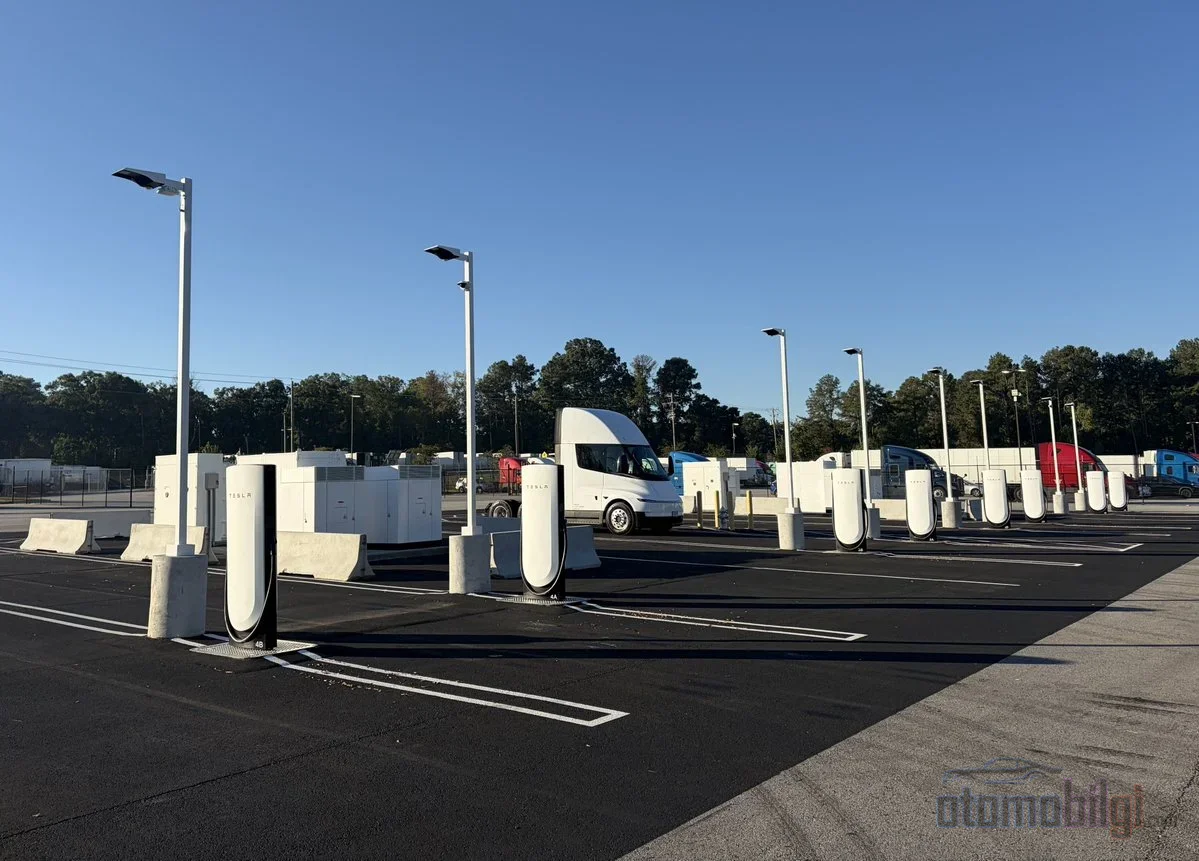
Pilot and Tesla have commissioned the first Tesla Megacharger station in the town of Ellabell, Georgia; the facility is the first step of the heavy-duty charging network, capable of delivering up to 1.2 megawatts to Tesla Semi electric trucks, outside California. This network, which operates with a very different technical and commercial logic from the charging infrastructure of personal electric vehicles, marks a critical threshold in the electrification of trucking.
Highlights
- First Pilot-Tesla Megacharger station opened in Ellabell, Georgia on October 8, 2026.
- The station has six charging stalls ; each offers up to 1,200 kW
- of power. The Tesla Semi recovers about 60%
- of its range in 30 minutes.
- Three new locations in Tulare, Fort Stockton, and North Las Vegas will open soon. Currently, 12 additional charging locations
are actively under construction.
The Ellabell Station: Charging Where Truckers Already Stop The station was established at the Pilot #1390 travel center in the town of Ellabell, at 130 Interstate Exchange Way. It has six heavy-duty charging stalls, each capable of delivering up to 1.2 megawatts (1,200 kW) of power using Tesla's V4 cabinet technology. According to Tesla's figures, each stall allows a Tesla Semi to recover 60% of its charge in 30 minutes. After more than 30 years of following the automotive industry, I can say this comfortably: the real genius of this project lies not so much in its technical capacity as in its location choice. Truckers have been stopping at the same spots for years; they also take their legally mandated breaks there. Moving charging to those points does not require fleet operators to add extra idle time to their routes. In the past, charging stations were built in parking lots in settled areas and then spread to the highways; now, on the heavy-duty side, the work is being carried out from the very beginning through truck stops along freight corridors.
How the Network Will Grow: New Stops and 12 Locations Under Construction
Following the Ellabell opening, Pilot announced three more locations that will be commissioned soon. Each will contain four to eight high-power charging stalls:
Location
| City, State | Status | Pilot #1390 |
|---|---|---|
| Ellabell, Georgia | Opened (October 8, 2026) | Flying J #1071 |
| Tulare, California | Opened (October 9, 2026) | Flying J #553 |
| Fort Stockton, Texas | Opening soon | Pilot #341 |
| North Las Vegas, Nevada | Opening soon | Beyond these four locations, a total of |
12 additional heavy-duty charging locations are actively under construction; the sites of nine of them have not yet been announced. The Pilot-Tesla partnership was announced in January 2026, and at that time the first sites were planned to open in the summer months. The opening slipped to October; that is, we can speak of a one-season delay, which, in infrastructure projects, I would say counts as almost on-time delivery. While California, Georgia, Nevada, New Mexico, and Texas appeared on the January state list, New Mexico was removed and Indiana added as of October. The partnership's goal is to build a network along major freight corridors, starting with I-5 and I-10. are actively under construction; the locations of nine of them have not yet been announced. The Pilot–Tesla partnership was announced in January 2026, and at that time the first sites were planned to open in the summer months. The opening slipped to October; that is, we can speak of a one-season delay, which, in infrastructure projects, I would say counts as almost on-time delivery. While California, Georgia, Nevada, New Mexico, and Texas appeared on the January state list, New Mexico was removed and Indiana added as of October. The partnership's goal is to build a network along major freight corridors, starting with I-5 and I-10.
How Does the Megacharger Differ from Standard EV Charging?
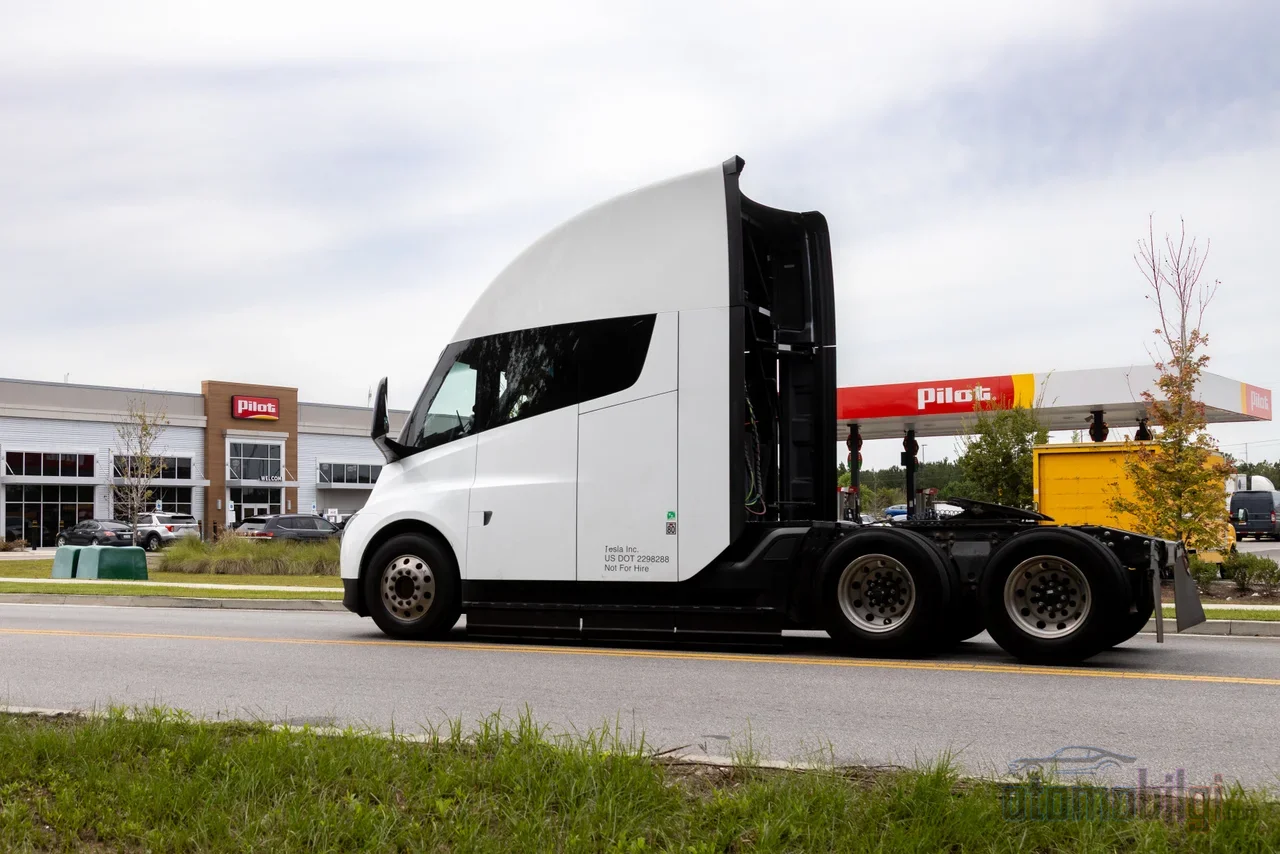
The difference here is not just one of degree, but of category. A typical DC fast charger produces power in the 50-350 kW range; the most powerful examples can approach 500 kW. By contrast, the standard known as the Megawatt Charging System (MCS) aims to fill trucks' massive batteries in a short time by delivering 1,000 kW and above of power. The 1.2-megawatt stalls in Ellabell operate on this standard.
Let me note this from an editor's perspective: for a personal vehicle user, a 20-30 minute charging difference is a lifestyle choice, while in truck operations, minutes translate directly into money. That's why the difference between 350 kW and 1,200 kW on the heavy vehicle side is not about luxury, but about the sustainability of the business model. For now, the dominant model for fleet charging is 150-400 kW DC charging installed at depots; megawatt-class charging is still at an early stage in corridor-based deployment.
How Does Range Anxiety in Trucks Differ from Individual Vehicles?
According to the final specifications Tesla announced in February 2026, the Semi's Standard Range version offers 325 miles of range, while the Long Range version offers 500 miles under an 82,000-pound load; peak power is 800 kW, peak charging speed 1.2 MW. However, it's worth noting there is a gap between the range claim and the real world: fleet tests show that range varies significantly depending on the operation, and since the EPA has not given an official range rating to heavy-duty electric vehicles, there is no verifiable standard figure. This makes charging access an even more critical variable than range itself.
Range anxiety on the truck side is not the same as it is for individual vehicles. The individual user asks, "is it enough for my daily route?"; the fleet operator, meanwhile, seeks an answer to "where is the charging point in case of an unexpected delay?" Mandatory break regulations are the most important factor easing this equation: a 30-minute 60% charge coincides with the driver's legally mandated 30-minute break. In other words, charging can fit into the break without adding an extra burden to the route plan - the condition being that there are enough stalls along that corridor.
The Atlanta-Savannah Corridor: The First Outside California
The Georgia opening has another meaning as well. The same week, a second Megacharger station with eight stalls was brought online in Conley, about 16 km south of Atlanta, near I-285/I-675; this facility does not belong to Pilot and has pull-through stalls, meaning trucks can enter and exit without reversing. The two stations, about 220 miles apart via I-75 and I-16, form the first truck charging corridor outside California on the Atlanta-Savannah route. Worth noting: the stalls in Ellabell differ in this respect; they require reversing.
The logistics logic of the location is also worth taking as an example. Ellabell lies about 32 km west of the Port of Savannah, one of the country's busiest container ports, right on I-16. A Semi working this corridor can complete a full round trip without using diesel: for the 325-mile Standard Range truck, chargers at both ends cover the 440-mile round trip. The previous links of this network were almost entirely in California - Carson, Bloomington and Vernon - with Sparks in Nevada also among them. As the first Semi Megacharger on the East Coast, Ellabell is shifting the network's geographic balance. The fact that Tesla has started series production of the Semi at its Nevada plant with an annual capacity of 50,000 trucks also supports the network's growth with the industrial reality of carriers.
Deployment Speed and Grid Load: Two Sides of the Criticism
Looking at the big picture, two main debates stand out. The first is deployment speed: Tesla's own plan foresaw roughly 37 Megacharger sites for 2026; in the second week of the year there were only 4 sites on the map, and as of early October the publicly available list includes Vernon, Bloomington and Conley - meaning these four customer-accessible sites and 26 stalls. In February, 66 locations across 15 states had been added to the map, and there is a target of 46 sites by early 2027 along with a goal of charging posts with more than 200 megawatts of capacity. In other words, the plan is ambitious, but execution lags behind the target - and this is exactly the reservation fleet owners voice most often.
The second headline is grid load. Megawatt-class charging points place a serious burden on power grids, often requiring grid upgrades and costing more. This is a cost item that could limit the pace of expansion. Another not insignificant irony is also worth noting: while the Hyundai plant in Ellabell carries its parts with hydrogen fuel cell trucks, Tesla has brought megawatt charging to the truck stop in the same town - we are witnessing the two technologies becoming this close of neighbors in the heavy-duty vehicle arena for the first time.
Truck Charging's Place in Pilot's Broad Energy Equation
Pilot is not writing this move on a blank page. The company, founded in 1958, headquartered in Knoxville, Tennessee, and owned by Berkshire Hathaway, serves an average of 1.2 million customers per day at more than 900 locations across 43 US states and 5 Canadian provinces as North America's largest travel network, and supplies roughly 12 billion gallons of fuel per year. Its infrastructure on the electrification side is also ready: 1,300 fast-charging stalls at 300 locations have been activated for personal EVs through a GM and EVgo partnership, and in the coming period the goal is to reach 2,000 chargers at 500 Pilot centers. Investments in renewable diesel and biodiesel are also part of the portfolio.
What this table tells me is this: the logic of the 1960s fuel station - selling energy where traffic already stops - still holds true in the electric age. The type of energy changes; the economics of location choice does not. Heavy-vehicle electrification will remain one of the most tangled chapters of automotive history; but examples like Ellabell show that on the corporate fleet side, the shift from the experimental stage to the operational stage has already happened.
Sources
- Pilot and Tesla Open First Megacharger Site, Announce Three Additional Locations Opening Soon
- Tesla opens 14 Semi Megacharger stalls between Atlanta and Savannah
- Tesla Is Building Megachargers For Semis Where Truckers Already Stop
- Electric Semi Truck - Tesla
- Megawatt Charging System (MCS) - CharIN
- Electric vehicle charging - IEA Global EV Outlook 2025