Lucid Air Owners Are Getting a $950 UX 3.0 Bill
Share This Page
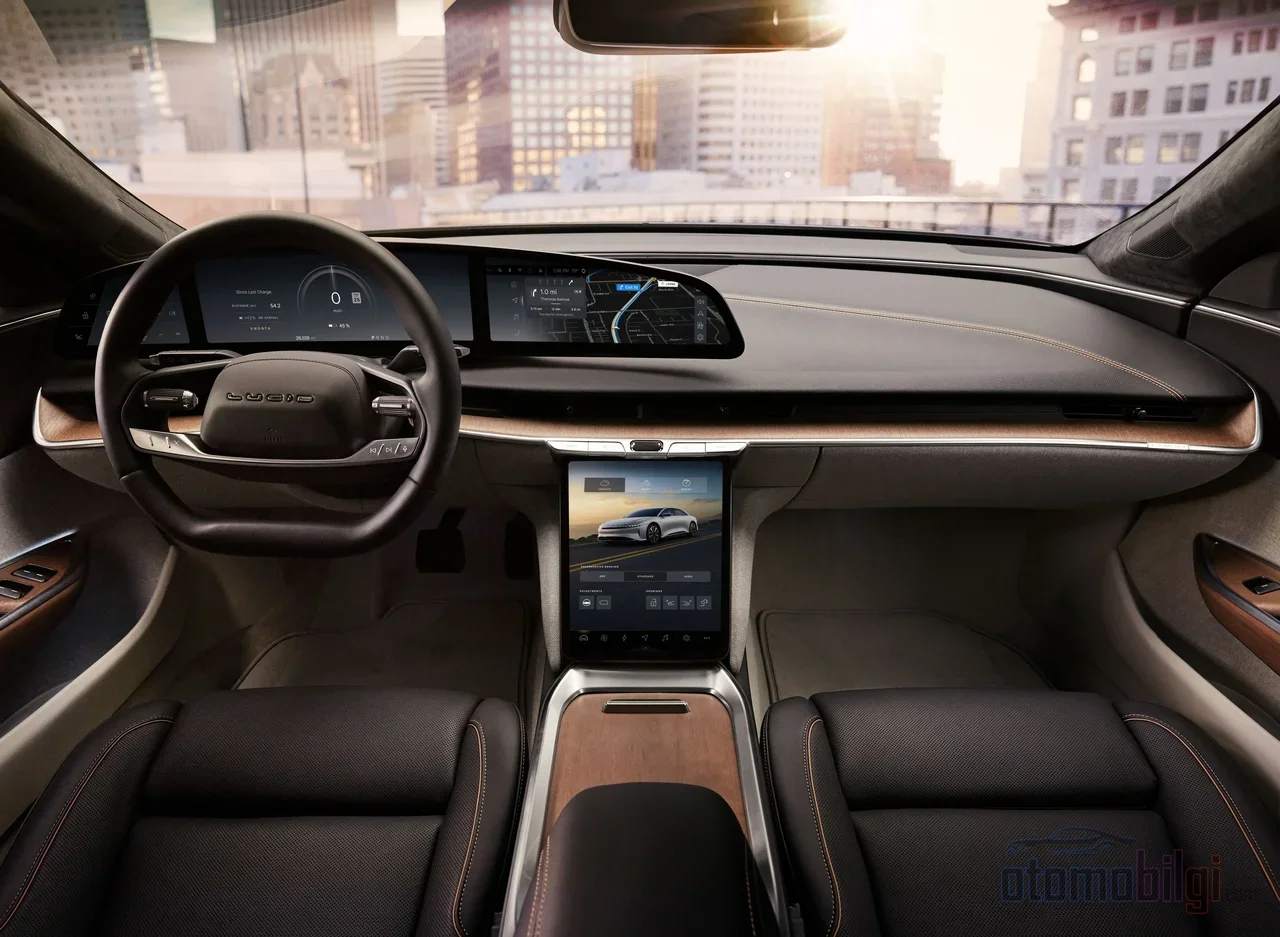
Lucid, announced on September 29, 2026, is offering the Air UX 3.0 interface update to 2022-2024 model Air owners for 950 dollars conditional on a hardware upgrade. While the new interface is being distributed wirelessly and free of charge to 2025 and newer vehicles, owners of the earliest years will either pay or continue with the old interface. This is one of the first concrete examples of software genuinely becoming a paid service in the electric car.
Highlights
- UX 3.0, announced on September 29, 2026, was rolled out as part of software version 2.11.0
- The hardware upgrade required for 2022 and 2023 models costs 950 dollars in the US (installation included, taxes excluded)
- Some 2024 models earn free OTA rights, while others still need the hardware upgrade
- The update brings the Gravity interface, winner of the 2024 Gold iF Design Award, to the Air
- Tesla's precedent in 2020 was initially priced at 2,500 dollars for older Model S/X, then 1,500 dollars as the price
What does the Lucid Air UX 3.0 update bring?
This release, which Lucid has described as the biggest software revision of the Air in years, came about by directly porting the interface matured in the company's second model, the Gravity SUV. Gravity's user experience won the Gold iF Design Award, one of the prestigious honors of the design world, last year; Air owners will now see the same design language in their own vehicles. Only the third major release has occurred in the Air interface since late 2021, when deliveries began - the previous step was the rollout of UX 2.0 in October 2022. Three major releases in four years is a slow pace even for someone who has been watching automotive software for years; but the quality of what has been delivered partly compensates for this slowness.
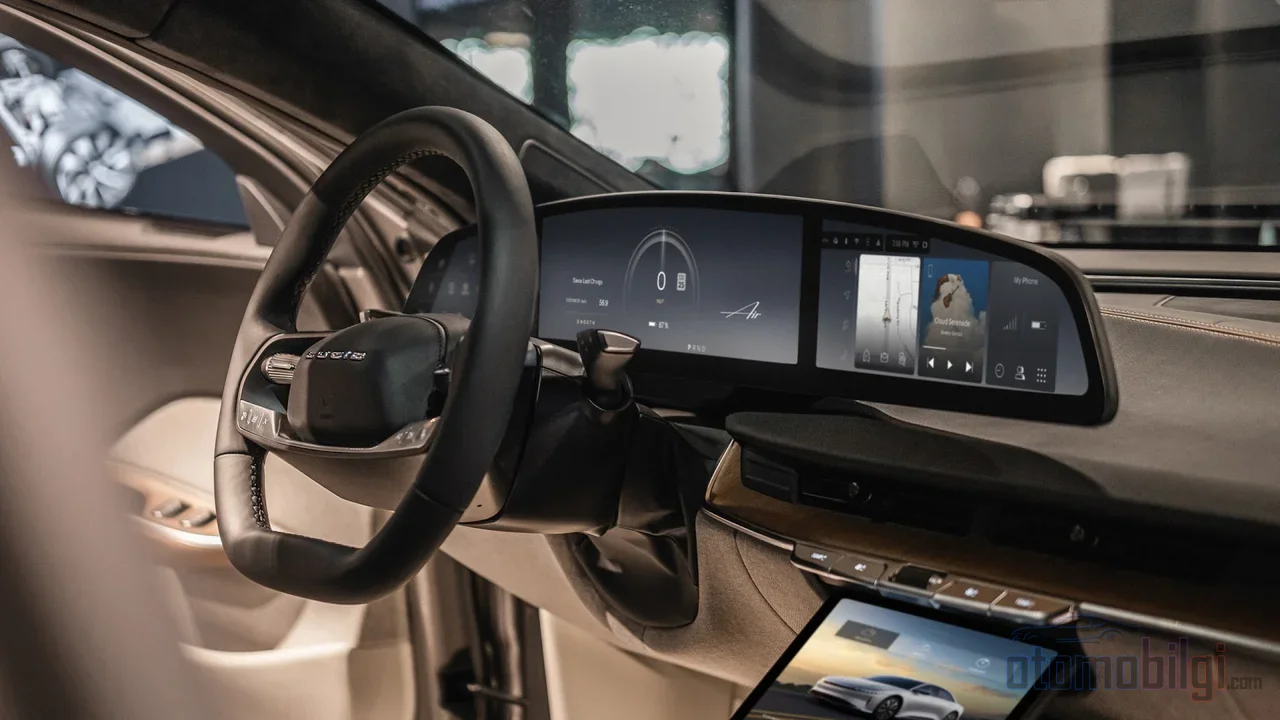
The Cockpit Panel behind the steering wheel now consists of swipeable cards. Media, charging stops, one-tap routing to home or work address, calls, and vehicle settings are gathered in these cards; when you pull a card down, a full-size app opens on the Pilot Panel. A logic familiar from phones has also settled into the Pilot Panel: the new Quick Controls menu, swiped down from the top of the screen, makes frequently used functions - from drive modes to regenerative braking settings, from locks to battery preconditioning and mirror folding - accessible in a single move.
The rest of the list also shows it is not merely a cosmetic refresh:
- App buttons can be customized; the order can be changed via drag-and-drop
- Apple CarPlay and Android Auto completely cover the right side of the Cockpit Panel wirelessly or via USB - Lucid made CarPlay standard across its entire product line in 2023
- Navigation features a refreshed dual-screen experience, Favorites, and Auto Dark Mode
- Smart EV routing takes into account preferred charging networks, stations that work with Lucid-approved adapters, and the minimum desired range at the destination
- Profile switching has been sped up; the Primary profile manages linked keys, guest profile resets have been made easier, and a six-digit PIN is required to exit Guest mode
- Easy Entry & Exit can be personalized; the seat moves automatically to the saved position
The company's software side has also been clarified: Lucid's Vice President of Software Marc Solsona Palomar delivered the message that owners can expect a more reliable and intuitive experience. It is the kind of sentence executives say at every launch; but for those who know the troubles of early Air software, there is a timing that casts doubt on that claim: the first version of the update drew complaints as well, including a bug that temporarily broke the iPhone's passive lock.
The rationale for the 950 dollars: the old processor in the center console
The technical justification behind the fee rests on a simple and defensible logic. The processor that runs the center console in older Airs cannot make the leap required by UX 3.0. As part of the upgrade, this unit is replaced with the second-generation processor used in 2025 model year vehicles and in the performance-focused Sapphire variant. In other words, Lucid is charging owners not just for software, but for a physical part that is actually swapped out.
Price in the U.S. 950 dollars; installation included, taxes excluded. Owners of 2022 and 2023 models need to visit a Lucid service center to have this upgrade done. Pricing for other markets has not yet been announced; owners are asked to inquire about their eligibility by contacting Lucid Customer Service.
Why are 2024 models split in two?
This is where things get complicated. At some point during 2024 production, Lucid updated the processor; that is why some 2024 Airs receive the OTA update for free while others fall under the hardware upgrade. It is impossible to tell from an external source which side an owner's vehicle falls on; eligibility can only be learned from Lucid itself. Not being able to make a diagnosis based on the model year without confusion is the most painful aspect of such practices, and Lucid needs to keep its communication very clear on this point.
The summary table, broken down by model year, looks like this:
| Model year | Delivery method | Cost |
|---|---|---|
| 2027 (new) | Standard from the factory | None |
| 2025 and 2026 | Free over-the-air (OTA) | None |
| 2024 (partially) | Free OTA or upgrade required | 0 or 950 dollars |
| 2022-2023 | Hardware upgrade at a service center | 950 dollars (taxes excluded) |
How are competitors handling OTA?
For someone who has been following this industry for years, the picture looks familiar. In 2020, Tesla offered a $2,500 infotainment computer retrofit for older Model S and Model X vehicles, and lowered the price to $1,500 in response to the backlash. Lucid's demand is numerically lower; but the critical difference is timing: Tesla's retrofit went to vehicles produced eight years ago, while Lucid is asking for the same fee for vehicles that are two to four years old. Charging an owner a hardware fee in a vehicle's fourth year reopens the question of what buyers used to get when they bought a car.
The picture on the Rivian front is entirely different. The company sends its owners free monthly OTA updates and announces that every vehicle is regularly improved through software. An even more ambitious step is also on the agenda: it plans to offer some R1S and R1T owners the option of unlocking extra power and range via a wireless update. Viewed through a competitive lens, Lucid's move stands in stark contrast to a manufacturer that uses wireless updates as a sustainable loyalty tool.
On the more traditional side, the picture is not bright at all. Audi is known to have charged $450 for a mere software update to fix the MMI problems in the e-tron. Those defending Lucid rightly say this: at least it offers a genuine hardware upgrade opportunity, and the payment goes toward a processor physically replaced at a service center. This is something most traditional manufacturers do not even intend to do. Still, the defense does not justify the fee; it only shows it is less bad compared to worse alternatives.
Billing early adopters: an ethical reckoning
The debate in the owner community is already heating up. Whether $950 is worth paying for a 2023 Air is being actively discussed in Lucid owners' online groups. One owner reporting regret over the update and the lack of a way back is a reminder that the upgrade is a one-way door. The second-hand market also provided a precedent: a buyer of a used 2023 Air was reported to have been faced with a bill of roughly $1,300 due to the missed updates - a striking indication that wireless updates have now become a bargaining chip.
The core of the criticism comes down to this: those who took the first Air in 2022, including Dream Edition owners who paid as much as $169,000, financed the company at the very moment it most needed resources, and in return experienced the least mature software. Now they are being asked to pay a second time to benefit from the software that has since matured. That is a hard bill to accept. Lucid has at least not announced a software support end date for bug fixes and safety updates to date; so owners are not being left entirely out in the cold. But the existence of owners who feel excluded is read as a risk that could also touch the sales side. Industry data points the same way: while Tesla loyalty runs high, Rivian and Lucid are seen to have started drawing some Tesla owners to their side. The bill Lucid is making its owners swallow today could have an effect on the pace of that switching wave tomorrow.
The big picture: software, profitability, and the limit of the car sold
Reading this solely as a monopolistic move by Lucid would be an incomplete reading. OTA updates have now reached the point of covering battery management and safety features; the automotive OTA market is forecast to reach $22 billion by 2034. Manufacturers are restructuring their software strategies to better match costs with the returns of the technology. From heated seat subscriptions to OTA upgrades, how much drivers will pay for features they already own is being tested separately at every brand. Lucid's $950 is one of the clearest answers to this test so far.
My assessment is along these lines: the cost of a hardware change has to be covered somewhere, and opposing that would be naive. But who this cost is loaded onto is part of the brand's day-one promise. The early adopter is the customer who shoulders every manufacturer's riskiest period; demanding $950 from a four-year-old car shows up as money entering the till in the short term, but as a line item of reputation that does not convert into sales in the long term. You used to buy a car and it was yours; now ownership resembles an agreement renegotiated by the manufacturer with every software generation. In the first big test of this negotiation, Lucid made a move whose verdict by the market is hard to predict in advance.
Conclusion: is it worth it or not?
UX 3.0 has real work on the side it extends its hand: Gravity's award-winning interface, a seriously rethought control layout, and full-screen CarPlay. For an Air owner living with the old interface, the update carries technical value. The $950, however, is not just about the processor; the price of the trust the company built with its early-stage customers is also written into the bill. The decision is easier for those whose hardware has genuinely changed, while for 2024 owners with uncertain compatibility the first step is to ask Customer Service. The decision comes down not to the car's value, but to the owner's understanding of ownership.
Sources
- Lucid Introduces Air UX 3.0 - Lucid Media
- Lucid Air UX 3.0 Enhanced In-Car Experience, Personal Profiles & Next-Gen Connectivity | Lucid Motors
- Lucid Air's Infotainment Update Costs Either $0 or $950 - Car and Driver
- Lucid brings Gravity's UX to the Air, but older owners must pay $950 - Electrek
- Lucid Air Gets Gravity-Inspired Interface, Older Models Eligible - KBB
- Owner Reports $1300 Bill After Missed Updates On Lucid Air - CarBuzz
- Automakers shift over-the-air update strategy - Automotive News
- Why automakers are rethinking over-the-air update strategies - WardsAuto
- Your Next Car Comes With A Monthly Bill - Forbes
- Tesla loyalty is high, but Rivian and Lucid are luring owners - Green Car Reports