GM Is Cutting Vehicle Development to Two Years with Artificial Intelligence
Share This Page
General Motors has announced a new AI-powered development model that aims to reduce vehicle development time from the traditional four-to-five-year cycle to approximately two years. The program, unveiled at the second annual GM Forward event held in New York on October 21, cuts aerodynamic simulation from 60 hours to 60 seconds and structural analysis from months to hours. The company backs this goal not as an empty promise, but with gains in time that have already been measured.
Highlights
- Vehicle development time target: From 4-5 years to 2 years
- Aerodynamic (CFD) results: 60 seconds instead of 60 hours
- Structural analysis: A few hours instead of 4 months
- LMR battery development: 256 instead of 60,000 lab hours
- Production speedup in battery assembly: 30 percent
What does the plan announced at the GM Forward event promise?
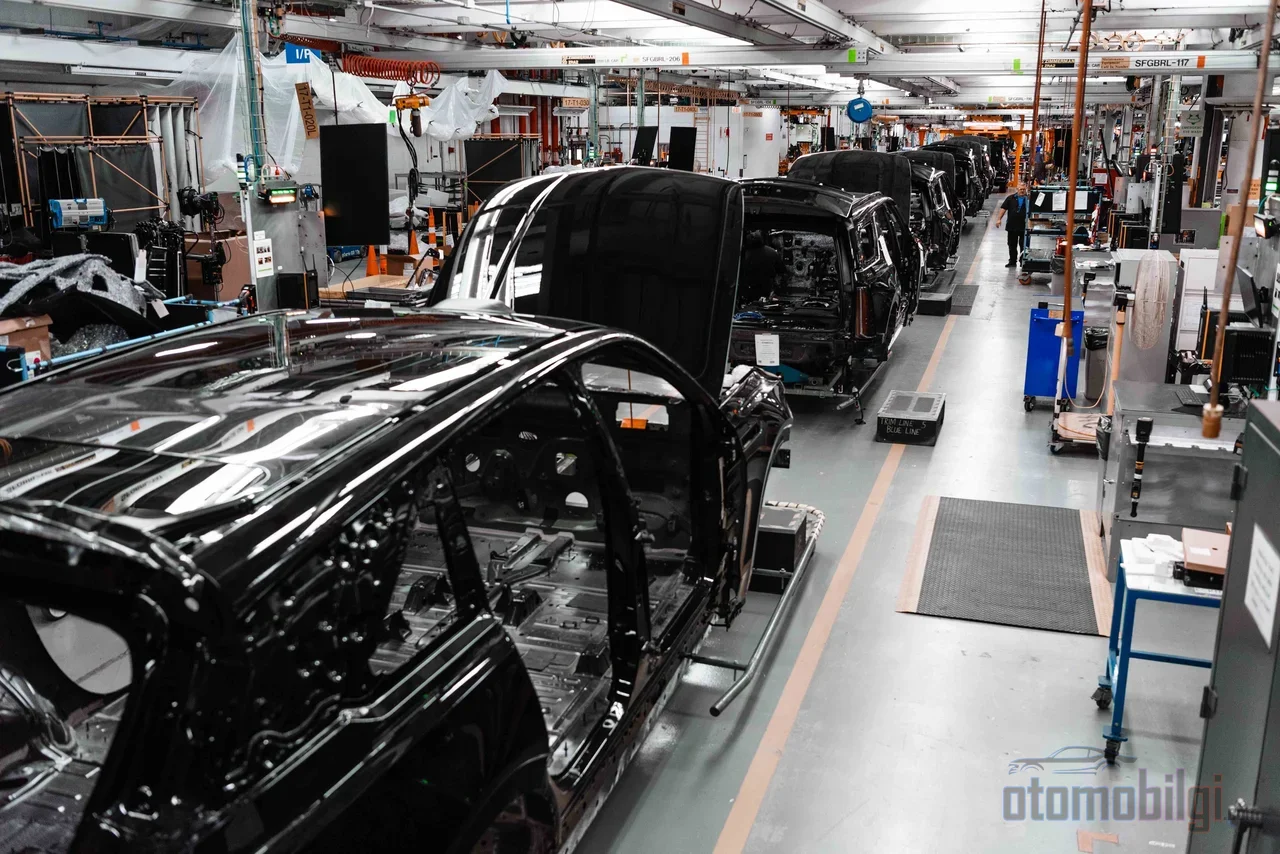
The second Forward event hosted by GM became the stage this year for announcing a fundamental shift in the company's engineering culture. The essence of the announcement made in New York on October 21 is this: the vehicle development cycle will be shortened from the traditional four-to-five-year sequential process to approximately two years. The method relies on an idea that seems nothing new but has never been fully implemented: simultaneous engineering. Design, engineering, and manufacturing teams will work together on a single digital line from day one; the classic relay-race arrangement, where design hands off to engineering and engineering to manufacturing, is being abandoned.
At the center of this arrangement are internal AI systems trained on GM's own data, machine learning, virtualization, and what the company calls agentic engineering. GM positions this as decades of accumulated corporate knowledge - design decisions, crash tests, and supply chain history - turning into an advantage in the AI era. That is also the view championed by the company's executive vice president of product, Sterling Anderson: the major automaker's advantage lies not in data volume but in data advantage; and fast iteration means a better product.
The tangible counterpart of this strategy is not left vague either. The figures shared at the event show, item by item, which processes will actually deliver the two-year target.
CFD results drop from 60 hours to 60 seconds
As anyone who follows this field closely will immediately understand, the real bottleneck in vehicle development is usually not the designer's imagination, but the speed at which a design can be validated. GM gave its most striking example here in aerodynamics. Getting an appointment at a wind tunnel takes weeks; traditional computational fluid dynamics - CFD simulations - take up to 60 hours in a single run. In practice, this means a single design iteration per day for the engineer.
This is exactly where GM's machine learning-based tool, trained on its own data, comes into play. A proprietary tool called Themed aero produces results strikingly similar to CFD in approximately 60 seconds. A design idea that once could be tested once a day can now be tested hundreds of times a day. For someone who has been following this industry for more than thirty years, this means the very nature of the job has changed: aerodynamics is no longer a sequential approval process, but a design tool that provides instant feedback.
Gains in structural analysis and the LMR battery
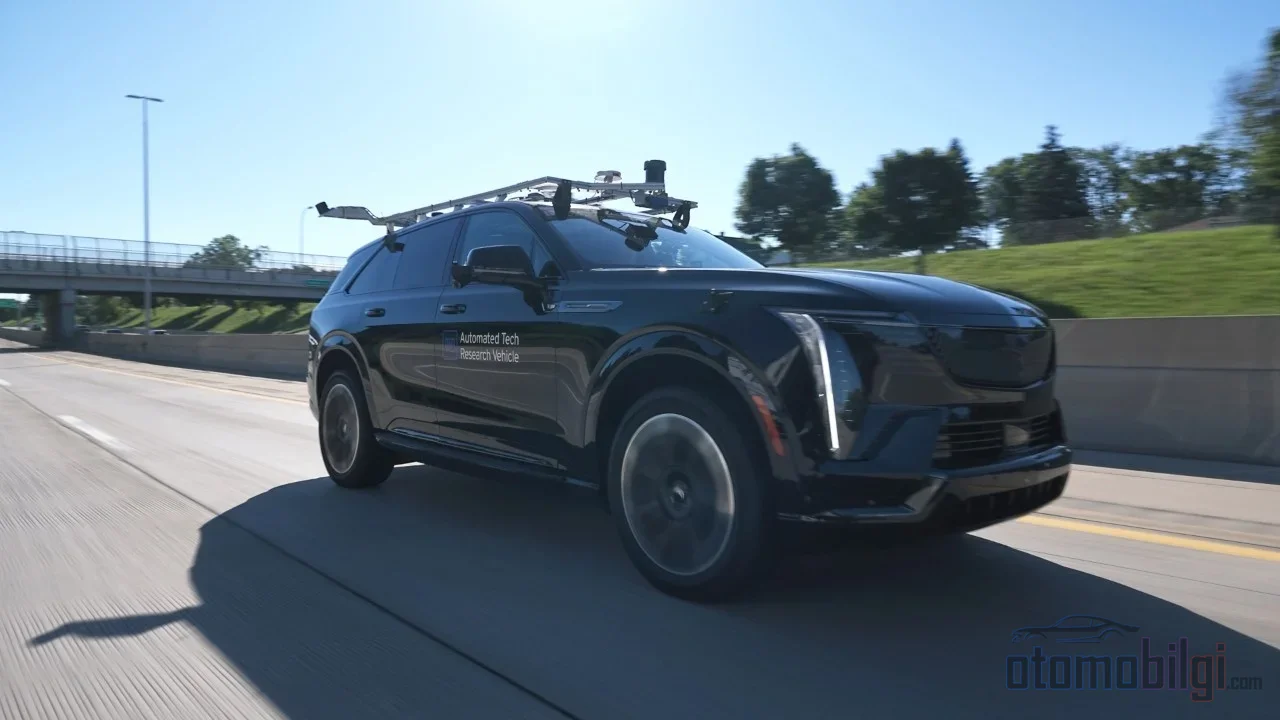
And it is not just aerodynamics. The time savings GM has demonstrated with numbers extend to nearly every stage of development. According to the published data, machine learning can, for example, reduce roof crush analysis from calculations that took 8-40 hours to under 5 minutes. Structural analyses that took four months in the traditional process - front-end stiffness, dynamic standards, durability requirements - are solved in a few hours with the new AI process.
| Process | Traditional time | New time |
|---|---|---|
| Vehicle development cycle | 4-5 years | Approximately 2 years (target) |
| CFD aerodynamic simulation | Up to 60 hours | Approximately 60 seconds |
| Structural analysis | 4 months | A few hours |
| Roof crush analysis | 8-40 hours | Under 5 minutes |
| LMR battery development | 60,000+ lab hours | 256 lab hours |
| LMR pack: from concept to program approval | - | 1 month |
LMR battery: 300,000 designs, one prototype
Perhaps the most impressive example is on the battery side. The development of the LMR (lithium-manganese-rich) battery, which is cobalt-free and offers approximately 33 percent higher energy density compared to LFP chemistry, was reduced thanks to molecular-level modeling and machine learning from a task that would typically require more than 60,000 lab hours to 256 lab hours. GM tested more than 300,000 battery designs virtually before building a physical prototype, and the first LMR pack went from concept to official program approval in one month. As announced last September, LMR cells will be produced at scale for the first time in the world at the Spring Hill, Tennessee facility, which was retooled in partnership with LG Energy Solution.
The Silverado's V8 and the accuracy taught by the Corvette ZR1
It would be wrong to think that virtual engineering only works on the EV side. The 6.6-liter V8 engine of the 2027 Chevrolet Silverado was developed in one-third of a typical engine's development time and at 80 percent of the prototyping cost. The proof on the accuracy side came from the Corvette ZR1: virtual engineering predicted a test speed of 233 mph; the calibration was rewritten the same day, sent to the test team the next day, and the car actually reached 233 mph. A deviation of one mph is a remarkable level of accuracy at this scale.
The promised 30 percent on the production line
Knowing that shortening development time alone is not enough, GM clearly defines the production dimension of the strategy as well. AI-supported improvements will be made in robotic functions such as stamping, casting, welding, painting and assembly; a 30 percent speedup is promised in battery assembly. The company's PlantBrAIn platform aims to move battery packs through the production line this much faster. It would be a contradiction that would waste the time gained if a vehicle designed in two years reached the roads in two and a half years because of a slow line; GM appears to have closed that loop as well.
Is this acceleration a move against Chinese manufacturers?
That was the most debated question after the announcement. The pace of Chinese manufacturers, who bring connected vehicles to market quickly and at low cost, has long been a problem for established Western manufacturers; the interpretation that GM's pursuit of speed is a direct response to this race is widespread. That framing is not empty: a two-year cycle puts GM considerably closer to the production speed of its Chinese rivals.
However, industry analyst Stephanie Brinley of Mobility Global reads it differently. According to her, this move is not a response to the China threat, but a stage in the efficiency evolution GM has been pursuing for years; the speed gained will increase its competitiveness against every rival. The timing alone does not confirm the China thesis either: the announcement came one day after the company disclosed that its third-quarter results met Wall Street expectations.
On the implementation side, there are still unknowns. GM has not yet explained when exactly the two-year process will take effect or which model it will be tied to; it is stated that behind the target lies the reduction of device cost and complexity. This uncertainty is a legitimate hesitation for those wondering about the distance between the target and the announcement versus a concrete product.
The other headlines of the event: central computer, eyes-free driving, and OnStar AI
AI-supported development was not the only topic of the Forward event. GM also introduced an architecture with a new central computing unit (CCU) promising 40 times more processing power per vehicle, 30 percent less cabling, and cellular connectivity up to 50 times faster. The fourth-generation EV platform arrived with headlines such as 25 percent better aerodynamics, a 15 percent lighter structure, a 20 percent more compact battery pack, LMR chemistry, and bidirectional energy flow.
On the product side, an eyes-free driving system debuting with the 2028 Cadillac ESCALADE IQ and the OnStar AI Assistant, starting with the 2027 Cadillac LYRIQ via wireless update, were announced. It was stated that existing assistant options - including Google Gemini - will remain in place as options, with the new assistant serving as an alternative to them.
Assessment: speed is not a goal, but a process that advances by measurement
Promises of shortening development time have always been made in automotive history; two-year cycles have always existed on paper. What makes GM's announcement different is that the claim is backed by time savings that have already been realized. A 60-second aerodynamic simulation, one-month battery approval, a V8 developed in one-third the time - these are not targets, but measured results. When and with which model the two-year full cycle will actually happen has not yet been announced. Those who have been following this industry for years know: a change in engineering culture is not tested in the announcement hall, but on the series production line. GM has a strong starting score on its side; the roads will show the rest.
Sources
- GM Forward: Engineering the intelligence-defined vehicle for everyone
- How General Motors Plans to Speed Up Vehicle Development Using A.I. - Road & Track
- GM is turning to AI to slash vehicle development time - Detroit Free Press
- GM aims to develop vehicles in as little as two years with AI - CNBC
- GM simulated 300,000 EV battery designs before building a single prototype - Fortune