Rivian Acquires Third Dimension AI for Autonomous Driving Simulation
Share This Page
Rivian officially announced that it has acquired Third Dimension AI, an AI-powered 3D spatial generation company, on October 22, 2026. According to the statement made from Irvine near Los Angeles, the acquisition aims to accelerate synthetic data generation and full-world simulation for the American manufacturer's driver assistance and autonomous driving software. The appeal of the deal is this: developers will no longer have to wait for rare dangerous scenarios to occur spontaneously on the road; they will be able to recreate them on a computer, with as many variations as they want, as many times as they want.
Highlights
- Announcement date: October 22, 2026; the purchase price was not disclosed.
- Third Dimension AI was founded in 2024; most of its 15-person team is based in the United Kingdom.
- Before closing, the company had raised $7 million in seed funding.
- Its simulator SuperSim reconstructs recorded driving scenes using radiance field technology.
- Founders Tolga Kart and Piotr Sokolski are joining Rivian's Autonomy teams along with the team.
Who Is Third Dimension AI and What Did It Do?
Third Dimension AI was a small but ambitious software company founded in 2024 by Tolga Kart and Piotr Sokolski. Most of its 15-person team worked in the United Kingdom, and to sustain its operations, the company had raised $7 million in seed funding from venture capital investors. So this was not a mature, hundreds-strong technology firm in the classic sense; it was a team with specific technical expertise, deeply specialized in a niche field.
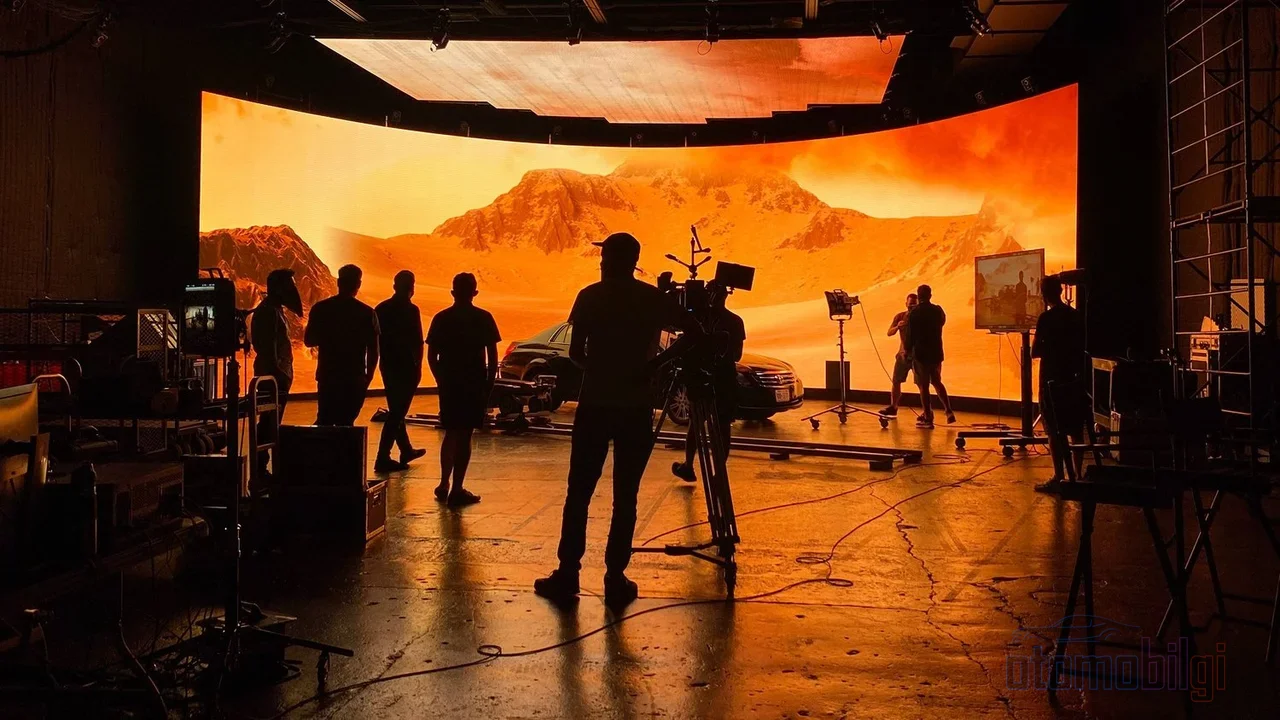
That expertise was transforming real-world recorded data into high-fidelity, controllable 3D simulation environments. The company's simulator, called SuperSim, reconstructs recordings collected from vehicle sensors using radiance field technologies (including gaussian splatting). The difference in this approach is significant: traditional simulators rely on manually modeled meshes in game engines; SuperSim, on the other hand, converts the road itself into a three-dimensional scene exactly as it was recorded. Moreover, using world modeling methods, it can add 3D objects to the scene that were not present in the original recording.
The practical value lies right here: a single real driving recording can be converted into thousands of scenario variations. The same scene can be tested over and over with different pedestrian movements, different visibility conditions, and different vehicle arrangements. This is exactly what everyone developing autonomous software dreams of; Third Dimension was one of the few teams that managed to turn this into a product.
Why Did Rivian Acquire This Technology?
The rationale in the official press release is clear: the acquisition will accelerate synthetic data generation and full-world simulation for Rivian's driver assistance and autonomous driving systems. The company frames this as part of an end-to-end data strategy that unites physical and virtual data streams in a single pipeline. In other words, data collected from the road will feed the simulation, and the learning produced in the simulation will flow back into the systems on the road.
For those who know the inner workings of this business, it is no surprise. The real bottleneck in training autonomous systems is the rare "edge case" scenarios: a dangerous event may occur on the road perhaps once a year, or never at all. Rivian's management points to exactly this point; they clearly state that they aim to simulate complex driving conditions rather than wait for them to occur. This approach, which places simulation at the center of training and validating autonomous systems, is a continuation of an approach that has been established in the industry for years; what Rivian is doing is bringing this capability in-house rather than buying it from outside.
Founders and Team: Joining Rivian's Autonomy Structure
The most valuable part of the acquisition may be the people rather than the software. According to the official statement, Third Dimension's leadership and technical talent are joining Rivian's Autonomy research and engineering teams. Founder and CEO Tolga Kart emphasizes that the company was always founded with the goal of empowering next-generation embodied AI and autonomous systems; he adds that joining Rivian offers the opportunity to deploy simulation technology at scale. In his own post, Kart is seen to have co-founded the company with Sokolski two years ago, with the belief that the future of simulation would be grounded in reality.
For those with industry memory, one more detail stands out: Kart's background extends to heading simulation in Tesla's Autopilot program. This claim rests on a single source and has not been confirmed by the official announcement; nevertheless, if true, it can be read as a telling detail that Rivian has brought in a simulation expert groomed in a rival camp. The fate of a small startup's entire workforce is often unclear in acquisitions by large companies; here, however, it has been officially reported that the entire team has been absorbed into the Autonomy structure.
How Much Is the Purchase Price, and What Are the Financial Terms?
The answer to the question is short: unknown. Rivian clearly stated in its official announcement that it has not disclosed the financial terms of the deal. This is a common choice in technology acquisitions; especially in small companies whose chemical value lies in the team's know-how and the technology itself, keeping the price undisclosed is not an exception to the rule. Considering the company's $7 million seed investment and two-year lifespan, the visible tip of the iceberg of the deal is already the investment history; the actual amount will remain a number that neither side intends to reveal.
Robotaxi and The Place of the Acquisition in Rivian's Autonomy Roadmap
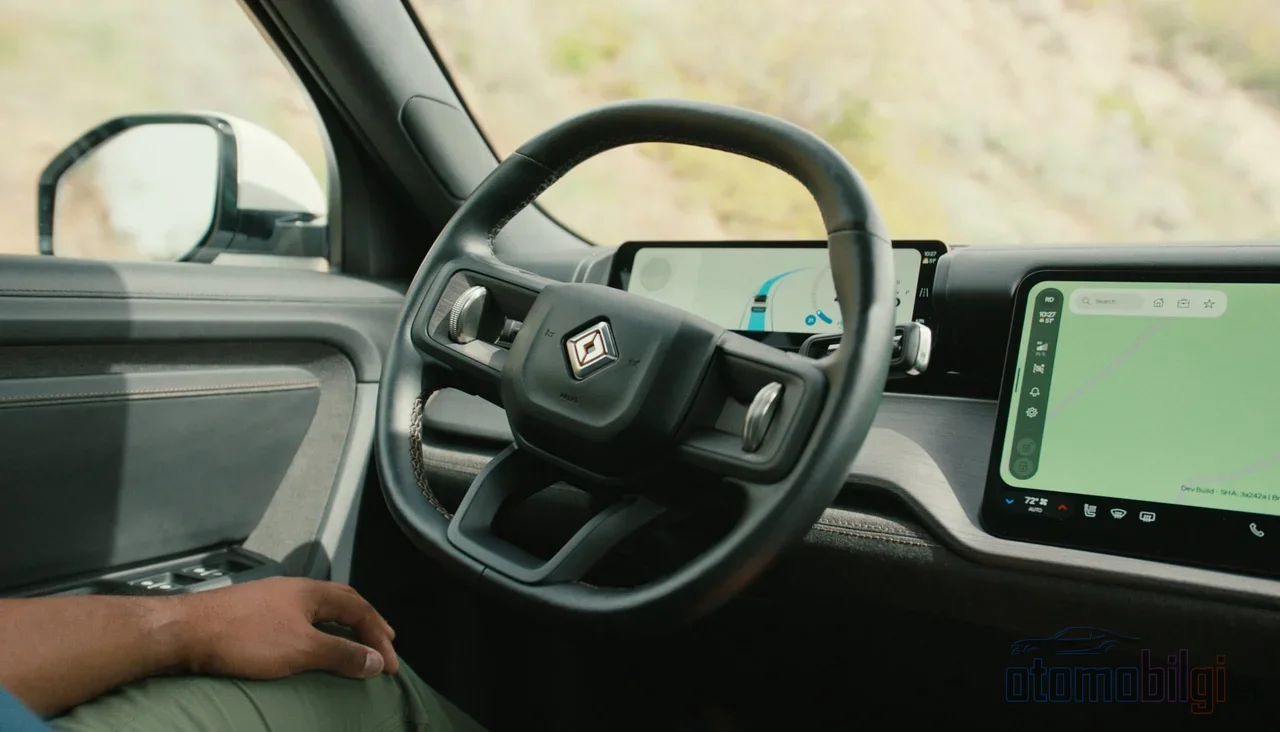
Reading this acquisition in isolation paints an incomplete picture. Rivian has been accelerating its steps on the road to autonomy over the past year. At the company's first Autonomy & AI Day event, its own Rivian Autonomy Processor was introduced; In early 2026, the "Level 2++" version of the Autonomy+ platform promising eyes-free driving was announced. The R2 SUV is equipped with 11 HD cameras and 5 radars; a lidar unit is planned to be integrated into the vehicle next year, and from late 2026 onward, autonomy-focused hardware and software improvements will be added to the model.
The most interesting part is the robotaxi front. Rivian is known to have plans to deploy robotaxi versions based on the R2, and the official release explicitly states that the acquisition will strengthen autonomy in both the consumer and robotaxi roadmaps. Industry analysts read this acquisition as follows: Rivian sees simulation not as something to be bought externally, but as a core autonomy capability that must be kept in its own hands. The seriousness of the robotaxi claim is measured precisely by the scale of investments of this kind; what is at stake is not adding a feature, but taking full control of the entire development infrastructure.
Simulation Investments in the Automotive Industry: Where Does Rivian Stand in This Trend?
In the past, when you mentioned simulation to automakers, crash tests and wind tunnels came to mind; in the software-defined vehicle era, however, simulation has become a production tool directly connected to the development pipeline of driving software. The market figures also show the cost of this transformation: the automotive simulation market is projected to grow from $19.35 billion in 2025 to $39.88 billion in 2035, at an annual growth rate of about 7.5 percent. For the broader simulation software market, there are forecasts extending from $22.29 billion in 2026 to $69.63 billion in 2034, carrying annual growth above 15 percent. It should be noted that these figures come from third-party market reports and cannot be verified with an official source.
The precision of the figures may be open to debate, but the trend is not. Every manufacturer leading the software-defined vehicle race is investing in synthetic data and world model technologies; some do so through organic development, others by acquiring companies. Rivian's choice is the latter, and its chosen target aligns exactly with the industry's current technology agenda; the company's radiance field-based approach is seen as one of the industrial adaptations of scene reconstruction techniques that have moved from academia into practice. Viewed through a thirty-year lens, it is possible to say that the real test of acquisitions of this kind is given by how quickly they are integrated into the acquirer's main development pipeline.
Viewed through a thirty-year lens, it is possible to say that the real test of acquisitions of this kind is given by how quickly the acquired technology is integrated into the main development pipeline. In Rivian's favor is that the team joins the Autonomy structure entirely and the technology is placed right at the center of the company's autonomy strategy. Against it is that the tangible product of this integration will only be visible in the coming years, in R2's autonomy updates and the progress of the robotaxi program.
Conclusion: A Small Startup, a Big Item in Rivian's Autonomy Calculations
Third Dimension AI, with its two-year lifespan and team of 15, is outwardly a modest acquisition; the undisclosed price may also point to the account's small size. But the metric that determines the winner in the autonomy race is not headcount, but how quickly you can turn the training and validation cycle. Rivian has acquired in one move an infrastructure capable of converting real-road data into simulation fields with unlimited variation. As the R2-based robotaxi plans take concrete shape, the strategic weight of this purchase will become clearer; for now, what we can say is that Rivian has given one of the strongest signs that its autonomy claim is being taken seriously.
Sources
- Rivian Acquires Third Dimension AI to Accelerate Scene Simulation (Rivian Newsroom)
- Rivian Acquires Third Dimension AI, Inc. (Business Wire)
- Rivian buys world model startup to accelerate self-driving ambitions (TechCrunch)
- Rivian buys Third Dimension AI to turn real roads into 3D worlds (The Next Web)
- Radiance Fields LinkedIn post on SuperSim acquisition
- Rivian acquires Third Dimension AI for driving simulation (Automotive World)
- Rivian Acquires Startup Led by Former Tesla Autopilot Simulation Head
- Can Rivian Self Driving Edge Past Tesla and Waymo? (Spectrum IEEE)
- Rivian's Self-Driving Upgrade Costs Way Less Than Tesla's (MotorTrend)
- Rivian Autonomy & AI Day (Rivian)