Audi A2 e-tron Goes on Sale: The Electric City Car Priced at 30,700 Pounds
Share This Page
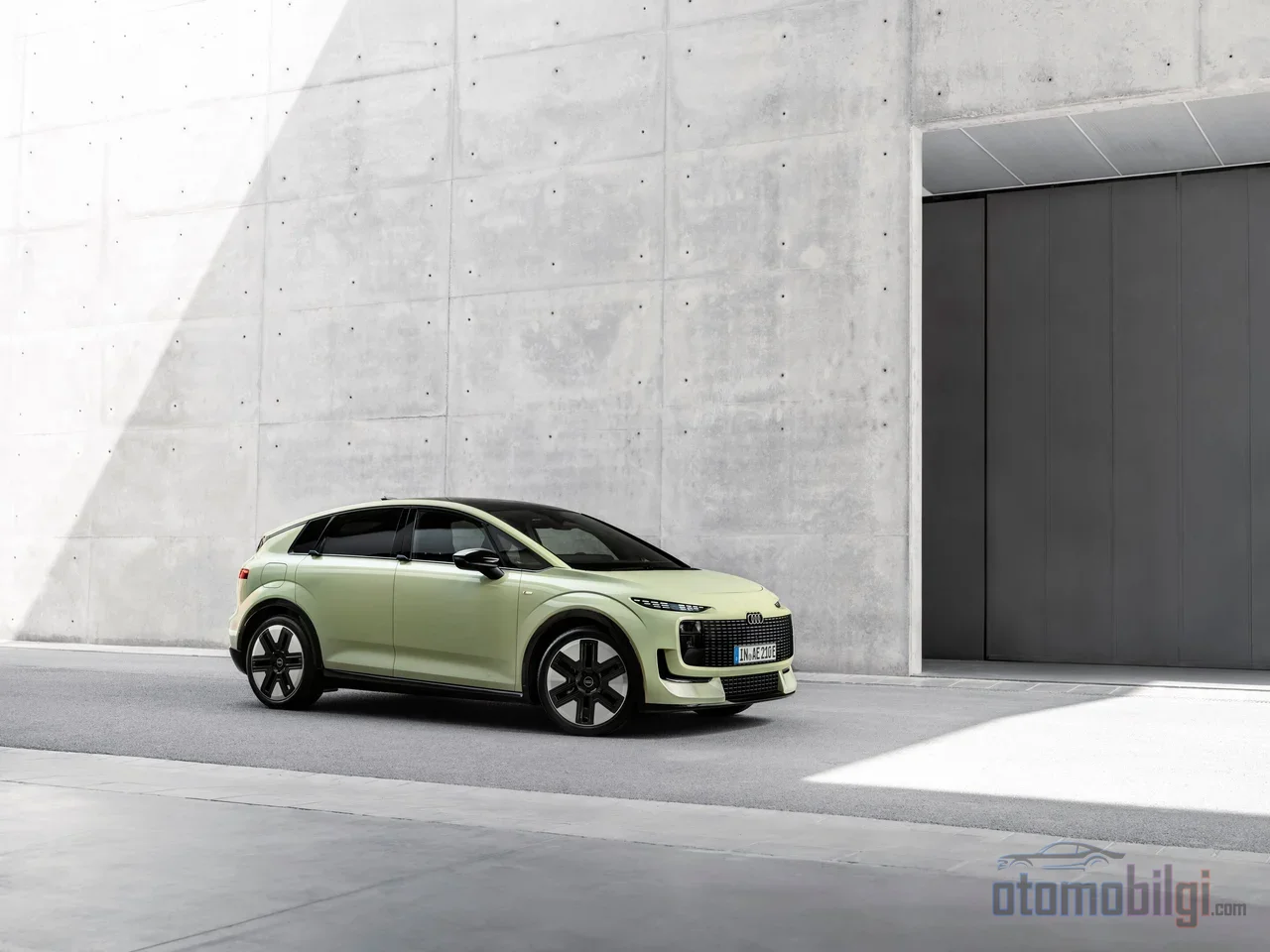
Audi's smallest electric car A2 e-tron has gone on sale in the United Kingdom: list price is 32,200 pounds, but with the Electric Car Grant, the entry point for the 52 and 61 kWh versions drops to 30,700 pounds . The model, starting at 38,200 euros in Germany, will reach dealers in November 2026, with the first deliveries on UK roads in early 2027. Set to fill the gap left by the A1 and Q2, which Audi retired from production this year, the vehicle also holds the title of the most efficient series-production model in the brand's history.
Highlights
- Entry price in the UK of 32,200 pounds, or 30,700 pounds
- after the grant. Three batteries: 52, 61 and 84 kWh; WLTP range of 423-646 km
- At 12.8 kWh/100 km, the brand's most efficient series-production model
- Orders opened in October 2026, with UK deliveries in early 2027
How much does the Audi A2 e-tron cost and when can you buy it?
The price list reads in three tiers. Entry-level equipment in the UK is 32,200 pounds (on the road), while top trims climb to around 45,000 pounds . The real news here is that select 52 and 61 kWh versions qualify for the Electric Car Grant: the 1,500-pound subsidy pulls the entry point down to 30,700 pounds. In other words, for the first time Audi can put an EV with this kind of range under the 30,000-pound mark - or rather, for the first time it is landing at this price point with such serious equipment.
The sales timeline looks like this: order books in the UK opened in October 2026, dealers will start displaying the car in November 2026, and the first customer deliveries will be made toward the turn of the year, in the first weeks of 2027. Germany is one step ahead: the list price starts at 38,200 euros and deliveries begin from December 2026. In Germany, the 228 hp 84 kWh version is at the 48,900-euro level, and the 322 hp top tier at 51,200 euros.
The sales news overshadowed by the Paris premiere
The A2 e-tron was officially unveiled in Paris in September 2026 with a presentation by CEO Gernot Döllner. There was a lot to say at the premiere: it is the most efficient series-production model in Audi's history, it consumes 12.8 kWh/100 km in the WLTP cycle, and with a drag coefficient of 0.24 it is the best of the brand's compact series. However, much of the launch buzz went to concept cars and the glamour of the shows; the accusation that the price list and order timeline were not sufficiently communicated to the public is not unfair. Now the sales opening is the real news that fills that gap.
The strategic context matters too. Audi retired the A1 supermini and Q2 crossover from production this year; the A2 e-tron fills the gap that emerged in the entry segment. The model is the first member of a new electric entry family positioned below the Q4 e-tron, and its intended use case is clearly Europe's urban traffic.
Battery, range and power: what does each version promise?
Audi offers three batteries: 52, 61 and 84 kWh (gross). The two smaller batteries come with LFP chemistry; this is a sensible choice for entry-level EVs in terms of cycle life and cost. The largest battery is NMC. Range accordingly varies between 263 and 401 miles (WLTP, approximately 423-646 km); the 52 kWh pack delivers around 260 miles, the 61 kWh around 310 miles, and the 84 kWh roughly 397-401 miles - the fact that this last figure shifts by a few miles from one source to another stems from the configuration-dependent nature of WLTP measurement, not from a contradiction.
On the power side there are four tiers: starting from 125 kW and 350 Nm up to 240 kW and 545 Nm. Expressed in horsepower that's 170, 190, 231 and 326 hp; all with rear-wheel drive. The top tier completes the 0-62 mph sprint in 5.7 seconds but speed isn't this car's main selling point: the most efficient tier is the 190 hp version, and its efficiency figure of 4.85 kWh per mile is a number worth talking about in the segment. In DC charging, with power ranging from 105 to 183 kW, a 10-80% charge takes 24-29 minutes depending on the model - compared to the Kia EV3's 128 kW peak, the 183 kW peak is an advantage that will make a difference in daily use.
| Feature | Value |
|---|---|
| Length / wheelbase | Approximately 4.3 m / 2,770 mm |
| Battery options | 52, 61, 84 kWh (LFP / NMC) |
| WLTP range | 423-646 km |
| Power tiers | 170 / 190 / 231 / 326 hp, rear-wheel drive |
| Consumption (best) | 12.8 kWh/100 km |
| DC charging (10-80%) | 24-29 minutes, up to 183 kW |
| Cargo | 396 lt (expanding to 1,336 lt) |
| UK price | £30,700-45,000 |
Equipment: big-segment assists in a small body
In terms of size, the car is about 20 centimeters longer than the outgoing Q2: a length of around 4.3 meters and a wheelbase of 2,770 millimeters carry the interior space advantage of the MEB platform (the shared infrastructure with the ID 3, Skoda Elroq and Q4 e-tron) here as well. Cargo space is 396 liters - 16 liters more than the A3 Sportback - and opens up to 1,336 liters with the rear seats folded. Speaking as someone who has been through the mill on this: in small EVs, cargo space is tested not by the brochure number but by the daily school-bag and grocery-run excitement; the figures here are realistic.
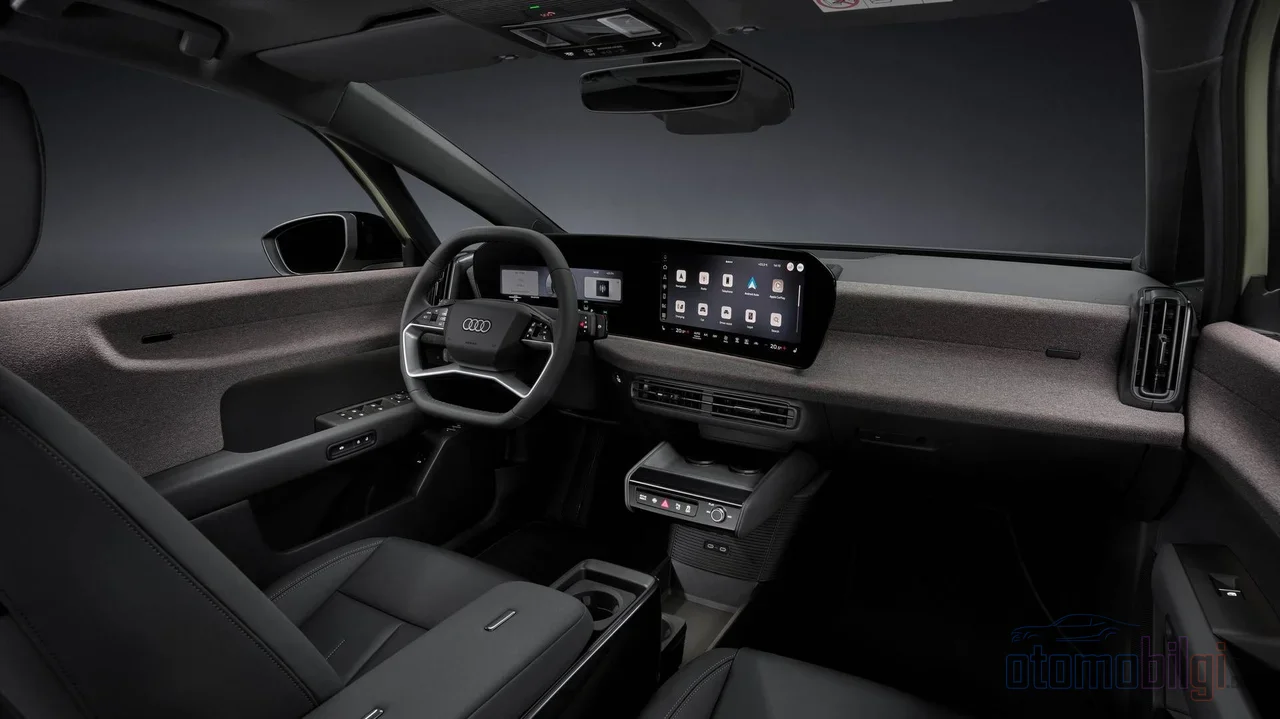
There are interesting details in the interior: fabric upholstery called Softwrap, Fidlock's magnetic accessory mounting system and an optional panoramic roof. More than 300 components are made from recycled steel, aluminum or plastic; the seats use recycled polyester. On the technology front, upper-segment assists such as bidirectional charging (both V2L and V2G), lane change assist, trained parking and proactive occupant protection have been carried into the small body. The drag coefficient is 0.24 - surpassing the original A2's 0.25 and matching the e-tron GT. Efficiency has become a matter of brand identity for Audi, so this figure carries high symbolic value too.
How does the price compare to its rivals? EX30, EV3 and Born comparison
The real message of the pricing is read against rivals. The A2 e-tron starts roughly 800 pounds cheaper than the Kia EV3 and Volvo EX30, and about 3,000 pounds below the Cupra Born. The Mini Aceman and VW ID 3 can also be added to Autocar's rival list; they are all fighting in the same corner of the urban and short-to-medium range electric market. The most striking difference between it and the ID 3, with which it shares the MEB platform, is the A2 e-tron's standard rear-wheel drive and lower consumption figures.
Of course, not everyone is convinced. The criticism that the entry price translates to around $45,000 in the American market, and that this is still serious money for a small EV, is reasonable. On German user forums, there are also views that it is thousands of euros more expensive than its rivals; these are not figures verified by the official price list, but they are a tangible sign of the market's price sensitivity.
The A2 name: continuation of a revolution, or a solid commercial product?
The name choice is no coincidence. The original A2 of 1999 surprised everyone a quarter of a century ago with its aluminum spaceframe body and pioneering lightweight design, but its high price turned it into a commercial disappointment. The new A2 e-tron tries to reverse that story: instead of a revolutionary materials revolution, a product that is one of the cheapest in its class, offers a range approaching 400 miles, and is expected to succeed in sales. And that is how it is being assessed: first impressions from the publishing side say the car is not as groundbreaking as the original A2, but that its price positioning will bring sales success.
My reading is this: Audi is selling an engineering balance here, not a manifesto. It is said to be an MEB-based VW Group product, which is true; however, the consumption figure of 12.8 kWh and a Cx of 0.24 show that an efficiency job beyond what is expected from the same platform has been delivered. This car is the first test of Audi's small EV strategy under Döllner's leadership, and the 30,700-pound entry point is an indicator of how seriously that test is being taken.
Conclusion: Will Audi's small EV move pay off?
The A2 e-tron is the product with which Audi has entered the entry-level segment for the first time in decades with such a clear thesis. With its range, efficiency, and post-incentive price, it makes a solid entry into Europe's urban electric market; it carries no revolutionary claim, but it keeps everything where it should be. The first UK deliveries will hit the roads in early 2027, and the real story will begin at that point: will buyers be willing to buy the efficiency record along with the price tag? The interest shown in a car bearing the name of a failed pioneer of the past will be an interesting answer to that question.
Sources
- Audi A2 e-tron: Rethinking efficiency (Audi MediaCenter)
- Audi A2 e-tron (Audi official page)
- Audi A2 returns: Mega-efficient EV costs from £32k (Autocar)
- Mat Watson reviews the new Audi A2 e-tron (carwow)
- New Audi A2 e-tron revealed with up to 326hp (PistonHeads)
- The A2 E-Tron Is Audi's Cheapest EV Yet (InsideEVs)
- Audi A2 E-Tron Debuts: 401 Miles Of Range (Motor1)
- Audi Is Relaunching the A2 Hatchback (Car and Driver)
- New Audi A2 e-tron goes on sale: yours for under £31k (Auto Express)
- Audi A2 e-tron (Wikipedia)