BYD Has Surpassed the One Million Employee Mark
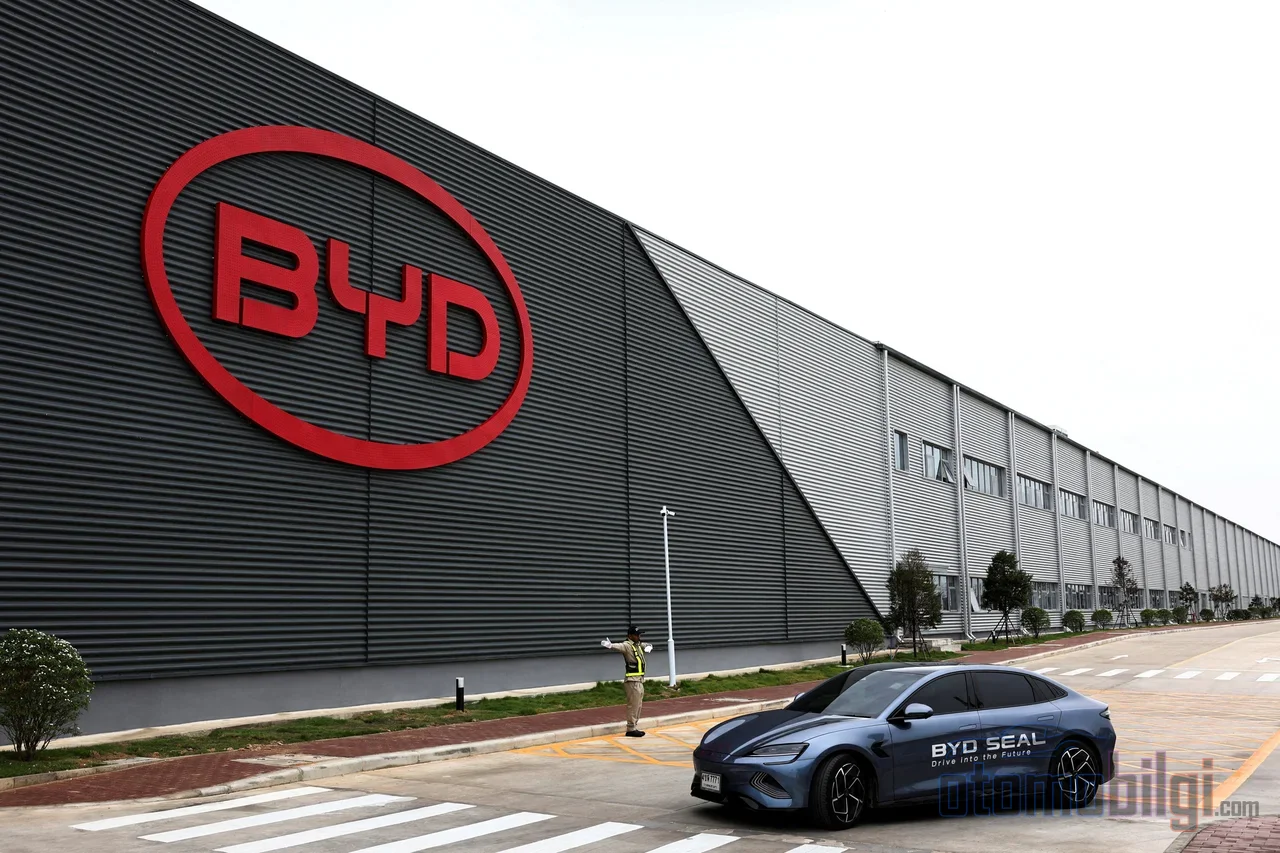
In automotive history, a company employing one million people within its own organization is, I think, the kind of threshold none of us has seen before in our professional lives. According to a statement by chairman Wang Chuanfu, China's BYD has passed that threshold, and the interesting part is this: It exceeds the combined headcount of Toyota, Ford, General Motors and Tesla. So what does this figure tell us, and why do so many people work for a company selling 3 million vehicles a year?
How did BYD's employee count surpass 1 million?
The company's employment curve over the past four years reads like an official textbook. With 570,100 employees at the end of 2022, BYD reached 703,500 in 2023 and, with a rapid hiring period, 968,900 by the end of 2024. Then in 2025 came a reduction of roughly 99 thousand people, and the year ended at 869,600. The pressure of price competition in the domestic market showed up that year as belt-tightening.
In the first ten months of 2026, the picture reversed again. With an increase of about 150 thousand people, total employment exceeded 1.02 million. Based on the 911,900 figure that S&P Global Market Intelligence gave for the end of June 2026, more than a hundred thousand people must have been hired in the last few months - a remarkable pace even for a major manufacturer.
The breakdown is also clear: about 960 thousand of the employees serve in China, while around 60 thousand, a slice of roughly 6 percent, work abroad. The company is reported to have between 110 and 120 thousand R&D engineers; these teams work across a broad field ranging from battery cells to electric motors, and from electronic control systems to semiconductors.
Highlights
- BYD's total employment has exceeded 1.02 million.
- The combined total of Toyota, Ford, GM and Tesla is approximately 851 thousand; the difference is 170 thousand people.
- Overseas sales reached 1,342,960 units by the end of September, an annual increase of 92.7 percent.
- Total sales in the first nine months of 2026 were 3,131,576 vehicles; a decline of 3.9 percent on an annual basis.
- The European target: reaching 40 thousand employees by 2030.
What does it mean to surpass the combined total of Toyota, Ford, GM and Tesla?
Reading the figure on its own would be misleading; it needs to be set against its rivals. Year-end employee counts rank as follows:
| Manufacturer | Employee count |
|---|---|
| BYD | Over 1 million (approximately 1.02 million) |
| Volkswagen | 663 thousand |
| Toyota | 391 thousand |
| Stellantis | 259 thousand |
| Honda | 195 thousand |
| Ford | 169 thousand |
| General Motors | 156 thousand |
| Tesla | 134,785 |
Adding up Toyota, Ford, GM and Tesla gives roughly 851 thousand people. BYD having opened a gap of approximately 170 thousand people over that shows the shift in the automotive industry's center of gravity also in terms of employment. But the other side of the coin is efficiency: According to 2025 data, BYD produces about 5.3 vehicles per employee, while at Tesla that ratio rises to 12, and at the Volkswagen Group to 13.5. Toyota, which also sold 11.3 million vehicles including Daihatsu and Hino, has a figure of 29 vehicles per employee. Employee count is not, on its own, a measure of production efficiency; to understand what is actually being told, you need to look at the company's structure.
Vertical integration: the real reason behind the 1 million employees
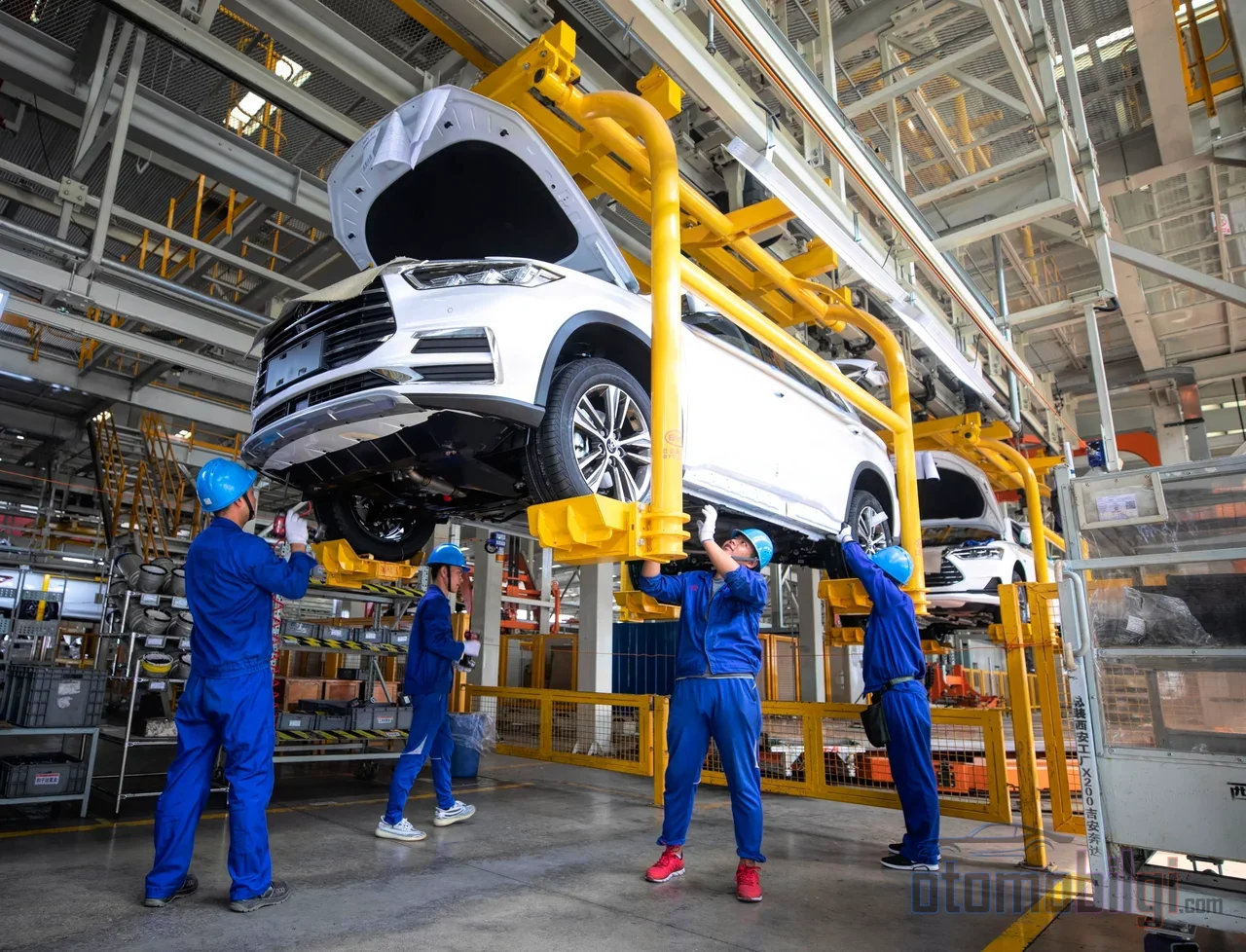
Comparing BYD's employment size with a classic automaker is like weighing an apple against a pear. The company was founded in 1994 as a battery manufacturer, and today it does not only produce cars; it is also active in battery production, electric motors, semiconductors, energy storage systems and rail transportation. The vertical integration approach that Wang Chuanfu has always emphasized keeps the links of the value chain within the company itself - and each link brings its own workforce.
The most concrete example of this is BYD Electronic, in which it holds a majority stake. The company produces and assembles electronic devices for other brands; as of the end of 2025 it alone has approximately 165 thousand employees, and this figure is included in the group total. In other words, a significant portion of the one million employees is not working in a car factory, but on battery and electronics lines. We used to look at an automaker's employee count and read its market power from it; now the first question to ask is what that company is a manufacturer of.
Why are sales falling while employment is growing?
Here is the contradictory part of the story. In the first nine months of 2026, BYD sold 3,131,576 vehicles; this means a decline of 3.9 percent on an annual basis. September was the strongest month of the year with 463,561 vehicles, but the first half's financials are not bright: revenue was 344.8 billion yuan and net profit 12.3 billion yuan - both of which have declined on an annual basis. The fierce price competition in China's domestic market and the strengthening of rivals such as Geely and Leapmotor are pushing profit margins down.
The real engine of growth is abroad. By the end of September, overseas sales had reached 1,342,960 units; an annual increase of 92.7 percent. Overseas' share of total sales rose to 43 percent, and the company surpassed Tesla in fully electric deliveries in the second quarter of 2026. While production investments in Thailand, Brazil and Hungary expand, the weight of production and employment is still in China. Part of the new employment is also going to teams that will carry overseas growth. This picture is as reassuring for the company as it is pressure-producing: growth leaning on exports is a way out of the price war, but it carries its own risks - the fact that serious allegations have come to the agenda regarding the working conditions of workers at the factory construction in Brazil is also part of this picture.
Europe's target is 40 thousand employees: the human resources front
The human resources side of expanding abroad is also scaling up. BYD plans to raise its number of employees in Europe to over 40 thousand by 2030. In the near term, exceeding 10 thousand regional employees is expected, followed by a fourfold increase in the figure. Given the size of the overseas workforce, which currently makes up about six percent of the total workforce, this target is of a scale that will gradually change the company's central structure.
Manisa factory: What is the latest status of BYD's Turkiye plan?
Turkiye carries its own question mark within this global picture. According to early announcements, BYD had planned a facility in Manisa with an annual capacity of 150,000 vehicles and an investment of roughly 1 billion dollars; up to 5,000 direct jobs were projected, production was targeted to begin by the end of 2026, and job postings for the facility had even been published.
However, reports have recently been published that this plan has been halted and that the company is prioritizing Hungary for its European production. This claim directly contradicts the job posting and employment plan reports, and social media content about visits to the factory site and the process being back on the agenda does not constitute verified information. Therefore, an honest summary of the Manisa agenda is this: the plan was once very clearly on the table, but the current status of the facility is uncertain. The company's presence in the Turkiye market, however, is a separate matter - it is reported that the number of models has reached 9 and sales have reached 40,770 units, and in the Turkish automotive market that has made the one-million-unit threshold permanent, the brand's monthly rhythm appears to be fluctuating.
What does the number tell us, and what does it not?
To reduce the meaning of one million employees to a single sentence: BYD is no longer just a car manufacturer but a technology and production group spanning from batteries to semiconductors; the size of its workforce is a natural consequence of this structure. Putting Toyota's efficiency of 29 vehicles per employee side by side with BYD's figure of 5.3 vehicles means comparing two different business models. One represents the most refined form of automobile manufacturing, the other keeping the entire value chain within itself.
With scale at this level, the decline in the financial picture is a reminder that the sustainability of growth depends more on profit margins than on the number of units sold. In this three-decade-long industry, one thing has remained constant: no matter how fast the machines and factories get, in the end you have to sit down and manage costs and people. BYD currently manages the largest automotive workforce in the world; the real test lies in the answer to the question of whether it can turn this workforce into profitable growth. On the Turkiye side, we are watching that the Manisa file has not been closed, only delayed.
Sources
- BYD's employee count exceeds 1 million: It has pulled ahead of its rivals
- BYD's total employee count surpasses 1 million
- BYD's massive employment move in Europe: Employee count to exceed 40 thousand
- BYD aims to employ 40,000 people in Europe by 2030
- The Türkiye automotive market is making the 1-million-unit threshold permanent
- The government could not be persuaded, and BYD gave up on the Manisa factory
- BYD will create employment for 5,000 people in our country with its massive investment
- Job postings published for BYD's Türkiye factory