A Death Sentence Was Written for the Corvette, but the Thunderbird Stopped It
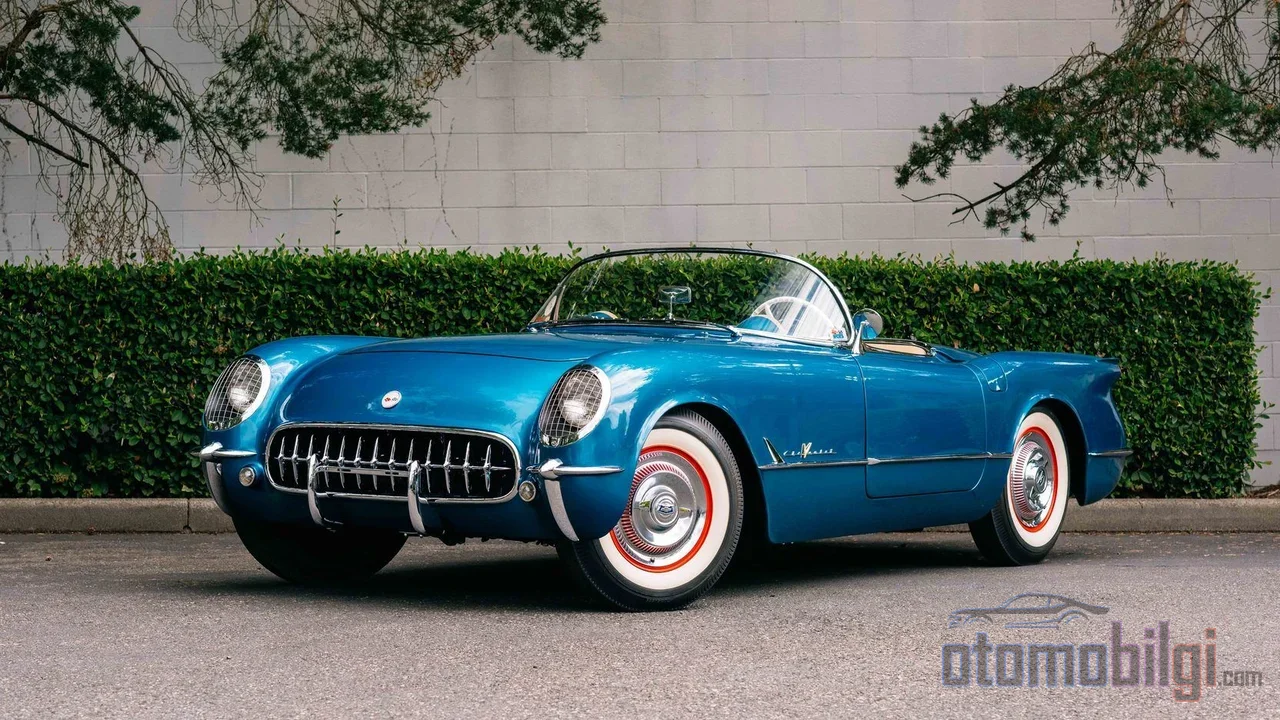
Towards the end of 1955, a decision was sitting on Chevrolet's desk waiting for a signature: Removing the Corvette from production. Yes, you read that right; the first generation of the legend we today call the American sports car, barely three years old, was about to have its death sentence signed. So what happened that we still talk about the Corvette today? The answer is as incredible as it is real: the savior was rival Ford. Let's start this story from the beginning, because the irony here is a true classic.
Polo White Dream, Blue Flame Nightmare: The Corvette's Difficult Birth
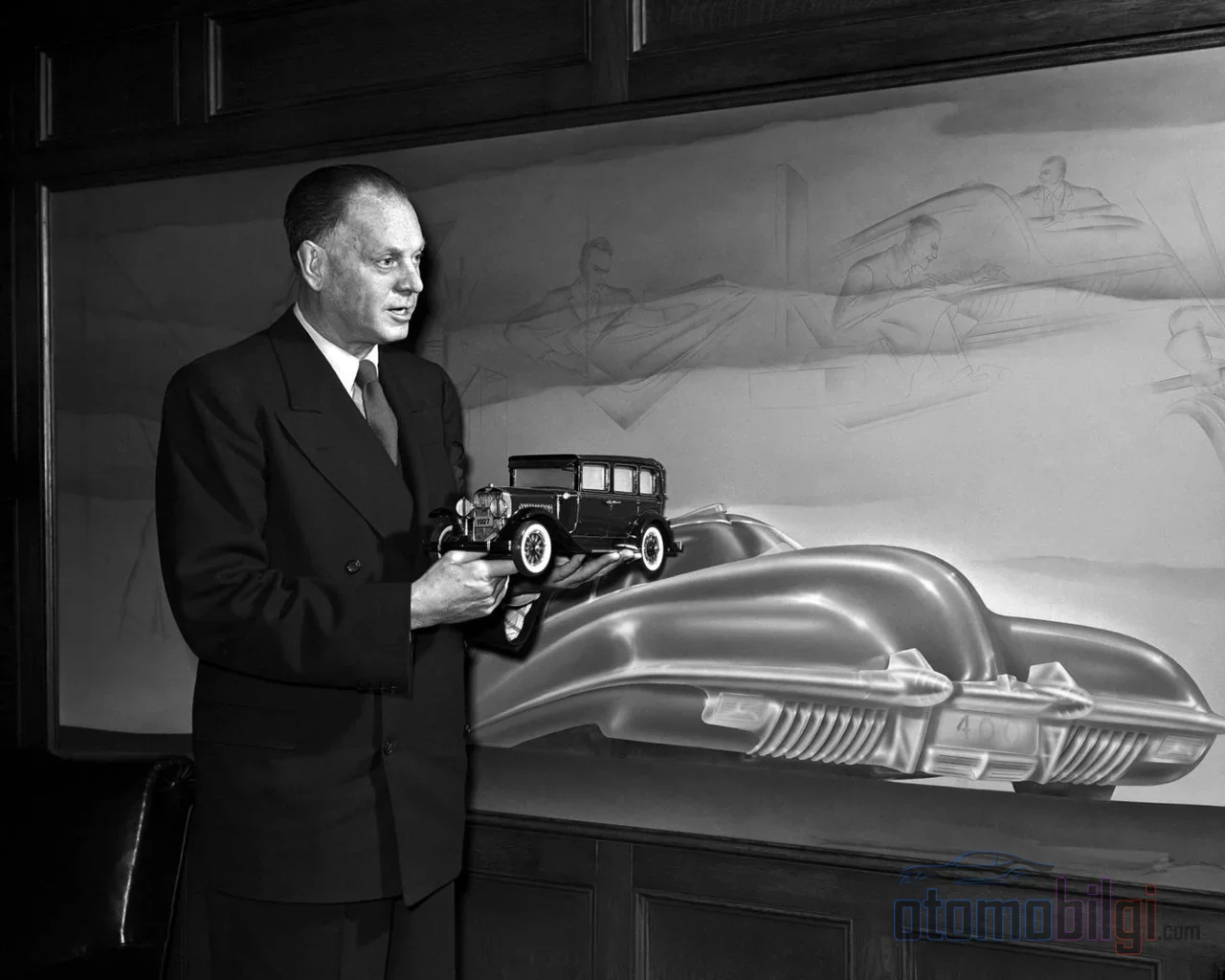
The Corvette idea came from GM's legendary designer Harley Earl. Earl proposed a two-seat, sporty, low American car in 1951; he got approval in 1952 and in January 1953 the car met its audience at the GM Motorama show. This flashy two-seater with a fiberglass body was so well liked that production was approved. Production began on June 30, 1953 in Flint, Michigan.
But that's where the trouble started. Only 300 units were produced in the first year, all with Polo White bodies and red interiors. It looked great, yes; but what was underneath? A 235 cubic inch (about 3.9 liter) inline six-cylinder engine called Blue Flame, 150 hp, and on top of that only a two-speed Powerglide automatic transmission. Think of it this way: they put the soft heart of a family car and a constantly slipping automatic into a sports-car-looking vehicle. The earliest cars didn't even have roll-up windows; side curtains were fitted, and even an exterior door handle was missing. Calling this car a "sports car" was like calling a bicycle an "airplane".
Sales Collapsed, Cancellation Talks Began
In 1954, production moved to the new factory in St. Louis, and capacity had been prepared at sky-high levels. What was the reality? 3,640 units. Demand fell short of expectations. In 1955, things got completely worse: sales collapsed to around 700 units, which was even lower than 1953, the Corvette's first production year. In the total of the first three years, only 4,640 cars had been sold.
Highlights
- In 1955, Corvette sales dropped to around 700 units; Chevrolet decided to cancel the car at the end of the model year.
- The Ford Thunderbird sold 16,155 units in its first year and proved the market existed.
- The 265 cubic inch V8 introduced in 1955 offered 195 hp and 260 lb-ft of torque.
- 693 of the 700 buyers chose the V8; only 7 people stayed with the six-cylinder.
- With the 1956 redesign, sales jumped to 3,467 units.
Morale inside GM was low. There's a scene recounted by Corvette historian Jerry Burton: In the fall of 1954, an anonymous GM executive gleefully tells Zora Arkus-Duntov, the project's future hero, that the Corvette was finished and would no longer be produced. In other words, the atmosphere was such that some executives were comfortable enough to celebrate the program's death. According to former Corvette chief engineer Dave McLellan, Chevrolet had already officially decided to cancel the Corvette at the end of the 1955 model year.
Two Advocates from Within: Duntov and Cole
Zora Arkus-Duntov, the Belgian-born, Russian-origin engineer, loved the Corvette's shape when he saw it at the 1953 Motorama, but immediately noticed its lack of performance and joined GM. He then became one of the strongest internal advocates for transforming the Corvette into a true high-performance vehicle; it is known that he wrote a passionate letter to Chevrolet chief engineer Ed Cole explaining that killing the car would be a mistake. On Cole's side, there is an important detail: When he took office in May 1952, well before the Thunderbird, he had been assigned the task of developing a lightweight, low-cost Chevrolet V8. So preparations for salvation were underway from within as well.
Another interesting development came from Harley Earl. Earl pitched the Corvette concept to Pontiac, Oldsmobile and Buick. Pontiac's proposal was found weak, Buick's too radical; but Oldsmobile's F-88 prototype - 270 hp V8, power windows, power steering and brakes, four-speed Hydramatic automatic - affected Earl so profoundly that he became convinced the Corvette too needed to evolve.
The Thunderbird Takes the Stage: The Lesson the Rival Taught
Now let's turn to the Ford side of the story. Ford's two-seater, the Thunderbird, was exhibited as a plastic-styled mock-up at an auto show in Detroit in February 1954, and production began in September 1954. The Thunderbird came with a V8 engine from the start and was marketed not as a pure sports car but as a stylish "personal car" focused on comfort and prestige. The result? Sales of 16,155 units in its first model year. While the Corvette stayed at around 700, the Thunderbird surpassed it many times over.
So how does this save the Corvette? Here lies the heart of the irony. GM management could have shut down the program by saying "there is no market for two-seaters." But the Thunderbird's success with 16,155 units proved that there were buyers in this segment, meaning the market was real. As McLellan put it, fate intervened through Ford. Moreover, Ford did not do this knowingly; before the Thunderbird even hit the market in 1955, Ford had already made the decision to replace it with a four-seater. The rival was breathing life, as a side effect, into the longest-lived American sports car in history.
There is fairness on the other side of the story as well: Ford's Thunderbird project did not begin after seeing the Corvette; when Chevrolet introduced its concept, Ford's sporty car work was already underway. So this was not a war of reaction, but two giants locking onto the same idea at the same time. Even the 1956 Corvette catalog made an indirect nod to the rival, describing it as a scaled-down convertible; Chevrolet had to answer the question of whether it was a pure sports car or a comfortable sports touring machine.
1955: The V8 Arrives and the Picture Changes
In the 1955 model Corvette, the real revolution happened on the engine side: The 265 cubic inch (4.3 L) small-block V8, developed under the leadership of Ed Cole, was introduced under the name "Turbo-Fire" as a $135 option. As a result, buyers made it very clear what they wanted: 693 of the 700 buyers chose the V8, and only 7 cars remained with the six-cylinder. Later in the model year, a three-speed manual transmission also arrived; the Powerglide mandate was lifted. The V8 brought a 40 hp jump in performance and became the first link in Chevrolet's V8-powered Corvette line that extends to this day.
| 1955 Corvette | Blue Flame Six-Cylinder | 265 V8 (Turbo-Fire) |
|---|---|---|
| Engine displacement | 235 cu.in. (approx. 3.9 L) | 265 cu.in. (4.3 L) |
| Power | 155 hp @ 4,200 rpm | 195 hp @ 5,000 rpm |
| Torque | 223 lb-ft @ 2,400 rpm | 260 lb-ft @ 3,000 rpm |
| Transmission | 2-speed Powerglide automatic | 3-speed manual (later) |
| Price | $2,774 (7 units) | $2,909 (693 units) |
The 1956 Redesign: A Brand Raised from the Dead
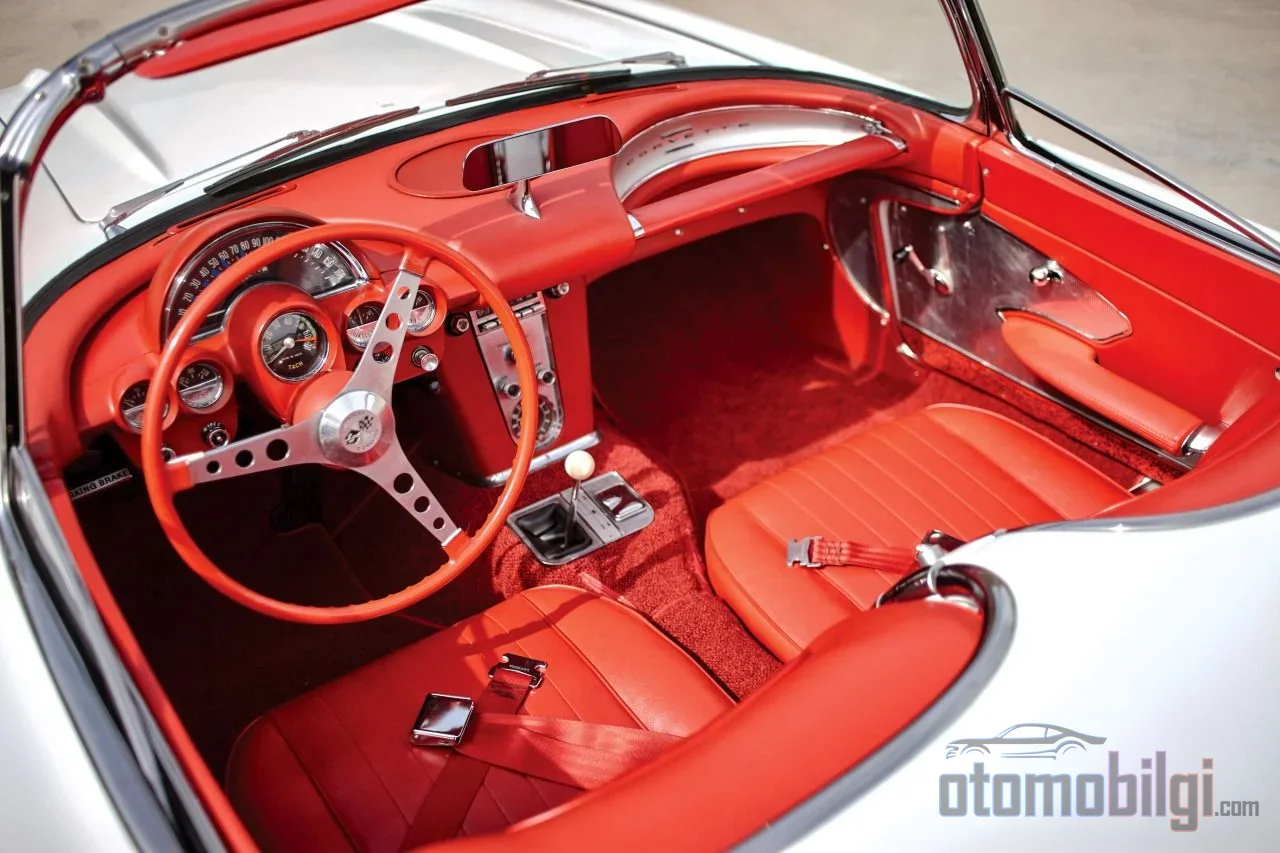
The Thunderbird's success convinced GM: the Corvette would stay, and a serious redesign was funded for 1956. Duntov also got his hands on chassis engineering in 1955; caster angle was increased to two degrees, the negative steering behaviors in the rear geometry were eliminated, and high-speed stability and power delivery in corners were targeted. The body gained side "cove" recesses, exterior door handles, and roll-up windows; the V8 was now standard.
The 1956 engine produced 210 hp (5,200 rpm) with a single Carter four-barrel carburetor, 225 hp with dual four-barrels, and 270 lb-ft of torque at 3,000 rpm. The "Duntov cam" option developed by Duntov offered 240 hp at 5,800 rpm and 265 lb-ft of torque at 4,400 rpm. Around January 1956, Duntov set a speed record of 150.583 mph at Daytona Beach under NASCAR supervision, averaged over runs in both directions; 163 mph was measured in tests at Milford. The result? Sales jumped to 3,467 units.
In 1957, the V8 was enlarged to 283 cubic inches, Rochester mechanical fuel injection arrived, and the most powerful version reached the legendary 1 hp per cubic inch: 283 hp from 283 cubic inches. A four-speed manual transmission was also added to the catalog; more than 6,000 Corvettes were produced in 1957. On the other hand, the tension was not entirely over: GM management was discussing removing the program if the Thunderbird exceeded 20,000 units in 1956 and the Corvette could not surpass 5,000. In other words, whether there would even be a 1957 Corvette was a serious question even during the 1956 launch.
Did Ford Really Save the Corvette?
The short answer: yes, but by accident. Chevrolet had decided to cancel the Corvette at the end of the 1955 model year; the Thunderbird's first-year success of 16,155 units showed there was promise in this market segment, and the cancellation decision was not implemented. Ford did not do this deliberately; in fact, a plan to convert the Thunderbird into a four-seat model was already prepared. Salvation came when internal dynamics - Duntov's stubborn advocacy, Cole's V8 that had been prepared in advance, and Earl's pressure - combined with Ford's market proof. The two rivals later drifted into separate philosophies: while Chevrolet insisted on the pure sports car side, Ford shifted toward the grand touring side. And history made its decision; The Thunderbird became a four-seater in 1958, while the Corvette has continued uninterrupted since 1953, making it one of the longest-lasting names in world automotive history. If its rival had not achieved its brightest success, perhaps we would never have been able to write these lines at all.