Those Who Brought the Car to the Masses: The Model T and the Assembly Line
Share This Page
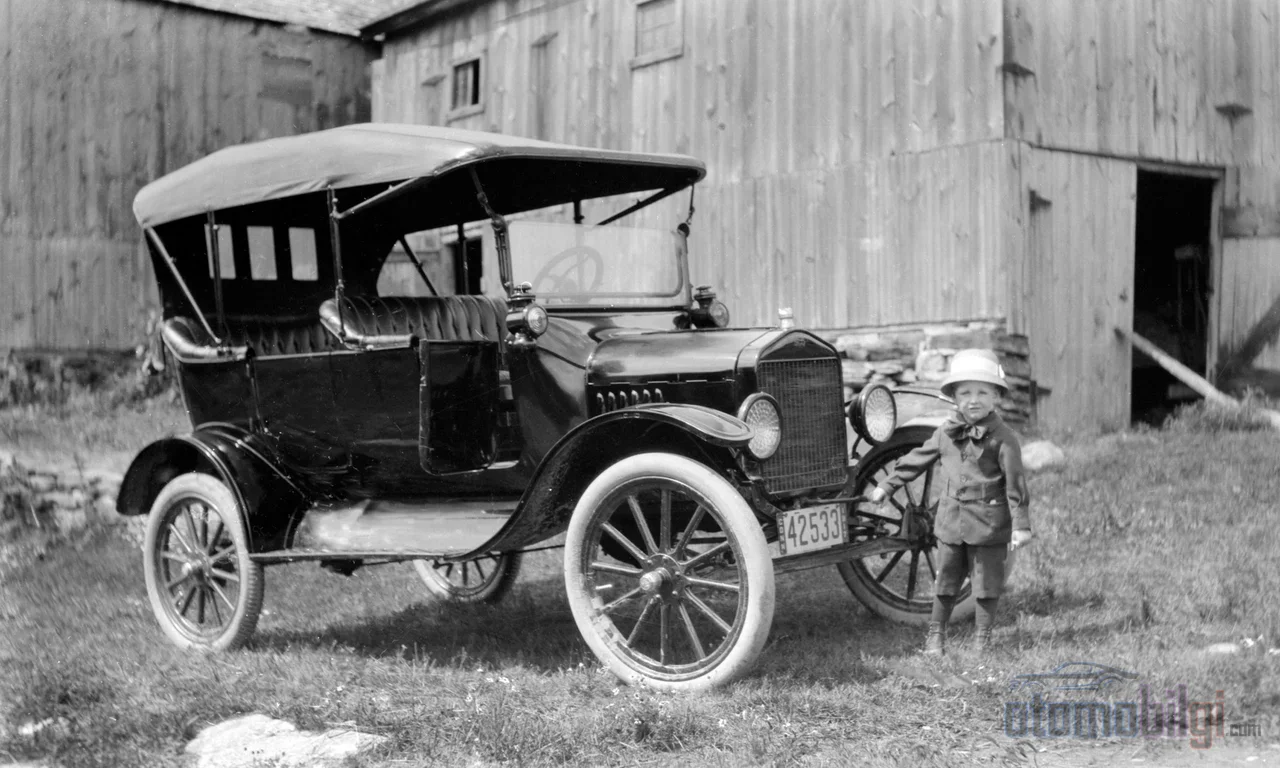
The Ford Model T, produced between 1908 and 1927 in numbers exceeding 15 million, transformed the automobile from a luxury consumer product into an ordinary household appliance, and the technology that made this transformation possible was not the car itself but the moving assembly line that produced it. This system reduced production time from 12.5 hours to 93 minutes, lowering prices so much that by 1918 half of the cars in the US were a single model: the Model T.
Highlights
- Production: October 1, 1908 – May 26, 1927, with over 15 million vehicles in total
- Assembly line: Production time of 12.5 hours in 1913 dropped to 93 minutes in 1914
- Price: $850 in 1908, $260–290 in 1924
- Engine: 2.9 L inline 4-cylinder, 20 hp, maximum 68 km/h
- First place in the 1999 "Car of the Century" selection
Pre-Line Era: A Hand-Assembled Car on Piquette
The first Model T was completed at the Piquette Avenue Plant in Detroit on August 12, 1908 and left the factory gate on September 27. The design team included Childe Harold Wills along with chief engineer Joseph A. Galamb and Eugene Farkas. The launch took place on October 1, 1908, and demand instantly exceeded the team's capacity: Only 11 vehicles could be produced at Piquette in the first month; by contrast, two days after the launch, 15,000 orders had accumulated.
This gap reveals the essence of the project. The Model T was initially an ordinary car; what made it historic was not the engineering details of its first assembly days, but the fact that a production system capable of meeting that demand did not yet exist. In the early years, cars were still assembled by hand. Henry Ford's vision at this point was clear, in his own words:
I will build a motor car for the great multitude... It will be so low in price that no man making a good salary will be unable to own one.
In 1910, production moved to the Highland Park complex, the physical embodiment of this vision. The car itself was also designed according to cost logic: The front axle was forged from a single piece of vanadium steel, and its durability was demonstrated at dealerships by bending it through eight full turns. This high-strength alloy provided a low-cost structure in terms of both lightness and part longevity.
How Was the Moving Assembly Line Born and How Did It Crush Costs?
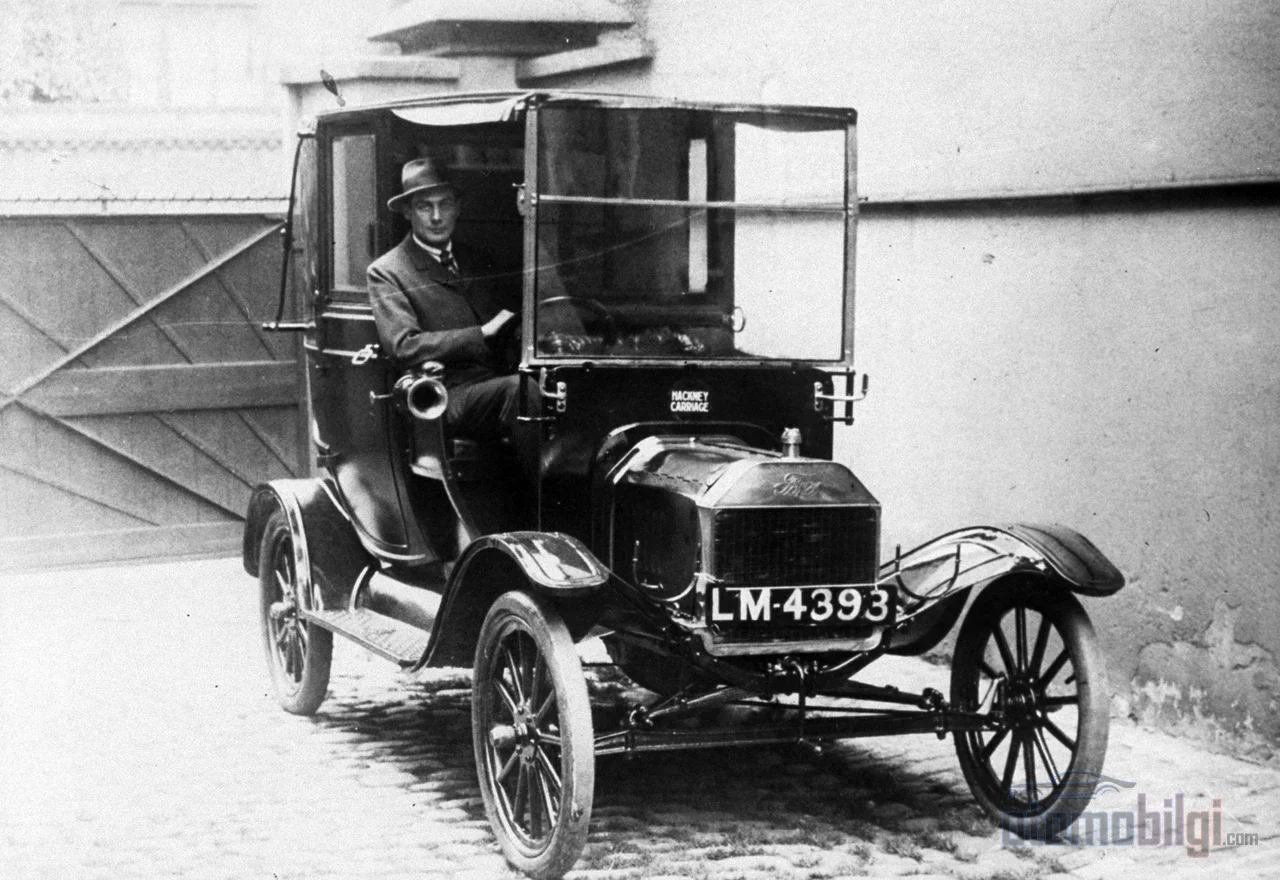
To answer a frequently asked question directly: The assembly line was not Ford's invention. Ransom E. Olds had developed an assembly line with static stations for the Oldsmobile Curved Dash from 1901 onward. Ford's contribution was to make this system radically efficient. Ford engineers put into operation at Highland Park, in December 1913, the continuous flow principle that moved the car and brought the work to the worker.
The result was one of the most dramatic efficiency leaps in production history. The assembly time for a body dropped from 12.5 hours to 93 minutes; in 1914, cars were coming off the line at three-minute intervals. The way the system worked redefined the worker's knowledge burden as well: The area of knowledge a worker had to fully master shrank to 84 operations. Everyone repeated a single operation, and complexity was embedded into the line itself.
The efficiency was reflected directly in the price. Ford was one of the rare manufacturers who converted efficiency gains into continuous price reductions, and this strategy reshaped the US car market between 1909 and 1919. In 1914, Ford produced more vehicles than all other car manufacturers combined. Demand so far outpaced supply that the company published no advertising at all between 1917 and 1923.
Tracking the price curve with numbers best illustrates the scale of the revolution:
| Year | Model T price |
|---|---|
| 1908 | $850 |
| 1910 | $780 |
| 1914 | $490 |
| 1916 | $360 (most basic version) |
| 1924 | $260-290 |
Converted into purchasing power, the table becomes even more striking: The 1908 price corresponds to roughly $24,835 in today's money, while the 1924 price is equivalent to about $8,200. The falling nominal price worked in reverse to general inflation over the same period, bringing the car within the middle class's budget. Research shows that the advanced assembly line cut the Model T's price by almost 50% and created the first mass-affordable automobile. The relationship between the product and the process was symbiotic: Without the Model T, the line's economics would not have formed, and without the line, the Model T's price would not have been possible; Ford's sales doubled from 1909 onward.
What Kind of Car Was the Model T Technically?
The Model T carried a deliberately simplified mechanical package consistent with its cost target. The pre-assembled inline 4-cylinder engine with 177 cubic inches (2.9 L) of displacement produced 20 hp and carried the car to a top speed of 68 km/h. Fuel consumption ranged from 13-21 mpg. As a forward-looking detail, the engine could also run on kerosene and ethanol in addition to gasoline; but the arrival of Prohibition in the US and the cheapening of gasoline made the ethanol option impractical.
| Feature | Value |
|---|---|
| Engine | 2.9 L inline 4-cylinder |
| Power | 20 hp |
| Top speed | 68 km/h |
| Fuel consumption | 13-21 mpg |
| Transmission | Two-speed planetary gear, three pedals + lever |
| Electric lighting | From 1915 onward |
| Electric starter | From 1919 onward |
The transmission was revolutionary by the standards of its time: In today's terminology, it was a two-speed planetary gearbox that reduced clutching and shifting to three pedals and a lever. This was a significant usability advantage compared with its chain-driven and belt-driven contemporaries, which demanded mechanical skill from their drivers. The car was also updated throughout its life: Electric lighting arrived in 1915, the electric starter in 1919; with the balloon tires introduced in 1925, the steering ratio was changed from 4:1 to 5:1.
More Than a Car: The Model T's Social Impact
The low price is not merely a statistic; the threshold that determined who could own an automobile. The Model T opened the automobile journey to the American middle class, and its low price made vehicle ownership a desire in almost everyone's mind. In 1918, half of all automobiles in the USA were Model Ts; when the 10 millionth vehicle was produced, half of the world's automobiles had come from Ford's hands. In 1925, daily production reached 9,000-10,000 vehicles, approximately 2 million on an annual basis.
In rural America, the vehicle was far more than a means of transportation - it was an energy and work platform. Tractor conversions from the Model T (doodlebugs), power take-offs that drove machines such as saws and silo blowers, snowbound "snowflyer" conversions, and railway draisines were all derived from it. One manufacturer modified more than 900 vehicles from the Model T chassis for fire departments. I. In World War II, the Allies used it in a wide range of roles, from personnel carrier to ambulance; In Poland, even an armored variant called the FT-B was developed.
The truths that remained in the shadow of the icon are also part of the story. Henry Ford spread his antisemitic views through the Dearborn Independent; this is an evaluative note that belongs on the positive side of his cultural legacy. The "Any color, so long as it is black" policy needs to be cleared of legends: The single-color black policy was implemented in 1914, whereas between 1908 and 1913 black was not used at all - gray, green, blue, and red were produced. carbon black was one of the cheapest pigments available, and the decision was made on cost grounds. How Did General Motors' Annual Model Strategy Push the Model T into Decline?
How Did General Motors' Annual Model Strategy Drive the Model T into Decline?
The formula of a single model, a single price, and constantly falling costs went unchallenged for more than a decade. The first crack came from General Motors under Alfred Sloan, which introduced the annual model change strategy in the mid-1920s. while offering consumers a renewed product every year, Ford was selling the same vehicle four years in a row. The short formula belongs to the era itself: GM style overtook Ford efficiency. This confrontation was not merely a marketing tactic;
it was the clash of two production philosophies. In the following decades, Ford's system is regarded as the classic example of "rigid, first-generation assembly line production" - it differs from flexible mass production. When it came to changing the product itself, the line, which had optimized a single product to the end, turned its rigidity into a disadvantage. The line, which had optimized a single product to the very end, was turning its rigidity into a disadvantage when it came to changing the product itself. Faced with GM's strategy based on aesthetics and variety, Model T sales declined and Ford was forced to retreat. On May 26, 1927, Henry Ford watched the 15 millionth Model T roll off the line at Highland Park; On November 26, 1927, it was replaced by the Ford Model A.
The record itself did not last long either, but years passed: On February 17, 1972, the Volkswagen Beetle finally broke the single-model production record on that date.
The Global Spread of Mass Motorized Transportation
The Model T's true legacy lies not in the number of vehicles it produced, but in the scale of the industry it created. US motor vehicle production soared from 2.2 million units in 1920 to 5.3 million in 1929; in the 1920s, Ford, GM, and Chrysler emerged as the "Big Three." The automobile industry's rapid expansion created employment across the country and played a central role in sustaining the economic prosperity of the 1920s. The Model T is the primary explainable reason for the United States becoming the world leader in automobile ownership and for the market transformation between 1909 and 1919.
The recognition became institutionalized: In the 1999 "Car of the Century" competition, the Model T surpassed the BMC Mini, Citroën DS, and Volkswagen Beetle to be chosen as the most influential automobile of the 20th chosen as the most influential automobile of the century. Over time, engine architecture, cylinder counts, and fuel technologies continuously evolved; but what opened the door to mass motorized transportation was an engineering achievement proven not by the engine but by the production line.
Conclusion: Not the Product, but the Triumph of the Process
To sum up the engineering lesson of the Model T story in a single sentence: A 20 hp automobile that could do 68 km/h can change the way an entire nation moves when the production process is redesigned. The moving assembly line turned an idea pioneered by Olds into a scalable economy; it pulled the price curve permanently downward and established the template for mass production. The Model T giving way to the Model A in 1927 also demonstrated the limits of that template: No matter how good the process is, the product must also be renewed when the market begins to demand aesthetics and variety.
Sources
- Ford Model T
- Ford Implements the Moving Assembly Line - This Month in Business History
- The Model T - Ford
- Model T - ASME Engineering History Landmarks
- The Model T - The Journal of Economic History
- General Motors Style Overtakes Ford Efficiency
- Ford vs. GM: The Evolution of Mass Production (A) - Harvard Business School
- Ford's Development and Use of the Assembly Line
- The Automobile and the Environment in American History
- Model T - History.com
- Wheels of Change - Richmond Fed Econ Focus
- Ford's Model T: Mass Automobility - Studebaker Museum
- Ford Model T Case Study - Blue Ocean Strategy
- The 1st Affordable Automobile: Ford Model T
- Automobile History - History.com