The Selden Patent: How a Piece of Paper Held the Automobile Industry Hostage?
Share This Page
The Selden patent was an American patent, claimed to cover the gasoline automobile, that George B. Selden applied for on May 8, 1879 and only obtained through legal maneuvering on November 5, 1895. This lawyer, who never built a car, used a sixteen-year waiting tactic to extend the patent's validity until 1912 and wore Henry Ford down with a lawsuit that lasted eight years. So how could a piece of paper hold an entire industry hostage? Let me tell you.
Highlights
- The patent application was filed in 1879 , but approved 16.5 years later, on November 5, 1895
- . The delay pushed the patent's expiration date to 1912 ; with early approval it would have expired in 1896
- . Manufacturers without an ALAM license were charged a 0.75%
- royalty per vehicle. The case file brought against Ford reached 14,000 pages and lasted eight years
- . Ford won on appeal on January 10-11, 1911: the engine in automobiles was not based on Selden's, but on the Otto engine.
What Is the Selden Patent and Why Is It So Important?
Think of it this way: Someone gets a patent on an idea but never brings that idea to life, never builds a car. Then one day everyone starts building cars, and the man comes knocking on the door: "I own the rights to this - either pay up or stop building." Sounds absurd, doesn't it? But this is exactly what really happened in the early years of the American automobile industry.
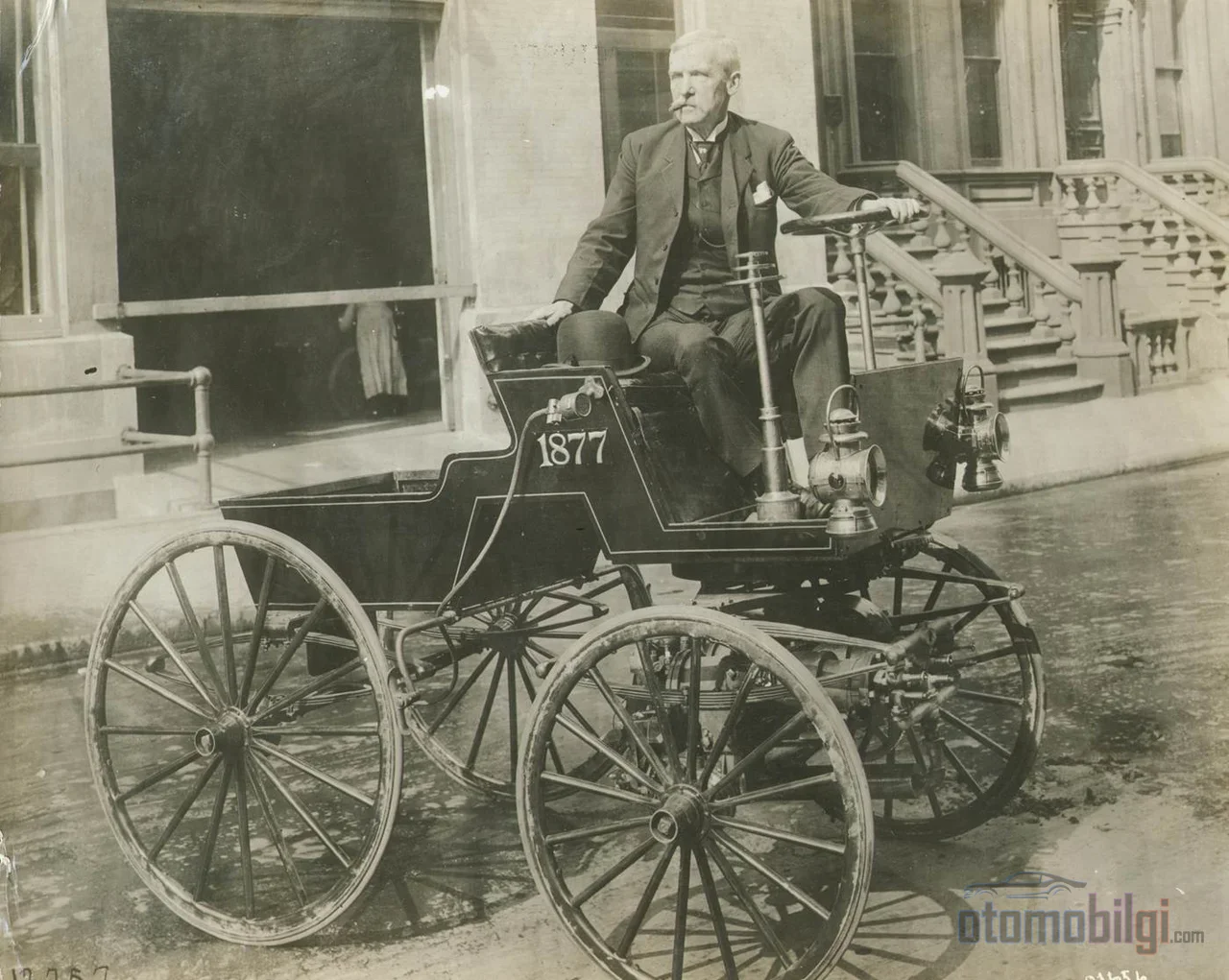
George Baldwin Selden was a patent lawyer from Rochester. He wasn't an ordinary lawyer, either; he was someone with a scientific education and a genuine interest in engines. He even represented the patent affairs of photography pioneer George Eastman. At the Philadelphia Centennial Exposition in 1876, he saw George Brayton's internal combustion engine and couldn't get it out of his mind: Could an engine light enough to move a road vehicle be built? In 1878, with the help of Rochester craftsmen Frank H. Clement and William Gomm, he produced a single-cylinder engine with an enclosed crankshaft, weighing 400 pounds . On the road, the engine could reach a speed of 14 miles per hour .
His design, which he named the Road Engine, covered an internal combustion engine mounted on a four-wheeled vehicle, and it had been drawn up roughly eight years before Karl Benz's Patent-Motorwagen. But here's the critical question: Is designing an engine the same thing as inventing the automobile? As you'll see in a moment, even the courts couldn't quite agree on this.
An Inventor Who Never Built a Car: Who Was George B. Selden?
Selden's life was fascinating in its own right. He served as a Union cavalryman in the Civil War; his father, Judge Henry R. Selden, pulled him out of the army and enrolled him at Yale. Young George preferred technical courses, studied at the Sheffield Scientific School, and entered the New York bar in 1871. In other words, he was a man who had an education close to engineering and who knew the patent system down to its finest detail. You can guess how dangerous that combination could be.
The most striking part is this: Selden never actually built the car in his own patent. Instead, he sold his rights and collected royalties. Seeing him as "a fraud with no mechanical ability" does not quite fit the evidence; in the assessments of the period, he is described as a shrewd and farsighted businessman who foresaw the automobile's impact and the fortune it would bring in advance. A bit of a scoundrel, but with his eyes wide open, so to speak.
The Sixteen-Year Wait: How Did a Patent Age on Paper?
Here is the cleverest part of the story. The patent application was filed on May 8, 1879. Under the existing rule, the applicant could respond to the patent office's requests once every two years. Selden used this right to the fullest: Nine revisions were made, and throughout this entire process the patent office worked for a total of only seven months . What were the remaining sixteen years? Pure, deliberate waiting.
Why? Because the math was very simple: Had he received early approval, the patent would have expired in 1896. Yet the automobile industry was still in its infancy, and no one was in any position to collect royalties from anyone. By prolonging the process, the expiration date was pushed to November 5, 1912- exactly when the industry was about to explode. Selden set a bomb waiting on paper until the automobile industry rose, and adjusted the fuse almost perfectly.
The patent office also used an interesting justification when granting approval: Although the components were individually known, the combination of body + drivetrain + engine was said to be novel. In other words, it was a "combination patent." In 1895, the Commissioner described Selden as the holder of "a pioneering invention in the application of the compression gas engine to road vehicles." This description would carry its weight in courtrooms in the years to come.
ALAM: The System That Collected Money from Every Car
In 1899, Selden sold his patent rights to William C. Whitney for the Electric Vehicle Company (EVC). The details of the deal are reported somewhat differently across sources: There is an arrangement of 15 dollars per vehicle plus an annual minimum royalty of 5,000 dollars ; another record says the sale was made on November 4, 1899 for 10,000 dollars plus a royalty per vehicle. Later, through ALAM - the Association of Licensed Automobile Manufacturers - a 0.75% royalty on all vehicles sold was negotiated; there were also periods when an initial fee plus a 5% royalty per vehicle was demanded for licensing.
The result? Nearly everyone who wanted to build gasoline cars had to obtain a license from ALAM. Many licensed vehicles carried a "Selden Patent" plate showing that the royalty had been paid - like an "I'm subscribed" badge stuck to the corner of the car. The magazine of the era, Horseless Age , wrote that even if the patent was as full of holes as a sieve, manufacturers could not stand against it. A hand gripping the industry by the throat, in short.
There is also an interesting speculation: It is thought that EVC's purchase may have actually been intended to deliberately hinder the development of the gasoline engine and to open up space for its own electric vehicles. The era's "lead cab trust" alliance, in 1900, had already begun sending cease-and-desist letters to leading manufacturers such as Winton.
Why Did Henry Ford Oppose the Selden Patent?
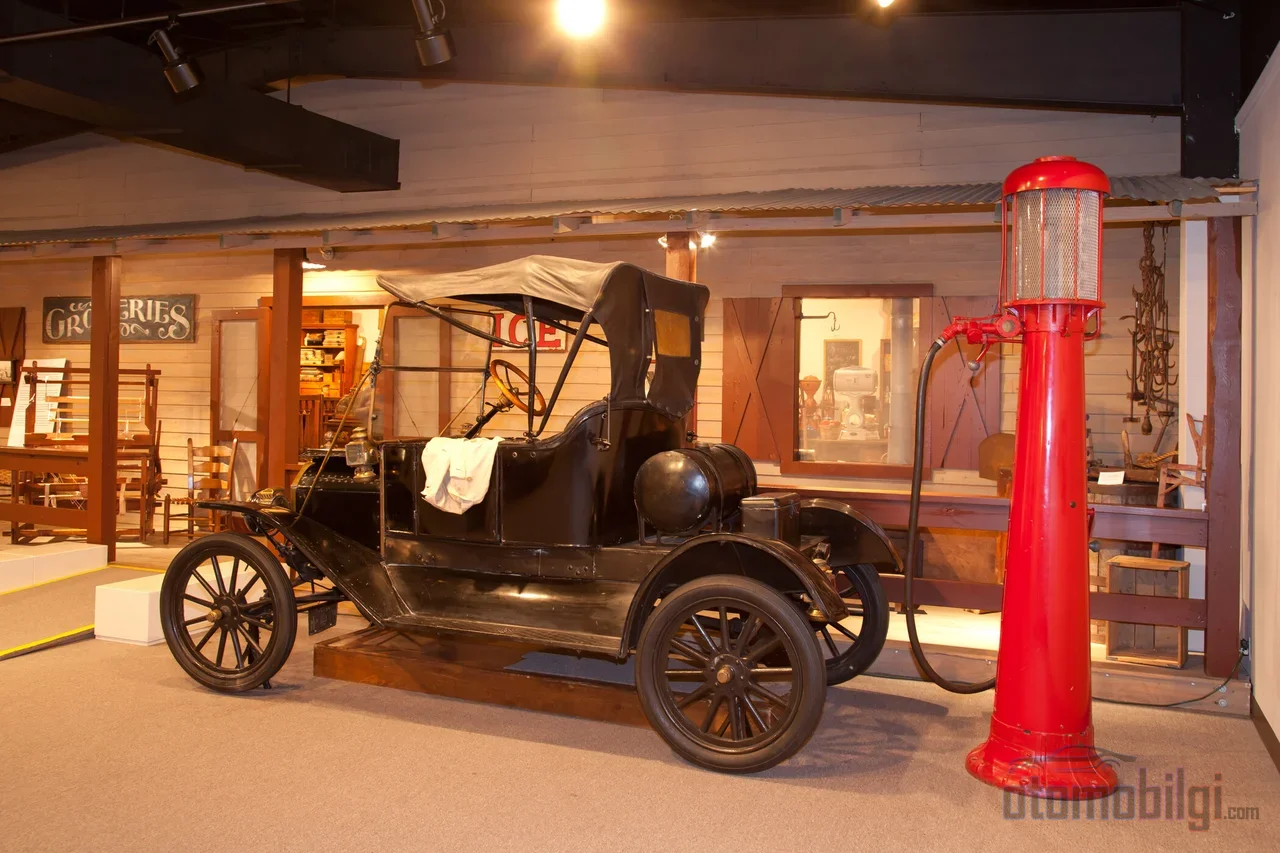
What would you do if you were in his shoes? You have just founded your company and started producing cars, when someone knocks on your door and says: "This car infringes our patent - either join us or see us in court." Ford Motor Company, founded in Detroit in 1903, was one of five manufacturers that stood up against the infringement lawsuit filed by Selden and EVC - and the only one that refused to give in.
It was an act of courage, because losing meant ruin. The case file grew to 14,000 pages . It lasted eight years. Look at the timeline - it reads like a thriller:
| Date | Development |
|---|---|
| July 1900 | Lawsuit filed after infringements by the EVC/Pope alliance |
| November 9, 1900 | Judge Coxe ruled in favor of accepting the case |
| October 22, 1903 | ALAM filed a lawsuit against Ford Motor Company |
| September 15, 1909 | Ford lost in the trial court |
| November 22, 1910 - January 9, 1911 | The appeal was heard |
| January 10-11, 1911 | The appellate court ruled in Ford's favor |
The first ruling of September 15, 1909 was against Ford, and the press was against him too. But Ford did not give up. On appeal, the court made a far more nuanced assessment: it acknowledged that the patent was valid but said its scope was narrow. The technical detail was this - Selden's engine was based on the Brayton principle, while the engines used in automobiles operated on the Otto principle. In other words, Selden's protection did not apply to the cars actually circulating on the roads. It is like a key that does not fit the lock: you hold the key, but it does not open the right door.
It is entirely safe to say that George Selden contributed nothing to the automotive industry at any point... if he had never been born, the industry would be further ahead today than it is.
Only one year remained on the patent at the time of the ruling. It was a striking defeat for Selden: his revenue stream evaporated overnight. According to estimates, he had earned several hundred thousand dollars in royalties over the years, but now it was all over. Selden turned his company to truck production; that company was in 1930 sold to Bethlehem Motor Truck Corporation. Selden himself in January 1922, passed away at the age of 75.
Did the Patent Really Hold Back Progress? The Debate
You usually hear this line: "The Selden patent held back automotive development for years." But things are not as black-and-white as they seem. Assessments in legal circles argue that this widespread claim is not supported by a "freedom to operate" analysis - that is, a method that calculates how comfortably a manufacturer can operate under the shadow of which patents. In fact, patent attorney Parker's legal opinion gave Ford the courage to publicly guarantee his customers protection against infringement damages. In other words, there was no door within the system that was completely closed; rather than a shackle clamped down to the bone, there was a shadow that frightened everyone.
On the other hand, as the Smithsonian also points out, the claim that Selden "invented the automobile" is dubious: he had obtained a patent but never built his own vehicle, and this shadow hung over the early manufacturing industry. The 1911 ruling, in the common assessment, paved the way for rapid innovation and competition. Meanwhile, the story does not stand alone: the Wright brothers' patent battle over aircraft technology in the same era raised similar questions about how the patent system works. The Selden case is remembered as an event that "creates legends," one that became a symbol of patent reform debates.
What Does the Selden Case Tell Us Today?
I think the beauty of this story is this: no one fits into a simple hero-villain tale. Selden was not an evil genius, but a brilliant strategist who knew the system inside out. Ford was a folk hero, yet a man who would have been crushed by an early loss. And the patent system was neither entirely a shackle nor entirely a shield - it was a game where a single word, "Otto" instead of "Brayton," could change the fate of an industry.
The next time you see a debate about "whose invention" a technology is - electric cars, batteries, autonomous driving, whatever it may be - think of Selden: how a piece of paper and a two-year legal maneuver could play with the fate of an industry for 16 years. Patents protect ideas; but sometimes they also delay what they think they are protecting, namely progress. The difference lies in the intention of the hand holding the paper.
Sources
- George B. Selden
- Selden Automobile Patent Model, 1879
- November 5, 1895 - Selden patents the automobile
- THE SELDEN PATENT - Staten Island Region
- 1911 Selden - Stahls Motor and Music Experience
- Selden Patent Lawsuit Collection - The Henry Ford
- Myth 2 - Selden's patent retarded early US automobile development
- Freedom to Operate analysis as competitive necessity
- How Henry Ford Zapped a Licensing Monopoly
- Association of Licensed Automobile Manufacturers
- Patents and Competition in the Automobile Industry - Duke Law