Steam, Electric, Gasoline: The Triple Race
Share This Page
Around 1900, gasoline cars in America were anything but the favorite: steam vehicles led the market, electric cars came in second, and the internal combustion engine was still fighting for third place. Yet within just a few decades, the winner of the race became clear. The technology race between steam, electricity, and gasoline was won by the gasoline engine - and cheap production, abundant fuel, and the electric starter motor invented by Kettering in 1912 played a big part. So how did a losing technology end up back on stage a century later? Let's rebuild the story from the beginning.
Key Takeaways
- Only about a quarter of vehicles produced in the US in 1900 were gasoline-powered; the vast majority of the rest were steam and electric.
- 1769/1770: Cugnot's steam carriage, the first self-propelled land vehicle in history.
- 1912: Cadillac buried the dangerous hand crank in history with Kettering's electric starter motor.
- 1912 prices: A gasoline car cost around 650 dollars, while an electric roadster was around 1,750 dollars.
- Electric vehicles all but vanished from the market by 1935.
Why Did the First Automobile Run on Steam?
The first self-propelled land vehicle in history was born not from a gasoline pump, but from a steam boiler. French engineer Nicolas-Joseph Cugnot built his steam vehicle, called the "fardier à vapeur," in 1769-1770. The purpose was highly practical: hauling heavy cannons. The vehicle sat on a heavy chassis made of oak beams and resembled a massive military utility truck more than an "automobile" in the modern sense. It was designed for work, not show - a true engineering mindset.
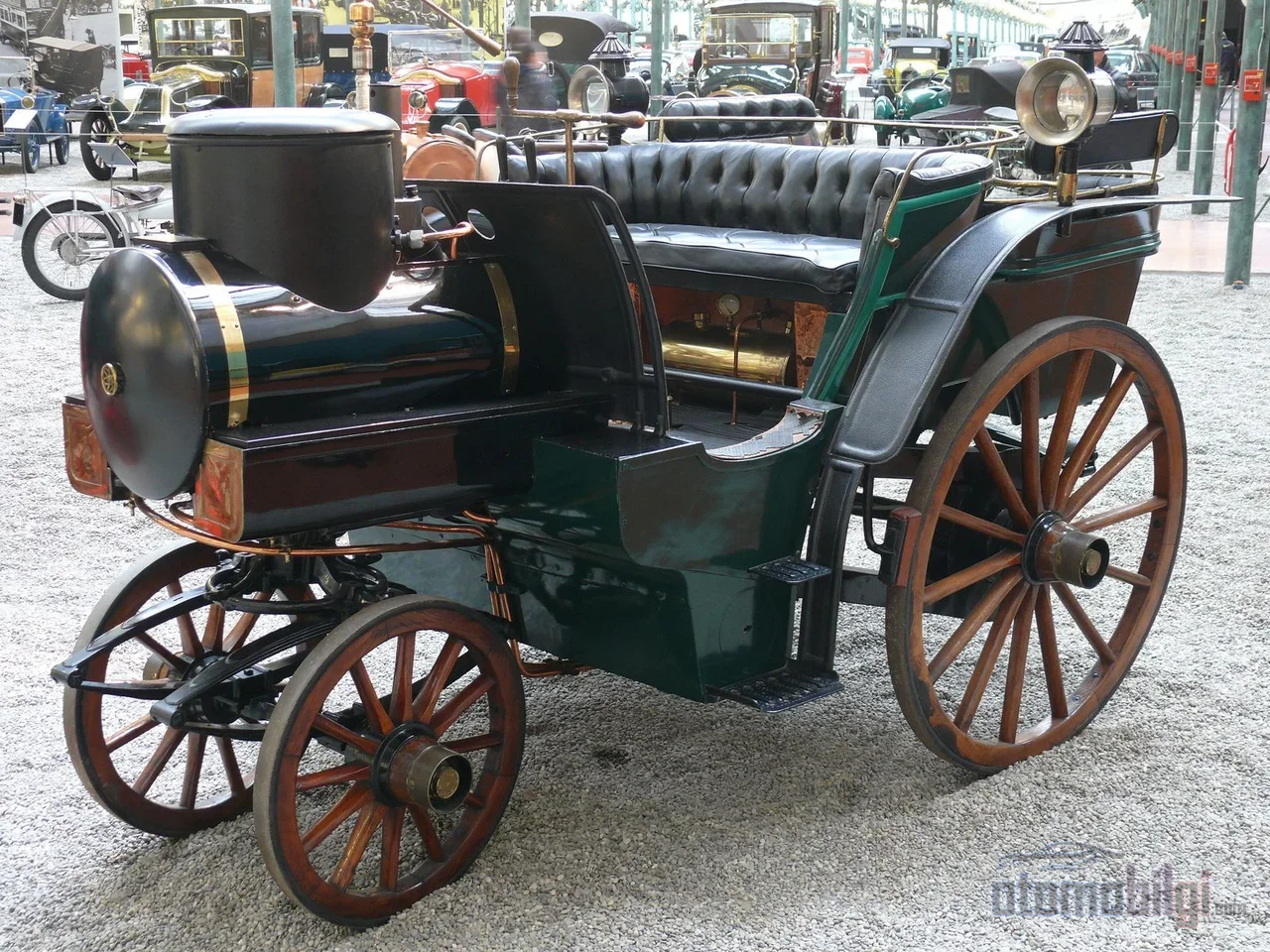
Over the following century, steam cars were tried but never became widespread; things got serious when Richard Trevithick developed high-pressure steam. Steam's advantage was clear: it was a proven, familiar energy source in factories and trains. From the 1870s onward, steam automobiles hitting the roads were also powerful, smoothly running machines. The problem lay elsewhere: getting the vehicle ready to start in cold weather could sometimes take 45 minutes . Today, think of it like turning on the car heater and grabbing a coffee - but even by the time the coffee's back, the car still isn't ready to go. Moreover, the need to fill up with water constantly limited the range.
Steam's Golden Age and Its Final Wink with Doble
Still, the steam lineup shouldn't be underestimated. In the early 1900s, an estimated nearly 40% of the US market was steam; the leader was already clear, and it wasn't gasoline. Brands like Stanley produced clean, quiet, and fast machines. The engine of these vehicles heated up just like an oven, and once the water turned to steam, they were ready to hit the road. This worked very well within and around the city.
The brightest (and latest-born) star of the lineup was Doble became. The Doble brothers built advanced steam cars that significantly reduced the long warm-up time problem; they became favorites of collectors and steam enthusiasts. But consider the timing: by the 1920s, the road network had expanded, gasoline had become cheap and abundant, and factories had geared up for mass production. The Doble was technologically perfect, but its rival was no longer an engine - it was an entire economy. Steam did not lose the race because it was losing; it lost because the conditions of the race changed.
The Early Golden Age of Electric Cars: Quiet, Elegant, Prestigious
The story of the electric line begins around 1890 in Des Moines, Iowa: William Morrison's electric vehicle, which could carry six passengers and reach a speed of 14 miles per hour, is considered the first successful electric car in the USA. Moreover, electric cars did not merely exist - they were popular. More than 60 electric taxi fleets were operating in New York. Ferdinand Porsche developed the P1 electric car and the world's first hybrid automobile in 1898.
The advantage of electric cars was very tangible in daily life: they were quiet, emitted no odors, required no hand cranking, and were very easy to use. For this reason, they were marketed especially to female drivers; brands like Baker and Detroit Electric produced elegant, premium "electric broughams." Even family elders were on their side: Thomas Edison was known to prefer electric for daily use, while Clara Ford was a wife who drove an electric car instead of her husband Henry's company's vehicles. Even Woodrow Wilson used a Milburn Electric ; his wife Edith went down in history as the first woman to drive an electric car in Washington DC in 1904.
Range was not bad at all either: Denver-based Fritchle produced models in 1914 offering a range of 60-100 miles per charge, and Oliver Fritchle completed the roughly 1,800-mile journey from Lincoln to New York in 29 days, averaging 90 miles per charge. In fact, around 1914, Henry Ford and Thomas Edison were working together on a cheap, practical electric car - the project unfortunately did not come to fruition. But even at that moment, a serious alternative was still on the table.
Why and How Did the Gasoline Engine Race Win?
The victory was not the work of a single invention, but of several conditions aligning at the same time. By 1905, gasoline cars had already overtaken steam and electric vehicles thanks to their longer range and the ease of refueling. Then in 1908, the Ford Model T took the stage, and mass production made the gasoline car affordable for everyone. In 1912, the picture looked like this: the gasoline automobile was about 650 dollars, while the electric roadster was 1,750 dollars - a threefold price difference. The heavy lead-acid batteries of electric cars meant short range; there was almost no electricity grid in rural areas; and as the intercity road network expanded, long-distance range became decisive. Texas crude oil made gasoline cheap and abundant while gas stations spread across the country.
| Criterion | Steam | Electric | Gasoline |
|---|---|---|---|
| Market position in 1900 | Leader | Second | Third |
| Starting | Long warm-up (up to 45 minutes in cold weather) | With a key, effortlessly | Difficult and dangerous hand crank |
| Range | Limited by the need to refill water | Short, heavy batteries | Long, fast refueling |
| Cost (1912) | No cheap production | Approximately $1,750 (roadster) | Approximately $650 (Model T effect) |
| Fuel infrastructure | Dependent on water sources | No grid in rural areas | Spreading network of gas stations |
| Decline | By the 1920s, relegated to the background | Nearly vanished from the market by 1935 | Victory |
How Dangerous Was the Hand Crank?
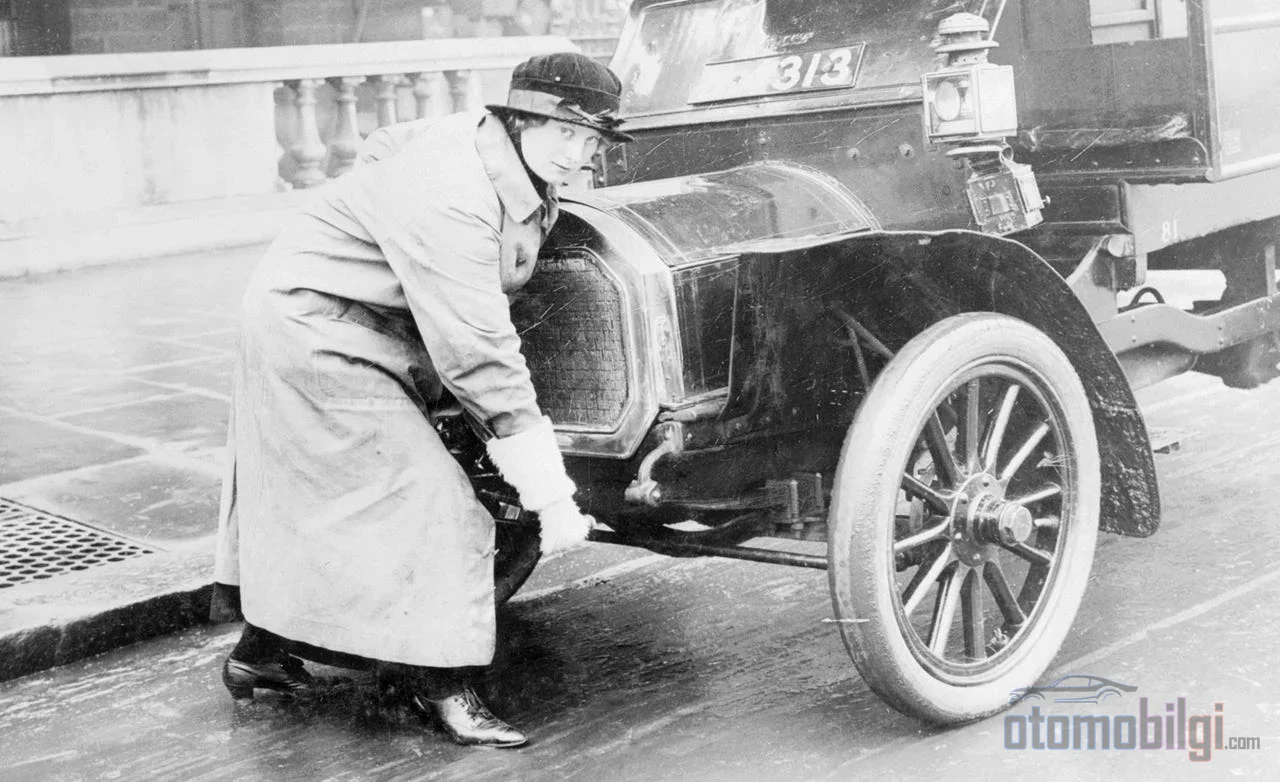
Here was the weakest point of the gasoline line: hand cranking. To start early gasoline vehicles, you had to position your hand correctly on the crank handle at the front and turn it suddenly. Not an easy task - when the engine kicked back, the crank handle could spin back toward your face, or rather your hand. The result: broken thumbs, broken wrists, dislocated joints, knee injuries, back strains. Starting your car was like taking a small gamble every morning, and some days the gamble didn't pay off.
The turning point of the story came with a tragic event: Byron Carter, the founder of Cartercar, died from complications caused by crank kickback. This death ignited the search for a solution that would eliminate the dangerous crank forever. The man who would deliver that solution was Charles Kettering- an engineer from the town of Loudonville, Ohio. The starting point was simple: Edward Deeds' request to install a starter motor on his car. Kettering and his team developed an electrically powered starter motor; the patent application was filed on June 15, 1911. The system, along with key-operated self-starting ignition, was introduced in 1912 Cadillacs, and the patent was registered on August 17, 1915 as an "engine-starting device." The 1912 Cadillac thus went down in history as the first mass-produced gasoline automobile with a starter motor.
Why was this so critical? Because the hand crank was the gasoline engine's greatest unfair disadvantage. If "starts with a key" hadn't been electric vehicles' most beloved feature, gasoline would have continued to look like "half advantage, half risk." Kettering's starter motor sealed the fate of the race by giving the gasoline car the convenience of key-start. As the crank handle exited the stage of history, electric vehicles' biggest selling point evaporated as well.
What Does This Story Tell Us Today?
You know the ending: electric vehicles nearly vanished entirely from the market by 1935, and the gasoline engine became the language of automobiles for a century. But the story doesn't end there. In the US, the number of electric vehicles on the road grew from approximately 22,000 to over 2 million between 2011 and 2021; in 2021, the median single-charge range jumped from 68 miles to 234 miles. In short, the second round of the race has begun, and this time the electric side carries no handicap like the hand crank - quite the opposite.
The lesson, as I see it: the winning technology is not always the "best" one, but the one that best fits the conditions. In the 1900s this was tremendous - cheap gasoline, expanding roads, mass production, and an electric starter changed all the balances. Today, too, increasingly cheap batteries, a growing charging network, and the range revolution are once again pushing that balance. Who do you think wins this round? We are driving in a world where electric cars, whose stars fell a century ago, may get their revenge - and those who know history know very well how possible that is.
Sources
- The History of the Electric Car
- Early Cars: Fact Sheet for Kids
- Technological Choices | National Museum of American History
- Early modes of transport in the United States
- Energy Use and the Internal Combustion Engine
- 38% Of American Cars Were Electric In 1900 - What about in the future?
- Steam car
- The History of Steam-Powered Cars
- Tampa Bay Automobile Museum - Preview the Archive
- June 15, 1911 - The electric starter is patented
- Electric Automobile Self-Starter Is Patented
- Charles F. Kettering, inventor of electric self-starter
- This Day in History: The Electric Starter Patented
- Invention of the Automotive Electric Starter
- How Cars Started Back in the Early Days
- Early vehicles really cranked up the injuries
- Doble: Last of the Red Hot Steamers
- EVs Were Outselling Gas Cars 100 Years Ago