From Crank Shaft to Starter Motor: The Revolution in Starting Your Car
Share This Page
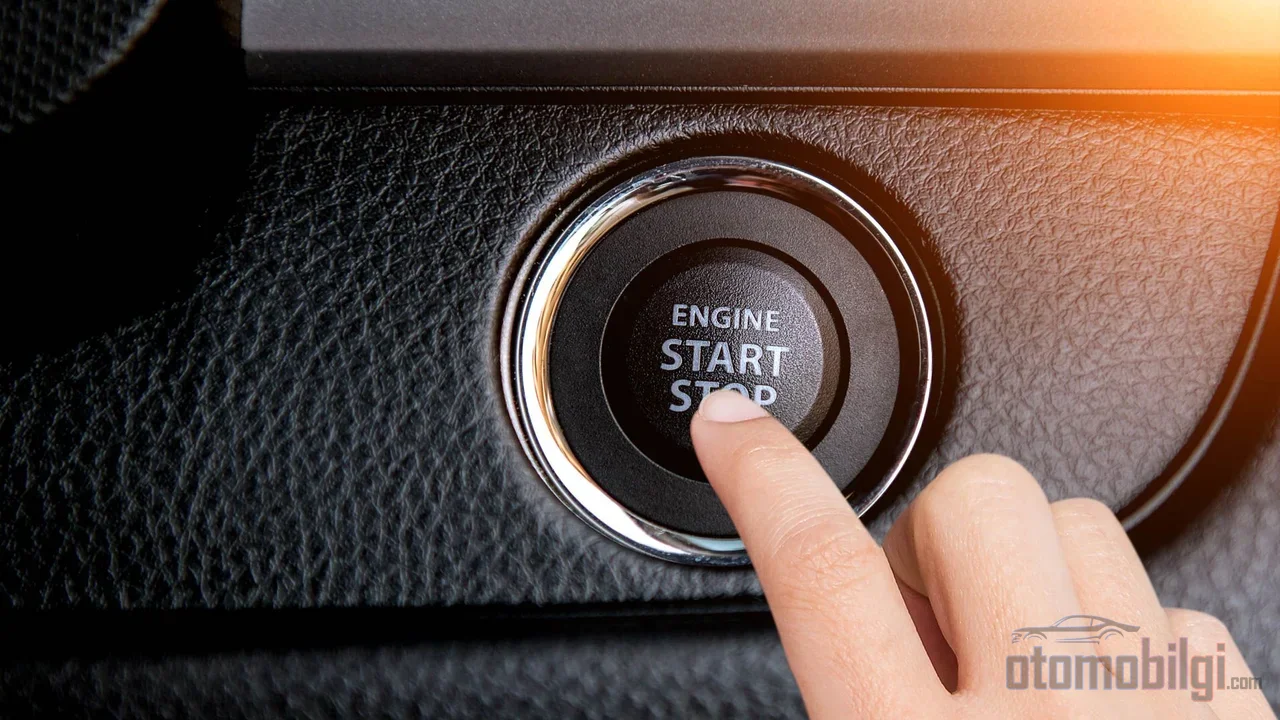
The electric starter motor is the system developed by Charles Kettering and first used in the 1912 model Cadillac, which starts the engine with a button instead of hand-cranking. This invention, which ended the broken wrists and deaths caused by the crank handle, transformed the gasoline automobile into a vehicle anyone could use.
Highlights
- Kettering filed his starter motor patent application June 15, 1911 and the patent was registered August 17, 1915.
- It was first introduced in the 1912 model Cadillac; for that year, 12,000 starter motors were ordered.
- The system provided starting, ignition spark, and lighting with a single electrical installation.
- By the 1920s, electric starting was standard on nearly every new automobile.
- Crank handle kickback caused broken bones and even fatal accidents.
Now think about it: you get in your car on your way to work in the morning, turn the key, and the engine starts in a second. Very normal, right? But in the early 1900s, that second was a nightmare for some people. Because cars were not started with a key, but by hand with a crank . And that crank did not behave like a friend who had your back: when it kicked back, it could break your wrists, your shoulder, even your jawbone.
What ended this dangerous routine is one of today's most overlooked automotive inventions: the electric starter motor. In this article, I will tell you how the crank handle turned into a nightmare, how Charles Kettering solved this problem, and how a tiny button changed automotive history. If you're ready, let's rewind time to 1908!
Why Was the Crank Handle So Dangerous?
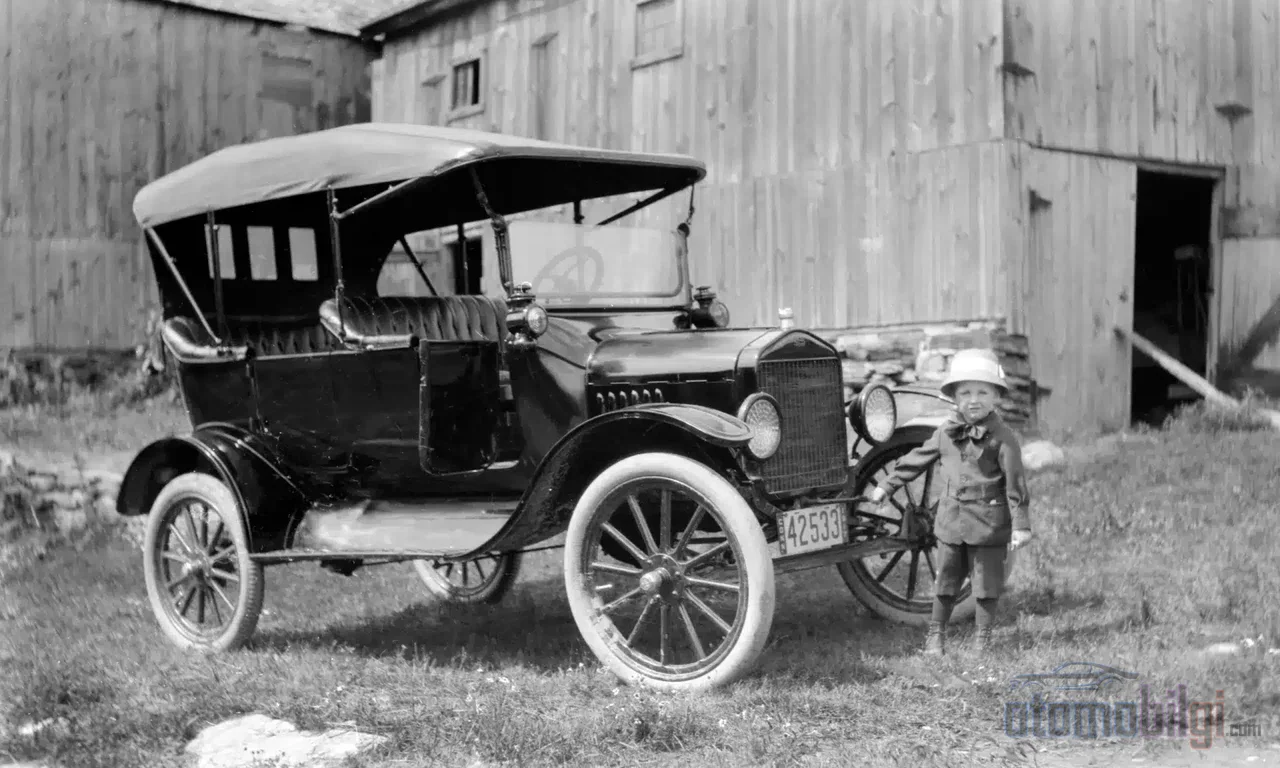
Starting early automobiles was not like turning a key today. You inserted the metal crank handle into a hole under the front grille, then turned it with all your strength. If the engine caught, no problem; but if it didn't, the crank spun back in your hand. In other words, the hands holding the handle were completely defenseless in front of that big metal bar driven by the engine.
So why did the kickback happen? Let me explain briefly. Back then, the driver adjusted the timing of the ignition spark by hand. If the timing was off, the engine's combustion pushed in the opposite direction, and the force of the crank handle came straight back to your arm. The result: a broken thumb, a broken wrist, a broken shoulder. Such accidents were so common in the early automobile era that almost every driver had a story about it.
Byron Carter's Death: The Event That Changed Everything
The best-known example of how dangerous the crank was is the story of Byron Carter, founder of the Cartercar. According to accounts, in the winter of 1908 in Detroit (in some versions, Belle Isle park), while Carter was cranking the car of a driver in trouble, the driver forgot to retard the spark, and the kickback broke Carter's jaw. Pneumonia that developed after the injury cost Carter his life. This story is not entirely indisputable in historical records, meaning not every detail is considered proven; but it is certain that the event was felt deeply in the automobile world of that era.
The most interesting part is this: Carter was a close friend of Henry Leland, the head of Cadillac. His friend's death became the final impetus for Leland to develop an electric self-starter system. So behind our ability to turn the key today and drive off comfortably, there actually lies a tragic loss. I still get chills every time I think about it.
Charles Kettering and the Story of Inventing the Starter Motor
Here is the hero of this story: Charles Franklin Kettering. Born on August 29, 1876, in the town of Loudonville, Ohio, this American engineer received a total of 186 US patents in his lifetime. He became a co-founder of the Delco company and served as head of research at General Motors from 1920 to 1947. In other words, he was one of the most prolific minds in automotive history.
The starting point of the idea is surprisingly modest: his work colleague Edward Deeds wanted a starter motor for a kit car. While Kettering was grappling with this problem, Leland's engineers were also looking for a practical-sized starter motor for Cadillac; when they failed, they consulted Kettering. By February 1911, Delco managed to produce a working model. On February 27, 1911, Kettering demonstrated electric starting to the press on a Cadillac engine with the press of a single button. Imagine: a button is pressed in the room and the engine starts on its own. At the time, this was truly a magic trick effect.
The Journey of the Patent: 1911 Application, 1915 Registration
Kettering filed his patent application for the invention on June 15, 1911; the document was recorded under a name meaning an engine starting device. The patent was granted on August 17, 1915. In other words, there are exactly four years between the invention and its official registration - let me remind you that patent processes back then were not as fast as they are today. Confusing these two dates is a common mistake; the application and the registration fall in different years.
So what distinguished Kettering's design from previous attempts? Unlike other early electric starting attempts, his system placed reduction gears on the engine's crankshaft. A simple analogy: instead of pushing a huge door, you would attach a small and clever lever to the door's hinge. The electric motor was powerful but small; the reduction gears transferred this power to the engine in the right proportion. Clever, isn't it?
One System, Three Tasks: The Real Brilliance Is Here
Kettering's true genius was even more important than the starter motor itself. His fundamental idea was this: a single electrical system in the car would serve the starting, ignition spark, and lighting current functions. Previously, these were independent and problematic systems. Kettering brought these three together under one roof. And the best part: this architecture is still used in modern cars. Today's battery + alternator + starter arrangement in your car is essentially that idea grown up.
I should add that Kettering didn't stop at the starter motor: in 1906 he developed an electric cash register, in 1918 he designed an aerial torpedo called the Kettering Bug, he had a hand in the development of Freon, and in 1945 he became one of the founders of the Memorial Sloan Kettering Cancer Center. In 1921, together with Thomas Midgley Jr., he also developed the gasoline additive tetraethyl lead; this additive was presented as a solution under the conditions of the time, but we all learned over time that it caused major environmental and health problems. So Kettering's legacy includes pages to learn from as much as brilliant inventions.
1912 Cadillac: Which Car Used the Electric Starter?
The first electric starter system was introduced on the 1912 Cadillac. Leland had such confidence in this technology that he placed an order with Delco for a full 12,000 starter motors for the 1912 model year. Just think about that figure: twelve thousand vehicles for a completely new, never-before-tried system. If that's not courage, what is?
The driver started the engine by pressing a button; the same system also operated the lights. So that year Cadillac solved not only the crank but also one of the biggest problems of night driving. This performance was recognized: the system won the 1913 Dewar Trophy award. Winning one of the most prestigious automotive awards of the era was like official proof of just how groundbreaking the technology was.
| Item | Information |
|---|---|
| Inventor | Charles Franklin Kettering (Delco) |
| Patent application | June 15, 1911 |
| Patent granted | August 17, 1915 |
| First demonstration | February 27, 1911, Detroit |
| First production application | 1912 model Cadillac |
| First order | 12,000 starter motors |
| Award | 1913 Dewar Trophy |
| Three tasks of one system | Starting, ignition spark, lighting |
The Social Revolution of a Button: Who Got to Drive It?
So far I've covered the technical side; but the real impact of this invention lies in its social dimension. The electric starter ended the requirement of physical strength as a precondition for driving a car. Pressing a button was something anyone could do - and precisely for that reason, anyone could ride in a car.
Women Drivers and the Losing Side: Early Electric Cars
Here's the irony historians love most: in the early 1900s, cars were sold in three main types - gasoline, steam, and electric. At the time, about a third of vehicles in the US were electric, and electric cars were especially popular among female users. They were quiet, clean, required no messing with a crank, and were well suited for short city trips. It is even recorded that in 1898 Genevera Delphine Mudge, one of America's first women motorists, drove an electric vehicle; affluent women like Clara Ford also preferred electric vehicles in that era. The electric car was virtually positioned as a vehicle for women.
The arrival of the electric starter upended this balance. Because the gasoline car's biggest advantage - ease of use without needing to be cranked by hand - was now also sitting on the gasoline side's table. Features like the electric starter and electric headlights transferred some of the advantages held by electric vehicles to internal combustion vehicles. When silence and ease of use ceased to be the identity of electric cars, the gender-based positioning that market relied on also lost its meaning. The result: the electric car could not compete, and the gasoline car began its century-long victory. When you consider that electric vehicles are stepping back onto the stage today, I can't help but say how cyclical history is!
From Sales to Industry: The Victory of the Gasoline Car
From 1912, when the electric starter was introduced, gasoline vehicle sales climbed even higher; the invention gave a direct boost to the rise of gasoline vehicles. The gasoline car, which anyone could easily start, became one of the main engines of growth for the American automobile industry. Kettering's Delco company was right in the middle of this growth: in 1916 it was sold to United Motors for 2.5 million dollars, and in 1918 it joined General Motors along with United Motors, where it laid the foundation for GM Research Corporation and Delco Electronics.
So how fast did adoption spread? Very fast: by the 1920s, the electric self-starter was standard on nearly every new car. In other words, there was roughly a decade between the invention and its universal adoption - for the automotive industry, that means the speed of light. If you also do a calculation based on Kettering's date of death: when he passed away in 1958, the crank handle was already relegated to the pages of automobile history books.
Connecting to Today: Why Are We Still Talking About This?
What aspect of this story concerns today? I think it's this: most of the greatest automotive inventions are not about the engine or acceleration, but about things that make the car easier to use. The electric starter was exactly that - it didn't change the engine at all, it simply reduced the act of starting it to a motion anyone could manage. The car of the masses happened when no difficulty remained.
Now consider this: today we start our car with a key or from our phone, electric headlights are standard, and a single battery powers everything. All of this stretches along the path opened by that 1912 Cadillac. The next time you turn the ignition, remember that behind that small motion lies a hundred years of people who feared broken wrists. Not having to get out of the car and crank the engine may well be the quietest yet greatest luxury in automotive history.
If it were you, which side would you be on in 1912: the quiet electric with limited range, or the gasoline car that anyone could now start with a button? Let's meet in the comments!
Sources
- June 15, 1911 - The electric starter is patented
- Charles F. Kettering, inventor of electric self-starter, is born - HISTORY
- Charles F. Kettering - Wikipedia
- The 1912 Cadillac: A Self-Starter - Studebaker Museum
- Electric starter's inventor Kettering was no crank - Hagerty
- Cadillac's Great Leap Forward: The 1912 Electric Starter - Mac's Motor City Garage
- The History of the Electric Car - energy.gov
- On the gendering of the early American electric car - ScienceDirect
- Technological Choices - National Museum of American History
- Early Electric Cars in America - Library of Congress
- How Women Used Cars To Fuel Female Empowerment - Atlas Obscura
- Femininity and the Electric Car - autolife.umd.umich.edu
- 'Women Behind the Wheel' - WSHU
- Fact check: Electric vehicles in early 1900s - USA Today
- This Day in History: The Electric Starter Patented - OnAllCylinders
- Invention of the Automotive Electric Starter - Mark Strecker
- In 1917, electric vehicles reigned - Reliable Plant