From Safety Glass to the Spare Tire: Early Safety Principles That Were Forgotten
Share This Page
Long before the Volvo three-point seatbelt and the airbag era, the seeds of today's safety mindset were planted in the automobile's earliest years: 1905 safety glass, patented in 1902 the drum brake, patented in ; the Rambler which came with a factory spare wheel; and the electric starter motor that consigned the hand crank to history. None of these inventions became standard overnight; some remained "early" for decades. Here is the story of that quiet safety revolution.
Key Highlights
- The first automobile patent for safety glass 1905 belongs to John Crewe Wood in ; it did not become standard equipment until the mid-1920s.
- Louis Renault patented the drum brake in 1902; that same year, Frederick Lanchester received the patent for the first caliper-type disc brake.
- The first car to come with a factory spare wheel and tire was the 1909 Rambler ; that year, 1,692 units were produced.
- Kettering's electric starting system appeared on Cadillac for the 1912 model year, rendering the dangerous hand crank obsolete.
Why Such an Article? Because Safety Has Always Arrived Early
Think of it this way: in the early 1900s, the automobile was a luxury item, a toy for the wealthy. Nobody wore seatbelts, nobody conducted crash tests. Yet it was precisely in this period that the first safety features we today call "essential" were invented one by one. The most striking part is this: between invention and standardization there is sometimes a gap of 20-30 years . So this story is really not about "coming up with ideas," but about the persistence required to get an idea adopted by everyone.
So what problem were these early safety inventions solving? Let's summarize briefly, then explain one by one:
| Invention | Year | Pioneer | Problem It Solved |
|---|---|---|---|
| Safety (laminated) glass | 1905 | John Crewe Wood | Shattering of the broken windshield |
| Drum brake | 1902 | Louis Renault | Ineffective braking |
| Disc brake | 1902 | Frederick W. Lanchester | A brake that cools better |
| Spare wheel | 1909 | Rambler | Being stranded on the road with a flat tire |
| Electric starter | 1912 | Kettering / Cadillac | The dangerous hand crank |
How Was Safety Glass Invented and Why Did It Take Decades to Become Standard?
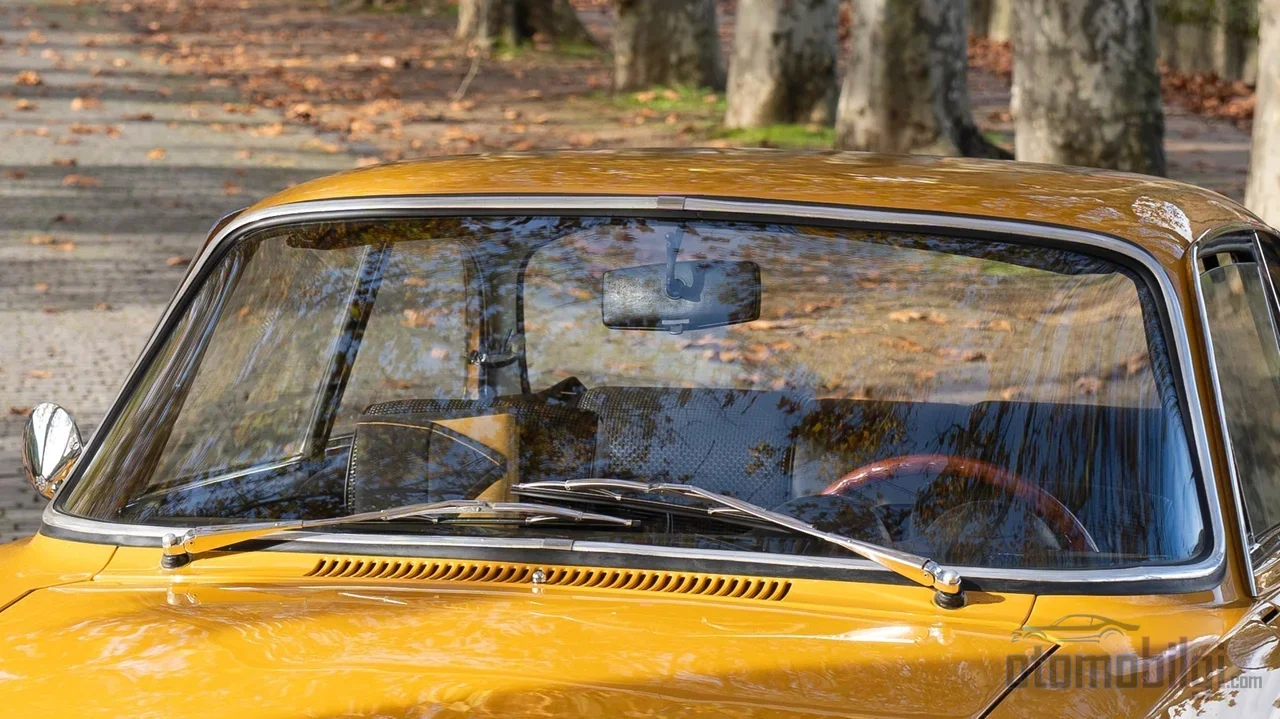
The earliest cars didn't even have a windshield. Glass windshields began appearing as optional equipment around 1904 and were made of ordinary glass. That meant if a small stone struck it, the glass would shatter into pieces, sending sharp fragments flying into your face and eyes. A truly terrifying situation, isn't it?
Chance, a Lawyer, and the Adhesive Between Two Sheets of Glass
The birth of laminated glass is actually the story of two separate journeys. On one side is the French chemist Édouard Bénédictus : in 1903, he knocked over a flask containing cellulose nitrate in his laboratory; the flask broke but the pieces did not scatter. Shortly after, when he read in a newspaper about two women injured by glass fragments, the idea came to him, and he developed laminated glass by placing a cellulose nitrate layer between two sheets of glass. He filed a patent application in 1909, founded Société du Verre Triplex in 1911, and used the trade name "Triplex" in his British and French patents.
On the other side, there is the English lawyer John Crewe Wood . This lawyer from Swindon, Wiltshire, received English and US patents in 1905 for laminated glass aimed specifically at automobile windshields. He bonded the glass layers with Canada balsam and, taking the work seriously, founded the Safety Motor Screen Company. So while cars were just beginning to spread, someone said "this glass shouldn't cut people" and even took out a patent.
The War, PVB, and the Long Road to Standardization
So why didn't this brilliant idea become standard right away? Because Triplex glass was slow and expensive; automakers didn't embrace it at first. The turning point was World War I : Laminated glass was widely used in gas mask goggles, and demand grew along with the war. After the war ended, the transition to automobiles accelerated; around 1924, the first automotive applications appeared in the US, and Ford made laminated glass standard in 1928. Although the dates regarding which manufacturer switched in which year vary somewhat from source to source, it becomes clear that Rickenbacker was one of the first manufacturers to make safety glass standard across the entire vehicle, around 1926-1927 . So from patent to standardization, a good 20-plus years.
The real revolution, however, came in 1927: Canadian chemists Howard W. Matheson and Frederick W. Skirrow invented polyvinyl butyral (PVB) plastic. Laminated glass with PVB did not discolor and was much more resistant to puncture; it quickly replaced the older varieties. In the 1930s, the British Road Traffic Act made safety glass windshields mandatory on all new vehicles; in 1937 the final interlayer was tested, in 1966 the PVB film was increased to 0.76 mm, and the high-puncture-resistance windshield became standard in the US. Today laminated windshields are mandatory in all major countries, and as of 2020 they are used in more than 1.2 billion vehicles. The story that began with a tipped-over bottle has come a long way, and how!
Who Invented the Drum Brake, and Why Was the Disc Brake Delayed?
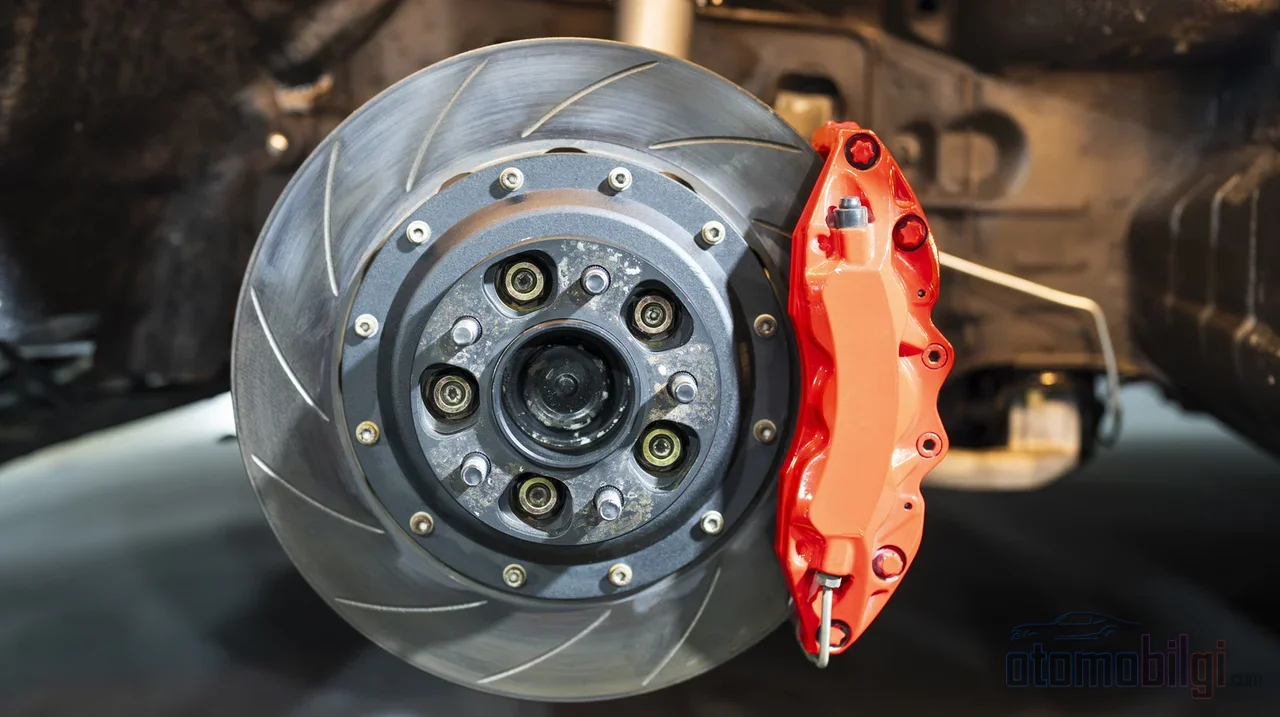
Accelerating a car is easy; the truly hard part is stopping it. Brakes on early automobiles were quite primitive and ineffective. The modern automobile drum brake was first used on a vehicle by Maybach in 1900; the truly groundbreaking step came in 1902: French engineer Louis Renault patented the modern internally expanding drum brake. In Renault's system, a pair of internally spring-loaded shoes pressed against the drum, and the Renault brand was the first to use this brake. Another aspect of Renault's contribution was converting the brake lining to asbestos - a revolutionary step as a friction material at that time. The drum brake remained the standard braking solution for automobiles for decades; the widespread adoption of disc brakes took many years.
Lanchester's Early Disc Brake: The Forgotten Genius of 1902
Interestingly, in the same year (1902), British engineer Frederick William Lanchester invented the first caliper-type disc brake and, on December 1, 1902's Patent No. 26,407. The system clamped a disc between two pads, much like a bicycle caliper brake. In other words, it was the ancestor of the solution we use in almost every modern car today. So why didn't it spread immediately? Practicality issues: The materials and manufacturing techniques of that era weren't enough to make this elegant design practical. It took decades for the disc brake to come to life in mass-produced cars. Lanchester's fate is very similar to that of safety glass: the right idea, the wrong time.
Spare Wheel: Where Does the "Stepney" Come From?
Today, the spare wheel sits at the bottom of the trunk, in a storage compartment most of us never open. But early automobiles were built without a spare wheel! Getting a flat tire on the road meant waiting helplessly by the roadside in those days.
Even the word itself has a story: In 1904, Thomas Morris Davies and Walter Davies patented the first spare wheel for automobiles in the town of Llanelli in Wales and founded a business called Stepney Works. The name "Stepney" comes exactly from this business. So the word we call "stepne" is actually the name of a Welsh town and a factory.
The first automobile to come from the factory with a spare wheel and tire was the 1909, produced in the USA by Thomas Jeffery & Company: the Rambler . That year, exactly 1,692 units were produced, and the first spare wheel sat on the right side of the vehicle. Note the distinction: one is an accessory and patent (1904 Davies brothers), the other is mass-production equipment (1909 Rambler). When the two combined, the equation "flat tire = ruined journey" became history. Today, while most vehicles handle this task with tire repair kits or run-flat tires, the spare wheel is still the classic inhabitant of the trunk.
Electric Starter Motor: Why Did the Crank Handle Fade Into History?
To start early automobiles, you had to turn the crank handle at the front of the engine with all your strength. The problem was that when the engine kicked back, that handle would spin along with you, and the results could be traumatic, like a broken arm, finger, or face. Henry M. Leland, the head of Cadillac, considered the hand crank dangerous for exactly this reason and decided to develop an electric starting device. Charles F. Kettering, working at Delco in Dayton, Ohio, began developing this device at the request of his friend and business associate Edward Deeds, and Delco produced a workable model in February 1911. On June 15, 1911, a patent application was filed for the electric starter motor; the patent was granted three years later, on August 17, 1915.
Kettering's key-operated electric starter and ignition system was introduced in model year Cadillac vehicles of 1912. Thus, your car started with the turn of a key - hand crank injuries became history. Today, everyone who presses the start-stop button to start the engine is, in fact, living Kettering's legacy. Moreover, this invention was not just about comfort, but a genuine safety innovation: no one had to take a crank handle to the head anymore.
How These Early Inventions Took Root in Today's Safety Mindset?
I'd like to point out what these five inventions have in common: none of them were made for "fashion." Each was solving a real, painful problem - glass that cut, brakes that were inadequate, a flat tire that left you stranded, a crank that broke your arm. And each one remained "early" for years until the right engineering solution became standard.
The journey of laminated glass from its 1905 patent to the mid-1920s, drum brakes remaining standard for decades, Lanchester's disc brake being understood only years later: these are proof that automotive safety advanced step by step, persistently. The next time you get into a car and fasten your seatbelt, or look out through the windshield, pause for a second and think: behind that glass there is a shattered bottle, behind that brake a French engineer, behind the spare tire in the trunk a town called Galli, and behind the starter button an inventor from Dayton. Which one do you think was kept waiting the longest?
Sources
- Laminated glass - Wikipedia
- Serendipitous Invention – Safety Glass - LexOrbis
- History of (PVB) laminated glass in Automotive - GlassOnWeb
- Laminated glass Facts for Kids - Kiddle
- From Glass to Elegance: The History of the Car Windscreen - Autentici
- A good idea at the time: Safety Motor Screen - The Telegraph
- Automotive safety glass: A brief history in time - Windshield Experts
- Windshield Glass Through the Years: A Brief History - Crystal Glass
- The evolution and importance of car windshields in automotive design - ACerS Bulletin
- 7 Interesting Facts About Laminated Glass - Techni-Glass
- June Is National Safety Month - Jack's Glass
- Drum brake - Wikipedia
- The History of Automotive Braking and Its Evolution - BrakeStore
- What's Up With Those Old Drum Brakes? - NAPA Blog
- The history of braking systems - ABE Brakes
- Brakes - Monroe Auto & Tire
- Drum brake – Invented by Louis Renault - Edubilla
- Frederick W. Lanchester - Wikipedia
- History of Disc Brake - Medium
- The Disc Brake: A Stop Is Heat - YouBlob
- Stepney Spare Wheel - BBC A History of the World
- Spare tire - Wikipedia
- 1909 Rambler Model 44 Touring - ConceptCarz
- Ramble On - 1909 Rambler - Hemmings
- From Panhard to Rambler - Otomobilgi
- June 15, 1911 – The electric starter is patented - Automotive History
- Charles F. Kettering - Wikipedia
- Charles F. Kettering, inventor of electric self-starter - History.com
- This Day in History: The Electric Starter Patented - OnAllCylinders
- Invention of the Automotive Electric Starter - Mark Strecker
- The Fascinating History of Car Safety Features - MR-KEY