Is Verbiest's Steam Toy the True Ancestor of the Automobile?
Share This Page
No, the first automobile did not come out of Karl Benz's workshop in 1886; the true ancestor of the automobile was a small steam toy made for the Chinese emperor in 1672 and only 65 centimeters long. This tiny vehicle, designed by the Jesuit priest Ferdinand Verbiest, could not carry passengers or a driver, so calling it an "automobile" is not entirely accurate; but it is recognized as the first vehicle to move under its own power. So the story of the automobile begins with a steam bubble more than with a gasoline pump.
Highlights
- Verbiest's steam toy was designed around 1672 for the Kangxi Emperor; its length was only 65 cm.
- Hans Hautsch, in 1649, built a horseless carriage said to run on clockwork mechanisms.
- Nicolas-Joseph Cugnot's 1770 fardier is considered the first full-size, working, self-propelled land vehicle.
- Trevithick's Puffing Devil became the first full-size steam road vehicle to carry passengers in 1801.
- Verbiest's concept was built to full scale by students in 2021 and managed to travel a few meters.
Who Invented the Automobile? The Difference Between the Official Answer and the True Story
If you ask "Who invented the first automobile?", everyone gives you the same answer: Karl Benz's three-wheeled Patent-Motorwagen, patented in 1886. And yes, if we are talking about an automobile with a gasoline engine, this answer is correct. Benz built his vehicle in Mannheim in 1885, received its patent on January 29, 1886; he produced his first four-wheeled model in 1891. But here is the interesting part: long before gasoline, people had imagined self-propelled vehicles, and had even built some of them.
Imagine it: you board a machine, no horse, no pedals to turn, no one pushing it from behind - and off it goes. This idea seems perfectly normal today, but for the 17th century it was practically sorcery. So if we want to tell the history of the automobile properly, we need to walk back from the official patent date. And that journey takes us to the capital of China, to an emperor's palace.
Verbiest's Steam Toy: 65 Centimeters Rolling Through the Palace
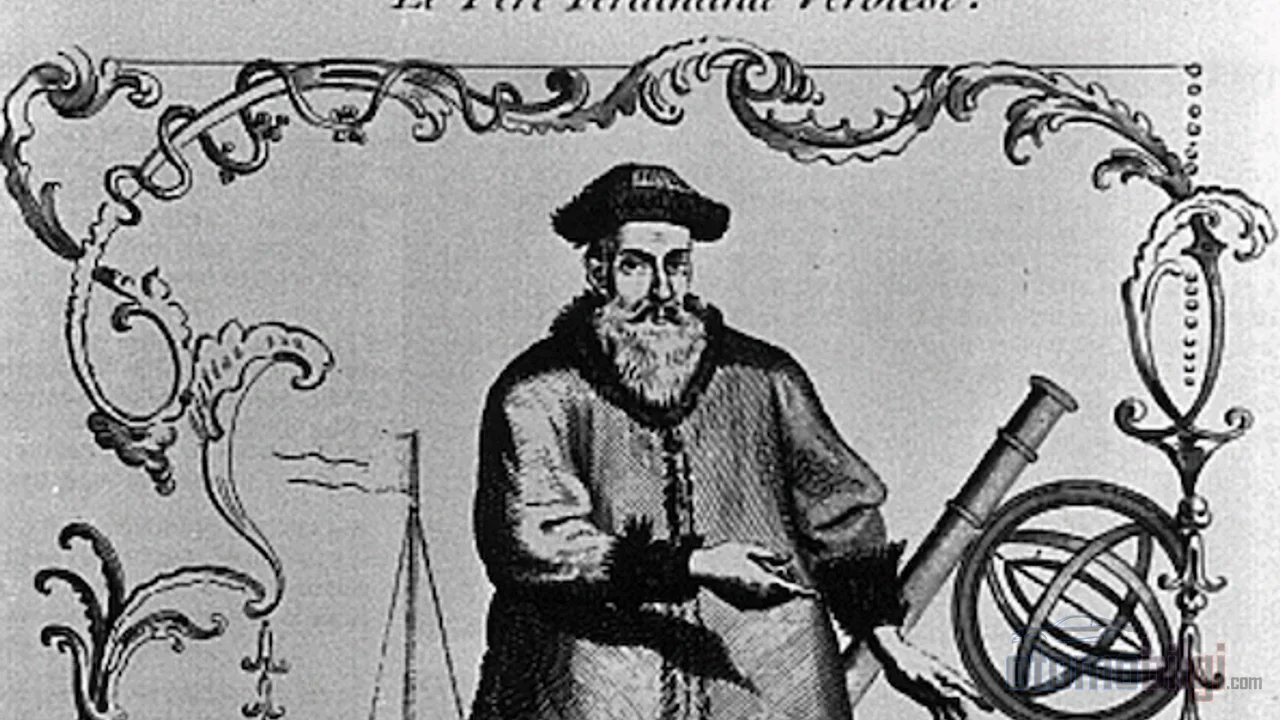
Ferdinand Verbiest was a Flemish Jesuit missionary born in Flanders (present-day Belgium) in 1623. He lived in China during the Qing dynasty, where he was known by the name "Nan Huairen". Now stop here and think: A European priest teaches astronomy to the Chinese emperor, becomes head of the Board of Mathematics and director of the Observatory, forms a close friendship with the emperor, and gives him lessons in geometry, philosophy, and music. In short, this man was no ordinary missionary; he was a superstar of his era.
Around 1672, he designed a small steam-powered vehicle as a toy for the Kangxi Emperor. This is "quite possibly" the first working steam-powered vehicle. Why do I say "quite possibly"? Because we cannot verify whether the vehicle was actually built from other sources, and there is no original drawing of it. But Verbiest had access to the finest metalworkers in the imperial palace; and it is believed that these craftsmen, who made precision astronomical instruments, could build such a vehicle.
How Did It Work? The Steam Turbine, Boiler, and Gears
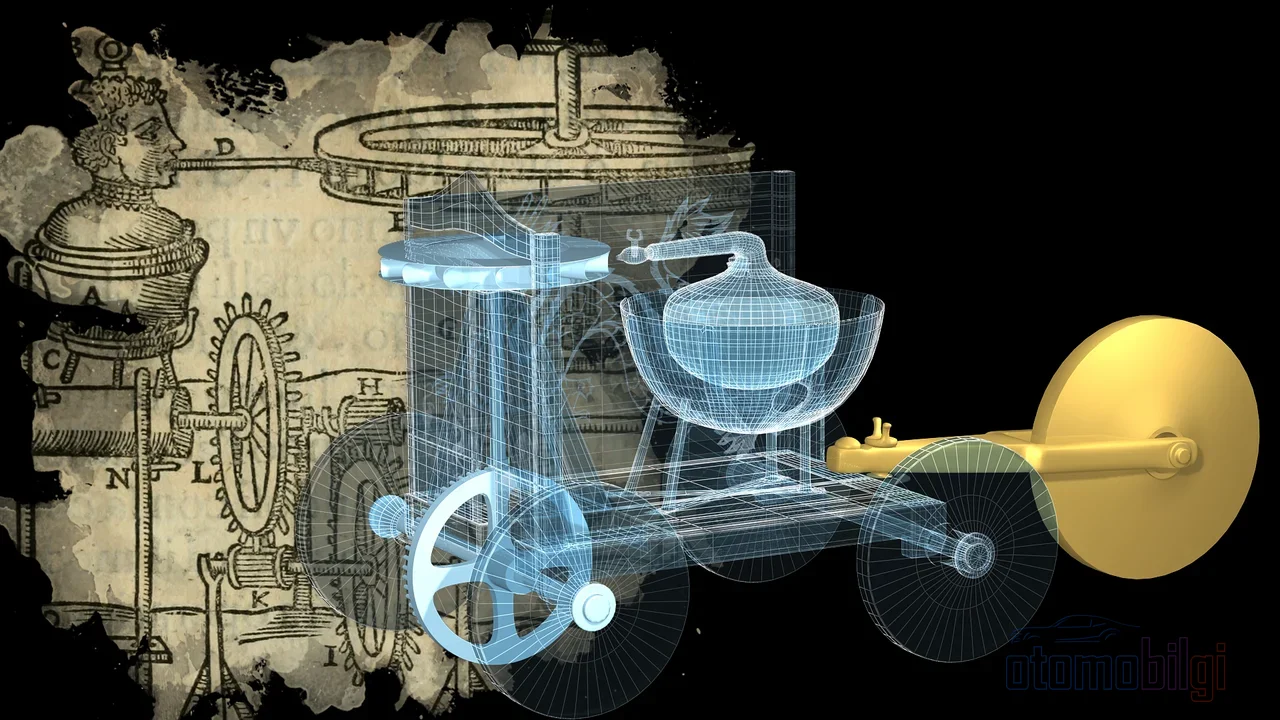
The technical part is genuinely clever. In those years, the steam engine, meaning the piston steam engine, was not yet known. So Verbiest used the turbine principle. Steam produced in his spherical boiler exited through the pipe on top and was directed into an open "steam turbine" resembling a water wheel, and the power taken from it drove the rear wheels. Let me make an analogy: Think of the steam escaping from the lid of a hot pot - Verbiest turned exactly that escaping steam into something useful. The steam coming out of the furnace spun the wheel, and the power was transferred to the wheels through the gears.
The man paid attention to very small details too: The vehicle could reportedly move for more than an hour on a single load of coal. Not bad for a 65-centimeter toy, right? There is also a historic first: Verbiest is the person who first used the word "motor" in its modern sense in his manuscript Astronomia Europea (completed in 1681, printed in Germany in 1687). So this priest also signed his name to the roots of every "motor" word we use.
But Is This a Car?
Let's be honest: No, not exactly. The vehicle was only 65 cm long; it could not carry a passenger, a driver, or cargo. To call something a car, it needs to carry at least one human being, right? What makes it the first car is that it moved by itself under its own motor power. Let's also be clear about this debate: We can call Verbiest's vehicle the grandmother of the automobile, not the mother. A model of this vehicle is on display at an automobile museum in Brussels, so the story still lives on.
Hans Hautsch and the Clockwork Car: The Mechanical Marvel of 1649
Let's go even further back than Verbiest: 1649. Hans Hautsch of Nuremberg (1595-1670) built a horseless carriage - and this carriage worked with a gear mechanism, that is, like a clock. The pamphlets and pictures of the period tell that the carriage was powered by a clockwork mechanism. Hautsch first designed wheelchairs for gout patients, and soon after made a four-wheeled mechanical carriage that moved by itself. An even crazier detail: It is said that he could hide four men in the vehicle's two-story body, and that such a carriage was sold to the Crown Prince of Sweden in 1649.
I need to point something out here: Sources use cautious expressions about Hautsch's carriage, such as "it is said to have been powered by a clockwork mechanism." So it is not known for certain where the clockwork mechanism's power came from and exactly how the vehicle worked. But this is clear: The idea of the automobile was already turning around in craftsmen's minds, long before anyone else had thought of it.
Murdoch's Redruth Model and Trevithick's Puffing Devil: Steam Takes to the Road
Let's move forward in time. In 1784, English engineer William Murdoch built a model steam car that drove around his living room. This is the first recorded instance in Britain of a man-made machine moving under its own power. The vehicle had three wheels; the engine and boiler sat between the two large rear wheels, with a spirit lamp underneath for heating. Imagine it: A little steam vehicle driving itself around in the middle of the parlor, right before the guests' eyes. That was probably the coolest technology demonstration of its era.
Then Cornish steel-muscled man Richard Trevithick takes the stage. In 1801, he built a full-size steam road locomotive in Camborne: The Puffing Devil. Powered by high-pressure steam, this vehicle was the first full-size steam-powered road vehicle. It was ready on Christmas Eve, and Trevithick rode it downhill from a hill with his cousin and friends - the world's first passenger-carrying road locomotive journey. Three years later, in 1803, a successful demonstration carrying 70 passengers was made in London. So nearly a century before Benz, people were traveling the roads on steam.
Cugnot's Fardier: The Claim to the First Full-Size Automobile
Now meet the official title holder: French engineer Nicolas-Joseph Cugnot. His vehicle, the Fardier à vapeur, is regarded as the world's first full-size, working self-propelled land vehicle. He built a scaled-down working model in 1769, and the full-size steam vehicle was ready in 1770. The vehicle was designed for the French army - military tasks like hauling artillery were envisioned.
Its performance was somewhat comical but revolutionary for its time: A speed of about 2.5 miles per hour, not even as fast as a brisk walk. The large three-wheeled steam vehicle would travel a few yards and tip over, and it claimed to pull tons of load. But its importance lay not in speed, but in the idea: Cugnot's vehicle proved to the world that a self-propelled vehicle could truly be built. From that day on, the idea spread and grew.
| Inventor | Year | Vehicle | Notable Feature |
|---|---|---|---|
| Hans Hautsch | 1649 | Horseless mechanical carriage | Said to run on a clockwork mechanism |
| Ferdinand Verbiest | ~1672 | Steam toy vehicle | 65 cm; probably the first working steam vehicle |
| Nicolas-Joseph Cugnot | 1770 | Fardier à vapeur | The first full-size working self-propelled vehicle |
| William Murdoch | 1784 | Model steam car | Three-wheeled model heated by a spirit lamp |
| Richard Trevithick | 1801 | Puffing Devil | The first passenger-carrying full-size steam road vehicle |
Why Is the Line from Verbiest to Benz So Important?
Let's consider this question: Was there really nothing before Benz's 1886 patent? The answer is a clear no. Before Benz, some inventors had developed self-propelled vehicles with steam engines; most of the earliest self-propelled vehicles of the late 1700s ran on steam, and it took until the 1870s for this technology to become established in automobiles. The principle of the steam car was simple: The fuel heats the water in the boiler, producing steam, the steam pushes the pistons, and the pistons turn the crankshaft. It's like the ancestor of today's engine, only the ignition differs.
This continuity always reminds me of the most beautiful part of stories: The line stretching from Verbiest's turbine toy to Hautsch's gear car, from Cugnot's artillery tractor to Trevithick's little steam carriage descending the hill has really been chasing a single question all along: Can a vehicle move under its own power, without a horse, without human muscle? Each generation answered this question a little better, and finally Benz solved it commercially with the internal combustion engine.
There is also a touching detail from history: Around 1775 in Karlsruhe, it is known that a German mechanic, inspired by Verbiest, built a similar three-wheeled, steam-turbine-powered vehicle. Unfortunately, this vehicle was most likely destroyed in a bombing during World War II. So a work that could be considered the precursor of the automobile was lost in war, centuries after another invention of the automotive age. History can sometimes be cruel.
Proof of 1672: 2021 Replica
But did Verbiest's vehicle actually work? The answer to this question was proven quite recently. Students at a German technical university built an original model according to the description in the Astronomia Europea - and they did so using only design options that were possible with the technology of the period. The only exception was a safety valve added to the steam tank for safety. The result? The pressure tank, heated with coal, traveled a few meters. So it was shown that the concept was technically feasible. Even after 350 years, Verbiest's design can still work. From lever-operated gears to modern EVs, the story of the automobile still moves forward with the same question: How far can a self-propelled vehicle evolve?
In my view, the most beautiful part is this: The story of the automobile is not the story of a single genius. A missionary's toy, the gears of a Nuremberg craftsman, an English engineer's parlor model, a Cornish miner's daring descent, and a German inventor's patent... They are all chapters of the same great story. The next time you get in a car, take a second to think before you close the door and turn the ignition: At that moment, you are sitting on top of a dream that is three and a half centuries old.
Sources
- Ferdinand Verbiest - Wikipedia
- Ferdinand Verbiest's Steam Cart - Museo Galileo
- Ferdinand Verbiest: The Man Behind One of the First Self-Propelled Vehicles - Museums in the Park
- Hans Hautsch - Wikipedia
- Johann (Hans) Hautsch driving his horseless carriage - Wellcome Collection
- William Murdoch - Wikipedia
- Murdoch's 1786 carriage - modelengineeringwebsite.com
- Richard Trevithick - Wikipedia
- The Puffing Devil's first journey - Cornwall Forever
- Nicolas-Joseph Cugnot - Wikipedia
- Nicolas-Joseph Cugnot - Linda Hall Library
- History of the automobile - Wikipedia
- Corporate History - Mercedes-Benz
- Early Cars: Fact Sheet for Kids - Smithsonian
- The History of the Electric Car - energy.gov