America's Forgotten First Intercity Automobile Race
Share This Page
The first motor vehicle race in the United States was not held in 1894, as most people think, but exactly 16 years earlier : On the morning of July 16, 1878 two steam wagons set out from the city of Green Bay in the state of Wisconsin. The goal was the $10,000 prize in the pocket of the legislature in Madison. The winning vehicle, however, was not among the favorites; so much so that it covered the 323 kilometers at an average speed of 9.7 km/h, meaning at the pace of a running horse. On this page, I tell the story from beginning to end of this incredible race, held before the automobile had even been invented.
Highlights
- The state of Wisconsin passed a law in 1875 offering a $10,000 prize for a horseless vehicle to replace horses
- The race between July 16-23, 1878 was held from Green Bay to Madison
- The winner Oshkosh completed the 201 miles (323 km) in 33 hours and 27 minutes finished
- Average speed: 6 mph (approximately 9.7 km/h)
- 16 years before the Paris-Rouen race, it took place before the invention of the automobile
How Did the $10,000 Prize Come About?
It all starts with a physics professor's garage hobby. In 1871, John Wesley Carhart of the University of Wisconsin designed and built a two-cylinder steam-powered vehicle. The name of the vehicle was Spark . Seeing this shaky but working machine, lawmakers had a lightbulb moment - a steam-powered lightbulb, of course.
At the time, farmers and merchants were still transporting goods with horses. Horses were expensive, they got tired, and they needed feed. So the Wisconsin legislature passed a law in 1875 : A Wisconsin citizen who produced a machine powered by steam or another motor, serving as "a cheap and practical substitute for horses," would receive $10,000 . By today's money, that is a serious fortune. The state was essentially saying, "Build me a horseless vehicle, and I will pay for it."
The Rules Changed Over Time
The law was amended twice, in 1876 and 1877. Its original form required the vehicle to be in continuous use for five years, which was hardly fair; expecting five years of durability from an untested machine was difficult. In its final form, the conditions were much clearer: Complete the vehicle's 200-mile route at working speed, at at least 5 mph . In addition, the vehicle had to be able to operate in forward and reverse gear, pull a plow, and drive a loaded wagon. It was also among the rules that the trials would begin in July 1878 and be completed within 10 days .
So in fact, this was less a race than a grand aptitude test organized by the state. But since a huge cash prize stood on the other side of the coin, a natural rivalry naturally arose among the machines built. I suppose it is no coincidence that even the oldest automobile race stories contain a battle for victory!
The Two Racing Steam Wagons: Oshkosh and Green Bay
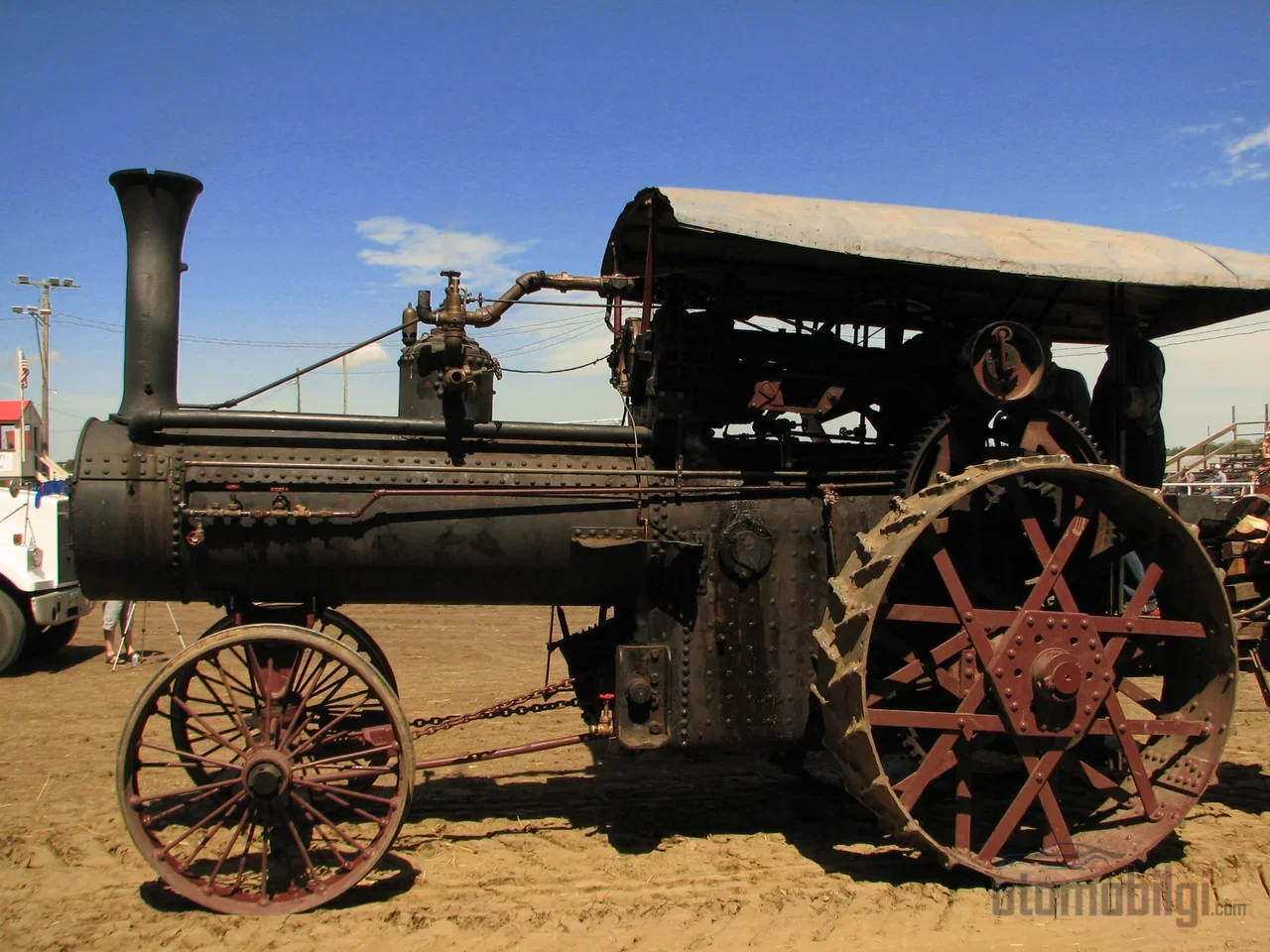
Six machines registered, but only two actually made it to the start. Both were named after their cities: Oshkosh and Green Bay. The others were stories of failure: The vehicle named Madison got stuck in the mud along the way, Milwaukee never ran at all, Fond du Lac could not finish the route. What happened to the sixth participant is still not fully known.
The Oshkosh team was crowded: at least six people developed the vehicle together. Among them were Anson Farrand, steam engineer of the Oshkosh fire department, and John F. Morse, owner of Union Iron Works. On the Green Bay side, one name stands out: inventor Edward P. Cowles of Wequiock, who had already received his patent number 154,846 for his design in 1874. When you put the specs of the two machines side by side, the differences are very clear:
| Feature | Oshkosh | Green Bay |
|---|---|---|
| Power | 12 HP, two cylinders | Two cylinders |
| Boiler | Vertical | - |
| Weight | 5,000 pounds | Over 14,000 pounds |
| Design features | Wooden wheels, chain drive | Four-wheel drive, four-wheel steering, three-speed transmission |
| Team behind it | At least six developers | A single inventor: Edward P. Cowles |
On paper, Green Bay was cooler. Four-wheel drive and four-wheel steering were seriously advanced concepts for the era - ideas we still use today. But here we see the oldest lesson of automotive history: The smartest design is not always the one that goes the farthest. A machine weighing over 14,000 pounds (about 6.4 tons!) was struggling under its own weight on the dusty and muddy roads of that age.
How Was the Grueling 323-Kilometer Route Conquered?
The route was no flat sprint: it started from Green Bay and proceeded through Appleton, Oshkosh, Waupun, Watertown, Fort Atkinson, and Janesville, then turned north and finished in Madison. In total 201 miles, that is 323 kilometers - if you think of a pace of 6 miles per hour, that is a marathon lasting three and a half nights. A three-hour drive by car today was a multi-night adventure with a steam wagon back then.
Green Bay's Bad Luck
Green Bay, considered the favorite, could not even leave Green Bay properly on the first day and had to have part of it transported to Oshkosh by rail. Imagine, the racing vehicle traveling by train! It broke down twice more along the route: first in De Pere, then with only 40 miles left to Madison. No matter how advanced conceptually, that weight and complexity were far too much for the roads of 1878.
Oshkosh's Quiet Victory
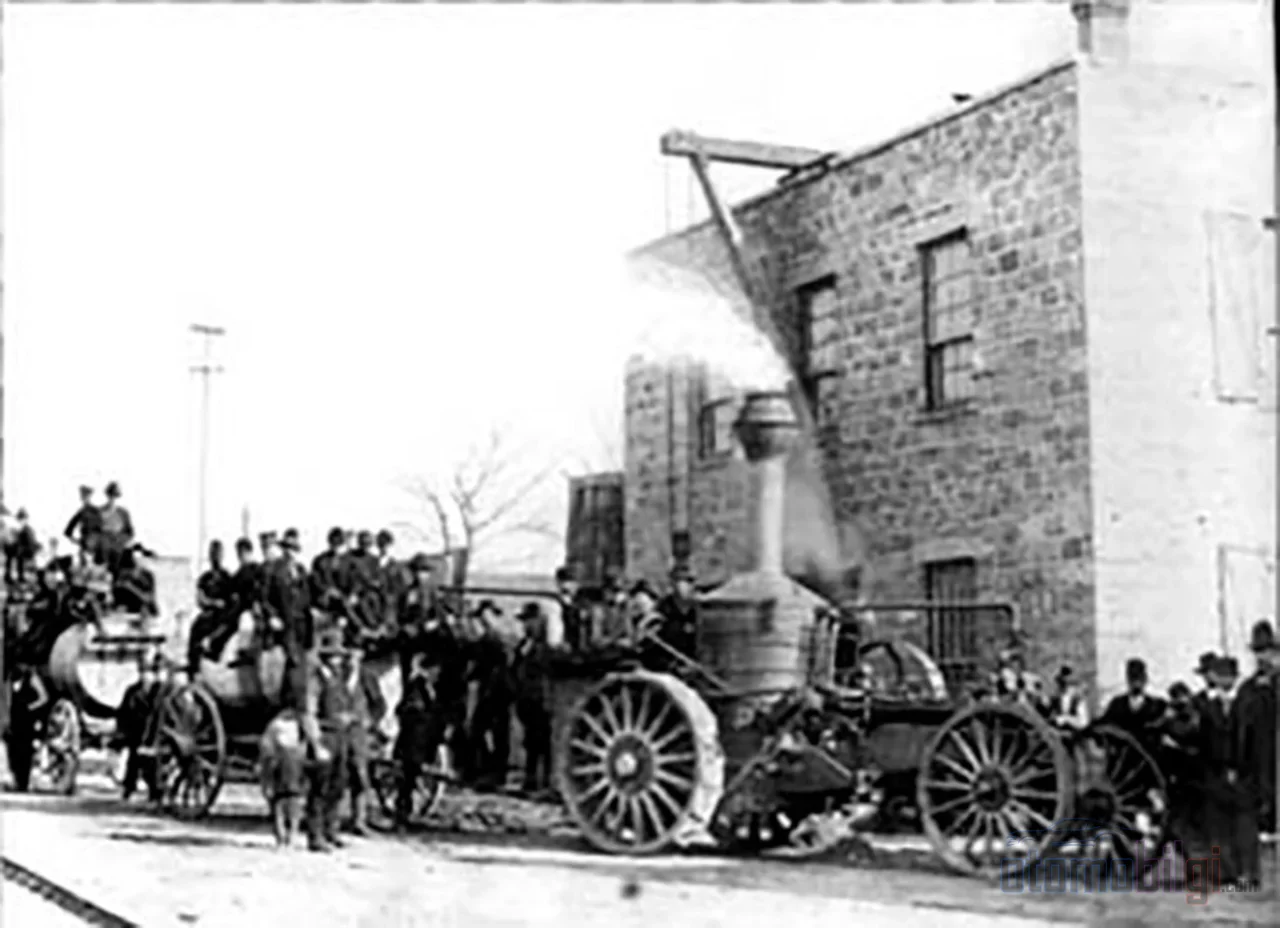
Oshkosh, on the other hand, kept moving forward with the same sturdiness. On July 23, 1878, at 11:00 PM it reached Madison: 201 miles in 33 hours and 27 minutes. Average speed 6 mph that is about 9.7 km/h - higher than the 5 mph required by the rules and within the 40-hour limit. Moreover, it finished alone and ahead of schedule. Compared to today's pit-stop strategies, tire changes, and telemetry screens, this pace may seem comical; but back then, a steam boiler staying operational for days without a break was an engineering achievement in itself. In fact, a photograph taken after the race is considered possibly the first photo of a racing vehicle in history. If the race had ended without anyone capturing an image, who would have documented the protocol, right?
Why Was the Prize Cut in Half?
Here is the most annoying and most human part of the story: Although Oshkosh had fully met the rules, left and right, it did not get its money right away. Even the race commissioners could not agree on the prize. According to the diary of commissioner George Marshall, the governor did not want to award the prize to the Oshkosh team. The commissioners' proposed solution was rather odd: Let them share the prize with the Green Bay team. The Oshkosh team rejected this offer - and in my view, quite rightly so.
The matter August 1, 1878 was even taken up in a newspaper editorial; the editorial criticized the commissioners as follows: Anyone who met the conditions would deserve the prize, even if the invention never made it into practical life. The matter was finally left to the next legislative session, and the assembly's decision was this: The Oshkosh team would receive $5,000 - exactly half the prize. Moreover, of this amount, $1,000 went to the rival Green Bay team. In other words, the winning team received only half of its prize and lost a fifth of it to its rival. In his 1931 interview, Anson Gallinger summarized the situation briefly and succinctly:
It made us very angry.
In the same interview, Gallinger also recounts a fond memory of a trick: He says that during the wagon-pulling test in Fort Atkinson, he deliberately cut the rope, thereby convincing the farmers across from him to walk. So race cheating was not Ferrari's invention after all!
Why Is This Race Told After Europe Rather Than Before?
When it comes to automobile racing, the first thing that comes to mind in most sources is the July 22, 1894 Paris-Rouen race. The roughly 126-kilometer event organized by a French newspaper was actually a reliability trial; 17 of the 21 participants finished, and this event is generally considered "the world's first competitive motor race." Some historians even regard the 1895 Paris-Bordeaux-Paris race as the first true motor race. The "first" label, contrary to appearances, is not a very clear-cut concept.
So what about Wisconsin in 1878? There is a nuance here: That race took place 16 years earlier, even before the word "automobile" and the concept of "automobile racing" in today's sense existed, and it was a contest between two steam traction engines - that is, steam tractors used in agriculture and transport. Moreover, the organizer was not a private club but a state legislature, and the goal was not a show but finding a practical replacement for the horse. For this reason, some racing historians do not consider 1878 a true "race," describing it instead as a state-sponsored trial with a prize. It is commonly said that the first automobile race in America was held in Chicago in 1895; 1878 falls outside that narrative. But in my view, this does not diminish the importance of 1878 - quite the contrary, it shows that the roots of motorsport reach this deep, back to the steam age.
What Happened After the Oshkosh Race?
The story does not end in Madison, as a few might think. John F. Morse, until at least 1879 Oshkosh Hog produced and marketed 12, 14 and 16 HP versions of it. Cowles continued to improve his design; in the early 1880s, different companies produced "pole road" locomotives based on Cowles' patents. So both racers left a technology behind.
So did this change the race car industry? The honest answer: no. Emily Rock of the Oshkosh Public Museum puts it clearly: it did not create a lasting impact on the race car industry. But another door of steam technology opened - steam threshing machines in Wisconsin made a serious contribution to agricultural productivity. So the dream of the horseless vehicle found life not in automobiles, but in the fields. That's how history works; it enters through one door and exits through another.
Years have passed since that arrival in Madison; today we ride in comfortable gasoline-powered cars and brush past 200 kilometers per hour. But think for a moment on your next journey: before this asphalt, in 1878, a boiler pushed by six people, quietly so as not to make noise at night, slowly traveled 323 kilometers at 9.7 kilometers per hour. Don't you think this is one of the most impressive moments in racing history?
Sources
- THE GREAT RACE OF 1878 - Farm Collector
- WE THE PEOPLE: Oshkosh steam wagon believed to have won the first auto race in the U.S. - WBAY
- Oshkosh Steam Wagon - Wikipedia
- Auto Race - Historical Marker Database
- Paris-Rouen (motor race) - Wikipedia
- First-ever automobile race runs from Paris to Rouen - History.com
- The First American Automobile Race: History and Legacy - Hemmings
- This Photo From 1878 Is Likely The First Picture Of A Racecar - Jalopnik (2015)