Behind the Scenes of the First Automobile Race from Paris to Rouen
Share This Page
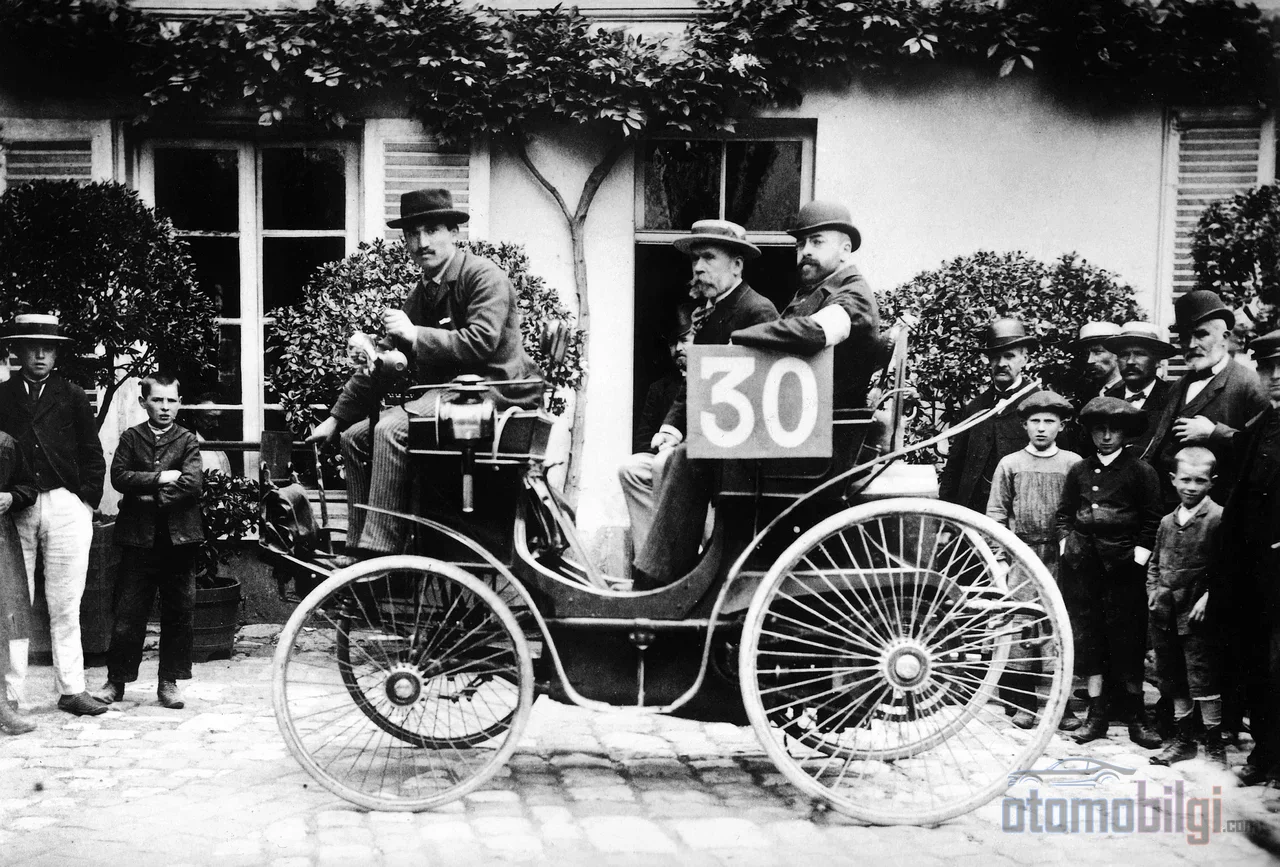
The world's first competitive automobile race, held on July 22, 1894 from Paris to Rouen over a 126-kilometer course, the Concours des Voitures sans Chevaux, meaning the "Horseless Carriage Competition". But here's the funny part: the first vehicle to finish didn't win a prize, because the jury valued safety, ease of use, and economy over speed. In other words, history's first automobile race wasn't even a speed race.
Highlights
- July 22, 1894: The first competitive motor race was run on a 126 km route between Paris and Rouen.
- 102 entries, 21 finalists, 17 finishers: The participation rates rival today's classic rallies.
- First to finish: Jules-Albert de Dion reached Rouen in 6 hours and 48 minutes with his steam tractor.
- Main prize (5,000 francs): Shared between Panhard et Levassor and the Peugeot brothers.
- Total prize fund: 10,000 gold francs - a huge sum for 1894.
It All Started With a Newspaper's Idea
Imagine: Formula 1, Le Mans, and even your favorite simulation races all trace back to a newspaper's promotional move. In 1894, Le Petit Journal editor Pierre Giffard organized a race both to promote his newspaper and to revive interest in the automobile and develop French motor manufacturing. Read its name carefully: "Horseless Carriage Competition". At the time, the automobile's biggest rival was still the horse-drawn carriage, so even the name was built right into the heart of this rivalry.
The race started at 8 in the morning on July 22 from Porte Maillot. The route extended from Mantes-la-Jolie (lunch break included!) via Vernon, Gaillon, and Pont-de-l'Arche to the Champ de Mars in Rouen. A race with a lunch break is a whole different world from today's pit stop strategies, isn't it?
Qualifiers: 102 Entries, 21 Passing
Getting into the main event was no easy feat. A total of 102 people paid a 10-franc entry fee each, but 78 participants never showed up for the qualifiers on July 18. Among them were at least 25 "eventful" technologies: nine gravity-powered vehicles, five compressed air, three each of "automatic", electric, and gas-powered, two hydraulic, and one attempt each of liquid, pedal, propeller, and lever technology. The gravity-powered car idea is quite cute in my opinion - it takes some nerve to call something rolling down a staircase a "vehicle".
The qualifiers were run between July 19-21, in eight 50-kilometer events starting near the Bois de Boulogne. The condition was clear: complete the course within 3 hours. The 21 vehicles that achieved this earned the right to compete in the main race.
Two rival camps at the starting line
Two major technologies faced off among the finalists: steam and gasoline. Steam vehicles were powerful but required a stoker, an assistant to heat the boiler alongside - imagine having a friend whose constant duty is to keep a fire burning next to you. Gasoline vehicles, as seen in the Panhard and Peugeot models, came with Daimler engines and offered single-person, "fully automatic" operation. In the prize distribution, this difference became the breaking point that would determine fate.
Who Won? Here's the Strangest Result in History
The fastest name in the race, leaving no room for debate, Jules-Albert de Dion was. De Dion's steam tractor reached Rouen in 6 hours 48 minutes, at an average speed of 19 km/h, finishing a full 3 minutes 30 seconds ahead of its closest follower. That follower was Albert Lemaître, driving a 3-horsepower petrol Peugeot. In the speed photo, steam wins.
But the jury was looking at another photo. The main prize would be awarded to "the ideal, closest vehicle," and the definition of an ideal vehicle was clear: it would be safe, easy to use, and cheap throughout the journey. The steam vehicle required a stoker all along the way; this pushed it outside the "easy to use" criterion. The result? The 5,000-franc Prix du Petit Journal was shared equally between Panhard et Levassor and Les fils de Peugeot frères. In other words, the first vehicle to finish was not deemed eligible for the main prize, and the winners were the easy-to-use petrol vehicles.
| Order | Driver / Entrant | Vehicle | Prize |
|---|---|---|---|
| First to finish | Jules-Albert de Dion | De Dion-Bouton steam tractor | Not deemed eligible for the main prize |
| Main prize (shared) | Panhard et Levassor / Peugeot brothers | Petrol, Daimler-engined | 5,000 francs (Prix du Petit Journal) |
| 2. | de Dion, Bouton et Cie | Steam tractor | 2,000 francs (Prix Marinoni) |
| 3. | Maurice Le Blant | 9-seater with Serpollet system | 1,500 francs |
| 4. (shared) | Alfred Vacheron and Le Brun | - | 1,000 francs each |
| 5. | Émile Roger | Benz | 500 francs |
The prizes were announced on July 24, and the jury minutes still bring a smile today: de Dion's vehicle was praised as "an interesting steam tractor that works like a horse, providing speed and hill-climbing power," and deemed worthy of 2nd honorable mention. The claim that he finished by towing another car with his tractor is one of the details noted in history. Considering the rules set a 12.5 km/h speed limit, the debate over just how much of a "race" this event was opens up by itself.
Was It a Race or a Reliability Trial?
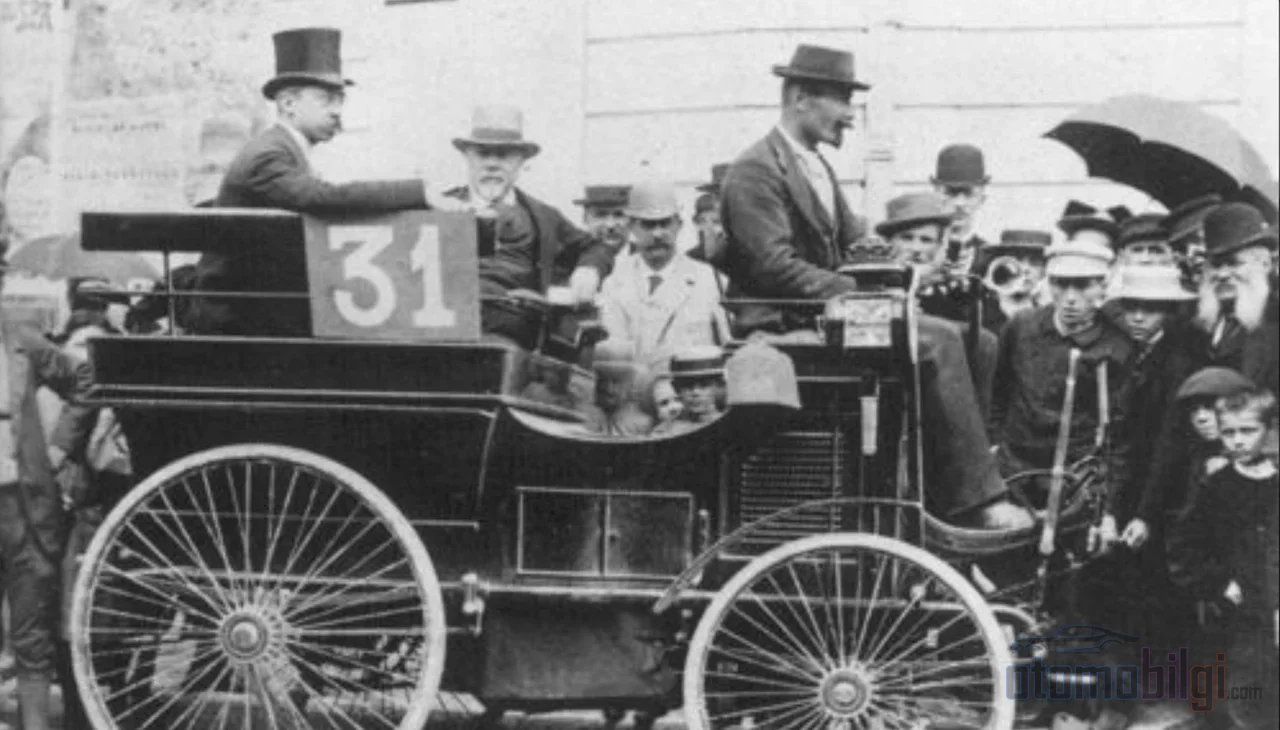
I must admit this is my favorite debate. The event is described by some automotive historians as "in effect a reliability trial"; the speed times were not even officially recorded. Some call it "a race that wasn't a race." And in a way they are right: the vehicles were judged on being safe, easy to use, and having low operating costs. This wasn't an F1 points table - it was almost a quality award jury.
Also, not everything is ice-cold clear in the finishing order. It is known that some positions (for example 5th through 8th) and times changed between the records of two separate periods. Of the 21 participants, 17 managed to finish; four remained on the road - one due to a broken wheel rim, the others due to engine failure. Even 126 km was a true endurance test for the cars of those years.
Here Is Where the Seed of the Grand Prix Tradition Was Sown
The results, which seemed like open pasture that day in Rouen, charted the course for motorsport in the following decades. This organization, considered the pioneer of intercity motor racing, directly paved the way for the Grand Prix tradition. The prominence of gasoline-powered vehicles with Panhard, Peugeot, and Daimler engines was largely an answer to the question of the automobile's future being gasoline-based and suited to personal use. De Dion's steam was the fastest on the route, but the question that would determine the automobile's future was this: "Is it a practical vehicle that everyone can use?" In my opinion, this is still the first test for all of us.
There is one more detail: Émile Roger participated as the first foreign sales agent for Benz vehicles and won the 5th prize. Even in the very first race, the competition of brands served a side mission of putting engineering on display - considering that today the greatest benefit of motorsport is its advertising power, this was a founding decision by the jury club.
Looking Back: The Legacy Created by 1894
The paper the race was written on is over 130 years old, but the logic it followed has not changed. Even today, motorsport remains the most ruthless validation laboratory for engineering ideas. The difference is this: back then, the jury scored for "safe, cheap, and easy"; today, electric powertrains, aerodynamics, and safety systems answer the same questions with technology. Reliability races against speed - as if nothing has changed.
What happened after the race? No jury ever again rewarded a car for "having a stoker"; automobiles settled on gasoline as fuel and filled the world's roads within a few decades. That 126-kilometer route is motorsport's first sentence. If it were you, would you reward the fastest car or the most practical one?