Siegfried Marcus: The Automotive Pioneer the Nazis Tried to Erase from History
Share This Page
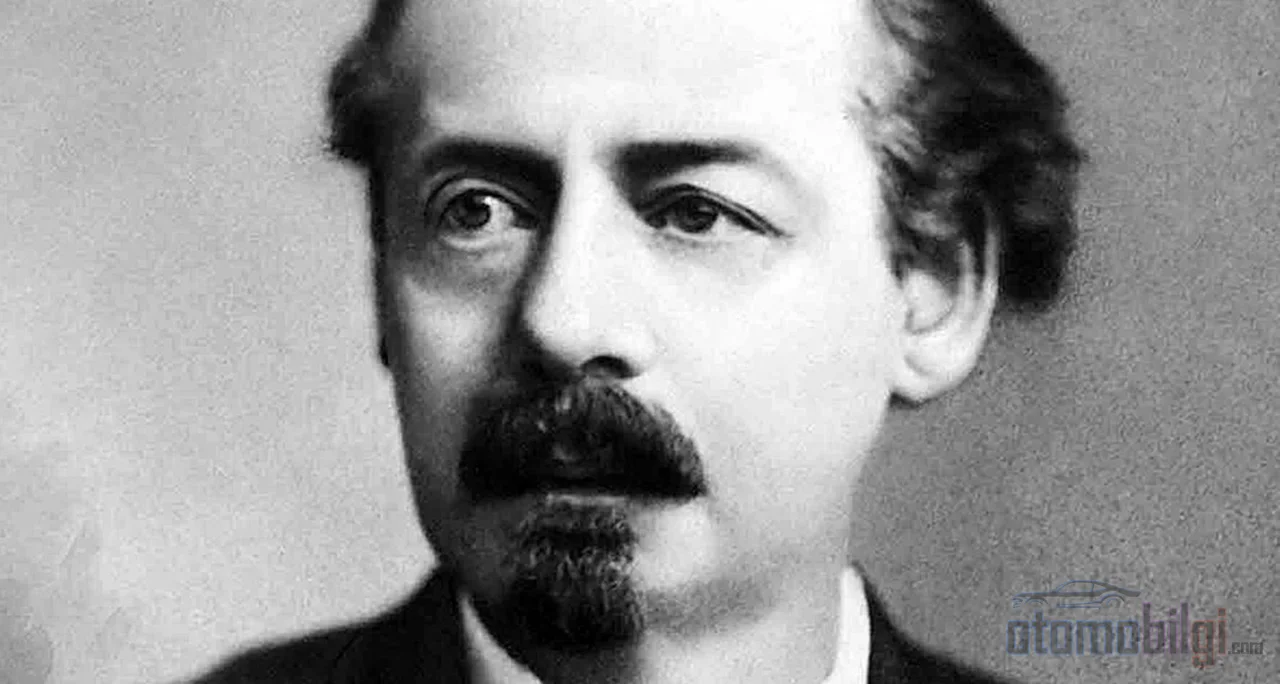
Siegfried Marcus, 1870: a Jewish inventor who mounted a petrol engine on a simple handcart in Vienna in 1870, and whose name the Nazi regime tried to erase from encyclopedias in 1940. What makes him so interesting in the debate over the inventor of the automobile is not just his inventions, but the fact that his work was deliberately erased from history. Here is the full story, stretching from petrol to his patent, and from his monument to school textbooks.
Highlights
- 1870: Marcus had the first petrol-powered vehicle built in Vienna - but the vehicle was a handcart, and even he was not satisfied with it.
- 131 patents, 16 countries: He never filed a patent application for his automobile.
- 4 July 1940: The Reich Ministry of Propaganda officially ordered that Daimler and Benz be mentioned as the creators of the automobile in encyclopedias instead of Marcus.
- The only surviving Marcus automobile, since 1918 has been on display at the Technical Museum in Vienna.
Who Was Siegfried Marcus, and Where Did This All Come From?
Siegfried Samuel Marcus, 18 September 1831 was born into a Jewish family in the town of Malchin in Mecklenburg-Schwerin. (Some sources give his birth year as 1833; even this small confusion can be seen as a harbinger of the erasure and revision battles in his story.) He started work as a mechanical apprentice at the age of 12, entered the doors of Siemens & Halske at 17, and 1852 moved to Vienna.
Vienna became the stage where he would perform: in 1860 he opened his own mechanical-electrical workshop at Mariahilferstrasse 107. The number of inventions that emerged from this place is astonishing - from an improvement to relay magnets (1861) to a fuel-air mixing device (1872), and from an improved gas engine (1883) to an electric ignition device (1884). The detonation machine called the "Wiener Zünder", used in the world of mining and explosives, is also his work. In total, he obtained 131 patents in 16 countries ; at the peak of his career he was awarded the Golden Cross of Merit by Emperor Franz Joseph, and upon his death he was buried in a "grave of honor" at the Vienna Central Cemetery.
So when he died, he was a respected, decorated, honored engineer. The trouble began afterwards.
1870's Odd Handcart: How Was Marcus's First Vehicle Born?
My favorite thing about attaching a petrol engine to a cart is this: the first attempt is not at all grand. Marcus, 1870 built his first petrol-powered vehicle in Vienna, and this vehicle was, yes, just a handcart. Moreover, to operate it, the drive wheels had to be lifted off the ground and turned - meaning the car never actually took to the roads. Marcus was so unsatisfied with it that he dismantled the vehicle. Only the model left its mark, 1873 Vienna Exhibition being displayed at the 1873 Vienna Exhibition.
Let me give an analogy from everyday life: this is exactly like your first cooking attempt burning. You enjoy the meal and clear the plate, but the recipe remains, and years later other cooks build upon that recipe. Mercedes-Benz Group's official history page confirms this 1870 vehicle as the first motorized vehicle; it is also generally accepted that Marcus's was the experiment that first used petrol as a fuel in a vehicle.
The Second Marcus Car: When Is the Real Date?
The second act of Marcus's story is complicated by a dispute over dates that lasted for years. Sources advocating the early dates put forward years such as 1864 or 1875; the account claiming that a Marcus vehicle was built in 1875 was refuted when Ludwig Czischek-Christen, who conducted research under pressure from patent lawyers, found evidence that the vehicle was actually built in 1888 and corrected this date at the Austrian showcase of the 1900 Paris Exposition. For this reason, there are significant differences even among the years referred to as "Marcus's first car."
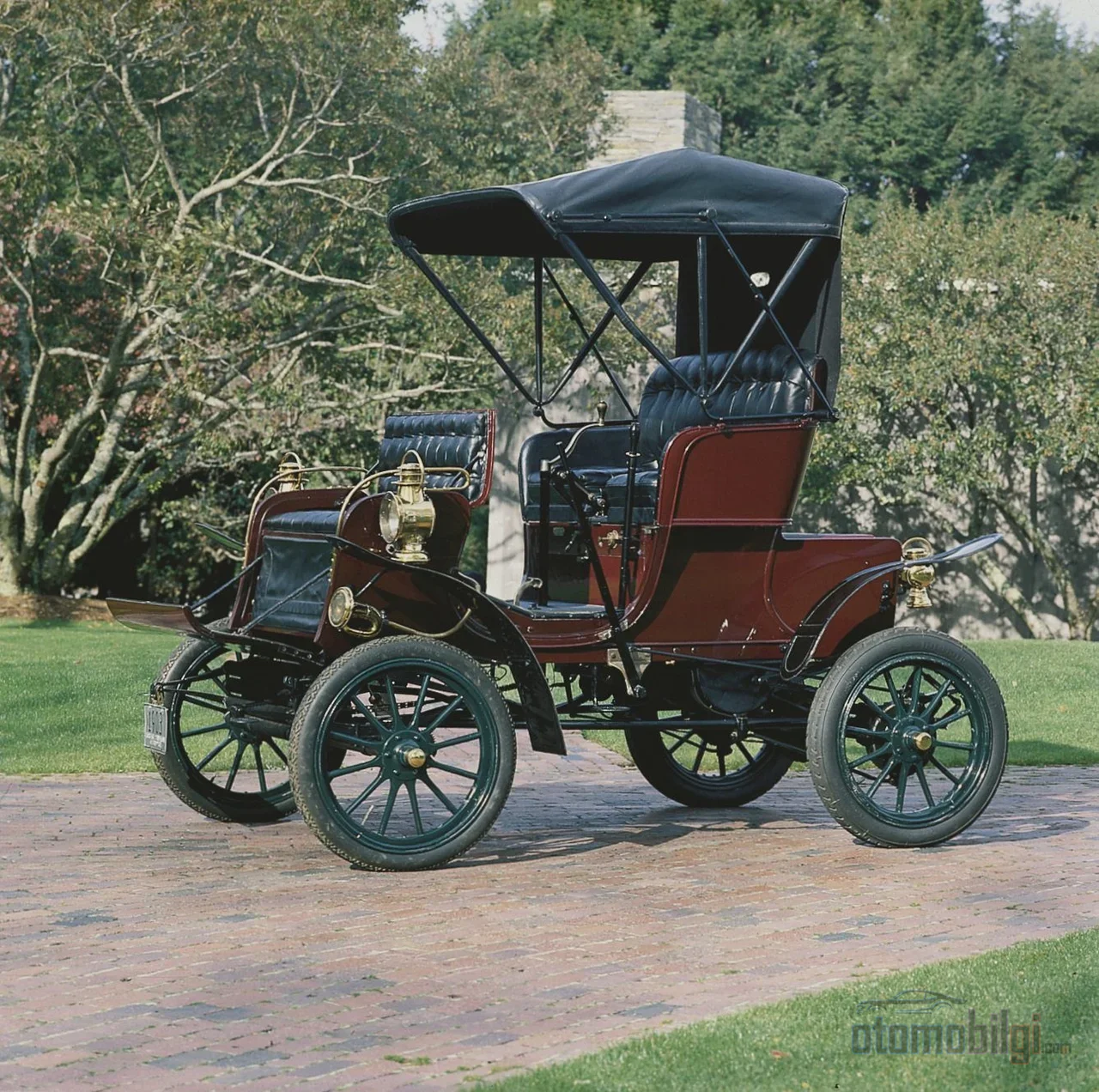
So what do we actually know? In 1887, Marcus entered into cooperation with the Moravia-based firm Märky, Bromovsky & Schulz and had his second vehicle built in these workshops in 1888/1889. The vehicle featured a four-stroke gasoline engine, a surface carburetor, and electric ignition. This ignition was based on the low-voltage ignition magneto patent Marcus obtained in 1883 in Germany; the same engine was used by the German Navy in torpedo boats in 1886.
Current historiography accepts that Marcus's second vehicle only ran years after the Benz Patent-Motorwagen. Marcus's vehicles had no practical impact on the development of the automobile; journalists of the era described his experimental vehicles as "impractical." The most interesting name on the opposing side is Benz himself: in an article published in 1925, he claimed that the "Marcus Wagen" had never been driven on the road, but he acknowledged that Marcus's engine was significantly better than his own predecessors. So there was respect even among colleagues; the problem lay elsewhere, behind the scenes.
Meanwhile, the only surviving Marcus automobile, the second vehicle built in 1888/89, has been on display since 1918 at the Technical Museum in Vienna. It has been started only twice since 1890 - which shows just how well suited the vehicle is to aging with museum calm.
Why and How Did the Nazis Erase Marcus's Traces?
Here is the harshest part of the story. Marcus was of Jewish origin, and the Nazi regime carried out a planned campaign to completely erase this pioneer of automotive history. The abstract form of the campaign was as follows: the destruction of his works, the removal of his name from future textbooks, and the removal of his monuments. The concrete steps were these:
- In March 1938, following Austria's annexation to Germany (Anschluss), the Marcus monument in front of the Vienna Technical University was removed.
- The statue on the facade of the Technical Museum in Vienna and the model of the first automobile were dismantled.
- The destruction of the original Marcus automobile displayed at the Vienna Automobile Club was ordered; the vehicle was hidden by museum staff during the occupation.
The most documented step of the campaign was on July 4, 1940 official letter dated: The Reich Propaganda Ministry under Joseph Goebbels, in a letter sent to Daimler-Benz A.G., ordered the Meyers Konversations Lexikon and Große Brockhaus encyclopedias to name Gottlieb Daimler and Carl Benz, instead of Siegfried Marcus, as the creators of the modern automobile. The full text of this document can still be examined today. In other words, behind the claim that "Benz invented the automobile" lies not only a scientific assessment but also a racist political decision.
Even so, there was resistance. In 1937, the Harand Movement in Austria, in response to an exhibition of racial hatred, issued stamps bearing the portraits of prominent Jews, including Marcus, and described Marcus as the inventor of the gasoline-powered automobile. The monument was 1948 re-erected in and still stands in its place today. Marcus's personal archive was also entrusted to the Central Archives for the History of the Jewish People in the early 1950s - meaning a line of memory emerged that left traces against those who tried to erase it.
Who Is the Inventor of the Automobile? Benz or Marcus?
This is the most frequently asked question, and the honest answer is this: neither as simple nor as complicated as you might think. According to the records, 1870 Marcus was the first person to drive a vehicle with gasoline in. Benz, on the other hand, is the person who, from 1886 onward, moved from experiment to production with the Benz Patent-Motorwagen and truly turned the automobile into a product. Mercedes-Benz Group's official "Forerunners" page lists, among the pioneers besides Benz, Isaac de Rivaz (1807), Lenoir (1863), and Marcus (1870); it also adds that most of these vehicles could not carry passengers.
| Pioneer | Year | Contribution |
|---|---|---|
| Isaac de Rivaz | 1807 | Early motorized vehicle experiment |
| Lenoir | 1863 | Pioneering vehicle with internal combustion engine |
| Siegfried Marcus | 1870 | First gasoline-powered vehicle (handcart) |
| Carl Benz | 1886 | First automobile to enter production |
Why didn't Marcus patent the automobile? The question is asked often, and the answer is somewhat melancholic: he never filed a patent application. Some assessments point out that this stemmed from a lack of business genius. Throughout history, inventors' marketing skills have been as important as their inventions; Marcus had none of the former. Nevertheless, the recognition that the only surviving Marcus automobile is "the oldest automobile still standing in the world" places him at the heart of automotive history, in a place he truly deserves.
Why Does Erasing History Distort the Automobile Narrative?
Marcus's story shows us why automotive history is so fascinating: not only does technical progress have a history, but so does the way that progress is told. A regime can change encyclopedias through official correspondence; one name can be inserted into textbooks while another is removed. But a vehicle preserved in a museum, a re-erected monument, and an entrusted archive remain as tangible evidence standing against attempts to erase history.
That is why debating the inventor of the automobile is not about pinpointing a single name. Benz's success in turning it into a product, Daimler's engineering brilliance, and Marcus's early experiment - together, the three of them make up the birth story of the automobile. If it were up to you, whose side would you take as being first? In my view, the most honest answer is this: the first experiment and the first product should not be put on the same scale. And erasing someone's name by a political decision is one of the biggest mistakes that distorts the narrative of automotive history as it has reached us even today.
Sources
- Siegfried Marcus
- 203 Siegfried Marcus Car
- Siegfried Marcus
- Forerunners to the automobile: Company history.
- From the Archives | Behind the Wheel - Segula
- Marcus-Mobile: The Jewish Genius Who Invented the Car ...
- The Second Marcus Car of 1888/1889
- Siegfried Marcus: The Forgotten Inventor of The Automobile
- September 18: The Lost Inventor of the Auto
- First Auto | The Engines of Our Ingenuity - University of Houston