From Spyker to the Jensen FF: The Forgotten Journey of Four-Wheel Drive
Share This Page
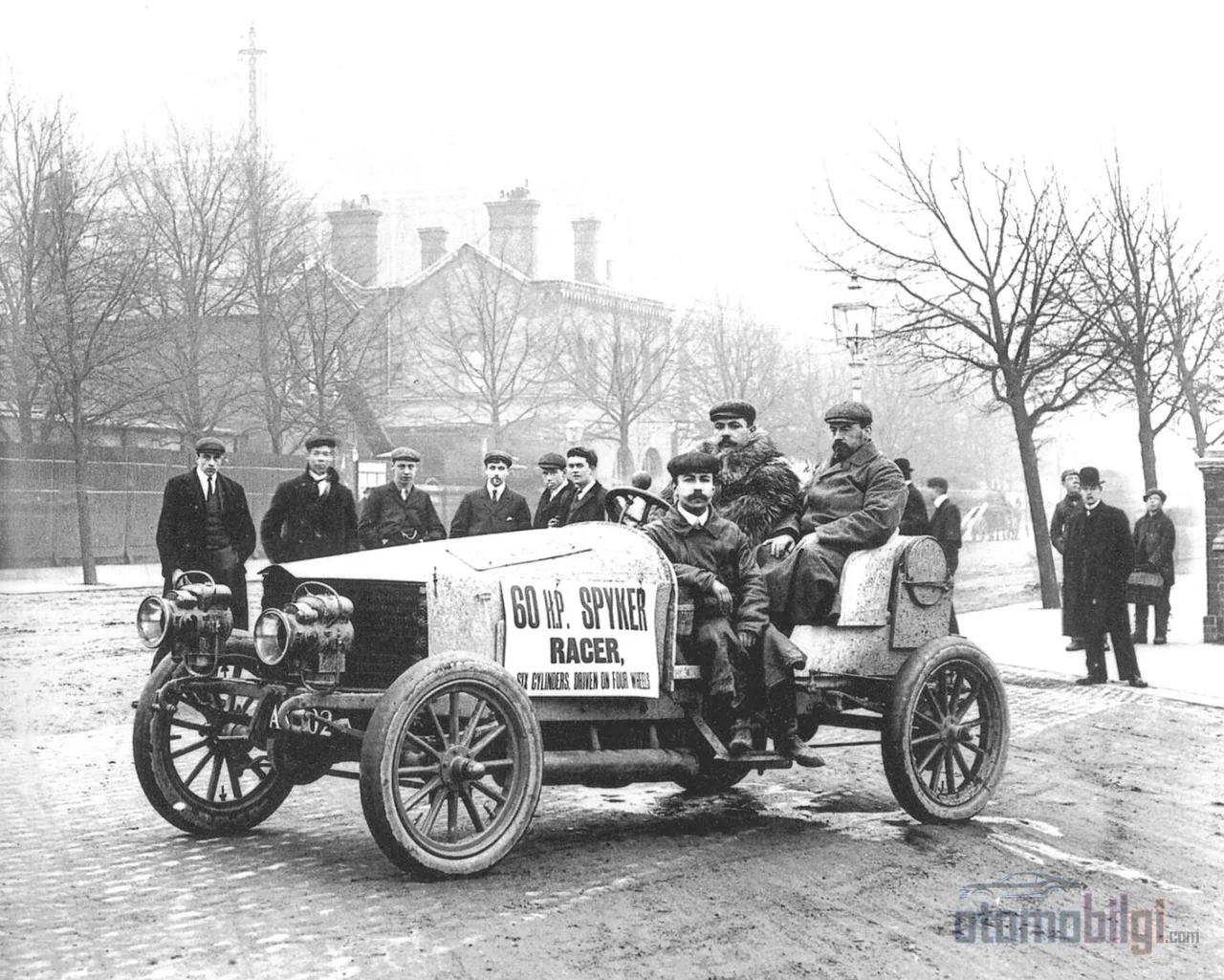
The world's first four-wheel drive car, and the first gasoline-powered example in the sense we know today, is the 1903 Spyker 60 HP; with its six-cylinder engine and four-wheel brakes, it carried three revolutions at once. The first patent for the four-wheel drive idea, however, was the system Bramah Joseph Diplock received for a steam traction engine in 1893. But the real surprise is this: this technology only reached series-produced road vehicles in 1966, with the Jensen FF. What happened during those 63 years? Here is the forgotten journey of four-wheel drive.
Highlights
- 1903 Spyker 60 HP: the first gasoline-powered four-wheel drive automobile
- The first six-cylinder engine and the first four-wheel brake system in the same vehicle
- Top speed: between 130-145 km/h
- 1966 Jensen FF: the first four-wheel drive series-produced for the road + the first series-production ABS
- Power distribution: front/rear 37%/63%
Why Was the Four-Wheel Drive Car Discovered So Late?
It seems strange at first glance, doesn't it? Even before airplanes were invented, there were people trying to power all four wheels. But that experimenter built only a single car, and the technology was then shelved for nearly an entire human lifetime. The reason for this gap is simple: four-wheel drive was expensive. Extra drivetrain components meant more weight, more complex mechanics, and a higher price. When manufacturers could not close this gap, they pushed four-wheel drive toward load-carrying work vehicles and the military; it was seen as a technology for dirt, not for asphalt.
So the problem wasn't the absence of the idea; the problem was cost and positioning. The best way to understand that story is to start from the beginning: 1893, with a patent from an English engineer.
Bramah Joseph Diplock and the Pioneering Patent of 1893
Think of the Jensen as built at least 70 years later, and the Spyker ten years later. In 1893, the English engineer Bramah Joseph Diplock patented a system providing both four-wheel drive and four-wheel steering for a steam traction engine -one of those giant, wheeled steam tractors-. This is considered the first four-wheel drive vehicle developed in England. Let's make it easy to picture: think of a classic steam tractor as a simple cart with its wheels connected to each other. Diplock's system, on the other hand, is like adding a robotic arm to that cart, where each wheel both spins and changes direction. Difficult work, an engineering marvel, but in practice expensive and cumbersome. That is why no series revolution followed the patent.
Spyker 60 HP: The Car of Three Firsts
Now our real hero takes the stage: the 1903 Spyker 60 HP. The Dutch Spyker company was founded in 1880 by the blacksmith brothers Jacobus and Hendrik-Jan Spijker. Jacobus ordered a very special car for the 1903 Paris-Madrid race. (The interesting part of the story: some early motorsport writers say it was built for the Gordon Bennett race; which race it was is debated, but it is clear the car was ordered for a race.)
The brain of the car bore the signature of the Belgian engineer Joseph Valentin Laviolette. Laviolette had designed an engine with six separate cylinders and built a transmission that sent the engine's power to both the front and rear wheels. A driveshaft extending forward from the transmission carried power to the front wheels. Today we are used to all-wheel drive, but in 1903 even imagining it was a daring act.
Three revolutions in a single car
The Spyker 60 HP is called "the car of three firsts," and it is a well-deserved nickname. We can list the reasons as follows:
- First gasoline all-wheel drive: With its driveshaft, all four wheels received power.
- First six-cylinder engine: An 8.8-liter straight-six design; a record for cylinder count at the time.
- First four-wheel braking system: Brakes on all four wheels, plus a transmission brake. Think of splitting the braking into four with this analogy: someone who cannot carry four glasses with one hand holds them far more comfortably with four hands.
Its top speed is given as between 130 and 145 km/h. Can you imagine that in 1903? The roads of that era were mostly unpaved; dusty, rocky, muddy. So in a sense, Spyker was running on the ancestral soil of today's rally cars.
An epic life of only two races
This is where the bitter truth begins. The car could not make it to the Paris-Madrid race in May 1903. It was unveiled in Paris in December 1903, and two months later it was displayed at the Crystal Palace in London. Its career was extremely short: it raced only twice. In 1904 it finished third at Blackpool, and in 1906 it won a hillclimb race in Birmingham. Hillclimbing actually suited all-wheel drive very well - on muddy, slippery roads, having all four wheels receive power could be a lifesaver. Combining that 1906 victory with the fact that the roads of the era were unpaved, some automotive historians consider the Spyker 60 HP probably the world's first all-wheel-drive rally car. Its racing life was short, but its results were unforgettable.
Today the car is on display at the Louwman Museum in The Hague. But even its display status is a bit of an adventure: in the early 1920s it was incompetently restored, and its body was changed. The museum bought it in 1993 and, with a five-year restoration, returned the car to its 1904 Crystal Palace display condition. So the car you see carries a 120-year restoration story with it.
From Spyker to Jensen: The Lost 63 Years
So what happened after Spyker? A classic of automotive history goes like this: There is a long silence between Dutchman Jacobus Spijker building the first all-wheel-drive racing car and all-wheel drive becoming a feature of road cars. During the years that passed in that silence, all-wheel drive did not disappear entirely, but it lived on mainly in military and industrial work vehicles. To justify the high cost, developers turned the vehicles into "work machines" that carried heavier loads. It was seen as a luxury for road cars and a necessity for tractors and military vehicles.
You can think of it this way: when automatic transmission first came out, it was also very expensive, and for years it was seen only in luxury vehicles. The difference is that automatic transmission became widespread within a decade; all-wheel drive, however, waited an entire human lifetime. Why? Because all-wheel drive was not just "an extra drivetrain component" - it was a system that required redesigning the entire vehicle. Fitting it into a road car required both the right mechanical solution and a bold manufacturer. The two did not come together until 1966.
The Jensen FF: The Automobile Revolution of 1966
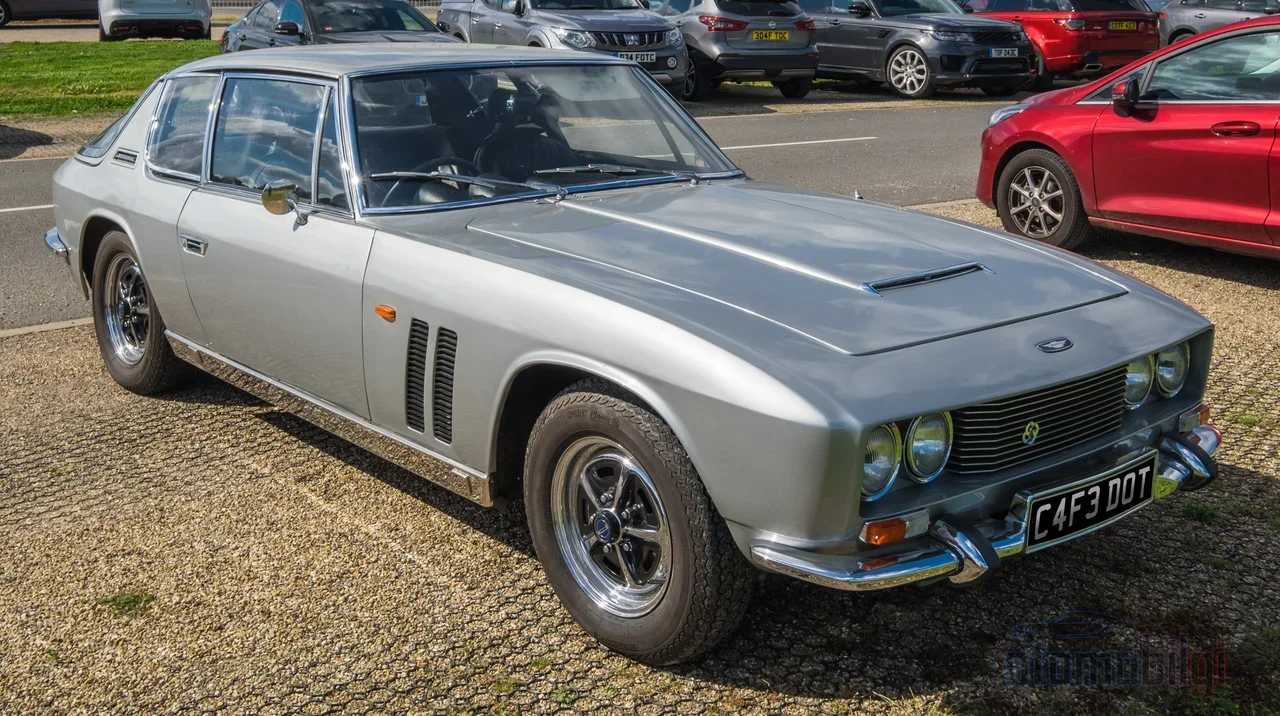
Here is the moment everything changed. In 1966, a small English coachbuilder fitted two things into a Chrysler-powered grand tourer: permanent all-wheel drive and anti-lock brakes, in other words ABS. This car was called the Jensen FF - FF stands for "Formula Ferguson". The Formula Ferguson system was what we today call "full-time all-wheel drive"; power was always distributed to all four wheels, with the distribution ratio between front/rear at 37%/63%. In short, it favored the rear wheels, offering a sporty character.
The braking side was just as ambitious as the traction: Ferguson's four-wheel drive was paired with Dunlop Maxaret anti-lock brakes. Think of ABS for a moment - that system that allows a car to stop without skidding even today. The Jensen FF was the first car to bring it to a series-production road vehicle. What's more, this happened a full 14 years before the Audi Quattro. So decades before the Quattro's debut, a small workshop in West Bromwich, England, was building the car of the future.
The Jensen FF in Numbers
| Feature | Value |
|---|---|
| Production years | 1966-1971 |
| Type | All-wheel-drive grand tourer |
| All-wheel-drive system | Formula Ferguson (full-time) |
| Power distribution (front/rear) | 37%/63% |
| Braking system | Dunlop Maxaret anti-lock (ABS) |
The Jensen FF went down in history as the first "non-off-road", that is, the first series-production all-wheel-drive vehicle designed for asphalt. In other words, all-wheel drive left the tractor and military vehicle aisle and entered the asphalt car aisle for the first time. Its being ahead of the respected and successful Audi is no coincidence; making an English grand tourer - not a Riviera - the pioneer was a completely different kind of courage for the automotive world of that era.
The Quattro's Secret Textbook
And here's the sweetest part of the story: according to legend, Audi engineers acquired a Jensen FF while developing the Quattro, took it apart, and studied it. There is no official source that can directly prove this claim, but the story is deeply meaningful in terms of engineering culture: a generation chasing firsts took the previous first seriously, picked it up, and examined it. It is certain that the features the Jensen FF offered in 1966 were things other manufacturers had to chase for decades. As for the production count, it is said to be only around 110 - this figure comes from a low-reliability source and cannot be independently verified, so "approximately" is the safest way to put it. But while the number was small, the idea was enormous.
Are History's "Firsts" Really "First"? The Definition Debate
This is the favorite debate topic of automotive enthusiasts: What does "first" mean? A small distinction needs to be drawn here. Spyker was the world's first gasoline-powered four-wheel-drive vehicle; Diplock, on the other hand, received the patent for four-wheel drive and four-wheel steering for a steam traction engine in 1893. In other words, "patent priority" and "gasoline application priority" belong to different parties. Additionally, there are those in some automotive forums who cite Mitsubishi's utility vehicles from the 1930s or Subaru's and Audi's models from the 1970s-80s as "the first four-wheel drive"; these are claims arising from different definitions, and as this article explains, no one had achieved a series-production four-wheel drive intended for road use until the Jensen FF. There is also the matter of the FF's first year: most sources give 1966, while some general histories use 1965 - it depends on whether production start or announcement is being referenced.
Looking Back Today: The Legacy of Four-Wheel Drive
Today, when you walk into a showroom and ask for a four-wheel-drive SUV or an AWD hatchback, no one gives you a strange look. Yet behind that option lies a patent from 1893, a Dutch vehicle ordered for a British race in 1903 but unable to make it in time, a legendary two-race career, and a wait of more than six decades. A technology being good is not enough; it also needs to arrive at the right time, at the right price, and answer the right need. Four-wheel drive is precisely the finest example of this. The Spyker 60 HP proved the idea, and the Jensen FF finally turned it into a real road car. If it were you, how would you evaluate this 63-year silence?
Sources
- Spyker 60-hp Four-wheel Drive Racing Car
- Spyker 60 HP
- Spyker 60hp - Dutch automotive pioneers - Revs Automedia
- Jensen FF
- The 1966 Jensen FF Had All-Wheel Drive and Anti-Lock Brakes
- Fast Forerunner: The Jensen Interceptor and FF
- The History of All Wheel Drive
- The Complete History of 4-Wheel Drive Vehicles