From Benz to the Ford T: The Birth Years of the Automobile and Its Pioneers
Share This Page
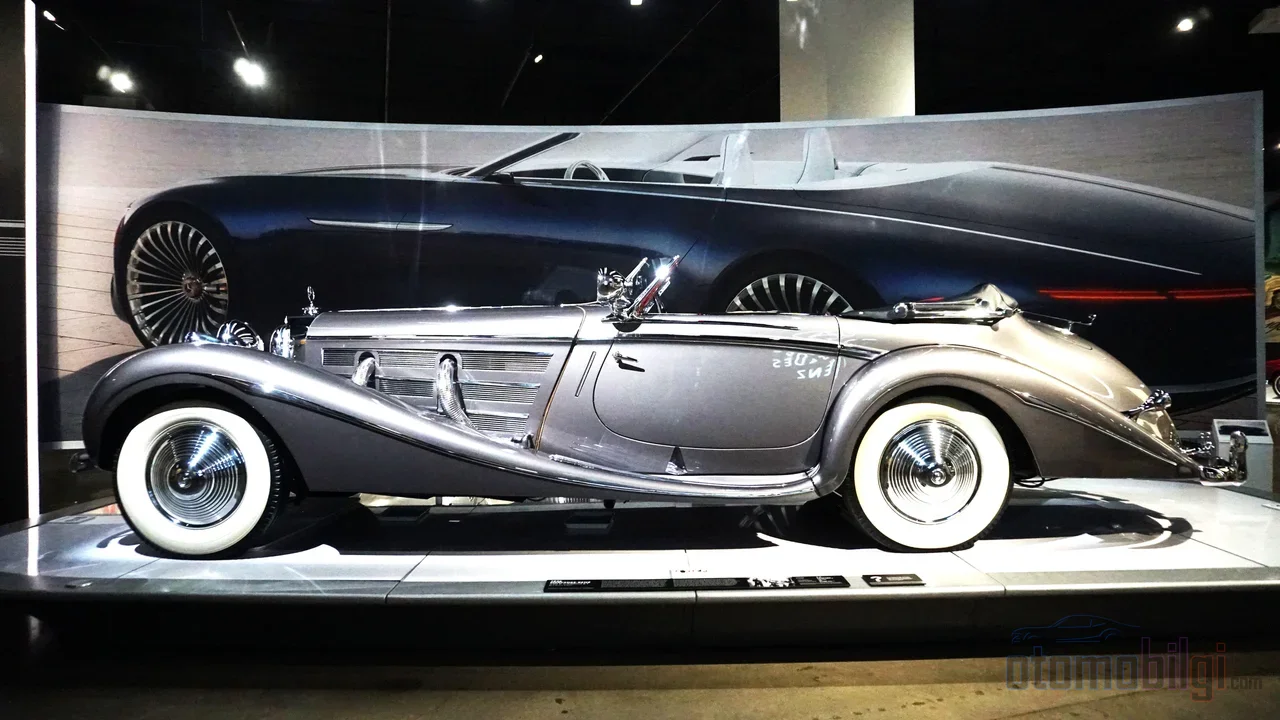
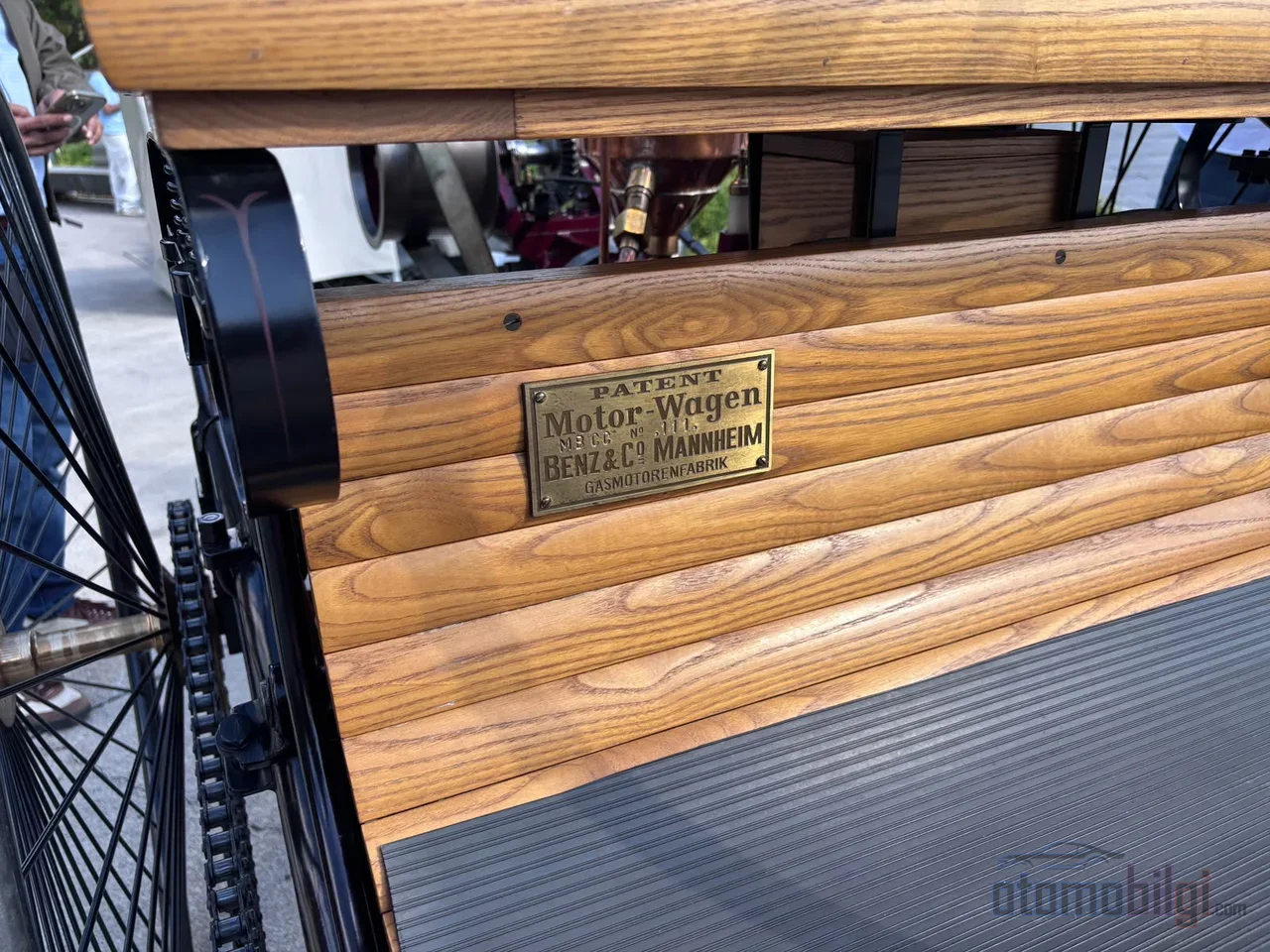
The first automobile, by the most widely accepted definition, was invented by Karl Benz: Benz Patent-Motorwagen' He built it in 1885 and received its patent on January 29, 1886. But the story of the automobile's birth cannot be told with a single name; it is the most exciting chapter of a half-century-long adventure stretching from Cugnot's steam vehicles to Ford's assembly line. So let's head back to 1886 together!
Highlights
- Karl Benz built the Patent-Motorwagen 1885' and received its patent on January 29, 1886.
- Bertha Benz, August 5, 1888' made history's first long-distance automobile journey from Mannheim to Pforzheim, a trip of about 106 km .
- Panhard et Levassor sold its first automobile in 1890' France established the world's earliest automotive industry.
- Ford Model T October 1, 1908' went on sale for $850 ' the price dropped to 1914' $490 .
- Ford's moving assembly line December 1, 1913' went into operation and divided assembly into 84 steps.
Who Invented the First Automobile? The Road from Cugnot to Benz
I would like to give a one-word answer to the question of who invented the first automobile, but history plays with us a bit. Because "first" depends on your criteria: do we look at steam, gasoline, or whether it carried people? Think of it this way: the first runner in a race and the first champion don't always have to be the same person.
The chronology is actually surprisingly old. 1672' Ferdinand Verbiest produced a small-scale, steam-powered vehicle - but it could not carry people, more like a toy. The real turning point came in 1769' Nicolas-Joseph Cugnot built the first self-propelled land vehicle with a steam engine. Cugnot's three-wheeled steam-powered Fardier is considered the world's first self-propelled vehicle; that's why he is even called "the world's first automotive engineer." The 1770 full-scale vehicle is regarded today as one of the world's first working automobiles.
So how did steam cars work? The fuel heated the water in the boiler, and the resulting steam pushed the pistons. Just like a teapot lid jumping from steam - but the size of an entire car. Didn't that sound familiar at all? Yes, exactly that teapot! Cugnot's vehicle could reach about 3.6 km per hour; that is, slower than today's walking pace. After a while, it also ran out of steam: 1905' by then, gasoline cars had left steam and electric cars behind with their ease of use and range advantage.
The real star was born in Germany. Karl Benz (1844-1929) was a German engine designer and automotive engineer. 1885' he built the Patent-Motorwagen, the first successful gasoline automobile, and on January 29, 1886' received its patent; on July 3, 1886' he officially introduced the vehicle. This vehicle is considered "the first practical automobile." Note that the words here matter: Benz's distinction is not just being "first," but being the first person to truly integrate the engine into a vehicle. Practical. That is, something that actually works.
Benz or Daimler? The Race of Two German Pioneers
At the end of the 19th century, there were two great pioneers of automotive production: Gottlieb Daimler (1834-1900) and Carl Benz. These two are considered the founding fathers of one of today's largest automotive groups - but interestingly, they worked like two rivals, not under the same roof.
Who was first? Here the answer is a bit teasing: Daimler and his partner Wilhelm Maybach 1883 invented the world's first high-speed gasoline engine. So in the engine department, they were first. But Benz was the first to integrate that engine into a vehicle, and in 1886 he produced both the first modern automobile and the first series-produced vehicle. Daimler, meanwhile, assembled his own first automobile in Germany in March 1886. So the engine belongs to Daimler, the car to Benz - but both won. Isn't that the sweetest outcome?
I hear you asking: "If the engine existed in 1883, why wasn't there an automobile right away?" Because mating an engine with a chassis isn't like pairing a phone with a case today; it's more like transplanting a heart into a body. Benz's genius was designing the engine and the vehicle as a single whole. That's why the Patent-Motorwagen is considered not just a motorized carriage, but the first true automobile.
Bertha Benz's Journey: The Woman Who Introduced the Invention to the World
Now we come to the hero of the story, and in my opinion my favorite part. Because Karl Benz invented his vehicle, but the person who won the public over to it was his wife, Bertha Benz. Yes, the first person to advertise the automobile was a woman - and she did it in secret!
On August 5, 1888, Bertha Benz took the Patent-Motorwagen without telling her husband, took her sons Eugen and Richard along, and set off from Mannheim to Pforzheim. The distance: about 106 km (65 miles). This was the first long-distance journey made with an internal combustion engine automobile, and at the same time a massive field test. Think about it: no gas stations back then, no asphalt roads, no guides. Just you, a three-wheeled machine, and plenty of courage. Bertha had to stop at a pharmacy to buy gasoline - yes, a pharmacy! Back then, gasoline was sold in pharmacies as a cleaning agent.
And the result was wonderful: the journey made a big splash in the public eye and stirred up far more interest in the automobile than ever before. In December 1888, the Illustrirte Zeitung newspaper published the journey, and Bertha wrote her name into history. Today, there is even a tourist route called the Bertha Benz Memorial Route for tourists who want to follow the Mannheim-Pforzheim route. You can still trace the footsteps of the first automobile test drive today - a superb vacation plan, in my opinion!
How Were the First Manufacturers Born? France Enters the Scene
Germany invented the automobile, but the French stand out among those who turned it into an industry. Four names formed the world's earliest automobile industry: Panhard & Levassor, Peugeot, Serpollet and De Dion. This quartet transformed the automobile from an invention into an industrial product.
Panhard et Levassor: The Pride of the First Sale
Panhard et Levassor built its first automobile in 1890 and became one of the first automobile manufacturers in history. So the first customer who bought a car and paid to take it home had simply called a Frenchman and placed an order. Doesn't that sound so much like the 1990s? A whole century ago!
Peugeot: The Transition from Steam to Gasoline
The story of Peugeot, meanwhile, shows us just how fast the automobile evolved. Armand Peugeot (1849-1915) built the company's first automobile in 1889- a three-wheeled steam-powered vehicle designed by Léon Serpollet. But just one year later, in 1890, they built a more advanced internal combustion vehicle powered by a Panhard-Daimler engine. A real slam dunk, right? People were deciding which engine the next car would use before the first one was even finished.
In 1891, Peugeot built its first gasoline-powered automobile, equipped with Daimler engines brought in from Germany. Their first four-wheeled vehicle (quadricycle) was also sold on June 9, 1891, to a Swedish customer. So Peugeot's first customer wasn't even French - the automobile had become a global product right from birth. In the 1890s, Peugeot produced a vehicle that used the Daimler engine but offered a new layout, and it became one of France's leading manufacturers. Family disputes, meanwhile, led Armand Peugeot to found his own company; it seems automotive history got its share of family drama too.
1886-1908: What Was the Pre-Mass Production Chaos Era Like?
I call the twenty-two years between Benz's Patent-Motorwagen and the Ford Model T the automobile's "adolescent years." Because everything was trial and error, with every brand striving to find its own path. All automobiles before 1908 were built as custom, limited-production vehicles. In other words, the automobile wasn't an object but a work of craftsmanship - like a suit tailored specially for you. And of course, since tailoring is expensive, these vehicles were luxury products; for most people they were priced beyond imagination.
| Period | Production method | Who could buy it? |
|---|---|---|
| Before 1886 | Steam-powered and experimental vehicles | Almost no one |
| 1886-1908 | Custom-built, limited production | The wealthy and enthusiasts |
| After 1908 | Transition to mass production | The general public |
During this period, every brand was developing its own engine, its own chassis, its own layout. There were no standards, no shared parts, and of course no gas stations at all. A vehicle breaking down meant a week's headache for its owner. But at the same time, this chaos was like soil where the seed sprouted: Panhard, Peugeot, Daimler, Benz... all at once, independently of one another, they were trying to discover what the automobile should be. And right out of the middle of this chaos, history's second most important hero would be born.
Ford Model T and Mass Production: The Automobile Belongs to Everyone
And the stage is left to Henry Ford. Ford reinvented modern mass production and turned to high-volume Model T production. The Model T, October 1, 1908' (some sources say the first vehicle was assembled at the Piquette Avenue Plant on September 27) $850 when it went on sale. Do you know what Ford's goal was? A "universal car" that most people could afford, in other words everyone's car. The idea of taking the automobile away from being a toy of the aristocracy and turning it into a vehicle for the masses was exactly this.
The real magic came on December 1, 1913: the moving assembly line went into operation and the Model T's assembly was divided into 84 separate steps . This completely reversed the production process: previously the worker went to the vehicle, now the vehicle came to the worker. Ford also took advantage of Eli Whitney's interchangeable parts system to move to mass production; the same screw fit every car, the same door fit every chassis. This logic is used in almost exactly the same way by every factory producing today.
The result? Magnificent: the price of the Model T in 1908 was $850, and by 1914 it dropped to $490. The longer the assembly line ran, the cheaper the vehicle became, and the automobile transformed from a luxury toy into an ordinary family vehicle. The Model T changed the way people lived, worked and traveled. The automobile gave people more personal freedom and access to jobs and services; it also led the way for the development of better roads. So the bus, the truck, even your own cars that you use today are all descendants of these two pioneers - Benz's invention and Ford's production idea.
The Lasting Legacy the Birth Era Left Us
This journey, stretching from Cugnot's steam vehicle moving at 3.6 km/h to Ford's 84-step assembly line, took about 140 years, and this process lives on today in the DNA of every car coming out of factories. Saying "first" doesn't always mean "best" - Benz's vehicle may look like a rickety bicycle by today's standards, but it solved such a fundamental problem that it physically rebuilt the world. Which era do you say we dive into next in the story of the automobile? I'm inclined to retreat to the war years, but first, what do you say - if the first car were in the world, which one would you choose: Cugnot's steam-powered one, Benz's gasoline one, or Ford's affordable Model T? I'm waiting in the comments!
Sources
- History of the automobile - Wikipedia
- 1886 - Wikipedia
- Carl Benz - Wikipedia
- Bertha Benz - Wikipedia
- Panhard - Wikipedia
- Bertha Benz - Mercedes-Benz Group
- The predecessor companies (1886-1920) - Mercedes-Benz Group
- Ford's assembly line starts rolling - HISTORY
- Ford Implements the Moving Assembly Line - Library of Congress
- Early Cars: Fact Sheet for Kids - Smithsonian
- The Rise of the Model T (1908-1927) - Learngala
- The History of Steam-Powered Cars - ThoughtCo
- Karl Benz and Gottlieb Daimler put the world on wheels - Autoweek
- Tampa Bay Automobile Museum
- Peugeot - Historic Vehicles
- 9 Oldest Car Companies in the World - Oldest.org
- The Automobile: Social Game Changer - NCpedia