How Did the World Wars Change the Automobile?
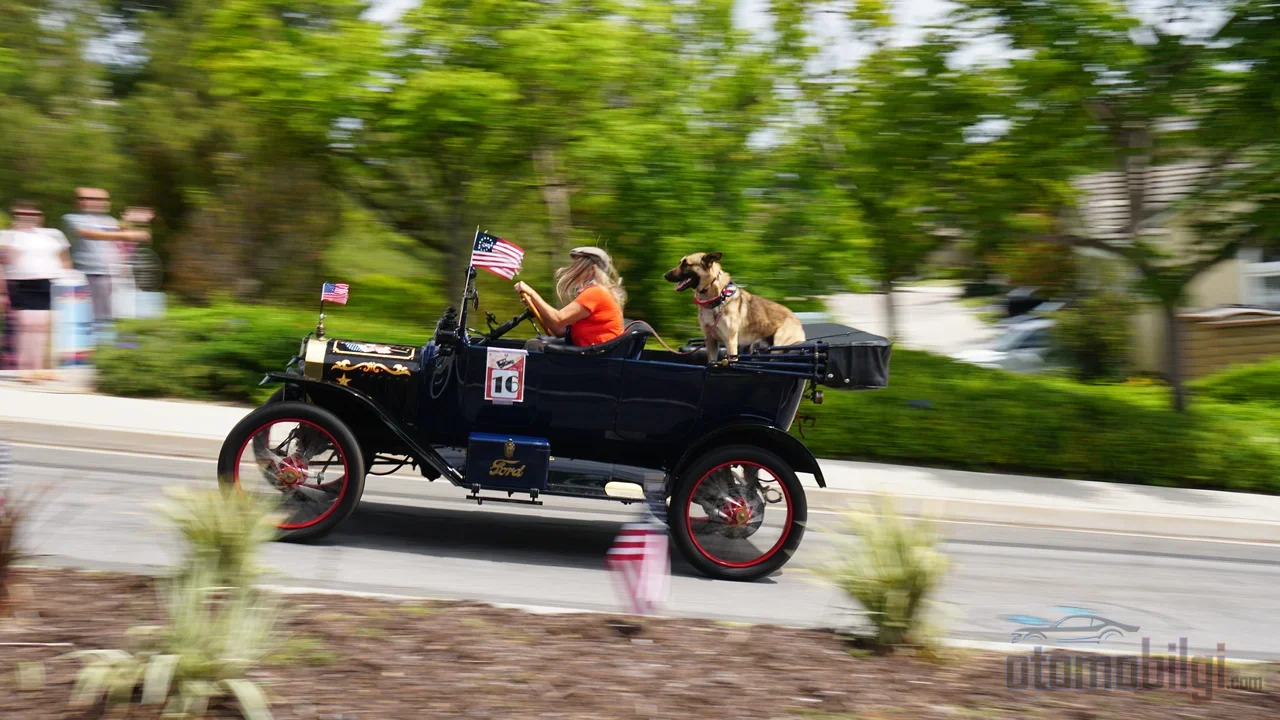
Share This Page
The world wars turned the automobile industry upside down twice: World War World War I carried Ford's mass-production methods into the war industry, and in the interwar period it gave birth to the idea of the people's car in Europe; World War II II created military vehicles like the Jeep, and after the war this accumulation turned into a massive automobile boom in America. In other words, the DNA of today's automobile industry was written on an all-out battlefield in the fairly recent past.
Highlights
- Ford's moving assembly line reduced the workers' 12.5-hour assembly job to 93 minutes.
- On January 1, 1942, the US froze consumer vehicle sales; civilian production came to a complete stop.
- Willys and Ford produced a total of 639,235 Jeeps during the war.
- By 1948, US manufacturers were producing roughly 4 million new vehicles a year.
- Throughout the 1950s, about 58 million vehicles were produced and sold in the US.
How War Changed the Automobile A Chronological Roadmap
Just think about it: Everything from those guitar-case-bodied classics to the city cars you see on every street corner took shape between and around the two world wars. The wars were fought not only on the front lines but also on factory floors; and the side that won the factories was the side that built today's automobile industry. I'm now going to tell this story chronologically, from beginning to end. Fasten your seatbelt, here we go!
The Pre-War Foundation: Ford and the Moving Assembly Line
The real hero of the story took the stage even before the war. The Ford Model T, introduced in 1908, was an incredible idea for its time: designing the car not just for the rich, but for everyone. Because in 1908, more than half of the cars sold were priced above $1,375 - roughly $45,000 in 2023 money. Yet the average per capita income that year was only $317. The car was not a toy; it was a dream.
Then Ford changed the game entirely. On January 14, 1914, he moved Model T chassis onto a chain-driven, moving assembly line at the Highland Park factory. Think of it this way: Instead of sitting at the dough and doing all the work yourself when making a pizza, imagine the dough coming toward you on a belt, you just adding one ingredient, and the pizza being ready at the end of the belt. Ford did exactly that, reducing the workers' 12.5-hour assembly job to 93 minutes. The result? The Model T's price fell, production soared, and by 1922, 47% of all cars in the US were Model Ts. In the years approaching the war, there were fewer than 50 passenger cars per 10,000 people on US roads, while by 1930 that figure exceeded 1,800. The war had already experienced an industrial revolution before it even began.
World War I: World War II: The Military Exam of the Factories
When war broke out in 1914, the automotive industry demonstrated its military value for the first time. Motor vehicles began to be used for military purposes: trucks and cars carrying ammunition, food, and soldiers to the front became the backbone of the war. The horse had been the king of the battlefield for centuries; but its throne was now shaken.
What is truly interesting is this: Manufacturers like Ford could convert their civilian production capacity to war production within months. To put it in today's terms, it was like a phone factory suddenly starting to produce masks. This flexibility was a byproduct of the moving assembly line - the line produced whatever you told it to produce. There is even an interesting historical assessment: It is said that the mass production superiority of the US automobile industry was probably one of the most important reasons the Allies won. In other words, the mass assembly line affected not just cars, but the course of the war itself.
And when the war ended, the industry did not sit idle. In Canada, passenger car registrations increased by 315% between 1914 and 1918 - that is, they tripled. In the US, the increase was 234%. The war worked like the greatest advertising campaign ever, bringing the automobile into the lives of ordinary people.
The Interwar Period: The Idea of the "People's Car" and the Birth of the VW Beetle
The years between the two wars were a period when the automobile changed its identity. In America, the Model T was produced until 1927 and transformed the automobile from a luxury product into a mass-market product. But in Europe, defeated in the war with a collapsed economy, the idea evolved in another direction: the nation needed a cheap, simple car.
The Overlooked Roots of the Beetle
In the early 1930s, Adolf Hitler put forward the idea of a cheap and simple "people's car." Based on this idea, a company was founded in 1937 and took the name Volkswagenwerk GmbH on September 16, 1938. Hitler also laid the foundation of the factory in Wolfsburg during the same period. So the origin of the VW Beetle, which we know today as a tiny, cute design, is based on an attempt to create an affordable car for the German people during the Third Reich era - its origins cannot be separated from Nazi Germany, at least not entirely.
But the story takes a strange turn here. In 1945, a rare Beetle was sent from the bombed German factory to Britain, and that little car gradually became a symbol of "freedom and economic miracle." A car designed in the middle of a war becoming the standard vehicle of hippie culture a few decades later... This kind of irony is found even in literature - in real life, it happened to a car!
The Rise of Small Cars in Europe
The Beetle was not alone. In interwar Britain, the Baby Austin 7 (1922) is cited as the pioneer of small car design. Ford, too, showed how important small cars were in the British market by introducing the Ford 8 in 1932. Right after the war, France took the stage: The Citroën 2CV was introduced at the 1948 Paris Motor Show and was produced from 1948 to 1990 - imagine, a car produced for 42 years with almost no changes! (The company itself was much older; Citroën had been founded by André Citroën in 1919.)
II. World War II: The Birth of the Jeep and the Transformation of Factories
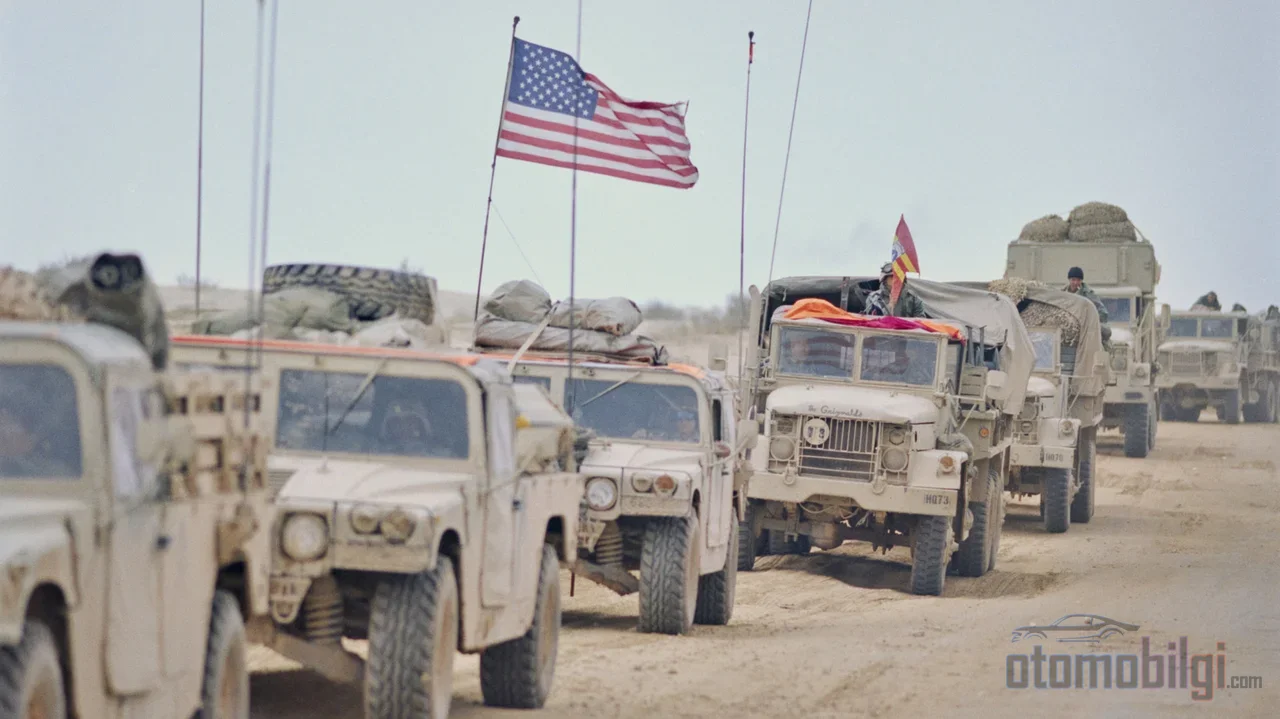
II. World War shook the automotive industry far more deeply than the first one. The U.S. government froze consumer vehicle sales on January 1, 1942 and completely halted civilian vehicle production; manufacturers were given time until February 9, 1942. Factories that produced 4.7 million vehicles annually in 1940 suddenly converted their sedan, coupe and convertible production lines to tank, aircraft engine and military vehicle production. So that pizza factory analogy of mine expands: the assembly line was now running with a completely different menu.
During these years, ordinary Americans had to use their cars for many years: rationed tires and fuel, patched-up repairs, material substitutes like plastic in 1942 models... The war extended the life of cars and developed people's repair culture. The roots of that classic-car-restoration approach that comes to mind today when you say "old car repair" partly go back to those rationing years.
The Four-Wheeled Legend: Willys MB
The most popular legacy the war left to the automotive world is undoubtedly the Willys MB, that is, the Jeep. It was produced between 1941 and 1945, and Willys and Ford together produced a total of 639,235 units during the war (about 360,000 were the Willys MB itself, with the rest being the Ford GPW). Even the name "Jeep" came from an affectionate nickname the soldiers gave the vehicle. Willys-Overland had received a contract for the production of 16,000 vehicles at a unit price of $748 until January 1942.
The importance of this tiny vehicle becomes even clearer with the numbers: quarter-ton jeeps made up one-fourth of all the military support motor vehicles the U.S. produced during the war. It became the basic light, multi-role wheeled vehicle of the U.S. Army and its allies. And here is where the great legacy comes into play: Jeep defined the transition of 4x4 innovation from war to civilian adventure. Every off-road vehicle you see on the road today has a war machine as its distant grandfather. What a dramatic family tree!
The Post-War Explosion: The Car Boom in America
The war ended, and when the gunpowder smoke cleared, the factories returned to their old business. Ford became the first major U.S. manufacturer to start producing vehicles before the Pacific front ended - on July 3, 1945! Automobiles returned to the public with the 1946 model year. Imagine a nation that had been unable to buy a new car for four years... The result, of course, was an explosion.
By 1948, U.S. manufacturers were producing about 4 million new vehicles per year, and in 1950 there were 40 million vehicles on American roads. Throughout the entire 1950s, nearly 58 million vehicles (an estimated 57,914,259) were produced and sold - this was the peak period of U.S. automotive production. Meanwhile, production also increased rapidly in Europe and Japan; but the process worked differently there, building on the small and economical cars I described in the previous chapter.
Why Such a Rapid Explosion?
It wasn't just accumulated demand; social change was also part of the picture. Suburbanization - that is, people's desire to own homes away from the city center - made the car an absolute necessity of life. A suburban house without a car was like a carriage without wheels. In the 1950s, engine power and speed also increased, designs became more integrated and artistic, and automobiles opened up to international markets. And in 1964, the Ford Mustang created an entirely new market segment called the "pony car"; its rivals, the Chevrolet Camaro and AMC Javelin, immediately followed suit.
If you want to summarize this era, here's a table:
| Period | Key Development | Impact on the Automobile |
|---|---|---|
| Before 1914 | Ford's moving assembly line (1914) | Assembly time dropped from 12.5 hours to 93 minutes; prices fell |
| 1914–1918 | Shift to war production | Automotive capacity demonstrated military value for the first time |
| 1930s | The "people's car" idea | The origins of the VW Beetle; the rise of the small car in Europe |
| 1941–1945 | Willys MB production | 639,235 Jeeps; 4x4 entered civilian life |
| 1945–1964 | Return to civilian production and the boom | ~4 million vehicles per year; ~58 million produced in the 1950s |
A Legacy That Remains Today: The Lasting Marks Wars Left on Industry
So what remains today from all that war and chaos? Actually, things you see every day:
- The moving assembly line is still everywhere. Ford's production logic of being able to convert rapidly during the war is today the fundamental skill of every automobile factory.
- 4x4 culture came out of the war. The Jeep's military success carried the off-road segment into the civilian world.
- The small car philosophy was born in Europe. The Beetle, the 2CV and their successors are the ancestors of today's compact class.
- The idea that "the car belongs to everyone" took hold. The mass car concept that began with the Model T became a global norm after the wars.
Of course, history did not move in one direction only. For example, World War I I somewhat delayed automobile adoption in Europe; but compared with the telephone and the radio, the size of this effect appears limited. In other words, the war both accelerated and slowed the automobile - it depends on which door you look through.
Conclusion: A Beginning That Smells of Gunpowder
When you look at the most transformative turning points in automobile history, the shadow of wars is always standing there. Ford's line fed the war, the war grew the factories, the growing factories gave birth to the Beetle and the Jeep, and they ignited the post-war boom. If you ride in a car tomorrow on your way to school or work, you are actually riding on the industrial legacy of two world wars. The weight of that thought feels heavier than your car seat, doesn't it? Which war period do you think contributed the most to the automobile - mass production, the Jeep, or the idea of the people's car? My vote goes to mass production, because everything started there.
Sources
- The Model T | The Journal of Economic History
- Ford Implements the Moving Assembly Line - This Month in Business History
- Automotive industry - Assembly Line, Ford, Manufacturing
- Ford Model T
- Volkswagen Beetle
- 1937 to 1945 – Founding of the Company and Integration into the War Economy | Volkswagen Group Chronicle
- Volkswagen | United States Holocaust Memorial Museum
- Hitler and 'his Volkswagen'
- The VW Beetle: How Hitler's idea became a design icon
- Willys MB
- Willys Jeep MB | 1940s Military Army Jeep History
- The Jeep in World War II | Studebaker Museum
- Forged in War: The Birth of the Jeep in World War II | Citizen Soldier Magazine
- How World War II Changed the Auto Industry
- Making Automobiles Last During World War II | National WW2 Museum
- Post-1945 Highway Bridge Engineering | FHWA
- American automobile industry in the 1950s
- July 3, 1945 - The first postwar cars
- Automobile History
- Three Stages of American Automobile Consciousness | JSTOR (Flink, 1972)
- Citroën 2CV
- Post-War Production Cars | Greenbrier Concours
- Why Did a Car Created by the Nazis Become a Staple of Hippie Culture?