The Automobile Was Born as Roads Opened Up: The First Roads, Signs, and Traffic Rules
Share This Page
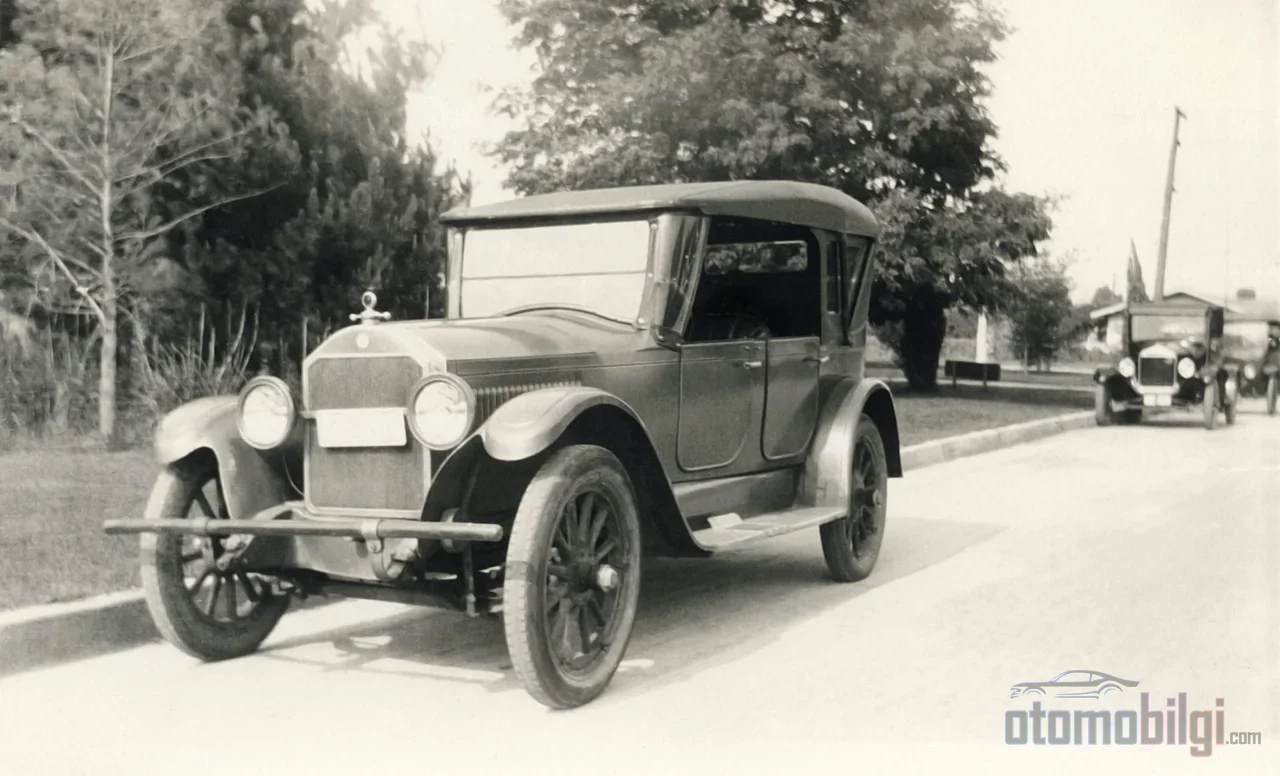
Have you ever wondered that when the automobile first appeared, there were no stops in the world, no junction rules, and no road markings? The first cars stepped into a world that knew no roads, no signs, and no traffic rules; today's traffic order took shape precisely out of that chaos, as needs arose. So the history of the automobile is really the history not only of the engine, but also of the road, the sign, and the rule.
Highlights
- 1888: Bertha Benz made history's first long-distance automobile journey - approximately 100 km.
- 1870: The first asphalt pavement was laid in Newark.
- 1909: The world's first mile of concrete highway opened in Detroit.
- 1915: The world's first stop sign went into use in Detroit.
- 1868: The first traffic light, powered by a gas lamp, operated in London.
Why and How Did Traffic Rules Come About?
Just think about it: at the end of the 19th century, when cars began to take to the streets, nobody was saying "keep right," "stop here," or "slow down." Why would they? Before the 20th century, there were almost no laws about the use of streets and roads, and there was hardly much need for them anyway. Horses, horse-drawn carriages, pedestrians... everyone managed in their own way.
But once the engine entered the picture, everything changed. As cars got faster, more numerous, and started traveling long distances, the same question emerged everywhere in the world: So who is going to put all this into order now, and how? Stop signs, traffic lights, speed limits, and road markings were born one by one, in order of need, precisely as the answer to that question.
In fact, the first "traffic rules" existed long before the automobile: the Locomotive Act, which came into force in the United Kingdom in 1865 and was popularly known as the "Red Flag Act," required someone to walk in front of steam-powered vehicles. So the idea of rules is old, but traffic order in today's sense is entirely the child of the automobile.
Bertha Benz and the First Long Journey That Made History
Before I explain the rules and infrastructure, let me tell you a story that will seem unbelievable. In August 1888, Bertha Benz took her two sons, Eugen and Richard, secretly took her husband Karl Benz's invention, the Patent-Motorwagen, and set off on history's first long-distance automobile journey. The distance? More than 60 miles, that is, approximately 100 kilometers.
It may sound like a little, but wait a minute: on that journey there were no gas stations, no GPS, and hardly any proper roads. Think of it as an analogy: it is like setting out from home today and driving 100 kilometers in an electric car without even carrying a portable charger, not knowing where you can charge. A true act of courage, honestly.
And this courage was rewarded: in December 1888, the newspaper Illustrirte Zeitung published the journey, and the automobile entered the agenda of a wider audience. If you want to follow that route today, you are in luck: the Bertha Benz Memorial Route, opened in 2008, lets you trace the footsteps of that first journey of 1888. A century-old route that still stands as a tourist cultural heritage - in my opinion, that alone is a history lesson in itself.
The First Roads: What Was There Before Asphalt?
Before roads were being built for cars, humanity had actually been building roads for centuries. The oldest known structured roads date back to 4000 BC: stone-paved streets in ancient Mesopotamia, and the first brick-paved streets in the city of Ur belong to this period. The Sumerians went even further; they built roads and temple floors with identical mudbricks laid with bitumen, the natural black sticky ancestor of asphalt. In the Indus Valley Civilization, flat and paved streets intersecting at right angles were discovered in Harappa and Mohenjo-Daro - this is exactly why the grid layout comes to mind when city planning is mentioned.
My favorite, however, is the Minoans: around 2000 BC they built a 50-kilometer road from Knossos to Gortyn and Lebena. Paved with sandstone and basalt, with side drainage, and even separate shoulders. According to some sources, this road was even superior to any Roman road. A civilization that peaked in road building before Rome - after all, who mentions the Minoan road in sequences or history books?
The Age of Asphalt and Concrete Begins
So when did the modern asphalt that cars would drive on emerge? In 1870, the Belgian chemist Edmund J. DeSmedt laid the first asphalt pavement in Newark, USA. He then covered Pennsylvania Avenue in Washington with 54,000 square meters of sheet asphalt. In 1871, Nathan Abbott received the first asphalt patent in Brooklyn. In the early 1900s, natural bitumen gave way to asphalt produced from petroleum - this transition is the ancestor of the road you drive on today.
But the real turning point was April 20, 1909: along Woodward Avenue in Detroit, the world's first "mile" highway, meaning a full mile long concrete-paved highway, was laid. Meanwhile, there is a figure describing the state of America's roads on that day: according to the first national road survey in 1904, there were 2 million miles of rural public roads, but only 154,000 miles of them were covered with gravel or stone. The rest was dirt. A decade later, in 1913, the Lincoln Highway stretching from New York to San Francisco opened as one of the earliest coast-to-coast roads for automobiles. In 1916, with the Federal Aid Road Act, Congress took the first critical federal step for improving state roads. By 1925, 7,680 miles of improved roads had been built, financed by gasoline taxes, automobile license fees, and federal bonds.
Let's not skip the role of the World Wars either: in the mid-1940s, nearly all factories were mobilized for war production, and the capacity of highway systems was increased to transport larger machines in greater volumes. Some historians argue that logistical superiority may have been one of the main reasons for the Allies' victory. So a road is not just a strip under your tires; even the fate of wars.
Where Were the World's First Traffic Signs and Traffic Light Used?
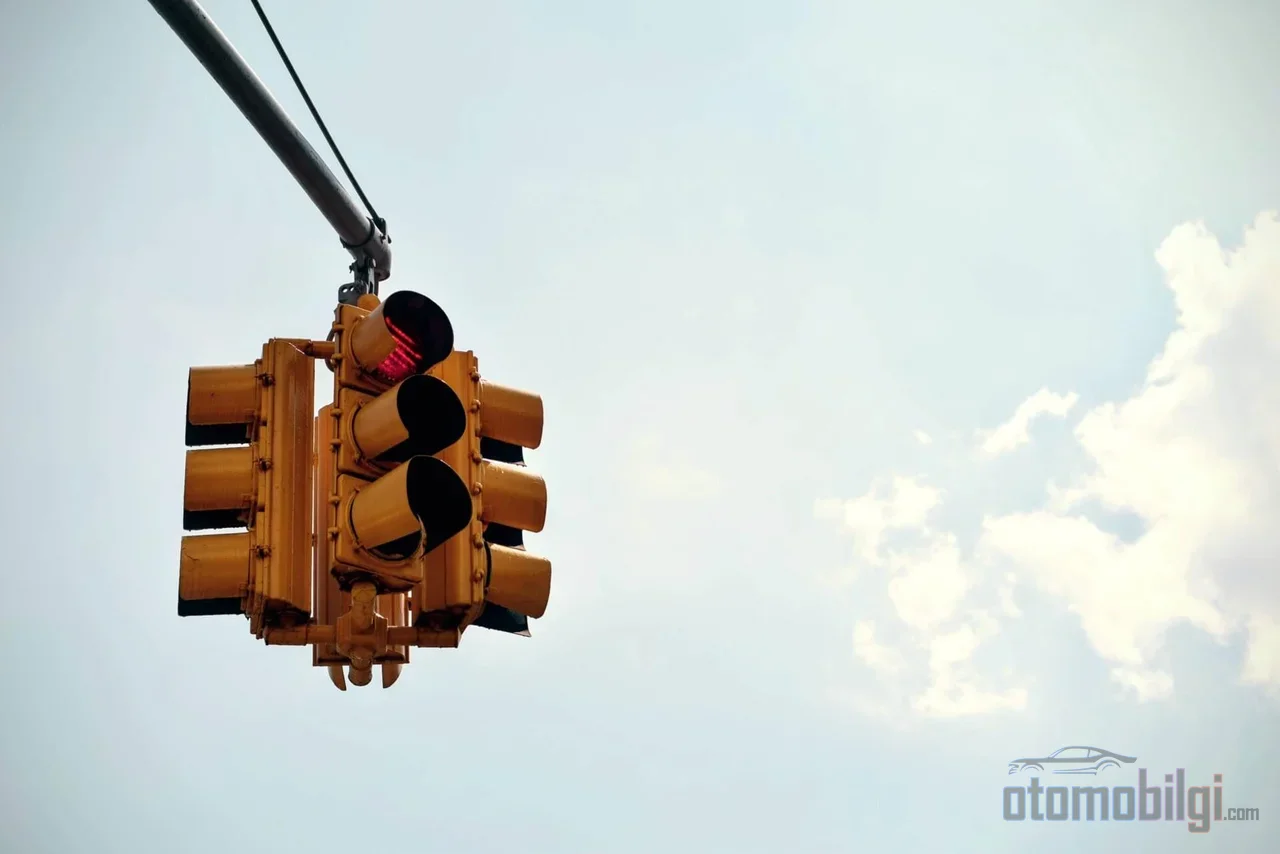
We can answer this question by splitting it between two continents. The first traffic light on December 10, 1868 It was installed in London, at Parliament Square; J.P. Knight had designed a gas-lit system to reduce the police workload. The electric one came much later, on August 5, 1914, installed at the corner of Euclid Avenue and East 105th Street in Cleveland - its designer was the American police officer Lester Wire. The transition from gas lamps to electric signals was literally the adolescence of traffic management.
The stop sign, meanwhile, is Detroit's invention: in 1915 the world's first stop sign went into use there, and you won't believe it, but it was tiny - white, rectangular, with black letters. It looked nothing at all like that big red octagon you see everywhere today. If we go further back on the sign side, the oldest signs were simple wooden and stone mileposts; the Romans were probably the first to use traffic signs: they marked road distances in Britain with 1,000 step (roughly one mile) stones. England then came to fingerpost direction signs. In 1927, the first AASHO highway sign guide standardized the six-inch-tall lettering font for American roads - yes, even the letters on signs have a standard, and you read it every day without even realizing it.
The First Traffic Laws: Who, Where, When?
Rules came step by step, just like signs. Here are a few of the milestones:
- 1901: New York pioneered one of the first traffic regulations in the US with mandatory automobile registration.
- 1901: Connecticut passed the first state law regulating vehicles with speed limits of 12 mph in cities / 15 mph in rural areas.
- 1903: William Phelps Eno, "the father of traffic safety," introduced many road rules, such as slow traffic keeping to the right.
- 1909: Germany enacted some of the world's first national traffic laws, along with a state driving exam and license.
- 1923: Garrett A. Morgan received a patent for the T-shaped traffic signal.
It's worth taking a closer look at Eno: this Yale graduate was one of the first people to take the question of "how traffic flows" seriously, just as cars were only beginning to appear on the streets. The order you see today when you pass on the right at an intersection or when slow drivers move to the right lane is largely the descendant of the ideas he established. That one man's suggestions can become today's traffic logic - that's my favorite part of the story.
Road Lines: Thought Painted in White
Now go out to the street and look at the line in the middle of the asphalt. Did you know that even that line is an invention? The oldest record of the painted center line comes from 1911 in Michigan: it is credited to Edward Hines, a member of the Wayne County Board of Roads. The first documented road pavement marking in Michigan, recorded the same year, also belongs to this era. But the story doesn't end there: in April 1917 in California, the line drawn by Dr. June McCarroll was recognized as the first yellow center line painted on asphalt in the US. A doctor drawing a line on the asphalt to prevent accidents... Turning something unrelated to one's profession into something adopted by an entire country - in my opinion, that deserves a lesson in entrepreneurship.
Why is there a debate over 1911 or 1917? It comes down to definition: 1911 is cited as the first painted road marking, while 1917 is the official record of the first yellow center line. When the definition changes, the date changes too - history is sometimes full of such fine details. On the England front, 1921 saw the start of center white lines in Birmingham against careless driving and accidents; the "cat's eyes" reflectors, invented for visibility at night and in fog, are also a product of this era. By the 1940s, yellow lines had become standard across the USA. The asphalt was literally talking now.
Tying It to Today: Every Sign Has a Story
From that dirt road Bertha Benz traveled in the dark, to the first concrete mile in Detroit, from the gas lamps in London to the first electric signal in Cleveland... Every line, every sign, every light you see today when you get behind the wheel was born from someone saying "this can't be done this way." The materials side isn't standing still either; nowadays additives and polymers are added to bituminous asphalt to improve durability, grip, and recyclability. The road is still evolving after 150 years.
The next time you're waiting at a red light, think about this: even that second you're waiting is a product of history. Which do you think is crazier - inventing the car, or bringing order to this world where cars exist? My answer is clear: the latter.
Sources
- Bertha Benz - Mercedes-Benz Group
- Bertha Benz makes the world's first long-distance journey in a car - Mercedes-Benz Public Archive
- Bertha Benz Memorial Route
- The American Roadway: History of Asphalt Pavement and Our Country's Highway Infrastructure
- Building Roads - FHWA
- Better Roads - National Museum of American History (Smithsonian)
- History of road transport
- Traffic sign
- Introduction - Know Your Traffic Signs - GOV.UK
- The History of Traffic Signs - American Sign and Signal
- History of Highway Sign Lettering - ClearviewHwy
- History of traffic lights
- First electric traffic signal installed - History.com
- Garrett Morgan's Traffic Signal Legacy - FHWA
- Road safety history - Continental
- A Brief History of Traffic Laws - SpeedingTicketKC
- The Rules of the Road - NEC
- Road Traffic History - autoevolution
- Road surface marking
- History of Pavement Marking - Safety Marking
- The History of Road Markings - Northern Marking