Why Are Engines Placed at the Front, Rear, or Middle? The Evolution of Layout Architectures
Share This Page
Where an engine is placed within a vehicle was as decisive an engineering decision in the history of the internal combustion automobile as cylinder count and engine architecture. Front, rear and mid placement, plus mounting the crankshaft parallel (longitudinal) or perpendicular (transverse) to the direction of travel; directly reshapes handling, weight distribution, safety, production cost and body design. This page examines the lineage, from Mercedes' long-hood front layout to the rear-engined Beetle and Tatras, and from the mid-engine racing revolution to the spread of the modern transverse layout, through milestone models.
Highlights
- The 1931 DKW F1 is regarded as one of the first successful transverse-engined cars and a pioneer of the modern front-wheel-drive layout
- With the 1959 Mini integrating the gearbox into the engine casing, the drivetrain occupied only 20% of the car's length
- The Giacosa layout in the 1964 Autobianchi Primula is still the standard for transverse front-wheel-drive vehicles today
- In its rear-engined models, Tatra went to extremes with weight distribution, reaching up to 70/30 toward the rear axle
- From 1998 onward, Volvo switched to transverse engines across all its models, including V8s
Why Is Layout Architecture an Engineering Decision?
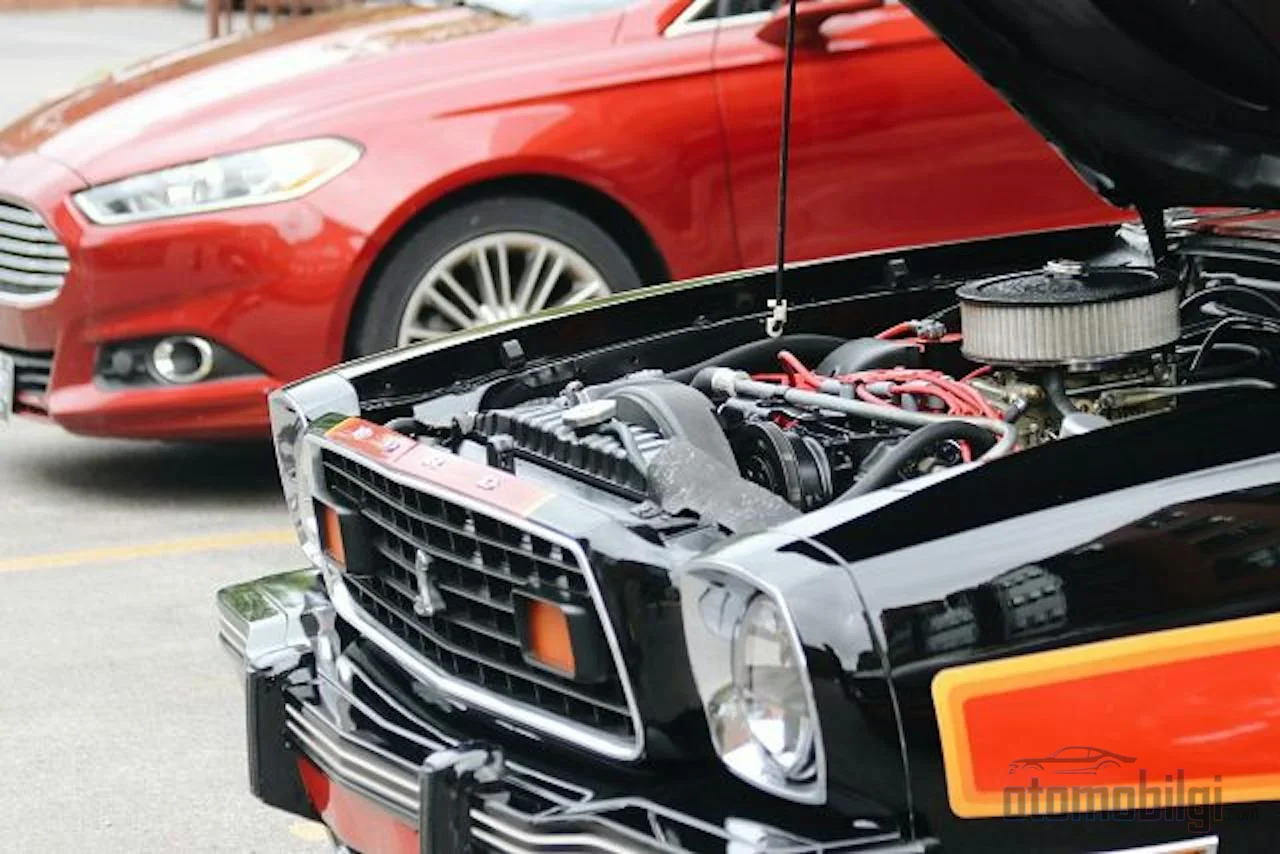
Placing an engine in a vehicle requires answering three fundamental questions: will the engine sit at the front, middle or rear, and will the crankshaft be aligned with the vehicle's long axis or perpendicular to the direction of travel? Each set of answers produces a different outcome. A front engine is practical, and the cooling and heating lines are short; which is why it became the most common layout in history. A mid-engine lowers the moment of inertia by bringing the mass closer to the vehicle's geometric center and improves handling. A rear engine increases traction by loading weight onto the driven wheels; in low-grip conditions this is a serious advantage.
In a transverse layout, the crankshaft sits perpendicular to the direction of travel; most modern front-wheel-drive vehicles use this arrangement. In a longitudinal layout, the crankshaft extends along the vehicle's long axis and is the choice of rear-wheel-drive vehicles. The choice between the two is mostly a matter of packaging: the volume occupied by the drivetrain directly determines the space left for the cabin and trunk. This simple geometric preference was influential enough throughout the twentieth century to redefine automobile classes, body styles and even tank designs.
The Early Era of the Transverse Layout: From 1899 to the Postwar Period
The idea of the transverse engine reaches back to the automobile's earliest years. In 1899, Daimler Motor Company's Critchley light car went down in records as one of the first examples with a belt-driven transverse engine. But the layout's first sustainable commercial success came in 1931: the two-cylinder DKW F1, with its transverse-engined, front-wheel-drive layout, is considered the first working example of the architecture we see in modern front-wheel-drive cars today.
During the war years, the layout proved itself in the military field. In the Soviet T-44 and T-54/T-55 tanks, the engine was mounted transversely; the aim was to save space inside the body, and the result was impressive: thanks to the transverse layout, the hull was shortened while armor was preserved, and the T-54/55 became the most-produced tank in history. On the automobile side, the 1947 Saab 92 was one of the first models to feature a transverse engine; Borgward's Goliath and Hansa brands also adopted the same practice. In 1957, the East German Trabant entered the production line with its transversely mounted two-stroke engine and continued this layout uninterrupted until 1991.
Mini and Giacosa: The Two Architectural Schools of the Transverse Layout
The transverse layout truly earned its appreciation in the automobile world in 1959, with BMC's Mini, signed by Alec Issigonis. Issigonis's move was a radical packaging solution: the gearbox was integrated into the engine crankcase, that is, the oil sump. Thus, the four-cylinder water-cooled engine with a displacement of 848 cc and the drivetrain formed a compact block that fit into a body only 1.2 meters wide; the drivetrain as a whole occupied only 20% of the vehicle's length. The idea of a truly compact four-seater car where passengers sit without spreading around the engine became possible thanks to this layout.
However, the cost of the Mini's gearbox-in-sump solution was repair difficulty. In 1964, Dante Giacosa applied the layout he had developed for Fiat in the Autobianchi Primula: the engine was connected to the gearbox via a shaft, while the differential was positioned off-center. This layout was later popularized in the Fiat 128 and became the basis of the scheme still used today. The Giacosa layout, which proved easier to refine than the Mini's solution, easier to repair, and more suitable for a five-speed gearbox, is the de facto standard of the modern front-wheel-drive car. The rise of the transverse front-wheel drive as the dominant layout in the market was also rapid; most manufacturers adopted this layout throughout the 1980s.
The Rear-Engine Tradition: From Tatra to the Beetle
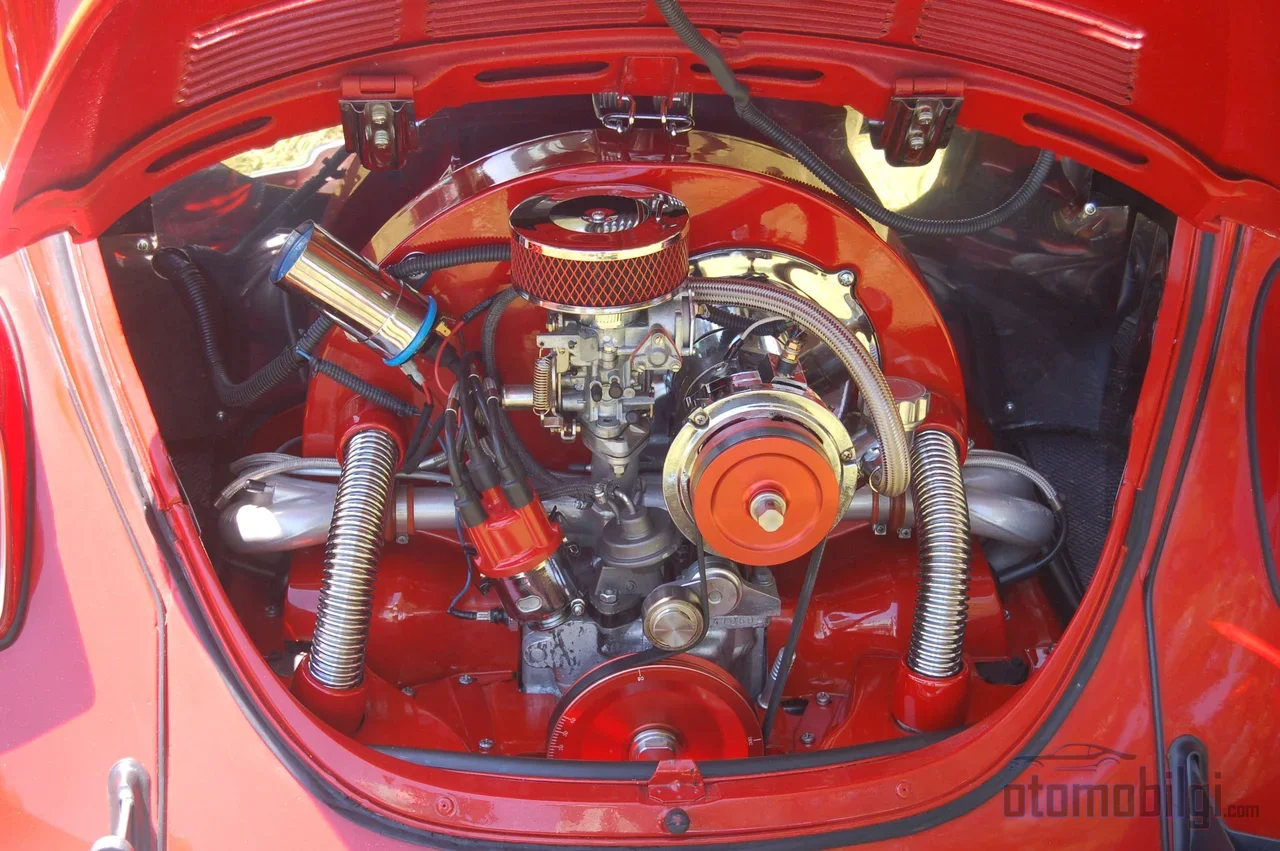
The rear engine was advocated with a logic quite different from the transverse layout's packaging story. Austrian engineer Hans Ledwinka, who joined Tatra as its technical director in 1921, mastered placing the engine behind the rear axle; this position provided exceptional traction on the driving wheels. The company's first air-cooled model was the 1923 Tatra 11; Tatra, which used both water and air cooling in its early years, standardized air cooling over time. The Tatra 77, 87, and the Tatra 97 produced in 1936 were among the era's unusual examples as four-door sedans with air-cooled rear engines and aerodynamic fastback bodies.
The Tatra 97 already possessed the triple formula that would later make the Beetle famous - rear engine, air cooling, aerodynamic body - and the similarities were close enough to be the subject of a lawsuit. It is widely accepted that Ledwinka's Tatra design influenced the Beetle; the debate over who transferred designs to whom continues, because Tatra's characteristic solutions were also taking shape in the early 1930s. In this period not only Tatra but also Mercedes-Benz experimented with rear-mounted engines: 1930s models such as the 130, 150 Sports Saloon, 150 Sports Roadster and 170 H tried this layout. On the Czechoslovak side, the tradition proved long-lived; the Tatra T603 from 1968 was a magnificent continuation of this heritage as a rear-engined V8 sedan.
The rear engine's triumph, however, rests on mass: the engine's weight sits over the rear wheels and increases tire traction. Yet this advantage came at a heavy price. In Tatra's rear-engined models, the weight distribution was piled toward the rear by as much as 70/30%, which led to notorious handling problems. When the weight is concentrated on the rear axle, the car produces unpredictable behavior as it approaches its cornering limit: a car that behaves well below the limits at low speeds can suddenly face the risk of excessive oversteer due to inertia - a situation known as lift-off oversteer. With the engine on the rear axle, the tail can act like a sling trying to overtake the driver when the throttle is lifted mid-corner.
The Mid-Engine Revolution: From the Race Track to the Road
The mid-engine layout, which places the engine behind the driver's cabin and ahead of the rear axle, set itself apart from its rivals in endurance and cornering performance by bringing the weight distribution closer to the geometric center. Introduced in 1969, the Porsche 917 was a sports prototype equipped with the Type 912 flat-12 engine; although only 25 units were built for homologation, it established dominance in sports car racing. The 1970 24 Hours of Le Mans was won outright by Team Salzburg's 917K, and the 917K dominated endurance racing with back-to-back Le Mans victories.
On the road car side, the pioneering example was the Lamborghini Miura: its transversely mounted mid-engine 4.0-liter V12 was a unique configuration in 1965. In the following decades the same scheme became widespread with models such as the Lancia Montecarlo, Toyota MR2, Pontiac Fiero and the first-generation Honda NSX; the mid-engine became a standard layout flowing from racing technology into affordable sports cars.
The Effects on Performance, Safety and Design
The role of engine placement in driving character is explained by basic physics: the position of the mass determines the weight distribution, and when the distribution changes, handling and driving character change significantly. A low center of gravity and balanced distribution improve cornering performance; in rear-wheel-drive layouts it provides a traction advantage. Changing the placement shifts the share of mass loaded onto one of the axles - effectively by piling it toward the front or the rear. There is also a contrary view: the components in the engine bay - including the battery - account for a relatively small share of the total mass, so shifting the engine from one place to another can change the weight distribution less than expected in some designs, and the effect can remain comparable to details such as battery placement. In reality, the two views are not mutually exclusive: the effect of placement must be evaluated together with body architecture and the mass budget.
On the safety side, the contribution of transverse placement was tangible and measurable. Placing the engine transversely frees up the longitudinal volume at the front axle; this space can be turned into a crash zone that deforms in a frontal collision. Volvo, from 1998 onward, moved to transverse engines across all its models, including V8s; the aim was to increase interior space, but the layout also improved frontal collision safety by providing a longer engine bay area and a larger front crumple zone. The safety record of the rear-engine layout is more complicated: In the early 1970s, Porsche equipped its rear-engined 911 with structural reinforcement and crash zones to a degree engineers did not initially believe, surpassing the collision standards of its era.
| Placement | Key Advantage | Typical Weakness | Landmark |
|---|---|---|---|
| Front, longitudinal | Practical, widespread, short cooling lines | Long hood, front weight | Classic layout |
| Rear | Increased rear traction | Risk of sudden oversteer | Tatra 97, Beetle |
| Mid | Balanced distribution, good handling | Cabin and luggage volume | Porsche 917, Miura |
| Front, transverse | Compact packaging, space savings | Powertrain limits | Mini, Fiat 128 |
Why Is Longitudinal Placement Still the Choice for Performance Cars?
The transverse layout dominates the small car market; on the other hand, most high-performance sports cars retain longitudinal placement. There are multiple practical reasons for this. A longitudinal powertrain allows larger and stronger gearboxes capable of carrying the torque of powerful engines to fit into the vehicle. Also, together with a rear-wheel-drive architecture, it clearly divides the traction and steering functions between the front and rear axles; in corners, the front tires handle only steering while the rear tires handle only propulsion. The longitudinal alignment of the engine, especially in wide engines such as V and boxer types, leaves free volume in the engine bay.
This distinction shows that placement has become a defining identifier of a vehicle class: in the language of the economy and compact class, it is transverse front-wheel drive; in the language of the performance class, it is longitudinal rear-wheel drive or mid-engine. A manufacturer's placement choice in a model is not merely a technical detail but also information about the vehicle's target audience and price positioning.
Closing: The Legacy of a Simple Geometric Choice
Looking at the internal combustion automobile's history spanning more than a century, the direction of the crankshaft and the position of the engine shaped the automobile as much as the number of cylinders and engine architecture. Issigonis's transversely mounted gearbox and Giacosa's shaft drive are the ancestors of almost every compact car on the road today. Ledwinka's air-cooled engine placed behind the rear axle reached millions of families through the Beetle and became the origin of a tradition that the Porsche 911 still carries on. The mid-engine layout, meanwhile, left the racetrack and settled at the pinnacle of road cars. A seemingly simple decision like where and in which direction to place the engine is an engineering legacy that rewrites every layer, from handling to safety, from production costs to vehicle class.
Sources
- Transverse engine
- Longitudinal engine
- Tatra 97
- Porsche 917
- What is the Porsche 917? - Porsche Stories
- Team Salzburg Porsche 917K - Sports Car Digest
- Corporate History - Mercedes-Benz
- Mercedes-Benz History: Rear-Engine Vehicles - eMercedesBenz
- The Untold Origin Story of the Porsche 911 - Woodside Credit
- 1968 Tatra T603/3 - Audrain Automuseum
- Transverse vs Longitudinal Engines - Car Throttle
- How Engine Placement Affects Handling - CarParts
- How does engine placement affect handling? - HowStuffWorks
- How Does Engine Position Affect Weight Distribution - MotoIQ
- The Porsche 911: the car that shouldn't work but does - CAR Magazine
- Transverse and longitudinal engine layouts - paultan.org
- Why do most performance cars have longitudinal engines? - Mechanics StackExchange