Small Cars Born from War: The Birth of the Post-War Compact Car
Share This Page
After World War II, small cars were not a luxury but a means of survival: destroyed infrastructure, fuel shortages, and a population with collapsed purchasing power made vehicles with limited engine displacement and size the only reasonable solution. The microcar wave in Europe and the kei class in Japan were born out of this necessity; models like the Fiat 500, Mini, and Beetle transformed the small car from a temporary measure into a permanent segment. This page explains how and why the compact car was born, with measurable data.
Highlights
- Civilian automobile production in the USA came to a complete halt on February 10, 1942; in 1942 only~160,000 civilian vehicles could be produced. The Isetta
- is the best-selling single-cylinder car in history with approximately 162,000 units; its consumption is 3.6 L/100 km . Japan's kei class
- was defined in 1949 with a 360 cc engine and a 3.4 m length limit.
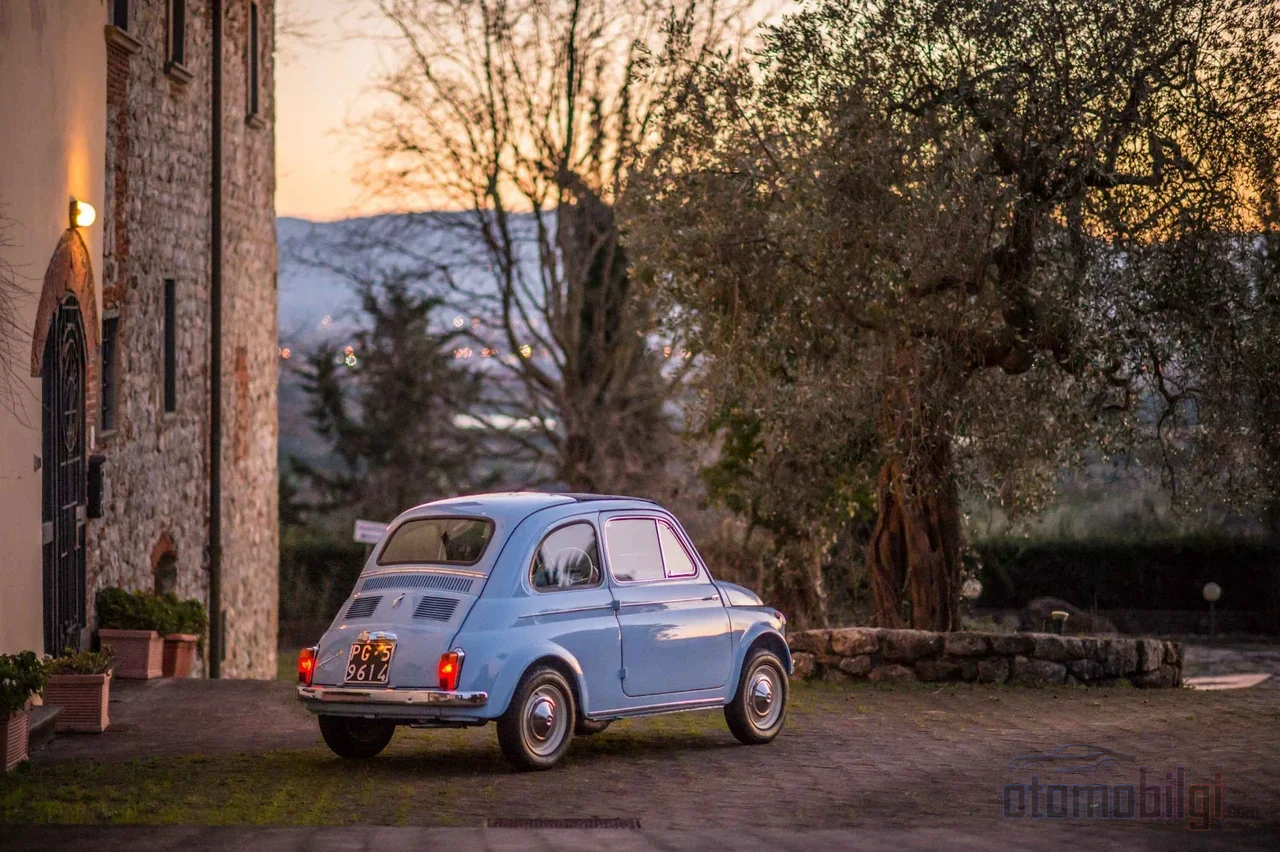
- The Fiat 500, was produced continuously between 1957 and 1975. Kei vehicles accounted for
- 39% of automobile sales in Japan in 2022. How the War Stopped the Automobile
To understand the birth of the small car, one must look at the supply shock before and during the war. In 1941, approximately
88% of US households had a family car; a 1942 model Ford Super Deluxe sedan sold for approximately 920 dollars - about one third of the average annual income. While Ford produced 691,455 automobiles in 1941, in 1942 civilian lines could only complete ~160,000 vehicles, and civilian production came to a complete halt on February 10, 1942. Industry turned to a single task: war production. The demand side was being restricted in the same way. Japan's capture of the Dutch East Indies and British Malaya cut off
90-95% of America's natural rubber supply. The result was gasoline rationing and the 35 mph "Victory Speed" limit introduced in May 1942. An "A" type gasoline coupon provided 4 gallons per week; for a 1939 Chevrolet Master that got about 18 mpg, this meant only 72 miles of driving per week. By 1945, household car ownership had fallen from 88% to approximately 73%. In Europe, the picture was much harsher. In the mid-1950s, the continent was poorer than before the war; infrastructure had collapsed, fuel shortages were widespread. There were few roads on which automobiles could circulate, and purchasing power was almost non-existent. Here, the idea of the small car emerged not as a marketing choice, but as a direct engineering output of the prevailing conditions. The Microcar in Europe: Engineering's Answer to Scarcity
The origin of microcars coincides with the end of World War II, the fall of fascism, and the process of rebuilding economies. Governments wanting to revive their economies encouraged small and affordable vehicles; manufacturers responded with solutions of limited engine displacement and size that converted scooter and motorcycle bodies onto four wheels. The shared common denominator was this: to provide mobility with existing components, at the lowest cost, with minimum energy.
Isetta: The Driving Egg
The origins of microcars coincide with the end of World War II, the fall of fascism, and the process of rebuilding economies. Governments seeking to revive their economies encouraged small and affordable vehicles; manufacturers responded with solutions of restricted engine capacity and size, converting scooter and motorcycle bodies onto four wheels. The shared common denominator was this: providing mobility with existing components, at the lowest cost, with minimal energy.
Isetta: The Driving Egg
For example, the best-known one was the Isetta, designed by the Italian refrigerator manufacturer Iso Rivolta. The design was deliberately suited to a scooter platform; BMW fitted the vehicle with a R25 motorcycle engine of 250 cc. The result: 85 km/h top speed and 3.6 L/100 km fuel consumption. Selling approximately 162,000 units worldwide, the Isetta became the best-selling single-cylinder car in history; in Germany it earned the nickname "rollende Ei" - the rolling egg.
The Isetta was not alone. The aircraft-cockpit-inspired Messerschmitt KR200, Goggomobil and Fiat Topolino filled the same niche; in France, the Renault Dauphine and the 2CV, a continuation of the "voiturette" tradition, were part of this front. The story of the 2CV is particularly illuminating: its origins date back to 1934, to a study in which Michelin researched what the French population wanted. The answer was a compact, durable, affordable and usable everyday car. Developed in secret under the name "TPV" (Toute Petite Voiture - Very Small Car), the project was shelved due to the war and could only reach the market in 1948 . Its air-cooled two-cylinder engine and independent suspension fit perfectly with France's crumbling infrastructure.
Japan's Different Path: The Birth of the Kei Class
Japan solved the same problem through regulation. In 1949 the government defined the kei class: engine displacement was limited to 360 cc and power to 40 hp ; the size limits were 3.4 m in length and 1.48 m in width. In other words, the small car was born there not as a market segment but as a legal category - taxes and regulations created the class itself.
The first kei vehicle on the roads was the 1955 Suzuki Suzulight SF . Despite its 150 cc two-stroke engine, it carried features ahead of its time such as twin swing-arm suspension and rack-and-pinion steering. It was followed in 1958 by Subaru's first mass-produced car, the Subaru 360 : bubble windows and a rear engine. In 1960 the Mazda R360 took the stage - a vehicle weighing 380 kg , producing 16 PS with an air-cooled V-twin of 356 cc , reaching a top speed of 84 km/h
. The R360, Mazda's first production car, is considered the template for the lightweight, driving-focused compact segment. The kei market expanded with the economic growth of the 1960s-70s; by the 1980s-90s, fuel injection, turbo and 4WD had entered the class. In 1984, the Suzuki Alto became the first kei vehicle to exceed the 64 PS threshold; from 1993 onward, the Wagon-R sold 5 million units over three generations. Even more striking is its staying power: kei vehicles accounted for 37.1% of Japan's sales in 2021 and 39% in 2022. The reason is geographic and urban: 73% of Japan's land is mountainous, cities are dense, public transport is strong - short-distance travel and narrow street use have always made the small car necessary.
Mini, Fiat 500 and Beetle: From Necessity to Icon
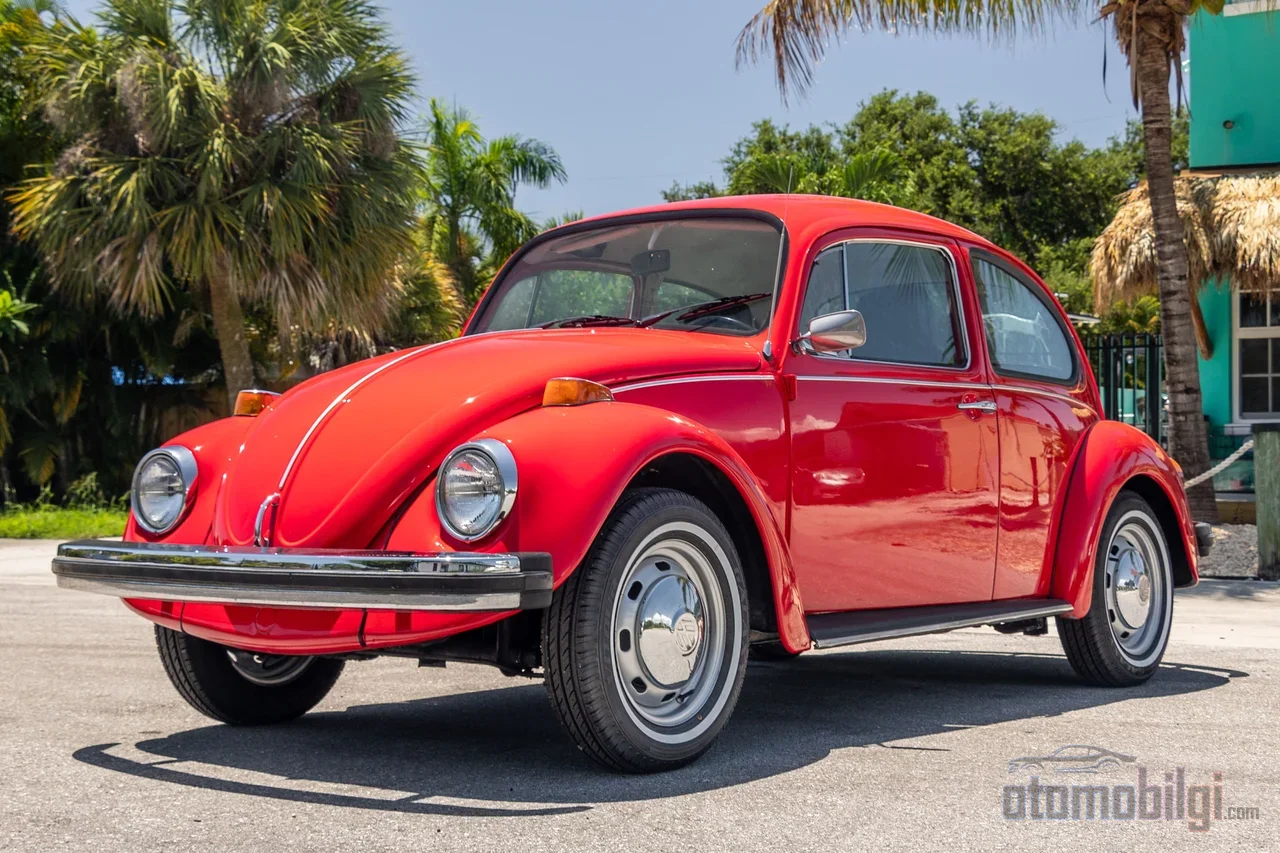
The three milestones of this era show the small car's transformation from "a vehicle bought when there is no alternative" to "a wisely chosen vehicle." All three solved the same problem - transporting four people with the fewest possible resources - with different architectural approaches:
| Model | Period | Defining Feature |
|---|---|---|
| Fiat 500 | 1957–1975 | Two-door economy/city car; a product of post-war European reality |
| Austin Mini | After 1957 | Front-wheel drive, transverse engine, 4 seats and real luggage space |
| VW Beetle | Post-war | Compact yet practical; cheap to buy and maintain, curved body |
The sales success of all three was no coincidence. Fiat 500 achieved healthy sales between 1957 and 1975 even after the conditions of its birth - post-war poverty - had disappeared. Austin Mini's transverse-engine, front-wheel-drive architecture squeezed four seats and enough luggage space for family weekends into a boxy body; this packaging ingenuity raised the engineering standard of the class. Beetle on the other hand, struck an equation that deserves to be described as "a masterpiece of innovation and economy": compactness, practicality, low purchase and maintenance costs. If part of these cars' popularity was style and loyalty, part of it was that the small European car of the era had become a symbol of being "cheap and chic."
During the same period, compactness also became established as a design goal at the luxury end. Mercedes-Benz, in the post-war period and especially under the leadership of Fritz Nallinger, developed innovative compact passenger cars in the 1950s; W 122 series is an example of this approach. The compact class was no longer merely a matter of economic necessity; it was the name of a discipline within engineering itself.
From a Vehicle of Necessity to a Permanent Class
Why did microcars decline in Europe but survive in Japan as kei cars? The answer has three layers. First, safety: the concerns created especially by three-wheeled models led to stricter regulations. Second, technical: small engines derived from motorcycles were noisy and high-revving. Third, economic: the compromises in space lost their meaning with rising incomes. Once the roads were repaired and purchasing power returned, the rationale for the microcar bought "because there was no other option" disappeared in Europe.
But during the same period, advances in combustion engines, lightweight materials and packaging made compacts with far fewer compromises possible - the Mini and Fiat 500 are precisely products of this threshold. The distinction here is critical: a vehicle of necessity and a preferred compact automobile are not the same thing; it is the latter that ensured the class's permanence. Japan's kei category, delimited by law, persisted institutionally outside this transformation.
Japan's Rise and the Global Outcome
Japan played a major role in the globalization of this class. In the post-war period, Japan experienced the most striking increases in automotive production: from a negligible position in 1950, it became a major power within thirty years. In the era's minicar manufacturer phase, Japan's share of the global motorized vehicle trade was held 32.9% of it; the US share was 7.2%. The cost and packaging discipline gained in the small car became the supporting foundation for Japanese manufacturers' expansion into world markets.
Where Does the Compact Class Stand Today?
The small car's history did not end with a closure; the category is still a measurable market today. The compact car market is valued at USD 200.02 billion in 2025; it is projected to reach USD 287.17 billion by 2034, with a compound annual growth rate of 4.1%. In Japan, kei cars' share has moved from just over a quarter of sales to nearly a quarter, and the class adopted technologies such as fuel injection, turbo, and 4WD years ago.
On the microcar side, however, the picture is mixed. The Smart Fortwo sold 1.7 million units until 2015, and around 6 million units in total; in contrast, the REVAi stopped at only 4,600 units, the Tazzari Zero at around 600 units. The Renault Twizy ended production in 2023. The Citroën Ami and its twins - the Fiat Topolino and Opel Rocks-e - represent a modern microcar renaissance, but a consistent "revolution 2.0" cannot yet be spoken of. On the US side, the picture points in another direction: the compact class fell from a peak of about 2.3 million units in 1962 to ~524,000 units in 1967, becoming a neglected area for American manufacturers.
To summarize: the compact car was born as a solution forced by scarcity and destruction; but engineering - packaging, weight reduction, engine efficiency - turned it into a consistent preference even after the conditions of necessity disappeared. The class's eighty-year lifespan is one of the clearest automotive examples of how good engineering can become independent of initial conditions.
Sources
- Making Automobiles Last During World War II
- The Second Coming of Microcars
- Europe after World War II - Automotive industry
- Chapter 2: Postwar Evolution of the Japanese and American Automotive Industries
- Fiat 500
- A history of the Volkswagen Beetle
- The C-Class: compact, but really big
- Compact cars became the neglected stepchildren of U.S. automakers
- Compact Cars Market
- The Fiat 500: Big Fun in a Small Package