How Did the Golden Age of Diesel End? Europe's Miscalculation
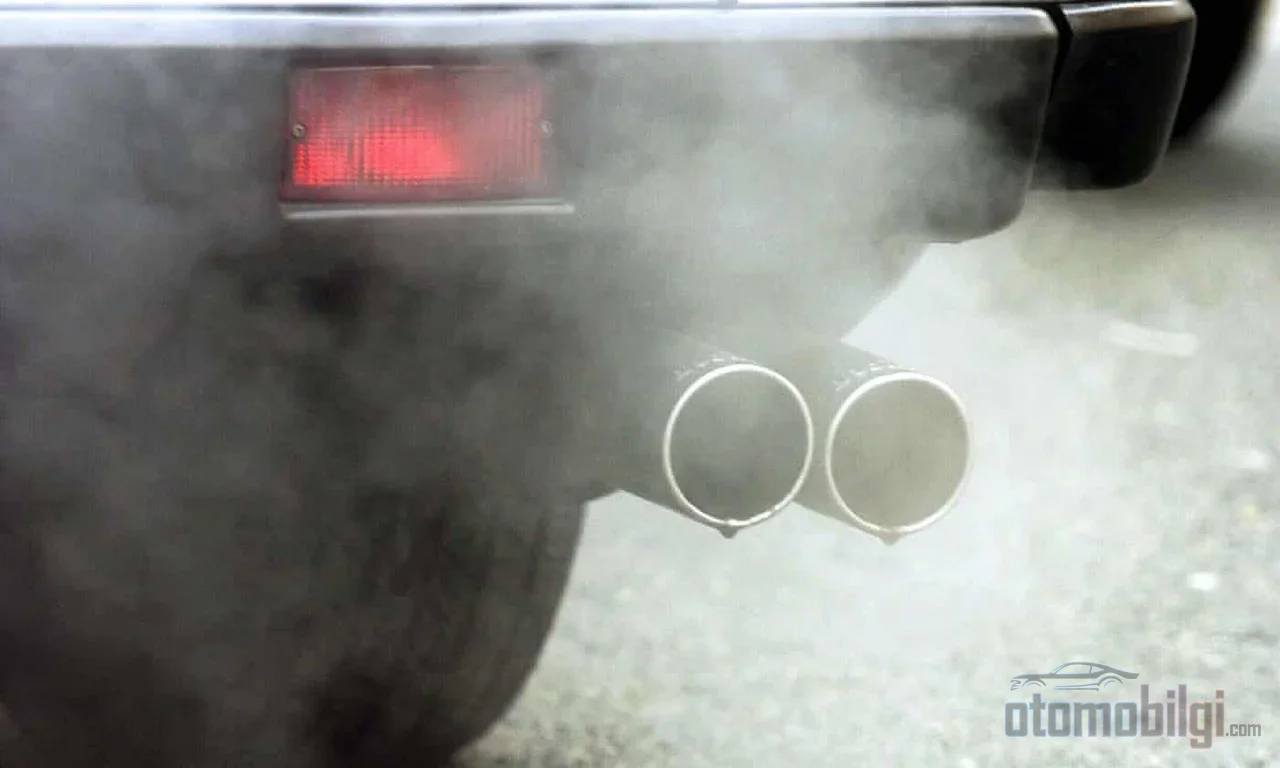
Share This Page
Diesel's golden age was a period of roughly twenty years, from the mid-1990s to 2015, that swept across Europe and reduced half of all car sales to a single fuel. Post-Kyoto Protocol CO2 pressure, tax policies, and the maturing of turbodiesel technology together produced this rise; the dieselgate scandal that erupted in 2015 and the city restrictions that followed nearly completely dismantled the same structure within a decade. This article charts the measurable history of that rise and fall.
Highlights
- Diesel's share of new registrations in the EU-15 in 1995, at 22.6%, rose to 52.1% in 2015.
- The first TDI engine, developed in 1989 for the Audi 100 TDI, was an inline five-cylinder unit.
- Dieselgate erupted in September 2015; non-VW German manufacturers are estimated to have suffered approximately $26.5 billion in lost sales.
- Europe's diesel market share fell from 52% in 2015 to 18% in 2023; more than 300 European cities restrict diesel vehicles.
- Diesel fuel contains approximately 15% more energy per volume than gasoline (36.9 MJ/l versus 33.7 MJ/l).
From Niche Fuel to the Industry's Favorite: How the Rise Began
Until the mid-1990s, diesel was a genuinely niche market in Europe, making up less than 10% of the vehicle fleet. Diesel vehicles were noisy, slow, and ranked low on most buyers' lists. What changed this was not only engineering, but also politics.
The turning point was the 1997 Kyoto Protocol. Wealthy countries committed to an average 8% CO2 reduction over 15 years, and the automobile industry was at the center of this target. While Japanese and American manufacturers sought the answer in hybrid and electric research, German manufacturers BMW, Volkswagen, and Daimler persuaded the European Commission to promote diesel. The EC-ACEA agreement signed in 1998 bound manufacturers to a 25% CO2 reduction over a decade, and the EU transport commissioner of the time, Neil Kinnock, along with Britain's environment secretary John Prescott, backed this line.
The tax system was pulled in the same direction. In 1998, Gordon Brown explicitly said that diesel cars should pay less vehicle tax than gasoline cars because of their CO2 performance. In 2002, the UK's company-car tax reform tied the tax to official CO2 g/km values, and corporate fleets turned to diesel ledgers within minutes. The result is measurable: in Western Europe, diesel's share of new registrations rose from below a quarter to over half by 2011. In the UK, the same curve moved from below 10% in 1995 to above 50% in 2012; today the country has 11.8 million diesel vehicles.
Why Did the Technology Work? The Physics of Diesel Versus Gasoline
A tax incentive alone does not sell an engine; the engineering was also ripening at just the right moment. Diesel fuel is denser than gasoline and carries about 15% more energy per unit volume: 36.9 MJ per liter versus 33.7 MJ. A diesel engine also operates at higher thermal efficiency and produces high torque at low revs, while a gasoline engine's power emerges at high revs. For a European driver covering long highway distances, this equation meant a clear economic difference.
The critical technological leap was the turbocharged direct-injection diesel. The first TDI engine was the inline five-cylinder unit produced for the Audi 100 TDI sedan in 1989; Audi engineers had worked for 13 years to bring direct injection to the automobile diesel. Volkswagen's first diesel passenger car was produced in 1976, and direct injection was introduced in 1991; in 1999 the technology expanded all the way to V8s. A turbocharged, direct-injection diesel, and within a few years one with common rail injection, bore none of the traits of the noisy engines of old. The market perceived this difference immediately.
Did the Climate Consensus Really Hold? The Collapse of the CO2 Myth
Diesel's political legitimacy rested on a single number: CO2 per kilometer. The problem is that this single metric did not tell the whole story. Pre-2011 European diesels do emit less CO2/km; however, after 2011 there was no meaningful difference per kilometer. Working with an entirely different data set, Marrero and his team calculated that diesel's CO2 per kilometer was only 2.5% higher than gasoline's. Different methods produce different numbers, but none shows a dramatic climate advantage.
Moreover, the modest CO2 gain on paper was offset by another devastation: the soot emissions of vehicles without particulate filters, with their additional impact on the climate, erased the gain. The indirect consequence of the tax incentives worked in the same direction. As the diesel share rose from 25% to above 50%, the proportion of high-NOx vehicles in the fleet roughly doubled, and persistent NO2 limit exceedances were recorded in London, Paris, and Berlin. A textbook example of an incentive focused on a single metric shifting the unmeasured burden elsewhere in the system - and proof of how hard it is to reverse once the capital stock has been dieselized.
Dieselgate: Trust That Collapsed in Two Weeks
The scandal that erupted in September 2015 first affected only Volkswagen, then engulfed the entire industry. VW admitted that it had installed "defeat device" software in some of its vehicles that reduced NOx only during official tests. The test regime itself was also flawed: in the procedure developed by the Geneva-based UN regulatory forum under pressure from the automotive industry, it was easy for manufacturers to program the computers to detect the test and lower emissions. The figure is striking: in 2015, the real-world fuel consumption of new passenger cars was on average 42% higher than their type approval values.
The financial devastation came swiftly. VW reported a loss of 1.7 billion euros in the first quarter of 2016 and was shaken worldwide by recalls, sales losses and a decline in share value. Switzerland took the first serious government step by banning the sale of VW diesel vehicles in 2015. The scandal spread beyond Volkswagen: for the German automotive industry, the "Made in Germany" label turned into a reputational burden, and non-VW German manufacturers are estimated to have suffered around 26.5 billion dollars in lost sales.
It was the wrong decision, and we are kicking ourselves.
These words were a confession from within the very British political establishment that had implemented the diesel policy. While former minister Michael Meacher said he could not recall being consulted on the matter, a retired senior official summed up the dilemma more harshly: "We did not sleepwalk into this... between killing people today and saving lives tomorrow."
How Did Cities Pay Back? Low Emission Zones and Bans
The political consequence of the scandal was that cities did what central governments failed to do. Today more than 300 European cities restrict diesel vehicles; Paris, London, Berlin and Madrid are the best-known names on this list, with fines starting at 68 euros. Paris announced it would ban diesel vehicles by 2025; four cities in France use the color-coded Crit'Air label system, and Paris, Lyon and Grenoble continuously tightened their tiers. In Germany, as of April 2021, diesel driving bans had been imposed, proposed or narrowly averted in 41 major cities.
Market data confirms the impact of these restrictions. In the first half of 2017, the EU-15 diesel share had fallen from 50.2% to 46.3%; Europe's diesel market share, which was 52% in 2015, dropped to 18% in 2023. The decline did not stop: in recent measurements the diesel share has fallen to around 6% of sales, and some experts project 2% for 2028. Electric vehicles are filling the gap - in December 2025, EVs overtook only petrol cars with a 22.6% share (petrol at 22.5%). Between January and June 2026, registrations of conventional internal combustion vehicles fell by 8 points to a 30% market share. Countries such as France, the Netherlands and the United Kingdom aim to completely end petrol and diesel sales between 2030 and 2035.
| Year | European diesel share (new sales) | Description of the period |
|---|---|---|
| 1995 | 22.6% | Beginning of the move out of the niche |
| 2011 | Above 50% | Peak of tax incentives |
| 2015 | 52.1% | The year Dieselgate exploded |
| 2023 | 18% | City restrictions and the rise of EVs |
| 2026 | ~6% | A fuel pushed to the sidelines |
Why Do Used Diesels Lose Value So Quickly?
The answer to the problem is not technical but regulatory. A diesel that cannot enter low emission zones becomes effectively unusable in city centers, the markets with the highest demand, and this loss of usability is directly reflected in the vehicle's value. Some dealers no longer accept diesel trade-ins at all. Engine durability and fuel economy are still strong arguments; however, buyers have begun pricing in which cities they will be able to drive the vehicle in a few years.
The market is accordingly split in two. Newer and larger diesels generally hold their value better than their petrol equivalents; this segment, used for long journeys and towing, is the least affected by low emission zone restrictions. In contrast, small and old diesels sold for city use are losing value as they enter ban lists. Aging Euro 5 and earlier vehicles are taking the hardest hit.
Is the modern clean diesel really clean?
Technology did not stand still after Dieselgate. Modern diesels that comply with the Euro VI norm are considered "very clean" when their treatment systems work properly; SCR catalytic converters and particulate filters target the biggest weakness of the fleet from a decade ago. The criticism is directed more at the reliability gap between the laboratory and the real world - when the treatment system does not reach full temperature on short urban trips, its calculated cleanliness is partially lost. In other words, the technology advanced; however, once-shattered public trust and tightened city rules did not allow the technical progress to translate into market share. It is noted that diesel vehicles will continue to be driven and sold even after the 2030/2035 bans; but the restrictions in cities with clean air zones will continue to suppress their value.
Was It Wrong? The Engineering Balance Sheet of the Diesel Legacy
The story of diesel in Europe is one of the clearest examples of the consequences of letting a single number (CO2 g/km) govern an entire industrial policy. The incentive partially served the metric it targeted but shifted the burdens it did not measure onto the lungs of cities; dieselgate then permanently destroyed a legitimacy that was already weakening. What remains today is the tension between a long-lasting and efficient engine technology and a shrinking space of use in more than 300 cities. From an engineering standpoint, diesel was never a bad solution; the mistake was failing for decades to change an incentive system in which a single metric made all external costs invisible. The accelerated loss of value on the second-hand market is the final item on the bill this system is still paying.
Sources
- The rise of diesel in Europe: the impact on health and pollution
- The Diesel Boom and the Climate - RIFS Potsdam
- CO2-equivalent emissions from European passenger vehicles
- Europe's diesel tax breaks cut CO2 but filled city air
- Dieselgate - a timeline of the car emissions fraud scandal
- Volkswagen: The scandal explained
- How the Volkswagen Scandal Turned 'Made in Germany' into a Liability
- Ten Years After Dieselgate - ICCT
- European Car Market Monitor: June 2026 - ICCT
- Cities driving diesel out of the European car market - ICCT
- Driving bans for diesel cars in German cities - Töller 2021
- Local bans of diesel cars in cities - BEUC
- TDI (engine)
- Differences between diesel and petrol - ACEA
- Decline in diesel car sales offset by more demand for petrol - ACEA
- Have fears of an EU new-car market slump eased? - J.D. Power
- Should I Sell My Diesel Car? - Carwow
- Car usage, CO2 emissions and fuel taxes in Europe - Marrero et al. 2020
- Low Emission Zones in Europe - Hagerty