How Formula 1 Engines Transformed Road Cars
Share This Page
Formula 1 engines have not directly replaced road car engines; but they have measurably accelerated their development. Solutions such as fuel injection, materials science, and energy recovery matured on the track and then moved into series production. On the other hand, the extent of this transfer is often exaggerated: the flow is not always from the track to the road, and a family car never gets an F1 engine. This article takes a balanced look at the evolution of engine regulations from 1950 to 2026 and the real legacy this evolution has left on the roads.
Highlights
- The Formula 1 World Championship 1950 began; the rule set is based on the concept of a formula, which also defines the engines.
- Used until 2012, the 2.4-liter naturally aspirated V8s could rev up to around 18,000 rpm.
- Since 2014, engines have been called hybrid power units; thermal efficiency has exceeded 50 percent.
- KERS was the first series track application that harvested braking energy and converted it into extra horsepower.
- F1's technology transfer is not a one-way story; some of the flow goes from the road to the track.
What the Formula Means: The Engine as a Rule Set
The word formula in Formula 1 is not a poetic expression, but the set of rules that participating cars must comply with. Engine displacement, the presence of a compressor, minimum weight: all are defined in the lines of this set. Even in the championship's early years, the formula was not fixed. In the 1952 and 1953 seasons, world championship races were run under Formula 2 regulations; the limits were 0.75 liters for supercharged engines and 2 liters for naturally aspirated ones.
In 1961 a new engine formula came into effect, and between 1961 and 1965 only naturally aspirated engines in the 1,300-1,500 cc range were allowed; the minimum weight of the cars was 450 kg . The engineering significance of this era is that the displacement limit pushed manufacturers toward the pursuit of high revs and efficiency. Later regulatory changes repeated the same logic on different axes: flat-bottom cars in 1983 , the ban on turbo engines in 1989, the ban on driver aids in 1994
, and narrowed bodywork with grooved tires in
1998
| . | A Brief History of F1 Engine Eras | Seeing the evolution of engine regulations in a single chart clarifies the context of the transfer story. Each era posed a different question to the world of production cars. |
|---|---|---|
| Era | Engine Formula | Question That Touched Series Production |
| 1952-1953 | Formula 2 regulations: 0.75 L supercharged, 2 L naturally aspirated | Power possible with small displacement |
| 1961-1965 | Naturally aspirated 1,300-1,500 cc, minimum 450 kg | The foundations of high-revving engineering |
| 1980s | Turbocharging era, banned in 1989 | Turbocharging maturing in series production |
| 2006-2013 | 2.4 L naturally aspirated V8, around 18,000 rpm | The ceiling of mechanical efficiency |
This table is not, by itself, proof of technology transfer. But it shows which era the track was struggling with which problem; and the transfer story can only be read correctly within this context.
Technologies That Went From Track to Road: What Is Real, What Is Myth?
The most defensible claim concerns three solutions that became widespread and standard in Europe in the 1960s and 1970s: fuel injection, independent suspension, and turbocharging. All three were tested in motorsport and then became commonplace in mass-produced vehicles. One caveat is worth noting: not the entire flow goes from track to road. The aviation industry has been one of the main sources of ideas for automotive engineering; for example, some technologies such as ABS have a troubled development history that predates the track. In other words, motorsport is often an accelerated proving ground for existing ideas, not the sole birthplace of ideas.
Materials science: the carbon fiber era
Almost 85% of the volume of a modern F1 car consists of carbon fiber composites. Carbon fiber is roughly five times stronger than steel and lighter than aluminum. The materials in this field are not limited to carbon fiber alone; Kevlar, Zylon, polyethylene filaments, epoxy resins, titanium, and alloys such as Inconel are also used for different tasks. F1 brake discs are carbon-carbon composites and frequently operate at temperatures exceeding 1,000 °C ; these brakes are remanufactured every three months.
This material menu cannot be transferred one-to-one to mass production; cost and production volume do not allow it. However, the transition from the pre-2014 F1 chassis, which was made mainly of aluminum, to today's fully carbon bodies progressed in parallel with the rise of high-strength steel and aluminum-composite hybrid structures in road cars. Composite materials science matured with the processing and repair experience gained on the track.
The high-revving philosophy and its limits
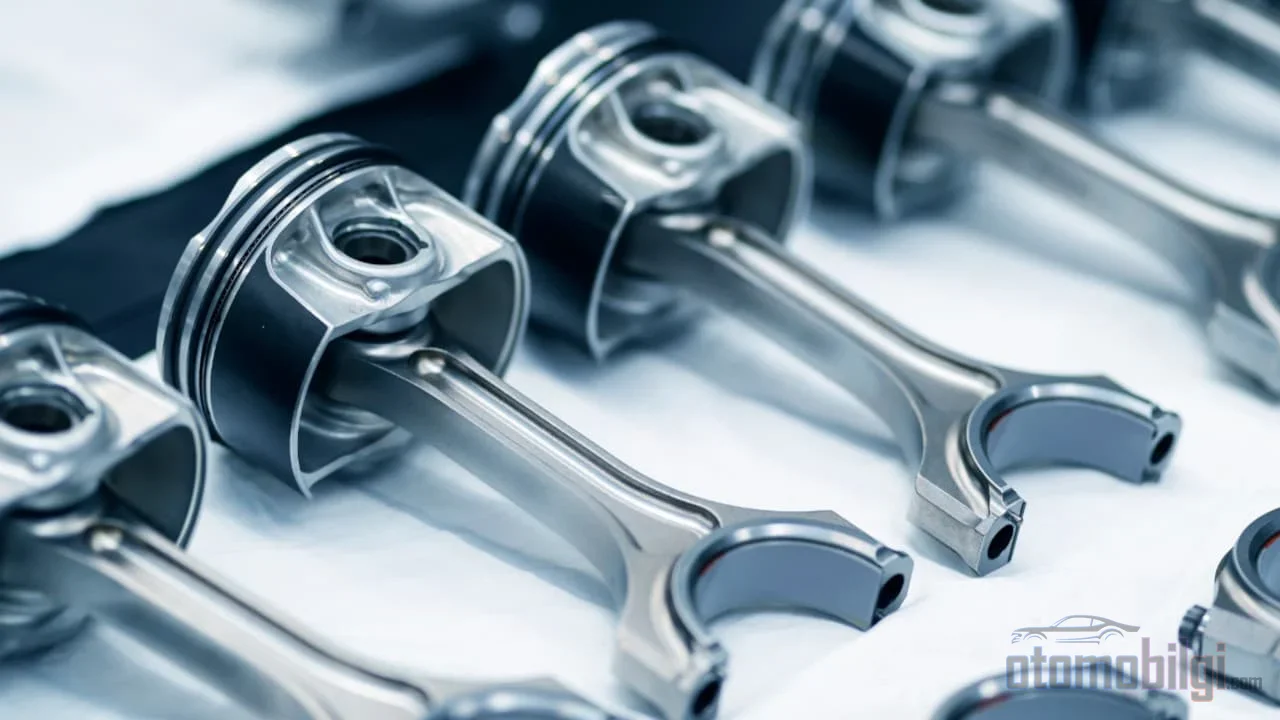
There are two functional reasons why F1 engines favor a high-revving, low-torque philosophy. The first is the mathematical relationship between power and revs: an engine that can produce the same torque at higher revs means more horsepower. The second is aerodynamics: as vehicle speed increases, drag force grows rapidly and power becomes more critical than torque itself. The ability of the 2.4-liter V8s that raced on the grid until 2012 to reach the 18,000 rpm band was the pinnacle of this philosophy. But what prevented 20,000 rpm from being exceeded is not beyond the rules but mechanical and thermal limits: material fatigue, friction losses, and vibration management. For this reason, high revs are a solution that has not been transferred to street cars in many contexts; road vehicles want torque at low revs.
From KERS to Hybrid Power Unit: The Legacy of Energy Recovery
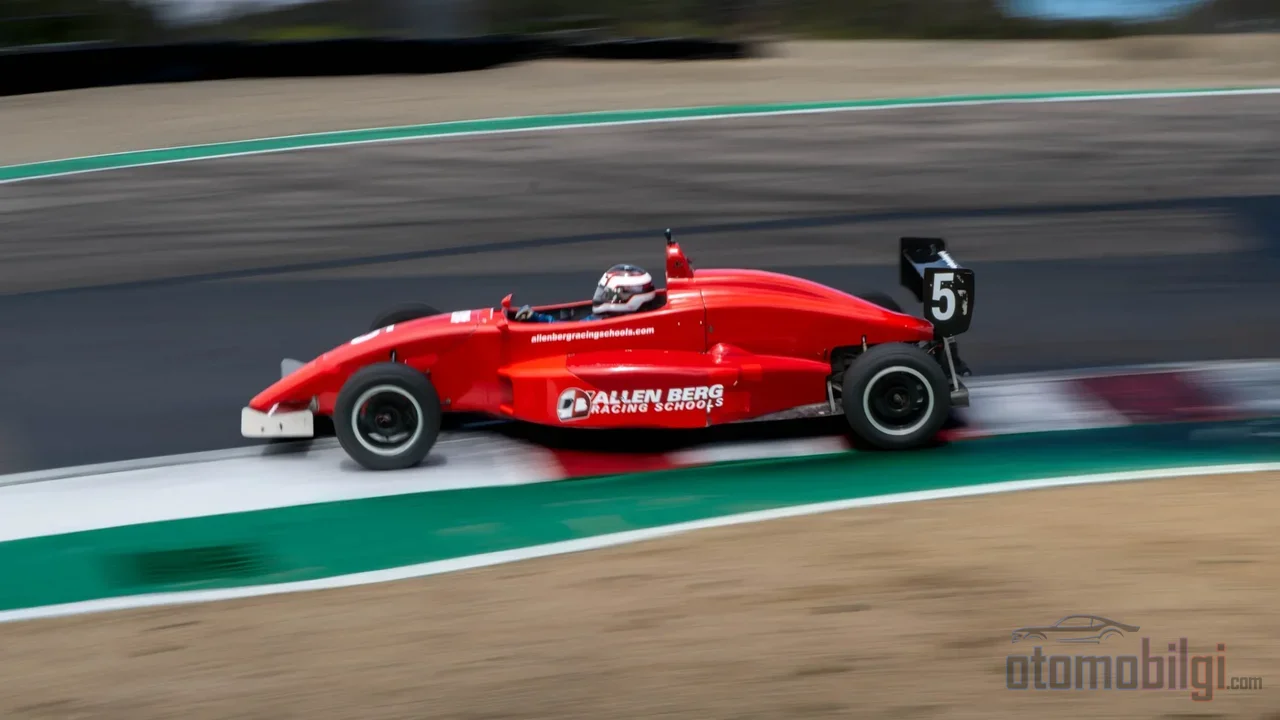
KERS, or Kinetic Energy Recovery System, is an automotive system that recovers the vehicle's kinetic energy during braking. A portion of the captured energy is stored and returned to the vehicle as additional horsepower, providing a measurable performance advantage on the track. In F1's original implementation, the 60 kW and 400 kJ limits were specific only to that formula. Heavier road vehicles can safely operate with higher power and energy transfer; in other words, the limit was an engineering ceiling set for the track, not a limit of the technology itself. According to one assessment, KERS-type energy recovery systems can improve fuel economy by up to 20% ; this rate varies depending on the implementation scheme and vehicle class.
2014 is the real turning point. From that year onward, F1 engines began to be called power units; approximately the same internal combustion engine and energy recovery system (ERS) form a single whole. The most striking measure of this architectural change is thermal efficiency. In the V8 era, the peak was around 29% ; today's hybrid F1 power units offer over 50% thermal efficiency. Mainstream street cars are far behind this level; track conditions (a fixed operating band, volatile fuel, extreme maintenance) make this efficiency possible. But the direction is clear: the efficiency target, hybrid architecture, and energy management software are F1's most concrete contribution toward the road.
How Big Is the Transfer Really: Gauging the Exaggeration
The transfer story needs to be viewed critically. According to one view, almost nothing useful for street cars originates in racing motorsport; motorsport mostly takes its ideas from aviation, and the flow mostly runs from the road to the track. This harsh claim captures part of the truth but is not entirely accurate. A more balanced reading is this: as road car technology catches up with F1, the share of direct transfer diminishes; in return, F1 continues to function as a technology showcase and marketing tool for manufacturers.
The second nuance is the nature of the transfer. Technology is not transferred piece by piece directly: a family car does not get an F1 engine. What is transferred are efficiency ideas, battery architecture, and fuel management approaches. For example, hybrid systems made their way into mass production far more quietly than F1's KERS experience; track connections are not emphasized in consumer brochures, but the engineering culture is fed from the same vein. For manufacturers like Mercedes-Benz, which both build engines and operate road car and F1 teams, this transfer can be described as a technology bridge in the transition from the internal combustion era to the electric era, and the transfer is alive and real.
An academic framework for the rate of substitution
There is also an academic framework that contextualizes the history of technology transfer. A 1986/87 study shows that changes in motor vehicle technology followed the logistics substitution model with a high degree of regularity; technology substitutions in road transport are far faster than changes in rail or energy infrastructure. In other words, every solution flowing from F1 is not independent of the automotive industry's structure; it takes its place within the industry's unique, fast substitution dynamics relative to infrastructure. This explains why the transfer seems irregular: technology may be born on the track, but its speed of diffusion depends on the market's substitution curve.
2026: What Does the Biggest Rule Change in History Tell Us?
The 2026 F1 season brings the biggest rule change in history: lighter cars, an evolution of the hybrid power unit, and a new era of strategic racing. The 18,000 rpm naturally aspirated V8s of 2012 were already replaced by hybrid units; from 2026 onward, the rules allow broader use of hybrid technology to improve efficiency. On the threshold of the electric era, transfer from the track to road car technology is becoming more important than ever.
My view is clear: F1's contribution to road cars is not a parts catalog but the transfer of ideas and experience. Fuel injection, composite material craftsmanship, the discipline of high-revving engineering, and energy recovery architecture matured on the track; yet each reached the road at a different speed and in a different form. The real value of the formula is that it never abandons the question of efficiency under extreme conditions.
Sources
- Formula One engines - Wikipedia
- Key regulation changes in F1 history - Formula1.com
- Benz Patent Motor Car: The first automobile (1885–1886) - Mercedes-Benz Group
- Materials Used In Formula One (F1) Cars - AZoM
- Kinetic Energy Recovery Systems in Formula 1 - Stanford PH240
- Kinetic Energy Recovery Systems - Clemson University
- Changes of E-KERS Rules to Make F1 More Relevant to Road Cars - IMETI/AITI
- What Formula 1 Technology Changed the Regular Car? - Clean Fleet Report
- Technology transfer from Formula One to series production - BMW Group Press
- The Automobile Road to Technological Change - IIASA (Nakicenovic, 1986)
- Why F1 Engines Can't Rev Past 20000 RPM - Driver61
- Formula 1's Biggest Regulation Overhaul in 2026 - F1 Miami GP
- Technology and Innovation - MAT Foundry Group
- Here's How Mercedes-Benz is Using Formula 1 - MotorTrend