Electric Cars Turn a Hundred Years Old: The Forgotten Turn of the 1900s
Share This Page
The history of the electric car did not begin with Teslas, as most of us assume, but with a three-wheeled vehicle that ran through the streets of Paris in 1881. In fact, around one-third of the automobiles produced in America in 1900 were electric. So the electric car is not an innovation; it is the story of a champion who lost its first race against gasoline and returned a century later.
Highlights
- Gustave Trouvé tested the first electric vehicle with a rechargeable battery in Paris on April 19, 1881.
- Of the 4,192 automobiles produced in the USA in 1900, 1,575 were electric.
- The Jeantaud electric car broke the first automotive land speed record in 1898 with 63.13 km/h.
- By 1935, electric cars had almost completely vanished from the roads.
Who Invented the First Electric Vehicle, and When?
Let's go through it step by step, because the heroes of this story are a colorful bunch. Going back to the very beginning, the Hungarian priest Ányos Jedlik built the first electric motor in 1827-28 and ran a small model vehicle with it the following year. Then the Russian engineer Moritz Jacobi built an electric boat around 1832 using non-rechargeable batteries. The Scottish inventor Robert Davidson, meanwhile, ran his vehicle - often referred to today as "the first electric car" - through the streets of Aberdeen with passengers in 1839. But here's the catch: all of these ran on single-use, non-rechargeable chemical batteries. Think of it like a giant remote control that gets thrown away once the battery dies - a bit of a letdown for a car, right?
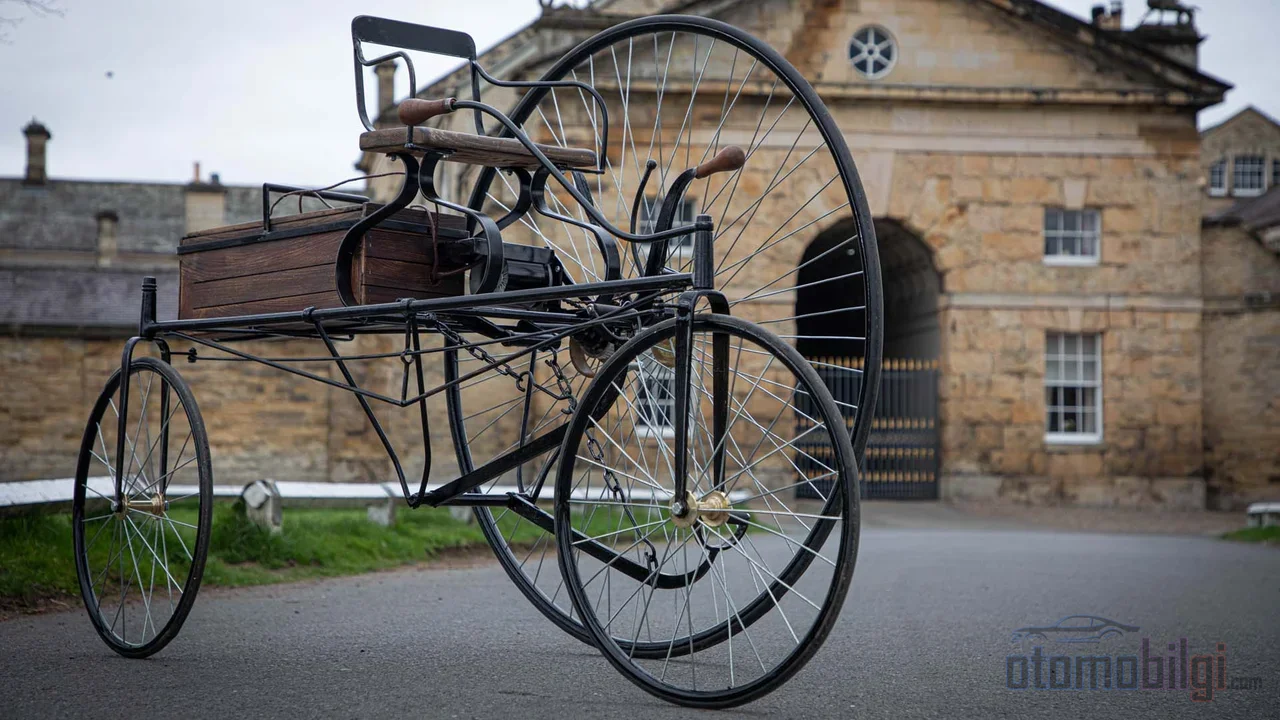
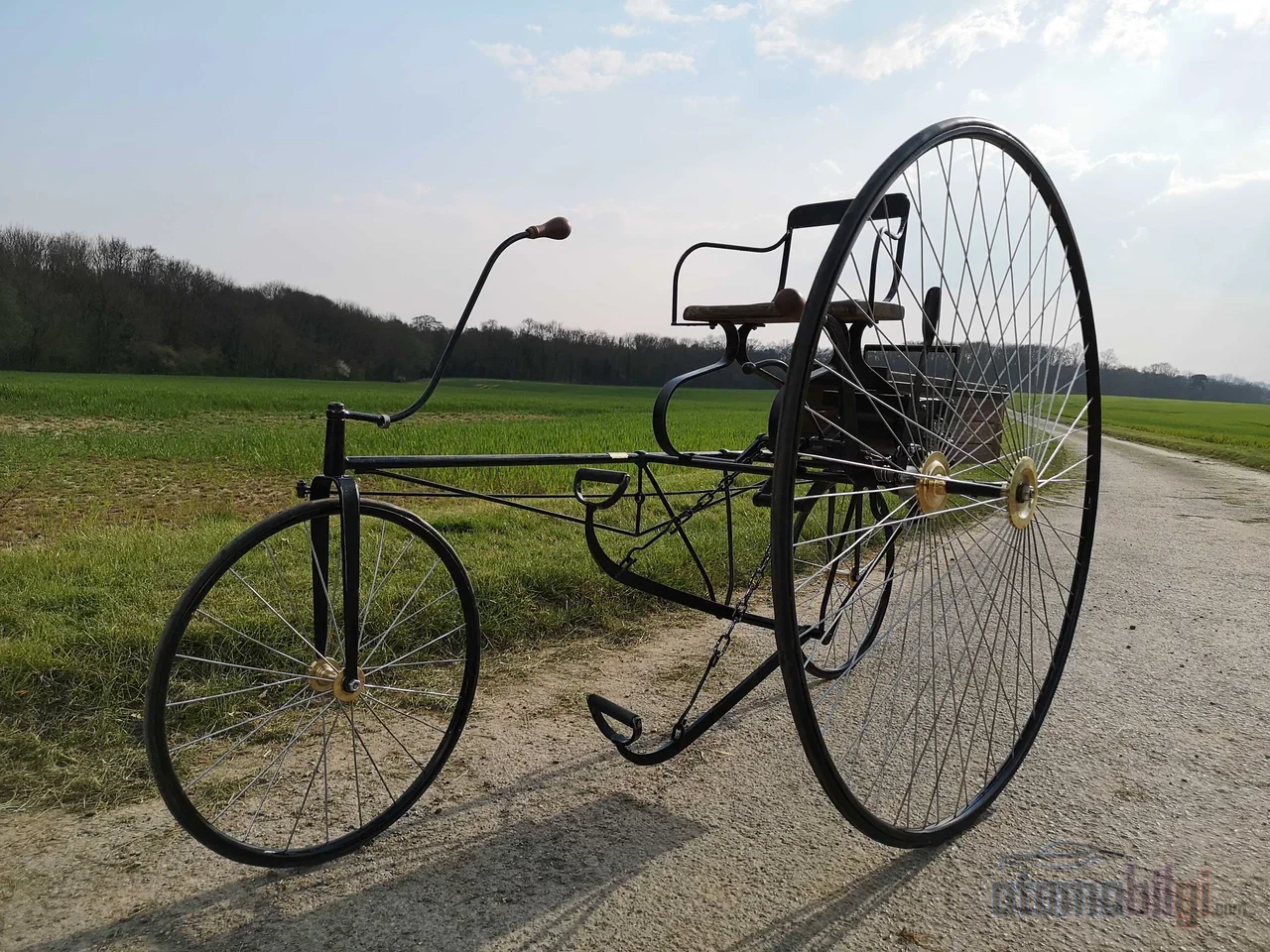
The real turning point comes in France. The French electrical engineer Gustave Trouvé improved the efficiency of a small Siemens electric motor in 1880 and mounted the newly developed rechargeable battery onto an English-made pedal-powered three-wheeled motorcycle. The result? The world's first electric land vehicle. Trouvé successfully tested this vehicle in Paris on Rue Valois on April 19, 1881, and introduced it that same November at the International Exposition of Electricity in the city. Guinness World Records still recognizes this vehicle as "the first electric land vehicle" to this day. The interesting part: Trouvé could not obtain a patent, and after the trial he dismantled the vehicle and moved the motor and battery to an electric boat project - a project that led to the invention of the outboard motor. The man sparked two revolutions at once; you can't help but respect him.
The Headlights Were Also Added by the British
That same year, in 1881, the Englishmen William Ayrton and John Perry built a three-wheeled vehicle equipped with electric headlights - making it the first vehicle with electric lighting. It had a range of 10-25 miles and a top speed of 9 mph. Let's not call it fast, but a vehicle with headlights was genuinely cool in 1881. Another Frenchman, Camille Faure, improved lead-acid batteries and, together with Charles Jeantaud, built a motorized electric vehicle. In short, the 1880s were the preparatory era of the electric car's golden age - noise-free (literally!).
Thomas Parker and the First Electric with a Rechargeable Battery in 1884
You have probably never heard the name of the English inventor Thomas Parker, but he was one of the true architects of this story. Parker held patents in the field of lead-acid batteries and dynamos; he is considered a pioneer of electric tramway and lighting equipment manufacturing. In 1882, together with Paul Bedford Elwell, he founded Elwell-Parker Ltd. in Wolverhampton, and they began producing high-capacity rechargeable batteries, and later dynamos, motors, and controllers. In 1890, Parker's battery-powered trams were carrying passengers in Birmingham; they had also been operating in Blackpool for five years before that date.
Now let's come to that famous claim: It is often said that Parker produced the first series-production electric car with a rechargeable battery in London in 1884, and in a famous photograph Parker can be seen sitting inside this vehicle. Some automotive publications are more cautious, saying that Parker put electric trams into service during that period and built prototype electric cars. So there is a debate over whether it was "series production" or a "prototype"; but everyone agrees that Parker was a pioneer in this field. And let's not forget: Until 1896, the Light Locomotive Act, known as the "red flag law," was in force in England - a speed limit of 4 mph in the countryside and 2 mph in the city, three drivers per vehicle, and a person walking ahead with a red flag. Under these conditions, breaking a speed record was a matter of luck!
Why Were Electric Cars So Common in the 1900s?
Now we come to the striking part of the story. Of the 4,192 automobiles produced in the US in 1900, 1,575 were electric and 1,681 were steam-powered; meaning electric cars made up roughly 38% of production. If we look at the vehicles on the road, the picture changes somewhat: about one-third were electric. Since different sources use different criteria, the figures range between 28% and 38%, but in summary: at the turn of the century, electric cars were not a distant dream, but an everyday reality.
Moreover, the first electric vehicle in the US was built around 1890-91 by the Scottish chemist William Morrison. He was followed by the first major manufacturers such as Waverly, Studebaker Electric, Beardsley, Columbia Electric, and Baker Electric; in 1902, Studebaker had already entered the automotive industry with an electric vehicle. They also made bold claims about speed: On December 18, 1898, the Jeantaud electric car set history's first automotive land speed record at 63.13 km/h. It seemed the electric car had finished its first race against the gasoline car by a wide margin.
So Why Did Everyone Prefer Electric?
- It was quiet and vibration-free; gasoline cars, on the other hand, were noisy, smelly, and cumbersome to shift gears.
- It required no hand-cranked starting handle - that crank was genuinely dangerous back then; if it kicked back, it could break your arm.
- It had no smell, and it could be charged right in front of the house.
That's why electric cars were especially popular among women drivers: because it was cleaner and didn't require wrestling with a hand crank. As the Department of Energy also emphasizes, 1900-1912 is considered the real "golden age" of electric cars. Quiet, easy to use, odor-free vehicles - an almost luxurious experience for the era.
Why Couldn't Thomas Edison Win the Victory With His Battery?
The name that would crown the electric car's victory was about to become his own headache: Thomas Edison. The father of the light bulb began developing a more efficient rechargeable battery for electric vehicles in 1899 - an alkaline, nickel-iron type. The goal was clear: to get rid of the heavy and bulky lead-acid batteries. Between 1901 and 1904 these batteries were tested in Baker's 1900 runabout and, from 1902 onward, in Studebaker's electrics. So the dream was big: with Edison's battery, electric cars would enter everyone's garage.
But it didn't happen. Edison's battery never delivered the expected performance, and this failure repeatedly delayed the electric vehicle project he pursued together with Henry Ford. Even one of history's greatest inventors couldn't solve the battery problem. I think anyone grumbling today about "why is battery technology so hard?" has tasted Edison's pain to some degree.
Why Did Electric Cars Disappear in the 1930s?
Here comes the most painful part of the story. The electric car's defeat wasn't caused by a single reason, but by several reasons piling on top of each other:
- Roads improved: Once long-distance travel became possible, the electric car's limited range became apparent; gasoline cars could go farther and faster.
- Cheap Texas crude oil: Gasoline prices fell, and running a gasoline vehicle became many times cheaper.
- Ford Model T and the assembly line: Mass production cut the price of the gasoline car to roughly a third of the electric's. When your competitor sells at a third of your product's price, business gets tough, doesn't it?
The electric car's own weaknesses didn't help either: it was expensive, slow, struggled on dirt rural roads, was sensitive to cold, and carried heavy lead-acid batteries whose voltage dropped under load. Sometimes it's customary to debate which blow was the fatal one - some point to Ford's price competition, others to oil prices and infrastructure. In reality, both struck at once: cheap gasoline and a cheap gasoline car. By 1920 almost all electric car manufacturers had either shut down or switched to gasoline production; and by 1935 electrics had all but vanished from the roads. The 1929 Stock Market Crash delivered a final blow to weakening sales.
| Criterion | Electric | Gasoline |
|---|---|---|
| Noise and odor | Quiet, odor-free | Noisy, smelly |
| Starting | Not required | Dangerous hand crank |
| Range | Limited | Noticeably longer |
| Operating cost | High | Low with cheap gasoline |
| Sale price | Expensive | One-third the price with the Model T |
Why Today's Electric Comeback Might Be Permanent This Time?
Here's the most interesting part of the historical cycle: the electric car lived a stop-and-go existence throughout the 20th century - it was remembered at every oil crisis, and put back on the shelf whenever pipelines filled up again. Just like a series that keeps getting postponed during school holidays: a great premise, but always delayed. Today things look different, though, because this time the planet is on the table, not just the price.
According to environmental authorities, electric vehicles often have a smaller carbon footprint than gasoline cars, even when the electricity used for charging is taken into account. Of course, debates continue: the environmental impact of manufacturing and how clean charging electricity is are being seriously discussed, and they should be. But there are two major differences separating today from the 1900s: public policies are encouraging clean and efficient vehicles, and lithium-ion batteries can now come close to the performance of gasoline cars. The battery problem Edison could never solve has, a century later, been largely solved.
So the electric car is a hundred years old, and it may be entering its golden age for the second time in history. This time it wasn't cheap gasoline that lost - we were always the ones who couldn't win; vehicles that pollute the air are coming home after a century-long hiatus. So will the story end differently this time? The answer lies in what we choose to drive.
Sources
- The History of the Electric Car
- First electric road vehicle - Guinness World Records
- 1881 Trouvé Electric Tricycle Replica Review
- Gustave Trouvé
- Thomas Parker (inventor)
- History of Electric Vehicles III
- History of the electric vehicle
- First Electric Car: A Brief History of the EV
- Early Electric Cars in America
- Edison and the Electric Car
- Electric Vehicles Had Their First Golden Age
- Electric Vehicle Myths - US EPA