Why Are Inline Sixes Rising Once Again?
Share This Page
The inline-six is an engine architecture in which six cylinders are arranged in a single row on a single crankshaft, and it carries one of both the oldest and the newest stories in automotive history. At the beginning of the twentieth century it was the measure of prestige, but with the rise of front-wheel drive and the V6 it was forgotten for decades; from the 2010s onward, however, thanks to turbocharging and its natural balance, it returned to production lines. This article is not about the death of the inline-six, but about the fact that as a piece of engineering it never died at all.
Highlights
- The inline-six is the only architecture among layouts with six or fewer cylinders to have a perfectly balanced primary and secondary engine.
- Nikolaus Otto developed his compressed four-stroke engine in 1876; this cycle is still known today as the Otto cycle.
- The BMW 303 (1933) was the brand's first mass-produced six-cylinder model; the M88 3.5-liter inline-six stretched from the M1 to the first M5.
- Stellantis' 3.0-liter twin-turbo inline-six produces around 400 hp in standard form and 500+ hp in high-output form.
- The main rationale for the inline-six's comeback is its length; in the turbocharged era this constraint has largely lost its former importance.
The Four-Stroke Foundation: The Line from Otto to the Inline-Six
The story of the inline-six cannot be considered apart from the story of the single-cylinder engine. Nikolaus Otto built his first gasoline engine in 1861; and his patent application for the concept of the four-stroke cycle dates to 1862. Otto, who founded the world's first engine factory with Eugen Langen in 1864, won a gold medal at a world exhibition in 1867 with his design. The real breakthrough came in 1876: the compressed-charge, gas-fueled four-stroke cycle. This cycle, consisting of the intake, compression, power and exhaust strokes, allowed fuel to be burned efficiently for the first time and is known today as the Otto cycle.
As the number of cylinders grew, engineers faced a new question: how do we arrange the cylinders? A straight row was the simplest answer. Cylinders extending along both sides of a single crankshaft could be solved with a single cylinder head and a single exhaust manifold. The V layout, on the other hand, gathered the cylinders into two inclined banks, shortening the engine, but required a separate head, a separate manifold and additional balancing solutions for each bank. The tension between these two approaches shaped the engine architecture debate of the following eighty years.
The Era of Prestige: When the Inline-Six Became an Institutional Layout
There was a period when the inline-six was an institutionalized solution found in the showroom of nearly every manufacturer. Its smooth running, direct power delivery and mechanical simplicity in long-hooded sedans and sports cars made it the natural choice of the premium segment. Mercedes-Benz was known for decades for its inline-six engines in its luxury and performance models. Toyota, with the 2000 GT produced between 1967 and 1970, showed what Japanese engineering could do with the inline-six.
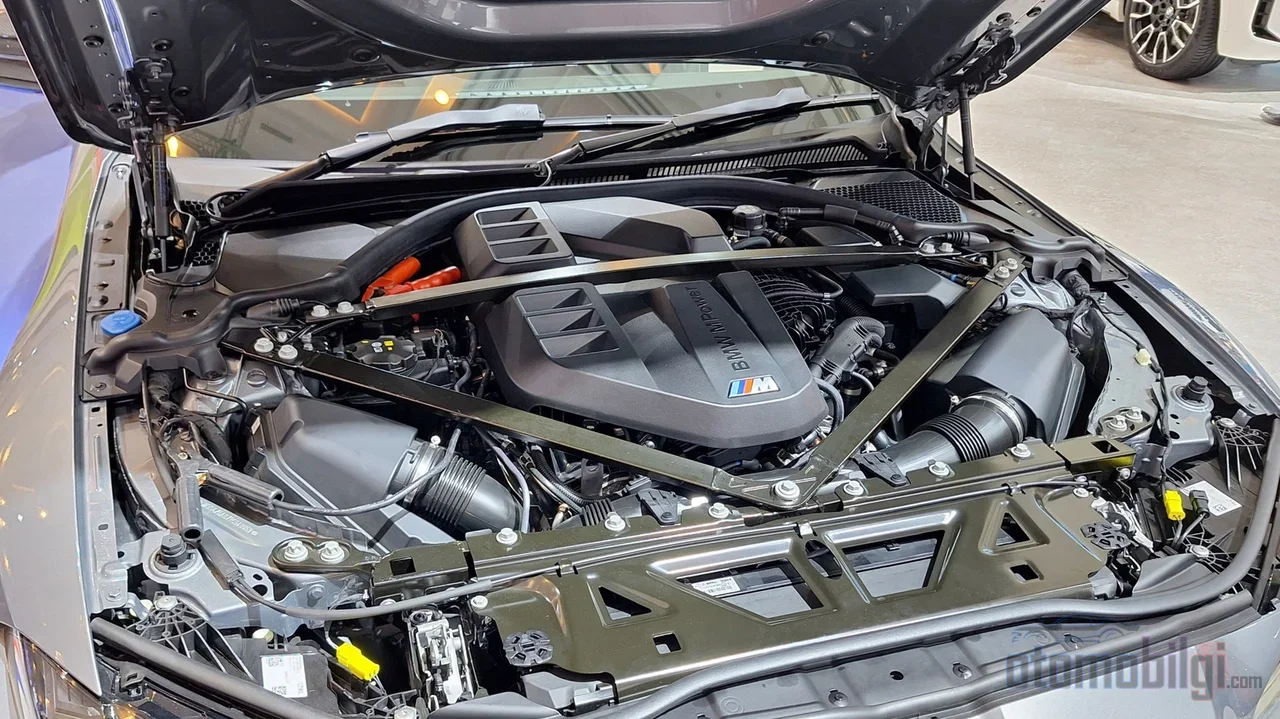
BMW's relationship with the inline-six deserves a separate chapter. The brand launched its first series-production six-cylinder model on the roads with the 303 it introduced in 1933; The M30 family, which arrived in the late 1960s, formed the backbone of the company's engine range for years. The pinnacle was the 3.5-liter inline six coded M88: used first in the M1 sports car and then in the first M5 and M6, this engine is considered one of the most respected engines at every level. Models ranging from the E36 M3 to the E38 7 Series prove that BMW's classic inline-six recipe has hardly changed for nearly six decades.
The decline: Why Did the V6 and V8 Win?
There was no single technical reason for the inline six's decline; there was a single geometric constraint: length. Arranging six cylinders in a single row turns the engine into a packaging problem that takes up serious space on both axes in front-engined vehicles. In layouts where front-wheel drive became widespread and the engine was mounted transversely, this length became practically unmanageable. The V6 gathered the same number of cylinders in two short banks, fitting them into a much more compact space.
The commercial picture quickly followed suit. Around 20-30 years ago, a wide product range, including legendary rear-wheel-drive models like the Land Cruiser, switched from the inline six to the V6 or directly to the V8. Years had also passed since Oldsmobile's high-compression Rocket V8 wiped the inline six off the market. Market data from 2010 showed that even V6 sales in sedans had begun to decline, while small and midsize SUVs were turning to four-cylinder engines; there was seemingly no place left for the inline six.
Yet the engineering rationale behind this decline was about packaging, not thermodynamics. The ground the V6 gained was usually the demand of the production line and the chassis. The engine itself was never strained; it simply could not find a place.
Why Is the Inline Six Perfectly Balanced?
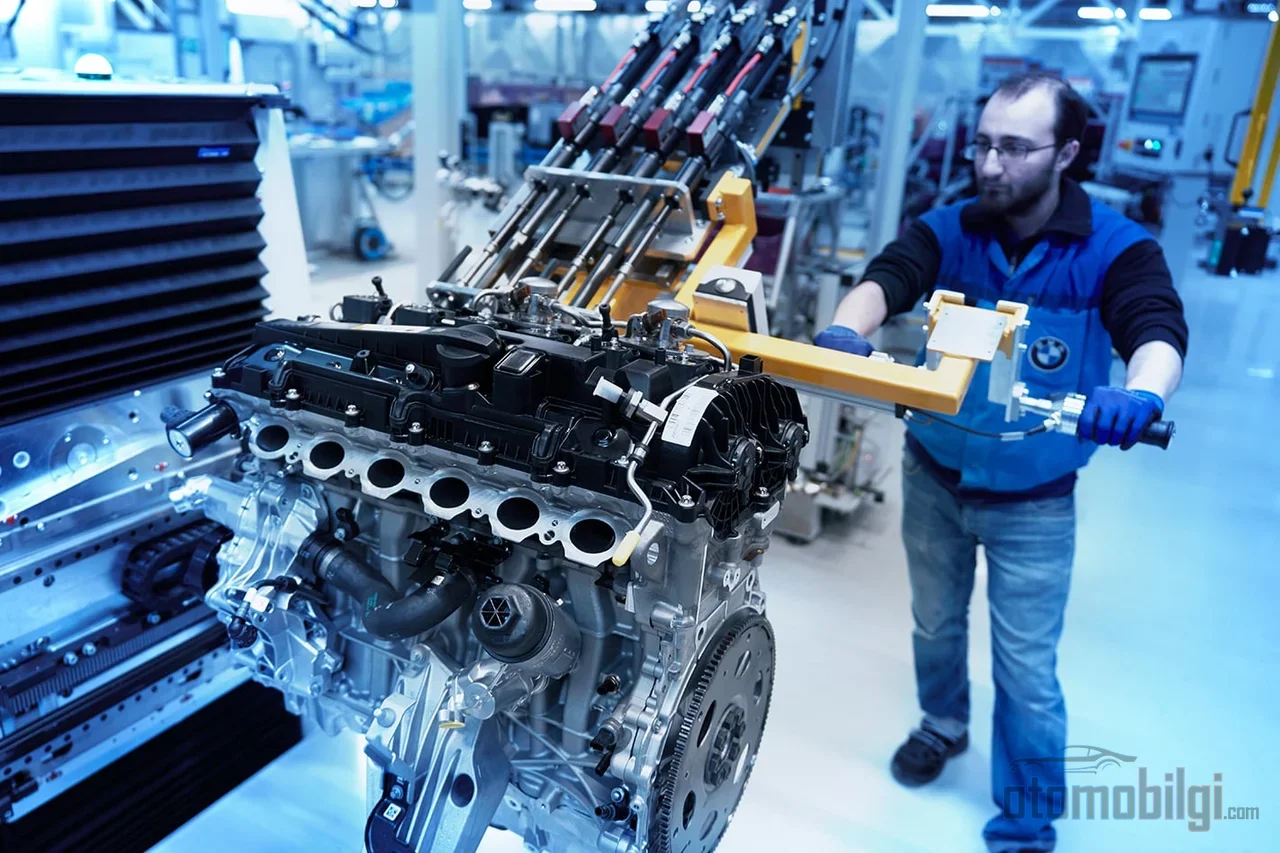
Understanding the inline six's signature feature begins with correctly establishing the concept of balance. In engines, vibration is examined in two categories: first-order forces, the main oscillations arising from the up-and-down movement of the pistons; second-order forces, on the other hand, are oscillations arising from the speed differences within the piston motion itself, repeating every two crankshaft revolutions. In an inline six, the six pistons are positioned on the crankshaft's cranks spaced at 120-degree intervals in such a way that the movement of the piston at the front end of the engine is mirrored exactly by a piston at the rear end. Primary forces cancel each other out; secondary forces do the same.
The practical consequence of this is significant. The need for heavy counterweights, balance shafts, or vibration dampers drops to a minimum. A naturally balanced engine does not require a reinforced block and heavy bearing towers to suppress vibration; this contributes to both durability and lower cost. The V6, on the other hand, typically needs additional balancing mechanisms to run smoothly; While some 60-degree V6 configurations can be naturally balanced, this does not apply to every V6.
Beyond balance, simplicity is also on the inline-six's card:
- A single cylinder head and a single exhaust manifold; A V6 requires two of each.
- A DOHC inline-six runs with just two long camshafts; A V6 demands twice as many small camshafts.
- The total part count of the valvetrain is halved compared to a V6.
- More main bearings than the number of cylinders give the crankshaft continuity along its length.
An honest engineering balance sheet must also record one constraint: length. Aside from length, it is hard to find fault with the inline-six; a V6 with a short crankshaft can be mechanically more rigid. But while that length was a fate in the 1990s, in modern chassis design it no longer is.
The Comeback in the Turbo Era: Length Is No Longer a Problem
Two technical developments were decisive in the inline-six's revival. The first is the maturation of turbocharging. A turbo does not produce a force that pushes the motor back and forth with the pressure fed to the engine; it only spins the shafts that transmit power. For this reason, a turbocharged inline-six offers a high and smooth character in torque delivery. The second is the ergonomics of modern chassis in the engine bay: a turbocharged inline-six is easier to fit into the same vehicle than a V8 and simpler to produce. In front-engine, rear-wheel-drive platforms, the inline-six fills the V8's place in a practically more efficient way.
The numbers make this transformation concrete. Stellantis' Hurricane family replaced the Hemi V8 as a 3.0-liter twin-turbo inline-six: approximately 400 hp in standard output, and over 500 hp in high output; in some applications there are versions reaching 550 hp. The engine was built on the logic of a single intake and single exhaust manifold - a direct continuation of the inline-six's classic simplicity advantage in the turbo era. Mazda fits a 3.3-liter turbocharged inline-six into its three-row CX-90. BMW's B58 and S58, Mercedes-Benz's M256-coded inline-six, and Stellantis' Hurricane together show that inline-sixes in production today are redefining performance. In the SUV segment as well, the inline-six's smooth operation is read as a comfort advantage compared to V configurations.
| Feature | Inline-Six | V6 |
|---|---|---|
| Balance | Natural, flawless in first and second order | Typically requires additional balancing |
| Cylinder head | Single | Two |
| Exhaust manifold | Single | Two |
| Camshafts (DOHC) | Two long | Four short |
| Length | Long, difficult to mount transversely | Compact |
| Turbo integration | Easy on a single layout | Split across two banks |
Legendary Engines and Counterarguments
The inline-six's legendary status cannot be reduced to BMW alone. Toyota's 2JZ -coded inline-six is still a reference point in tuning culture; even today, when a modern turbocharged inline-six is marketed, the analogy to the modern 2JZ is invoked. The existence of 3,000 hp examples built from Nissan's RB26 inline-six is measurable proof of how much load the block structure can withstand. The fact that a brand like Alvis put a 90-year-old classic inline-six back into production with an aluminum cylinder head further confirms the layout's historical value.
Despite this picture, the debate has not been entirely closed. Due to the pistons moving at different speeds in the upper half of their stroke, the inline-six's perfect balance is described in some engineering interpretations as one step short of perfect; broad acceptance, however, considers the neutralization of first- and second-order forces sufficient. There is also a circulating view that the boxer layout is superior in terms of balance. On the reliability side, the problems experienced in BMW's first turbocharged inline-sixes produced opposing user experiences claiming that four-cylinder turbo engines were more trouble-free. These are valuable warnings showing that engineering allows no generalizations about any layout being absolute; but they were not enough to change the market's direction.
Why Is the Inline-Six Rising Again? Conclusion
The story of the inline-six is not a story of comeback, but a story of postponement. The engine never weakened; it was simply that chassis and market conditions did not accommodate it. In an era when front-wheel drive and compact engine bays rose, its length was seen almost as a crime; turbocharging, electrically assisted systems, and modern platform architecture made that length manageable. In return, manufacturers got back, at a cost close to free, a package consisting of a single head, a single manifold, natural balance, and a long crankshaft delivering smooth torque - a package their rivals had to solve with balance shafts. The inline-six did not die; it waited, and engineering learned to welcome it back.
Sources
- Return of the inline-six: Why the classic engine layout is making a comeback
- Nikolaus Otto | Britannica
- Straight-six engine
- Why the inline-six is making a comeback - Hagerty
- Why Inline-Six Engines Are Timeless - Road & Track
- Why Every Automaker Is Quietly Bringing Back The Inline-Six - CarBuzz
- V6 Vs Straight-Six: The Pros And Cons Of Each Engine - Car Throttle
- 4 Car Brands Bringing Back The Inline-6 Engine - SlashGear
- Dodge SIXPACK - Dodge official
- Why Inline-Six Engines Are Making A Comeback In Modern SUVs - TopSpeed
- The Smallest Inline-Six Engines Ever Designed - Pedal Commander
- What Makes BMW's Inline-6 Engine So Legendary? - Clutch Masters
- More Automakers Are Making New Inline-Sixes - Jalopnik