How Did the Ford Thunderbird Establish the Personal Luxury Concept?
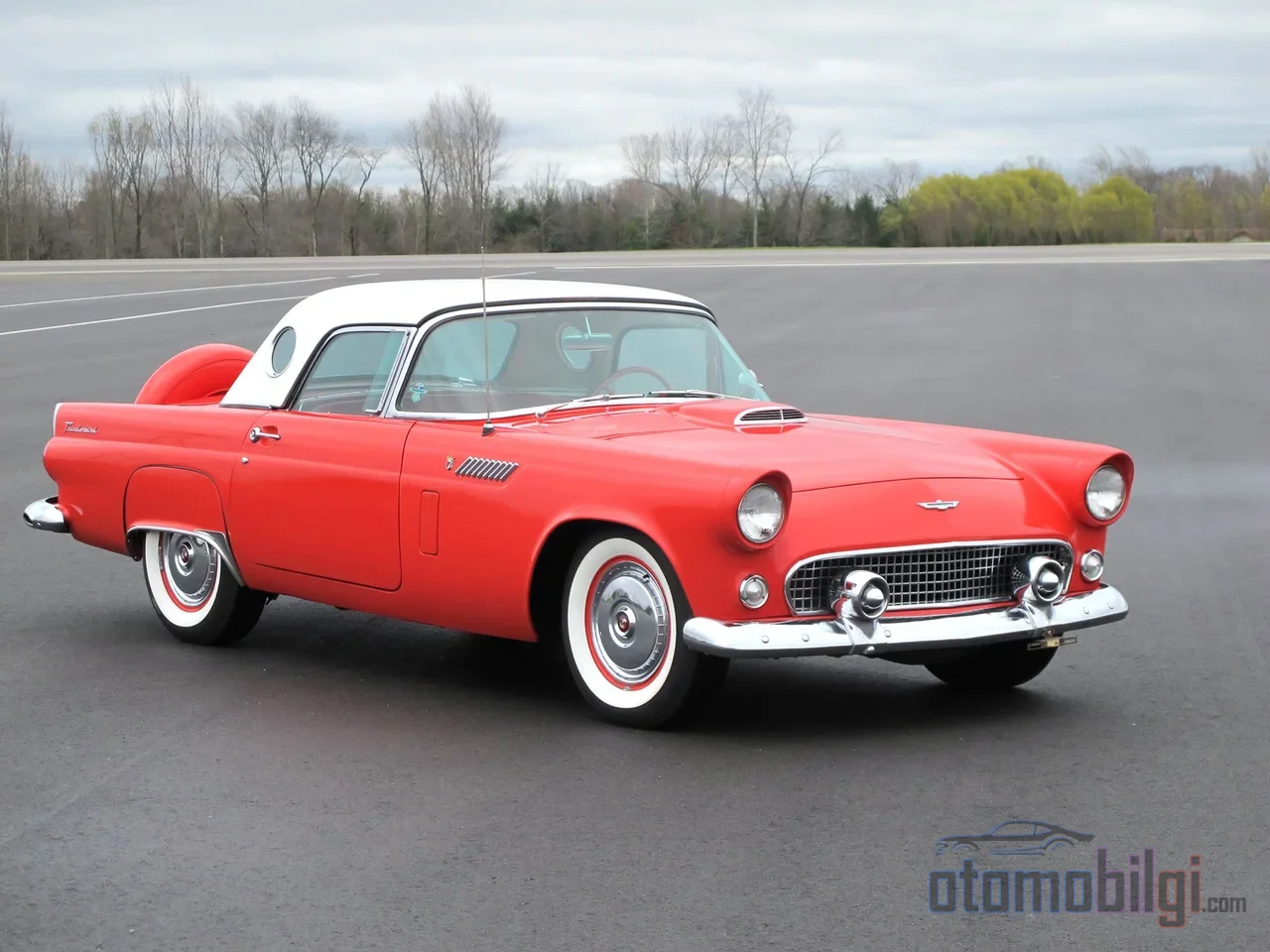
At a car show in 1955, a shiny two-seater Ford stood there, and nobody knew exactly what it was. Was it a sports car? Was it a luxury car? Both, and neither. It was precisely this ambiguity that would turn into one of the most successful marketing discoveries in automotive history: the personal luxury car. So how did the Thunderbird establish this concept, and moreover, not through its rival Cadillac Eldorado's exaggerated tails, but entirely with its own formula?
First, let's clarify this: the story is not as simple as you think. The Thunderbird was born to crush the Corvette, outsold it, then abandoned the two-seater format, and it was precisely this "betrayal" that immortalized the segment. In other words, a classic "winning by losing" story. If you're ready, let's begin.
An Answer to the Corvette, or Its Own Path? The Birth of the Thunderbird
In 1953, Chevrolet introduced the Corvette for Americans interested in European sports cars. Ford's answer was not long in coming: Although the project, unveiled in February 1953, may seem like a pure panic reaction, in fact it was not. Ford was targeting a new market created by rising public prosperity and the concept of "leisure time." As early as 1952, at Henry Ford II's request, a small two-seater roadster prototype named "Vega" was built; although it never went into production, it ignited the fuse of the secret design process.
The concept was shown to the public at the Detroit Auto Show on February 20, 1954, production began on September 9, 1954, and it went on sale as a 1955 model on October 22, 1954. The design bore the signature of Frank Hershey and Bill Boyer, while the name was suggested by a Ford stylist who had lived in the Southwest, inspired by the powerful supernatural bird in indigenous peoples' mythology.
Two Seats, One Formula: What Does Personal Luxury Mean?
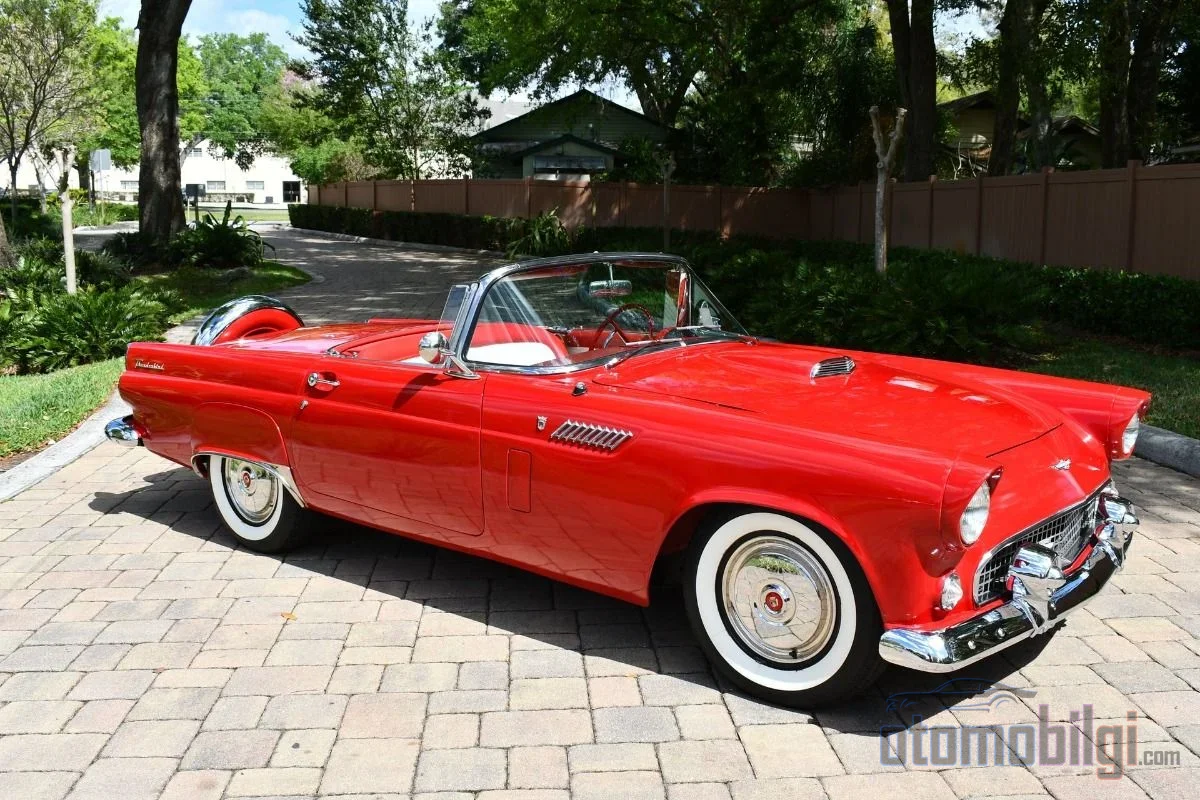
Here is the heart of the article. Ford did not position the Thunderbird as a minimally equipped, stiff-suspended European sports car; it positioned it as an upmarket "personal car" with a sporty look but a comfort focus. In Ford's promotional language, the emphasis was on an exclusive personal car, and the automotive press embraced this naming.
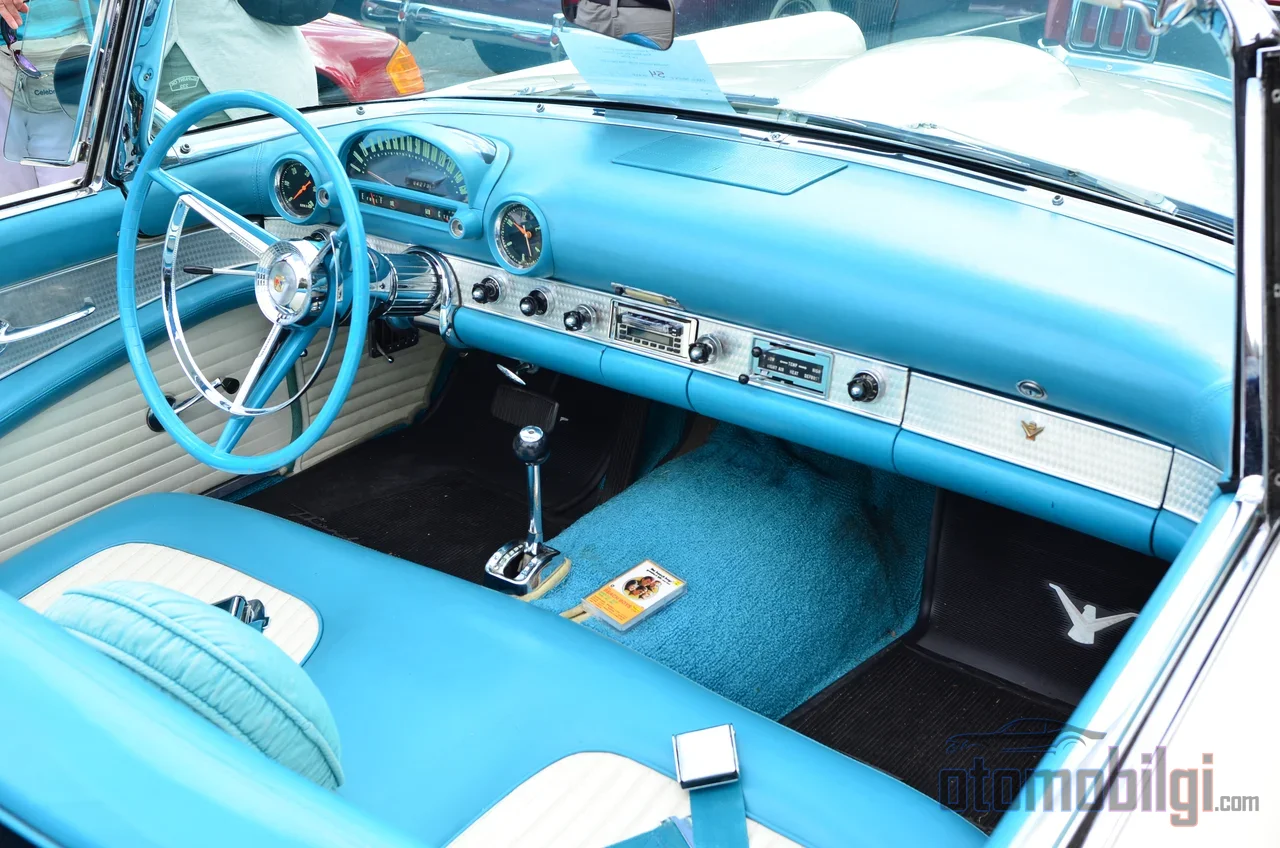
Concrete examples tell this better. The removable fiberglass hardtop was standard, while the fabric roof was subject to an extra charge. Features such as four-way power seats, telescopic steering, a tachometer, and push-button interior door handles had made it onto the list. Most strikingly: although the Thunderbird had two seats, it was never sold with separate bucket seats; in this market where comfort triumphed over sportiness, a single-piece bench seat was preferred. In other words, this car existed not to be a corner hound, but to pamper its owner.
Highlights
- In 1955 the Thunderbird sold 16,155 units, while the Corvette sold only around 700
- The initial list price was USD 2,944, and 3,500 orders were received in the first 10 days
- In 1958 it moved to four seats, and sales soared to about 38,000 units
- The two-seater format did not return until ... the eleventh generation in 2002
The Numbers Speak: What Happened in the 1955 Showdown?
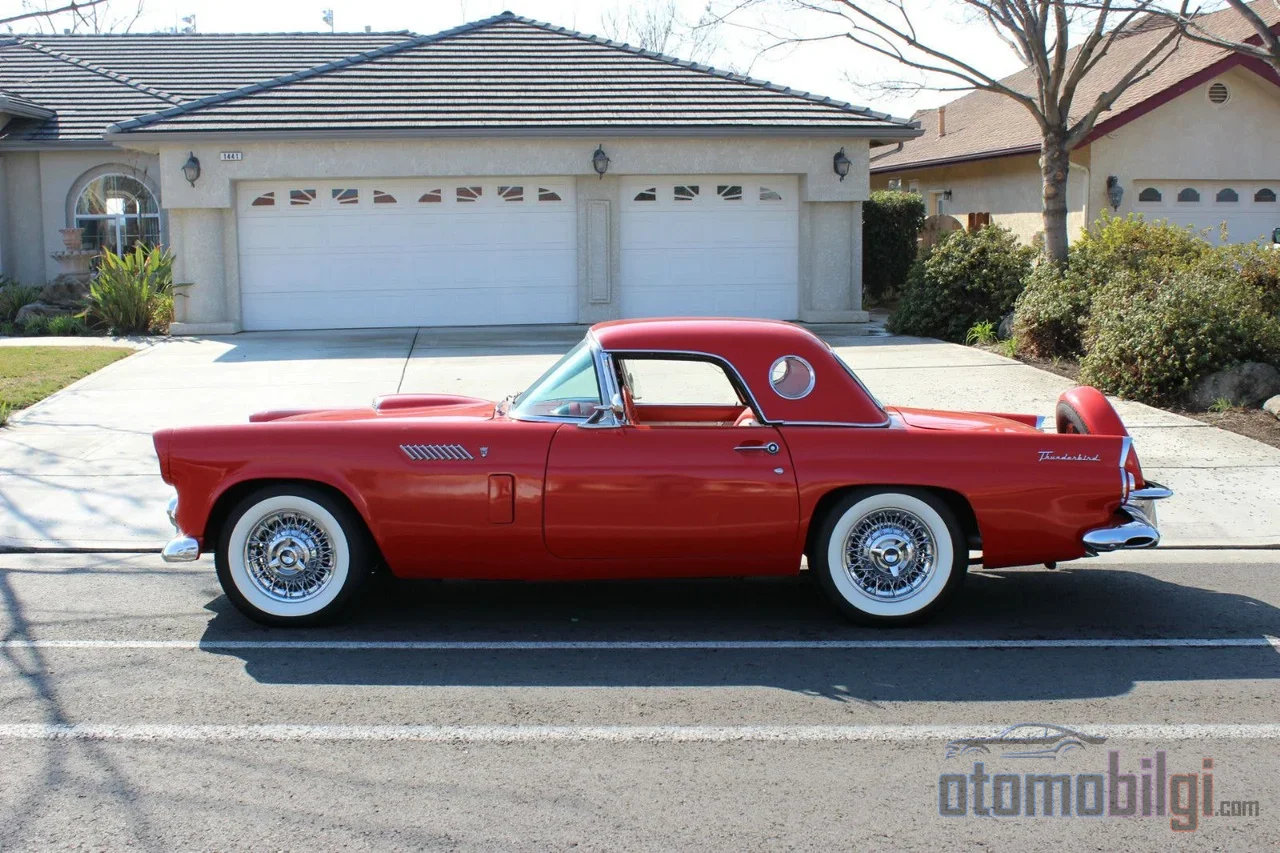
In the 1955 model year, the Thunderbird sold 16,155 units; The Corvette, meanwhile, ended up somewhere between 674 and 700. That means the Thunderbird had outsold its rival 23 times over. The $2,944 price tag at the top of the list corresponds to roughly $35,383 in 2025 money. The production figures are interesting, too: 15,631 in 1956 (the weakest year), 21,380 units in 1957; a three-year two-seater total of 53,166 units.
So did the Thunderbird "crush" the Corvette? Let's be honest: the Thunderbird wasn't winning the speed race, because it had never entered it in the first place. It was comfort-focused and was not a direct rival to the Corvette or European sports cars. It is even frequently argued that the interest the Thunderbird generated kept the Corvette alive, though there is no primary record that confirms this for certain.
Technical Specification of the First Generation
The two-seater Thunderbird was built from existing Ford components; its 102-inch wheelbase was the same as the Corvette's, but the engine was moved 10 inches back for weight distribution. The standard engine was the 292 cu in (4.8 L) Y-block V8, and from 1956 a 312 cu in (5.1 L) V8 appeared on the options list. In 1957, 312s fed by a McCulloch/Paxton centrifugal supercharger reached 300 hp, with one version going up to 340 hp.
| Period / Engine | Power | Torque | Acceleration |
|---|---|---|---|
| 1955-57, 292 V8 (manual) | 193 hp | 379 Nm | 0-100 km/h: not stated by the manufacturer |
| 1955-57, 292 V8 (automatic) | 198 hp | 388 Nm | 0-100 km/h: not stated by the manufacturer |
| 1957, 312 V8 supercharged | 300-340 hp | 595 Nm | 0-100 km/h: not stated by the manufacturer |
| 1958, V8 (Squarebird) | 300 gross hp (roughly 220 hp net) | 576 Nm | 0-100 km/h: not stated by the manufacturer |
I didn't leave the 0-100 km/h column empty in the table, but tests of the era were based on mph: with the 312 cu in / 225 hp version, the 0-60 mph time was 9.8 seconds, the quarter mile 16.6 seconds, and top speed was measured at 161-185 km/h depending on the transmission. There is no official km-based manufacturer figure in any period source at all.
The 1958 Decision: Was Adding a Rear Seat an Act of Courage?
The second generation, launched on February 13, 1958 and nicknamed the Squarebird, changed everything. The wheelbase grew from 102 inches to 113 inches, and overall length from 181 inches to 205 inches; unibody construction was used for the first time, and the car began to be produced on the same line as the 1958 Lincolns at the Wixom plant in Michigan. Ford adding a rear seat while the two-seater formula was selling at full throttle upset many fans at the time.
But the result speaks for itself: the four-seater Thunderbird was a huge hit, sales rose every year during its three-year cycle, and around 38,000 units were sold in 1958. Despite the more powerful engine (300 gross hp, 576 Nm), the extra weight meant it was not faster than the two-seater; its suspension was softer and its brakes weaker. So it wasn't performance that won, it was marketing. Looking back today, the rear-seat decision is seen as one of Ford's most profitable moves of that decade.
The Lincoln Connection
The Thunderbird's influence was not limited to its own brand. The 1961 Lincoln Continental shared the Thunderbird platform and saved the Lincoln brand as a four-door; The 1961-65 Continentals wrote off about 20 million dollars in profit. Between 1958-1976 the T-Bird and Continental came off the same assembly line, and factory paperwork occasionally got mixed up. The 1969 Continental Mark III was also on a platform related to the fifth-generation Thunderbird.
The Eldorado and Beyond: The Segment Becomes Permanent
The Thunderbird established the personal luxury format so well that no serious rival arrived until 1967. That year the all-new Cadillac Eldorado joined the segment; comparison tests of the era described the Thunderbird as the car that started the segment and the Eldorado as the newest contender. GM had even assigned designer Ned Nickles the task of developing a Thunderbird-style personal luxury car. So the Eldorado's story is not just about tailfins; its real significance lies in entering through the door the Thunderbird had opened.
Throughout four generations, the design evolution also followed the segment's maturing: In 1956 the trunk grew and the porthole windows became a free option, in 1957 the bumper, grille and rear fender fins were enlarged, and in 1958 the lines softened completely. For a decade, the Thunderbird was the sole voice in the very segment it had created.
On Screen and on Record: A Pop Culture Icon
The Thunderbird's cultural journey is at least as rich as its technical side. JFK included 50 Thunderbirds in the 1961 inauguration parade. In American Graffiti (1973), the blonde driving the white 1956 Thunderbird and quietly declaring her love to the young one became one of cinema's unforgettable moments. In Thelma and Louise (1991), the 1966 Thunderbird played the lead role. On the music side, the Beach Boys placed the T-Bird at the center of pop culture with Fun Fun Fun; Marc Cohn's song Silver Thunderbird is also part of the same legacy. It is also rumored that in 1955 Marilyn Monroe bought a Thunderbird and used it on her wedding day.
The Answer: Did the Thunderbird Really Invent the Concept?
Yes, and in two moves at that. With its two-seat, comfort-focused "exclusive personal car" idea in 1955, the Thunderbird single-handedly put the personal luxury concept before the market; by moving to four seats in 1958, it turned this segment into a permanent, profitable category followed by others. The Eldorado could only become a serious rival in 1967, twelve years later. The two-seat format did not return until the eleventh generation in 2002, and when it did, it was a farewell tour.
Collectible Value in 2026
So what is the situation today? Over 400 Thunderbirds are currently listed for sale on the platforms. The most current picture is this: the fifth generation (1967-71) is losing collector interest, and examples in condition 2 have lost 12 percent of their value. In contrast, the sixth generation (1972-76), the giant-bodied "big birds" that shared a platform with the Continental Mark IV, is warming up; examples in condition 2 are gaining an average of about 2,700 dollars per quarter. A 1970 Thunderbird found a buyer for $17,600 at an auction in January 2026. The general trend is flat, but examples in the best condition with low mileage are steadily gaining value; that's the unchanging rule of the classic market, after all.
The result? The Thunderbird didn't win the speed race, but it won something much bigger: it gave birth to a segment, saved Lincoln, made its way onto license plates and into movies, and more than sixty years later it remains an icon still being bought and sold. Sometimes you don't have to beat the Corvette to be mentioned alongside a legend like the Corvette.
Sources
- Ford Thunderbird (first generation) - Wikipedia
- 1955 Ford Thunderbird Fact Sheet
- Little Bird: The 1955-1957 Ford Thunderbird
- 1958-1966 Ford Thunderbird
- Vintage Car And Driver Comparison: 1967 Ford Thunderbird And Cadillac Eldorado
- Save the Lincoln That Couldn't Save the Thunderbird - Hagerty
- Collectors Warming Up To Sixth Gen Ford Thunderbird
- 1955 Ford Thunderbird - Muscle Car Facts