How Did the Renault 5 Become an Urban Car Legend?
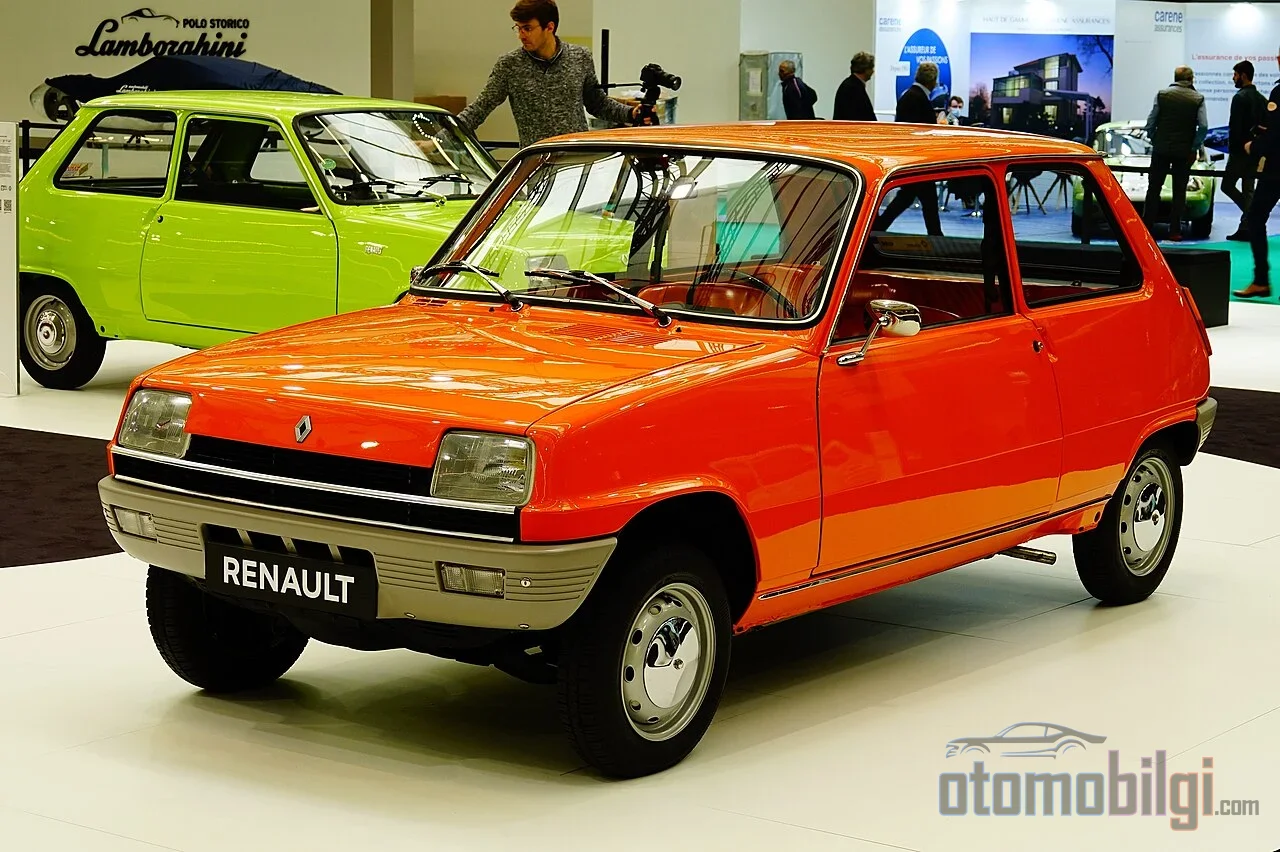
In January 1972, a small, round-lined hatchback was introduced in Paris, and nobody knew it was the first page of a legend. It was so little known that the press merely announced the model in December 1971 as Renault's new baby. When the books were closed fourteen years later, here is the picture that emerged: Production exceeding 5.5 million units, over a decade as France's best-selling car, and a legacy still talked about today. So how did this little French car manage to be both the economic car of the crisis years and the star of rally stages? Let's go back to the beginning of the story.
In this article, you'll find the Renault 5's entire journey from its birth in 1972 to its electric rebirth in the 2020s: the design story, sales records, performance versions like the Alpine and GT Turbo, Jean Ragnotti's rally victories, and the electric continuation of the legacy. Buckle up, because there are plenty of twists on this journey.
Birth: The Road from Projet 122 to the Showroom
The Renault 5's development code was Projet 122, and its design was signed by Michel Boué. The silhouette Boué drew was surprisingly modern for the 1970s: a single-body hatchback structure, soft lines, and dimensions narrowed for urban use. The exterior dimensions speak clearly: 3650 mm length, 1580 mm width, 1410 mm height and a 2415 mm wheelbase. So tiny by today's measurements, yet the use of interior space was so clever that it redefined the segment's bar.
Images and details were published on December 10, 1971, and the official launch took place on January 28, 1972. In September 1972, a right-hand-drive version reached the British market, and the model quickly crossed borders. The timing was spot-on even by today's standards: When the 1973 energy crisis erupted, people were looking for exactly a small, economical car, and the Renault 5 was there, ready and waiting in the showroom. It would take at least three years for rival manufacturers to create real competition in this segment; meaning the Renault 5 single-handedly established the supermini concept in practice.
Highlights
- Introduced in January 1972, it was France's best-selling car for more than a decade
- First-generation production exceeded 5.5 million units
- Mid-engined Renault 5 Turbo: 160 Hp, 0-100 km/h in 6.9 seconds
- Jean Ragnotti's victories at the 1981 Monte Carlo Rally and the 1985 Tour de Corse
- It returned in the 2020s as an electric car under the name Renault 5 E-Tech
Sales Records and the Le Car Era
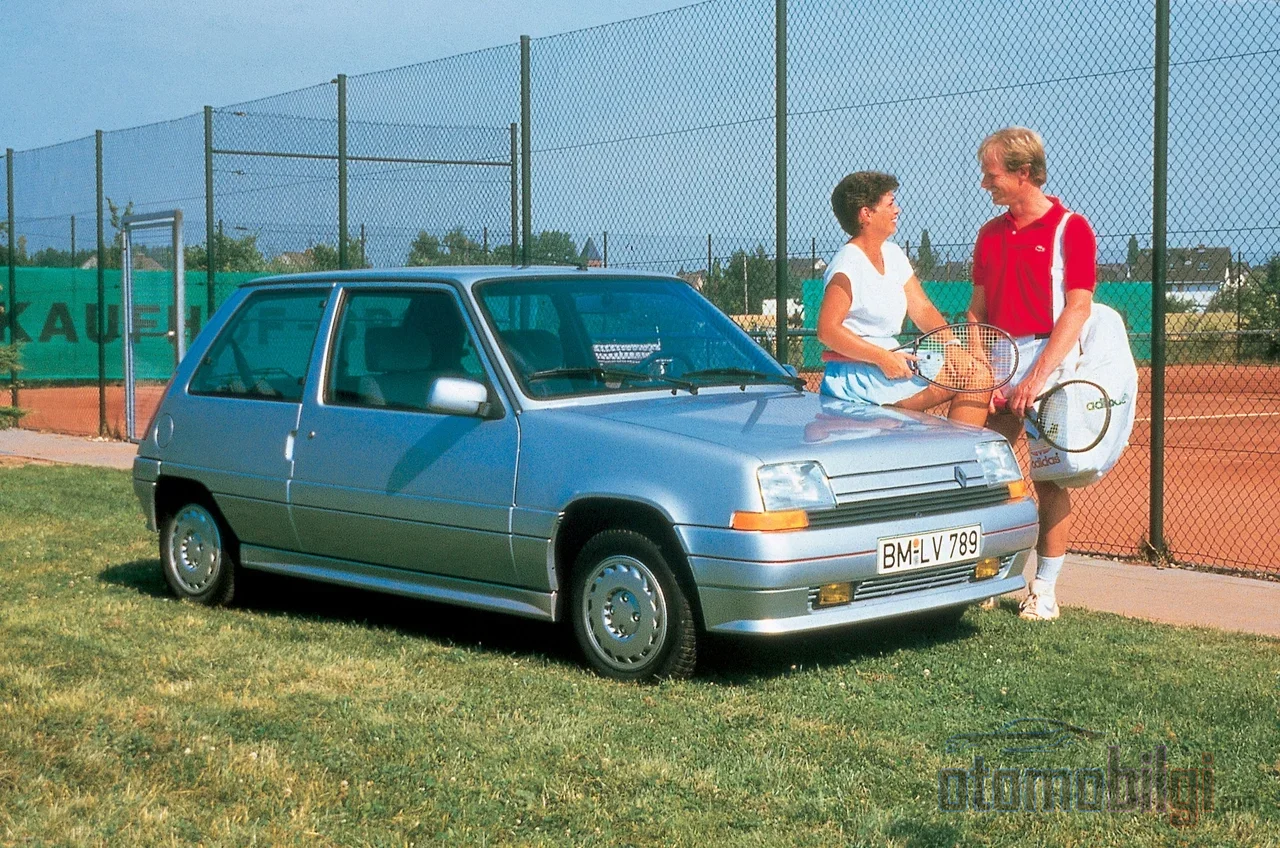
The figures were dizzying. From 1972 onward, the model became the best-selling car first in France, then in all of Europe. In 1984, when sales reached around 5.5 million units, it handed over its place to the Super 5, though parallel production continued for a while longer; so the total lifespan of the first generation extends into 1985-1986. Whichever way you close the door, the result is the same: Production exceeding 5.5 million in 14 years, making it one of Europe's best-selling small cars.
Across the Atlantic, the story is a bit more colorful. It was sold in the US market under the name Le Car; so the little French car also gained a marketing tower. However, Renault gradually began withdrawing from the North American market in the late 1970s, and the Le Car experience came to an end. Despite this brief American adventure, the model left a mark distinctive enough to be remembered.
Performance Identity: Alpine, GT Turbo and the Mid-Engined Mad Turbo
Up to this point everything sounds like a sweet city car story, doesn't it? But the Renault 5 also had a secret identity: stuffing a big engine into its small body. One of the most beloved French representatives of the 1980s hot hatch craze was born exactly here.
Renault 5 Alpine and Alpine Turbo
The Alpine versions brought the first serious performance touch to the ordinary 5. The 1981 Alpine Turbo added a Garrett T3 turbocharger to its 1.4-liter engine, delivering a noticeable power jump compared to the naturally aspirated versions. While an ordinary 1980 GTL produced only 44 Hp, the Alpine Turbo offered 109 Hp of power and 149 Nm of torque; in a car weighing around 870 kg, that was certainly no small amount of fun.
Renault 5 Turbo: The Engine Moved to the Middle at the Rear
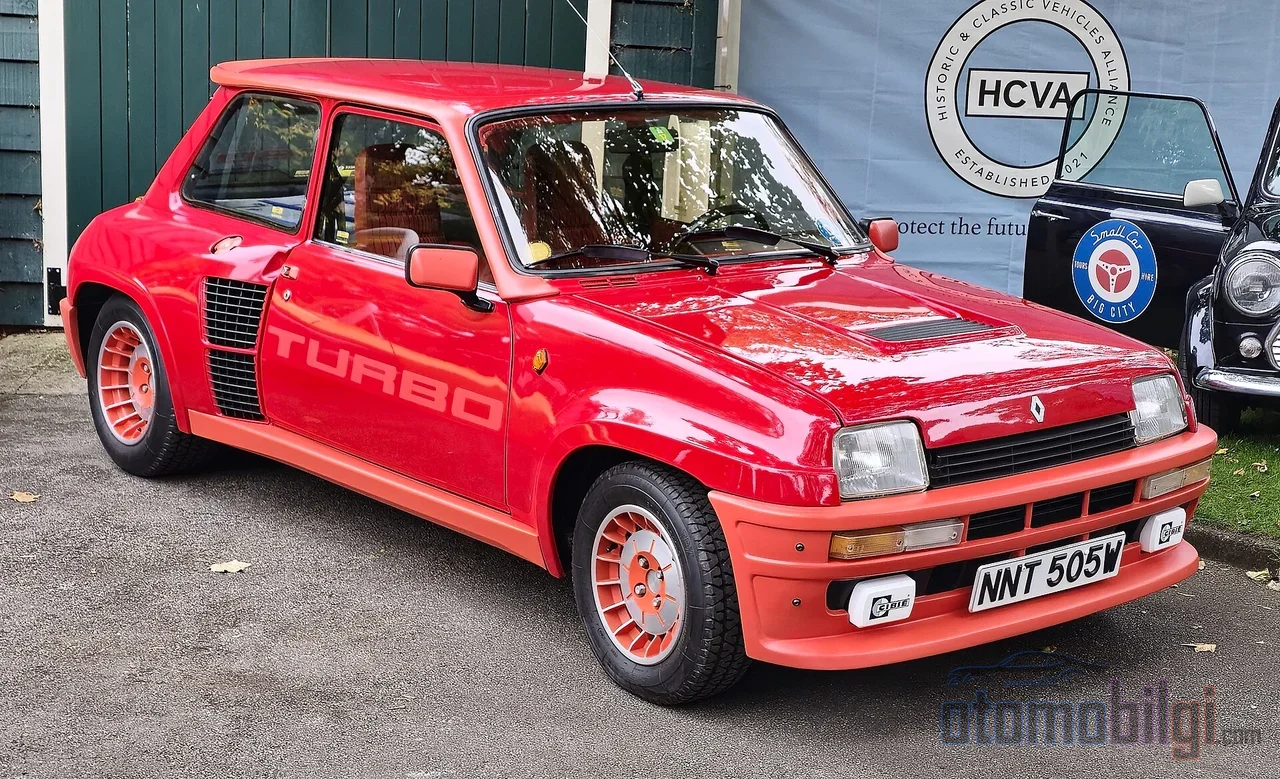
Then came the crazy sibling in 1980: the Renault 5 Turbo. Built for rally homologation, this special car, with its mid-mounted engine replacing the rear seats, shared almost nothing with an ordinary 5 but its name. Its wide fenders and short overhangs were enough at a single glance. The performance was clear in numbers: 160 Hp, 210 Nm of torque, 0-100 km/h in 6.9 seconds, and a top speed of 200 km/h. For the 1980s, these figures were as impressive as today's supercars.
GT Turbo: The Hot Wing of the Super 5
Born on the Super 5 body in 1985, the GT Turbo produced 113 Hp with a body weighing around 850 kg and completed the 0-60 mph sprint in 7.5 seconds. In the 1987 update, power rose to 118 Hp. For the youth of the 80s, the GT Turbo was a dream car both in terms of affordability and speed; that's why it is today one of the most sought-after French cars on the classic market.
| Version | Power | Torque | 0-100 km/h |
|---|---|---|---|
| 5 GTL / TL (1980) | 44 Hp | 85 Nm | 14 seconds (60 Hp, 1981) |
| 5 1.1 (45 Hp) | 45 Hp | 80 Nm | not announced by the manufacturer |
| 5 1.6 D (55 Hp) | 55 Hp | not announced by the manufacturer | 16.5 seconds |
| 5 Alpine Turbo (1981) | 109 Hp | 149 Nm | 9.0 seconds |
| 5 Turbo (1980, mid-engine) | 160 Hp | 210 Nm | 6.9 seconds |
| Super 5 GT Turbo (1985) | 113 Hp | 165 Nm | 0-60 mph 7.5 seconds |
The Rally Stage and the Legend of Jean Ragnotti
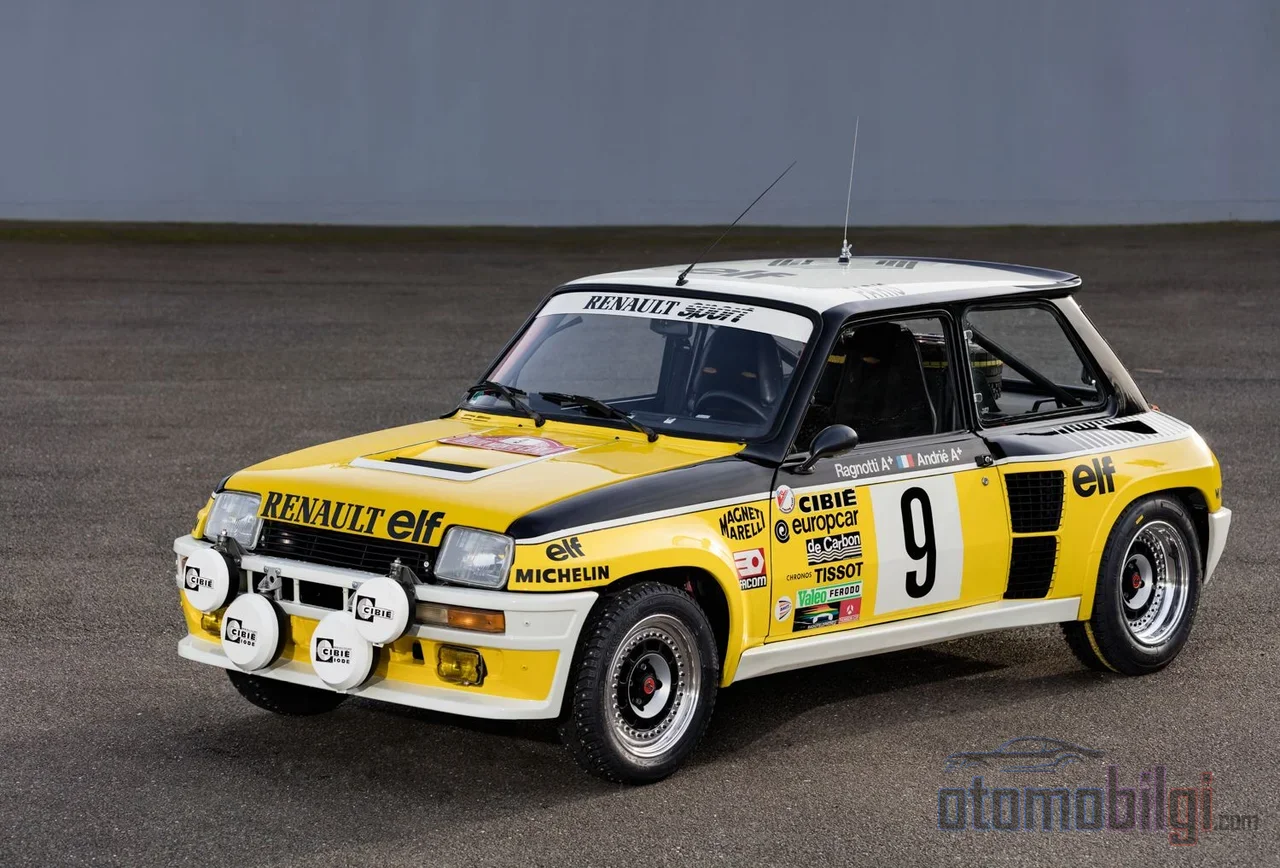
The reason for the performance versions' existence was rallying, and at the center of rallying stood one name: Jean Ragnotti. The Renault 5 Turbo was homologated for rally use under Group 4 regulations, and in 1981 it won the Monte Carlo Rally with Ragnotti at the wheel. Think about it: a short and wide box carrying a turbocharged engine underneath, wrestling with the Audi and Lancia giants on the snowy passes of the Col de Turini. A cinematic scene, isn't it?
The car was later moved to the Group B class, and the legend continued. In 1985, Ragnotti won the Tour de Corse with the Renault 5 Maxi Turbo in the fiercely competitive environment at the peak of Group B; this victory is all the more valuable as it was the first race for the Group B Renault 5. Ragnotti's connection lasted until 1990: that year he entered five ERC races and one WRC event, the Tour de Corse, with the GT Turbo, but could not finish in Corsica due to an engine failure. Even so, the name Ragnotti continues to be mentioned in a way that can never be separated from the Renault 5.
The Renault 5 in Popular Culture
The clearest proof that a car has become an icon is its visibility beyond the garage. The Renault 5 passed this test easily: has been featured in video games, appeared in movies, and in 2022 it celebrated its 50th birthday in 2022 it got its own celebration. The brand organized events throughout the year; it was showcased at the Circuit des Remparts in Angoulême, and the celebration year was crowned with special content such as a stop-motion film. Not bad for a city car, right?
The Electric Rebirth in the 2020s: Renault 5 E-Tech
And the story extends to today. Renault brought back the 5 as a fully electric vehicle under the name Renault 5 E-Tech. This car holds the title of being the first model to use the AmpR Small platform, which the brand developed for B-segment electric cars. The approach of blending retro design cues with a modern electric body has attracted great interest since its launch.
Let's look at the technical side: As of 2026, there are three powertrain options in the lineup. At the entry level there is the new 80 kW motor with a 36.5 kWh LFP battery and a range of up to 305 km; above it are longer-range packages offering 90 and 110 kW of power. The new generation initially carried the iconic configuration of a 40 kWh battery + 120 Hp and a 52 kWh battery + 150 Hp; the 52 kWh version reaches 0-100 km/h in 7.9 seconds. On the DC fast charging side, the 52 kWh pack supports up to 100 kW, and charging from 15% to 80% takes about half an hour. With a five-seat cabin, a 326-liter trunk and a curb weight of approximately 1350-1450 kg, the electric 5 carries on the practical spirit of its ancestors.
Conclusion: Why Did the Renault 5 Become a Legend?
The short answer is this: The Renault 5 was not only the right car at the right time; it also knew how to constantly reinvent itself. An economical city car during the crisis years, a fiery performance symbol in the 80s with the Alpine and GT Turbo, a racing car winning the Monte Carlo and Tour de Corse on rally stages, a beloved figure in popular culture, and an electric rebirth in the 2020s. With more than 5.5 million first-generation units produced, this model became one of Europe's best-selling small cars, permanently changing automotive history by effectively establishing the hatchback and supermini segment.
The return of a model thought to be just about discontinued, fifty years later, back to showrooms with an electric version still on everyone's lips, is proof that legends never die. The secret of the Renault 5 lies neither in its name nor in its power; it lies in its ability to be reinvented again and again for each generation in a different form, but with the same character.