BMW M1: Designed by Lamborghini, Made Legendary by BMW
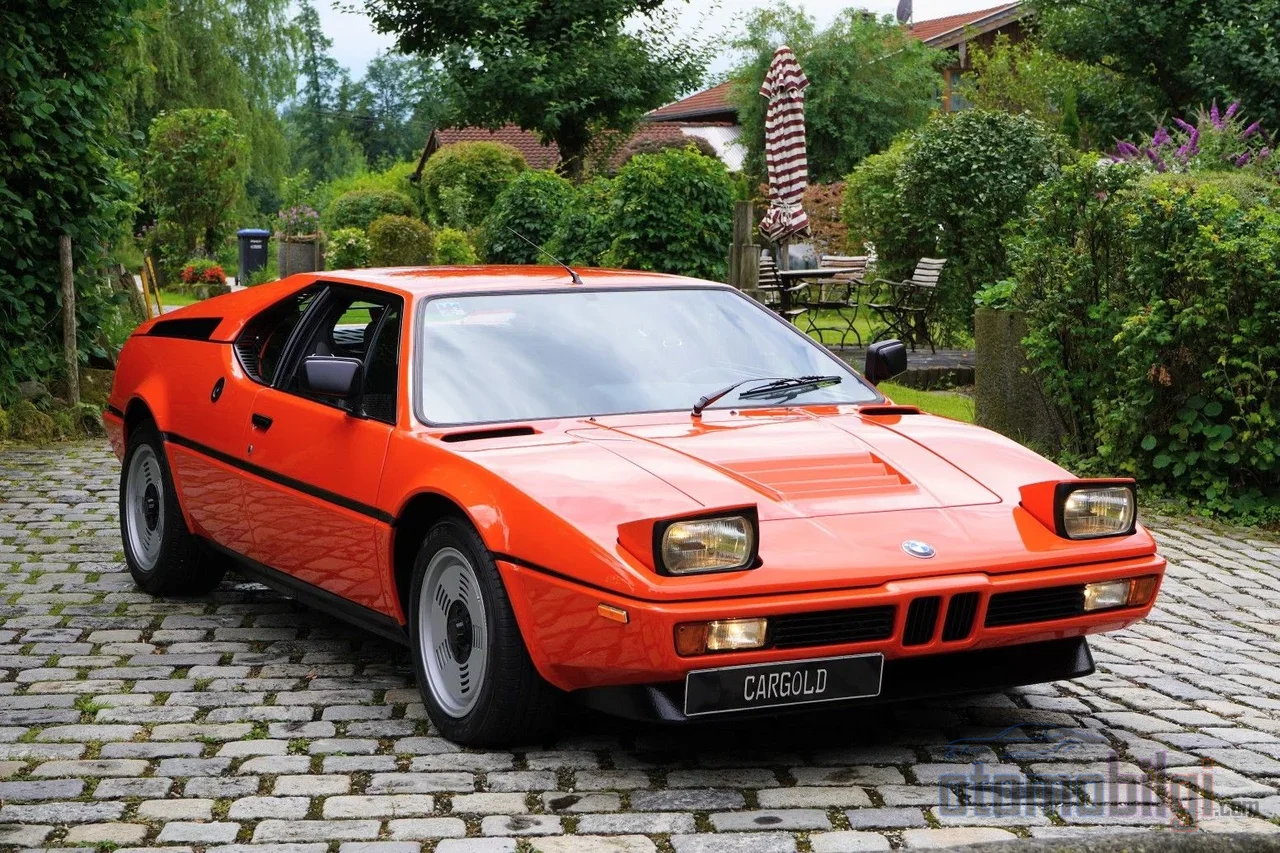
Just think about it: What does BMW have at the end of the 1970s? Solid but quiet sedans, coupes, and a motorsport team dreaming of hitting the track. Right across, Porsche is roaming the race circuits as if they were its own backyard. And right at that moment, Jochen Neerpasch, head of BMW Motorsport, makes a crazy decision: to be a real competitor, a mid-engined, race-focused car is a must. But there is a problem. The rules require hundreds of road cars to be produced within a certain period to race in Group 5, and BMW is in no position to do that on its own line. The solution? It reaches out to Italy, to Sant'Agata: A partnership with Lamborghini. Yes, you read that right. The BMW M1, considered a legend today, was almost a Lamborghini before it was born. So how did this partnership collapse, how did the project return to BMW's hands, and why is the resulting car called "Germany's first supercar" today? Let's dive into the story.
A Birth Story That Started with Lamborghini and Ended at BMW
The logic of the project was actually simple. BMW would design the race car, while Lamborghini would take care of the chassis details, prototype assembly, and production. The design of the tubular steel space frame was undertaken by Gianpaolo Dallara, whose name is today one of the most respected in the racing world. And the body was drawn by Giorgetto Giugiaro; the wedge-shaped, fiberglass body drew direct inspiration from the 1972 BMW Turbo concept. So the soul of the car carried both Italian design elegance and Bavarian engineering.
But then things did not go as expected. Lamborghini's financial situation deteriorated rapidly, and the partnership collapsed before production could ever scale. In April 1978, after seven prototypes were built, BMW took complete control of the project back. In fact, the engineering work was completed by Italengineering, a company founded by former Lamborghini engineers, just 10 miles away from the Lamborghini workshop. Talk about a twist of fate: The Italians left the company, but the job was still finished by Italians.
The production chain was an organization in itself. The fiberglass body was prepared in Reggio Emilia, the chassis at Marchesi in Modena, and the body and interior at Italdesign in Turin. The half-finished cars were completed by hand at Baur in Germany, the M88/1 engines came from Munich, and the final inspection was carried out by BMW Motorsport. The result: A hand-built, homologation-focused special production between 1978 and 1981. With an official production run of exactly 453 units. Actually, this figure is somewhat disputed; While BMW M's own page mentions 460 vehicles, some records point to 456. What is clear is this: The small number of cars produced in four short years changed BMW's history forever.
Highlights
- The BMW M1 was produced between 1978-1981 and became BMW's first mid-engined mass-produced automobile.
- Engine: 3.453 cc M88/1 inline-six, 277 PS of power and 330 Nm of torque.
- Top speed is 265 km/h, and 0-100 km/h acceleration is under 6 seconds.
- The Procar championship was won by Niki Lauda in 1979 and Nelson Piquet in 1980.
- In 2026, an M1 sold at auction for 824,000 USD.
The M88 Engine: The Heart of the German Supercar
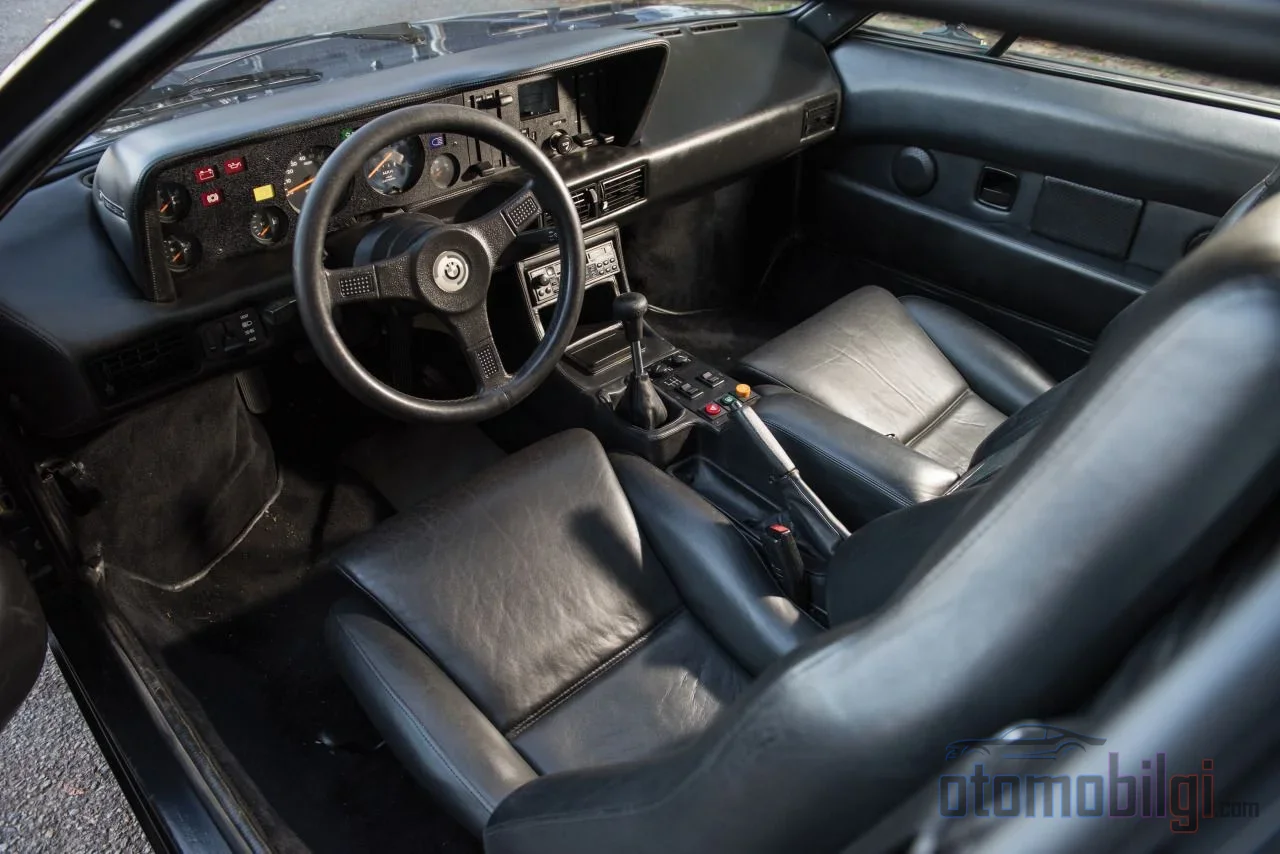
Now let's get to the technical part, because what truly made the M1 a legend lies beneath it: that famous naturally aspirated engine. The M88/1, developed by Paul Rosche, is a naturally aspirated inline-six gasoline engine with a displacement of 3,453 cc. Let me give you a simple analogy: like an athlete doing breathing exercises, this engine takes in abundant air through six separate throttle bodies, feeding each cylinder individually. Dual overhead camshafts (DOHC) and four valves per cylinder were among the most modern solutions of the era. Fuel was supplied by Kugelfischer-Bosch mechanical injection, and ignition by a Magneti-Marelli system.
So what does this heart produce? In the road version, 277 PS at 6,500 rpm (204 kW) and 330 Nm of torque at 5,000 rpm. It may not sound absurd by today's standards, but entering 1980 with a top speed of 265 km/h and a 0-100 km/h time under 6 seconds, the M1 was at the level of the fastest German automobile of its era. In the racing version, things change: M1s in Group 4 specification produced 470 PS at 9,000 rpm. Just imagine, a naturally aspirated engine revving to nine thousand rpm. A single Group 5 car, meanwhile, was pushed to approximately 850 PS with a turbo.
The gearbox was a 5-speed manual from ZF; at the rear there was a limited-slip differential with 40 percent locking. The suspension was double wishbone, with adjustable springs and Bilstein gas shock absorbers; the steering was pure rack-and-pinion, with no assistance at all. The brakes were ventilated discs, 300 mm at the front and 297 mm at the rear. Weight? Only 1,300 kg (dry). With a nearly perfect 50:50 weight distribution, the M1 behaved like a figure skater in corners.
| Feature | Value |
|---|---|
| Engine | 3,453 cc M88/1 inline-6, naturally aspirated |
| Power | 277 PS (204 kW) @ 6,500 rpm |
| Torque | 330 Nm @ 5,000 rpm |
| 0-100 km/h | Under 6 seconds |
| Top speed | 265 km/h |
| Gearbox | 5-speed ZF manual |
| Length / Width / Height | 4,361 / 1,824 / 1,140 mm |
| Wheelbase | 2,600 mm |
| Dry weight | 1,300 kg |
| Consumption / trunk / period price | Not disclosed by the manufacturer |
The Homologation Race and the Procar Series
Why Did 400 Cars Have to Be Produced?
Never forget: the reason the M1 existed was the racetrack. To compete in the Group 4 class, at least 400 road cars had to be produced within 24 months. In early 1978, it had become clear that this target could not be met on time; moreover, delays and changes made to the Group 5 rules forced BMW to turn to Group 4. In other words, from the moment it was born, the M1 was racing against the clock.
Procar: The Championship Where F1 Drivers Devoured Each Other
This is where Jochen Neerpasch's ingenious idea comes into play: Neerpasch founded the BMW M1 Procar Championship in 1979. This one-make championship aimed both to match the number of races to the cars produced and to introduce the M1 to the world. And the best part: Procar ran as a Formula 1 support series, and the same M1s had world-class F1 drivers at their steering wheels. Niki Lauda won the 8-race series in 1979 with his own M1; the 1980 championship went to Nelson Piquet. Just imagine: F1 stars, competing in the very same cars. This series turned the M1 into a motorsport legend overnight.
Le Mans, Art Car and Group B Rallies
The M1's motorsport adventure wasn't limited to Procar. At the 24 Hours of Le Mans in June 1979, the M1 Art Car driven by Hervé Poulain, Manfred Winkelhock and Marcel Mignot - painted by Andy Warhol himself - finished second in the IMSA GTX class and sixth overall. The M1 continued to race and stay competitive at Le Mans from 1981 to 1986. BMW France even converted a Procar car to Group B rally specification; Bernard Béguin won the Rallye de La Baule and Rallye de Lorraine back to back in 1984. From supercar to rally: this car's range of abilities was truly incredible.
How Did the M1 Shape Today's BMW M?
Here lies the real answer to the question. The M1 was the first car developed entirely in-house by BMW Motorsport. The team, which had previously handled engine and package work, designed, built and raced a complete car for the first time. This experience formed the DNA of the entire M family, which today extends from the M3s to the M5s. Those sharp lines drawn by Giugiaro were greeted again with the M1 Hommage concept unveiled at the 2008 Concorso d'Eleganza Villa d'Este. When the M division questions itself today, or even faces an identity debate with models like the XM, the reference point is always the same place: the pure origins of the M1.
How Valuable Is the BMW M1 Today?
The collector world is in love with the M1, and 2026 figures show it clearly. In verified auction sales, the median price is around 472,500 USD; sales range from 59,400 to 770,000 USD. In October 2026, a 1979 M1 found a buyer for 437,000 euros at the Zoute sale in Belgium. At RM Sotheby's Munich 2026, the M1 belonging to Jochen Neerpasch set a new benchmark with its ownership story, selling for 824,000 USD. The 1980 M1 held by Roger Waters for more than 40 years, one of only 59 blue examples, was also put up for sale in Arizona. It is said that restored examples exceed 1 million dollars. Germany's first supercar now cruises at the top of the investment vehicle charts as well.
Why Is the BMW M1 Considered Germany's First Supercar?
Since we've asked this question from the very beginning, let's give a clear answer: The BMW M1 was Germany's first series-produced mid-engine supercar, because its Italian-spirited design developed jointly with Lamborghini, its M88 engine developed entirely by M with 277 PS, and its body weighing only 1,300 kg despite a top speed of 265 km/h more than met the supercar benchmarks of its era. With the Procar championship, Le Mans victories, and Warhol's brushstrokes, it earned a place both on the track and in popular culture. Today, BMW did not produce a second mid-engine vehicle (the i8 in 2014) for a full 36 years after the M1. So the M1 was a beginning, a one-time star. Just like a good debut album: it was short-lived, but it was etched into everyone's memory.
Whenever I look at a photo of this car in a high school hallway, this thought always comes to mind: some vehicles are not produced to be sold, but to write a brand's character. The M1 is exactly that. Lamborghini nearly built it, BMW rescued it at the last moment, and the result was a legend of both the racetrack and the auction houses. 453 vehicles, one single legacy.
Sources
- BMW M1 - Wikipedia
- BMW M1: from Procar to icon - BMW M
- BMW M1 Procar Championship - Wikipedia
- The production of the BMW M1 - BMW M1 Club e. V.
- BMW M88 - Wikipedia
- 1978 - 1981 BMW M1 - Supercars.net
- BMW M1: History, Design, Specifications - MotorTrend
- BMW M1 Auction Results - DriveIndex
- BMW M boss's $824K M1 at RM Munich - Hagerty Insider
- 1980 BMW M1 | Arizona 2026 - RM Sotheby's