How Did the Datsun 240Z Become a Japanese Icon?
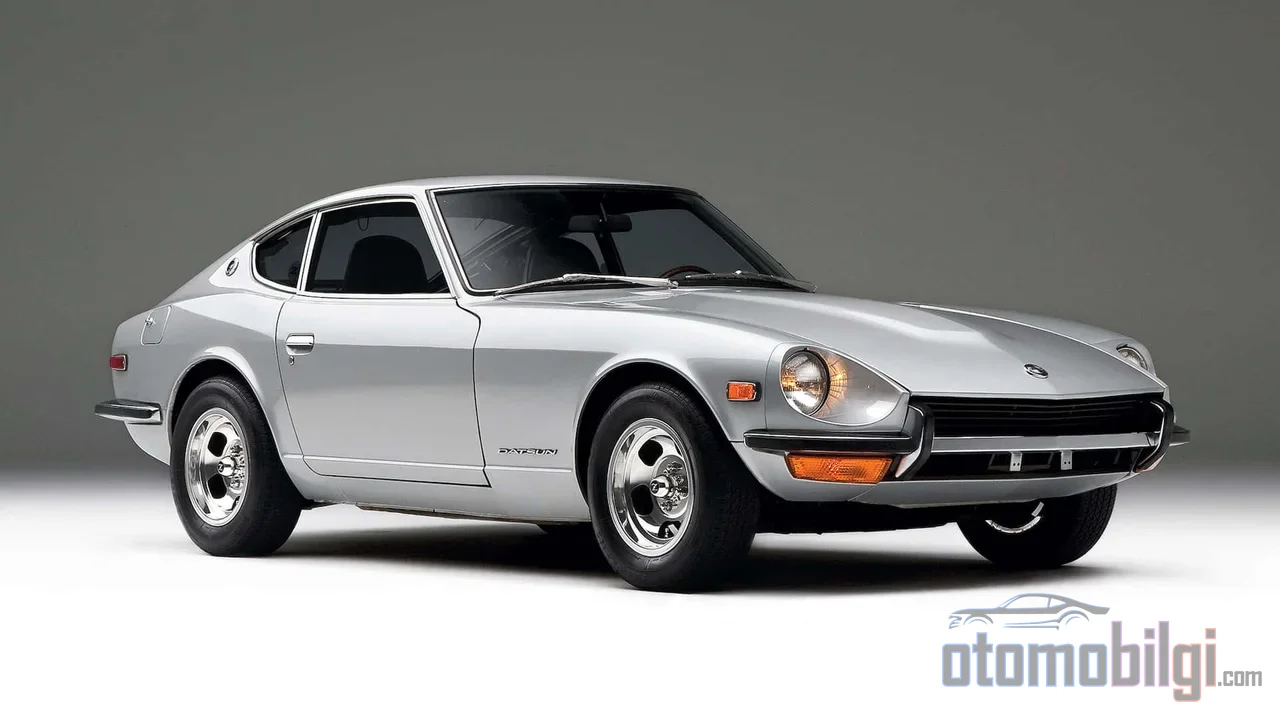
In the autumn of 1969, a strange Japanese coupe appeared among America's car dealerships: a long-hooded, short-decked sports car that winked at an E-Type. And at half the price of a Jaguar or a Porsche. So how did this car, within just a few years, become the star of streets and race tracks, the starting point of a whole legend? Here is the complete story of the Datsun 240Z.
Mr. K: The Man Who Gave Birth to the Z
Every legend has a brain; that of the 240Z was Yutaka Katayama, known by his nickname Mr. K. Born in 1909 in Hamamatsu, Japan, Katayama joined Nissan in 1935 and cared less about technical specifications than about the driver's emotions. He believed that what mattered was not how fast a car went, but how it made its driver feel. This philosophy is felt in every centimeter of the Z.
The first great moment showcasing Katayama's courage came at the 1958 Mobilgas Rally in Australia. He persuaded management to send two Datsun 210s on this 10,100-mile marathon, and the cars came home with first and fourth place in their class. The reward, however, was somewhat bittersweet: In 1960, he was sent to Los Angeles on the grounds of market research. But for Katayama, this was not exile - it was a golden opportunity. He built the Datsun dealer network in the US from scratch and saw with his own eyes what Americans expected from a car.
The road from there led to the Z. The Datsun 510, which swept the American market in 1967 - called the poor man's BMW by some - proved to Katayama that a sports car's chances were high. When the 510's technical foundation was combined with engine technology from Prince Motors, which Nissan had acquired, you had the Z's underlying platform in hand. Katayama drew the concept; the design was undertaken by the Nissan Sports Car Styling Studio led by Yoshihiko Matsuo. Katayama retired in 1977, was inducted into the American Automotive Hall of Fame in 1998, and passed away in 2015 at the age of 105. A beautiful story as long as a human lifetime, isn't it?
The Hand That Pulled Off the Fairlady Badge
Here is the most colorful moment of the story: In Japan, the car was sold under the name Nissan Fairlady Z. The name came from Broadway's famous My Fair Lady musical and from the sales team in Tokyo's Ginza district called Miss Fairladies; in Japan it was received as stylish and prestigious. But Katayama immediately realized: Talking about a musical while selling a sports car to an American customer would kill the deal.
There was no place for the Fairlady name on the cars in the first US shipment; all Nissan, Fairlady, and 432 badges were replaced with Datsun. Legend has it that Katayama personally had the badges removed. Whatever the truth, the result speaks for itself: In the US, the car went on sale as the Datsun 240Z on October 22, 1969, and that became the name that would carry the legend. Just think about how a badge changed the fate of a brand - marketing at its purest lesson.
Highlights
- US launch: October 22, 1969; in Japan it had been on sale a month earlier under the name Fairlady Z
- 2.4-liter L24 inline-six, 151 hp, weighing roughly 2,300 pounds
- 0-60 mph in about 8 seconds, top speed 125 mph
- New price around $3,500-3,600 - far more accessible than a Porsche 911 or Jaguar E-Type
- SCCA C Production championship four years in a row from 1970 to 1973
E-Type Fun at Half the Price: Technical Specifications
The 240Z's formula was brutally simple: Deliver the performance of European sports cars at roughly half their price. Under the hood, the US version had a 2.4-liter SOHC L24 inline-six; fed by twin Hitachi SU-type carburetors, this engine produced 151 hp and 146 lb-ft of torque. The standard transmission was a 4-speed manual, with an optional 3-speed automatic. Customers in Japan, meanwhile, got the 2.0-liter L20A producing 130 hp; to be honest, the favorite of true enthusiasts in this business was the Fairlady Z432 with the S20 DOHC engine taken from the Skyline 2000 GT-R - that version, with 160 hp, was outright a monster.
What's surprising is the car's lightness despite a six-cylinder engine: roughly 2,300 pounds - about as much as a modern compact hatchback. The suspension featured McPherson struts at the front and a Chapman strut arrangement at the rear - all independent, meaning every wheel does its own job in the corners. Rack-and-pinion steering, 270 mm disc brakes at the front, 230 mm drum brakes at the rear. Think of it this way: layering the precision of a high-end bicycle onto the smooth sound of a six-cylinder. The result: 0 to 60 mph in about 8 seconds and a top speed of 125 mph.
| Specification | US Datsun 240Z | Japan Fairlady Z |
|---|---|---|
| Engine | 2.4L SOHC L24 | 2.0L L20A |
| Power | 151 hp | 130 hp |
| Peak performance model | - | Z432, 160 hp with the S20 |
| Transmission | 4-speed manual / 3-speed automatic | Similar options |
| Sales name | Datsun 240Z | Nissan Fairlady Z |
Long Hood, Short Tail: The Signature of a Design Icon
Why does everyone fall in love with this car? The answer lies in its proportions. Long hood, short rear deck and a fastback silhouette - the century-old golden ratio of the classic sports car. Matsuo's team interpreted this template with a modern line; most of those who saw it first said the car resembled a sharpened Jaguar E-Type. Some even called it the poor man's E-Type; Katayama and his team took it not as an insult but as the finest compliment.
Over time, this silhouette became part of popular culture as well. In the Hot Wheels world, the 240Z has more than 50 variations; the Custom '71 Datsun 240Z, known as the Roadkill team's famous Rotsun, returned to shelves in 2024 with the Pop Culture series. To me, the fact that a toy car has been in production for half a century is the most innocent proof of how solid the design stands.
On the Track and in the Desert: Rally and Racing Heritage
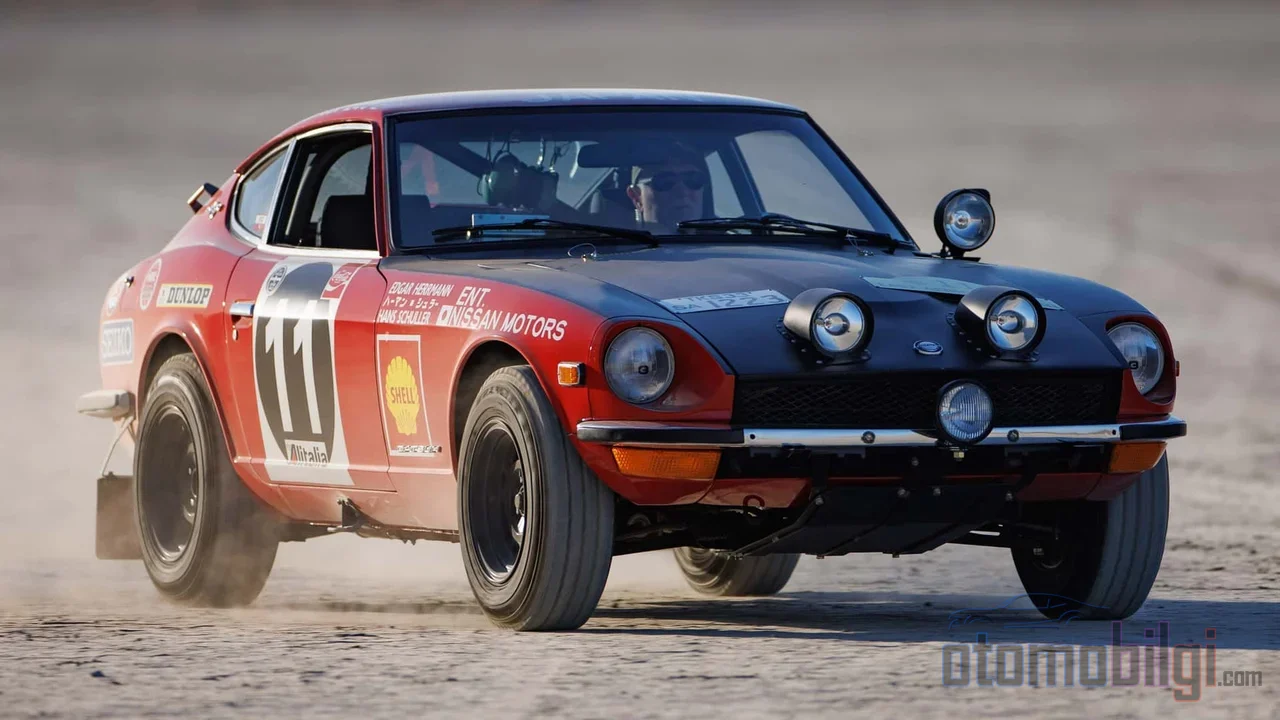
Perhaps the real reason the 240Z became an icon is this: it didn't just look beautiful - it won. Nissan's racing enthusiasm was no coincidence; Dick Roberts founded the Datsun USA Competition Department in 1967, and the philosophy was clear - privateer racers should find it easy and affordable to race with Datsun. Thanks to this policy, even a Z bought off the street could get lucky on the track.
- SCCA C Production championships: 1970, 1971, 1972 and 1973 - four consecutive years, with Bob Sharp Racing and Peter Brock's BRE team
- Suzuka 1,000 km victory: 1970, with the Fairlady Z432, in Japan
- East African Safari Rally: Edgar Herrmann/Hans Schuller in 1971, and Shekhar Mehta/Lofty Drews in 1973
And a detail that smells of cinema: it was Bob Sharp's team that brought actor Paul Newman into the racing world with the Datsun 510. Newman moved to the Datsun 280Z race car in the mid-1970s. Hollywood's most beloved blue-eyed man at the wheel of the Z - it's not hard to guess the marketing impact of that image.
The Evolution of the Z Series Across Generations
For a model to be considered an icon, it must not settle for just one great version; the Z did that in spades. While the first-generation S30 continued in the US as the 260Z and 280Z, in Japan it was produced until 1978 with measures to comply with emissions regulations. Then, one after another: 280Z, the 280ZX that introduced the turbo engine, the 300ZX that set the standards with its technology, then the 350Z and finally the new Nissan Z, arriving for the 2023 model year. A line spanning more than fifty years - Nissan crowned this legacy with a dedicated celebration broadcast for the Z's 50th anniversary with a dedicated celebration broadcast.
- 1st generation: 240Z (1969-1973), S30
- 2nd generation: 280Z (1975-1978)
- 3rd generation: 300ZX Z31 (1983/84-1989)
- Modern era: 350Z (from 2003) and the new Nissan Z (2023 model year)
The question of which generation is best is a permanent fixture on car forums; but no one disputes this fact: they all stand in the shadow of that first Z from 1969.
Would You Buy a 240Z Today? The Collector Market
Now put your hand in your pocket: what does a 240Z cost today? According to classic market data, an average-spec 1970 240Z coupe in good condition runs around 23,900 dollars - it has long been cited in the appreciating-assets category for investors. But the ceiling is far higher than you might imagine: a 1971 240Z found a buyer at auction for 315,000 dollars including fees. That's the price of being an icon in the auction halls.
The real treasure hunters, however, are looking at the Japanese market. An authentic Fairlady Z432 or the rare Z432R is significantly cooler and more valuable than a standard 240Z. Low-VIN early-production cars also receive special attention from collectors. So a car once sold at half the price can today reach prices in some examples that surpass those of supercars. One has to respect history's sense of irony.
So How Did the Datsun 240Z Become an Icon?
If I were to sum up the answer in a single paragraph: the 240Z brought the joy of a European sports car down to an ordinary person's budget, and it did so in a light, durable and lively package; fast on the street, a champion on the track, and forever popular on toy store shelves and at auctions. The most definitive statement is this: The 240Z was the first great star moment of the Japanese automobile on the world stage - a turning point in Nissan's expansion into the United States.
In Katayama's words, the idea was clear: what was being sold was not a car, but the driving experience. That line stretching to the modern Nissan Z is still drawn with the same emotion. Which Z generation do you think is the best - the original S30, or the 300ZX technology star?
Sources
- Life and Times of Mr. K: Yutaka Katayama | Nissan Global
- A Brief History of the Datsun 240Z | Silodrome
- 1972 Datsun 240Z | Audrain Auto Museum
- Nissan Z-car | Wikipedia
- Person Who Took Off Fairlady Emblems from Famous Datsun 240Z | Dyler
- Nissan Z: 50 years of excitement | Nissan Global
- A Visual History of the Nissan Z | Car and Driver
- The Vintage Limelight: Datsun 240Z in Pop Culture | SlashGear
- 1970 Datsun 240Z Base Value | Hagerty Valuation Tools
- Datsun 240Z Buyer's Guide | Classic Motorsports