Toyota 2000GT: Japan's First Supercar
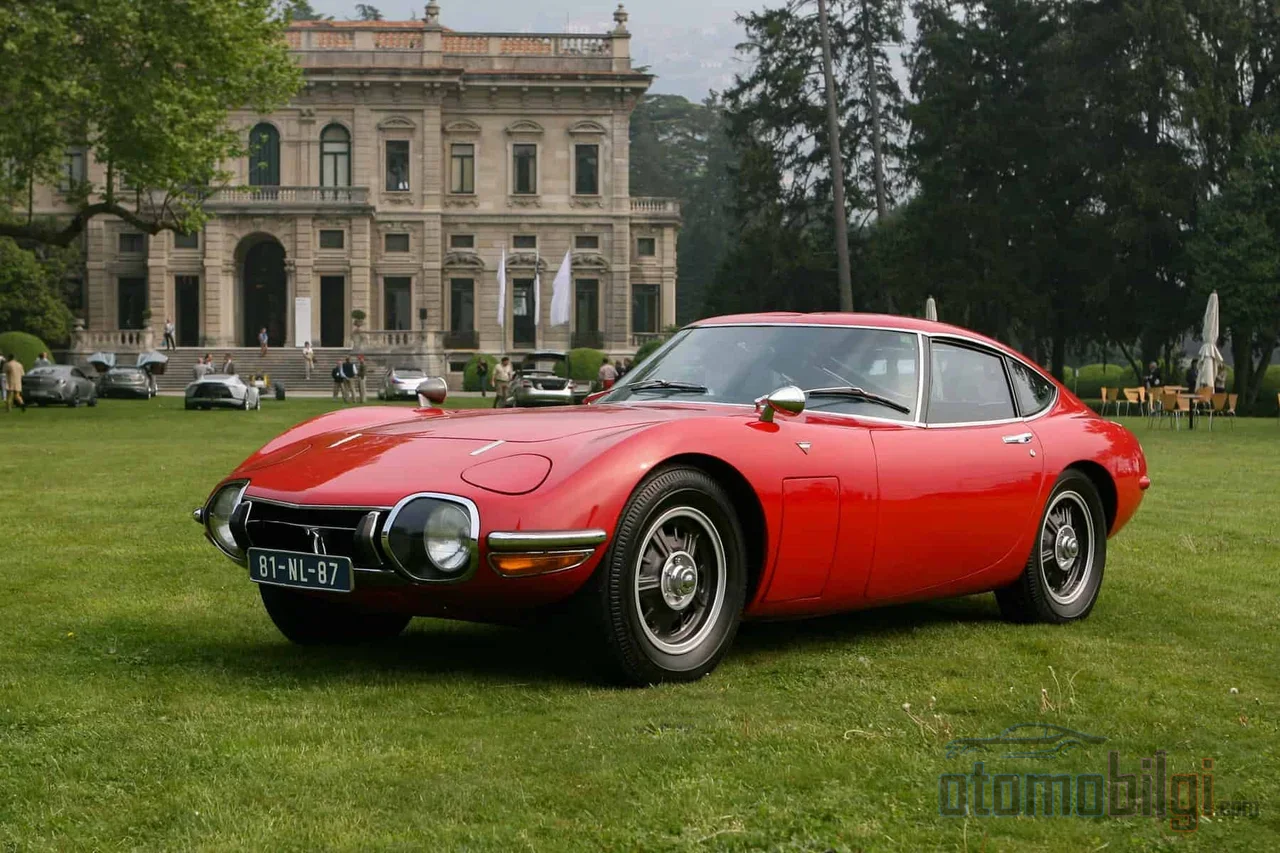
Is it possible to fit both a $2.5 million auction record and a James Bond movie onto the same car? In the mid-1960s, an absurd calculation sat on Toyota's desk: a sports car project targeting 1,000 sales per month would in reality be produced at only 8 units per month. So is that exactly why the Toyota 2000GT is today Japan's most legendary automobile? Let's dive into the story of this charming straight-six - because you'll feel as if it's about to set off and head to Iwata.
The Project Nissan Rejected Fell into Toyota's Lap
The beginning of the story sounds strange but it's true: the 2000GT wasn't even Toyota's idea. Yamaha proposed the A550X concept with a steel monocoque body to Nissan as a Fairlady successor. A few prototypes were built, but Nissan abandoned the project. Good thing it did - because opportunities that change the life of anyone who walks through the door come exactly like that, don't they?
In December 1964, Toyota and Yamaha began an official collaboration. The division of labor was clear: Toyota took on the general layout, design, and basic parameters, while Yamaha, along with developing engine performance, worked on the body and chassis details. Toyota's motivation, I'm sure, is something you'd never guess: elevating the brand image. In other words, the company's aim wasn't to make money, but to send the world the message that "a Japanese car can be like this too."
The first working prototype was completed by Yamaha in August 1965; the production collaboration agreement was signed in September, and the white second prototype took the stage at the Tokyo Motor Show in October 1965. Before series production, a full 15-20 prototypes were built in two categories (280 A/I and 280 A/II). Imagine, that much preliminary work for a single car!
Highlights
- Between 1967-1970, it was produced entirely by hand at Yamaha's Iwata factory, at a pace of 8 units per month.
- 150 hp of power, a top speed of 138 mph (approximately 222 km/h), 0-100 km/h in 8 seconds.
- In 1966, at Yatabe, it set 3 world records and 13 international speed records.
- It became the car of Japanese agent Aki in the 1967 Bond film You Only Live Twice.
- In March 2022, one example sold for $2,535,000, breaking the record for a Japanese automobile.
What's on the Technical Page?
Now let's get to the truly enjoyable part: the engineering. Toyota rejected the A550X's monocoque structure and switched to a Lotus-style backbone chassis. Think of it this way: a thick tube running through the middle of the body acts like the car's spine - both lightweight and resistant to torsion. With a 2320 mm wheelbase and a weight distribution of 49% front / 51% rear; in other words, like a balanced dancer.
The engine side, meanwhile, bears Yamaha's signature entirely. At its core, the M-series inline-six displacing 1988 cc, borrowed from the Toyota Crown; but Yamaha added an aluminum twin-cam (DOHC) cylinder head and fitted three Mikuni-Solex 40 PHH carburetors. The result: 150 hp at 6600 rpm and 176.5 N·m of torque at 5000 rpm. It might not sound impressive by today's standards, but in 1967 this meant a rocket clinging to a 1,120 kg body. A fully synchronized 5-speed manual gearbox and limited-slip differential were standard - yes, in those years even a 5-speed gearbox was a privilege.
And don't miss this detail: disc brakes on all four wheels became standard on a Japanese car for the first time with this vehicle. 15x5 inch cast magnesium wheels and a double-wishbone suspension complete the list. 4175 mm long, 1600 mm wide and just 1160 mm high; in other words, a low, wide and absolutely photogenic silhouette.
| Specification | Value |
|---|---|
| Engine | 1988 cc inline-six, DOHC, 3 carburetors |
| Power | 150 hp @ 6600 rpm |
| Torque | 176.5 N·m @ 5000 rpm |
| Transmission | 5-speed manual + LSD |
| Weight | 1120 kg |
| Top speed | 138 mph |
| 0-62 mph | 8 seconds |
| New price (USA) | $7,230-7,250 |
How Many Were Produced? The Answer to This Question Teaches You How to Count
Now we come to the heart of the controversy: the total production count. The figure 337 is often cited; this number covers standard production, 115 of which went to export. But some records count 342 units of MF10 (2.0-liter DOHC) plus 9 units of MF12 (2.3-liter SOHC, from April 1969 onward); which adds up to 351. The difference most likely stems from a discrepancy in how "series production" is defined - and when you throw in the open-top examples built for the Bond film, things get even murkier.
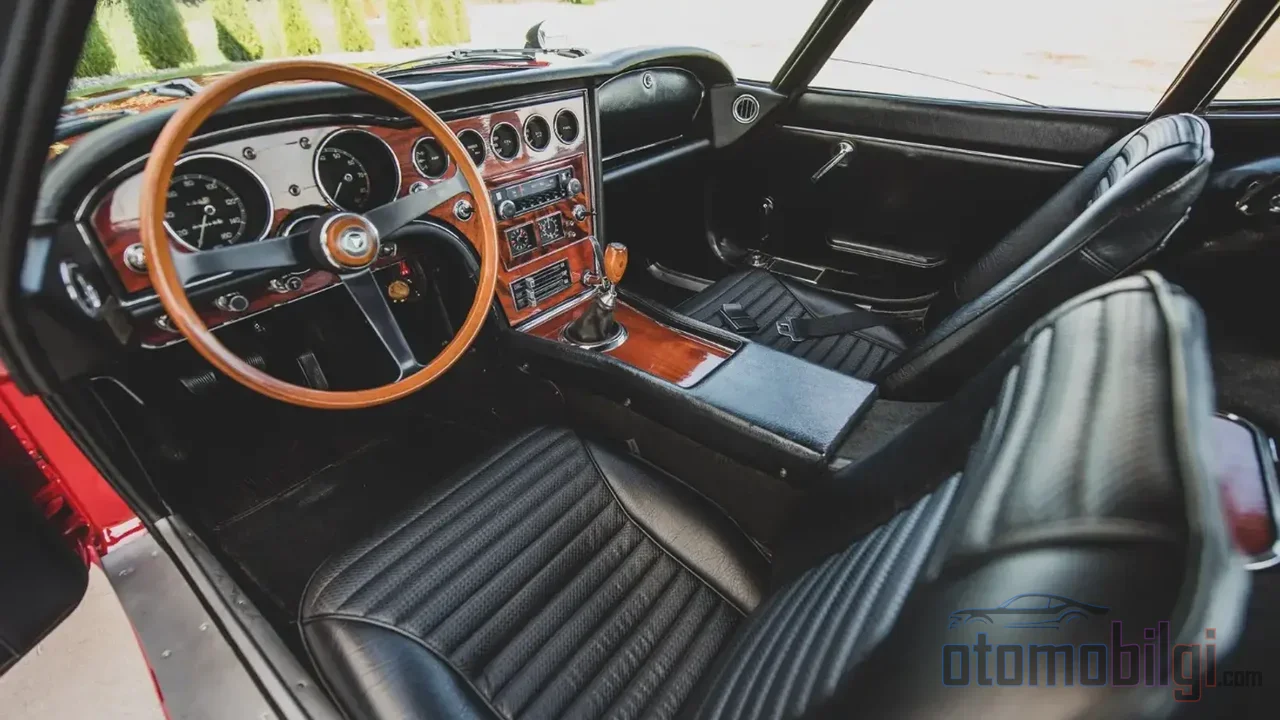
Production continued from May 1967 to the end of 1970 and ended without a successor. With the 1969 facelift, the front end was reshaped, larger turn signals and side markers were added, and new separately adjustable patterned seats were installed; toward the end of the run, a 3-speed automatic and air conditioning were also added to the options list. Was it a commercial earthquake? Absolutely not: the monthly sales target of 1,000 units was never even approached, and Toyota lost money on every car. But sometimes a money-losing project becomes a winning story - and you'll soon see the proof of that at the auction house.
Speed Records and the Racetrack
The 2000GT's power wasn't just on paper. In October 1966, even before the first production car had been delivered, 3 world records and 13 international speed records were broken at the Yatabe high-speed test track. I can't help thinking how cinematic it is for a car to start breaking records before its official launch.
In 1966, two prototypes were converted to the "311 S" racing specification and the car began making waves on the track too: third place at the Japanese GP, first and second at the Suzuka 1000 km. So the car wasn't just beautiful, it was genuinely fast - one of the rare models that could step out of the jewel box and onto the asphalt of the track.
The Japanese Agent in James Bond's Garage
Now for the popular culture part, my favorite section. In the 1967 Bond film You Only Live Twice (the fifth film in the series), the 2000GT is driven by the Japanese secret service agent Aki. And here's the critical detail: Since Sean Connery couldn't fit into the low fastback cabin due to his height, special open-top versions were built for the film. These open-top 2000GTs are the only open-top examples in the model's entire production history. So Bond's list has changed yet another car - and Bay Bond changes everything anyway, as we all know.
So Who Designed It?
Long hood, fastback cabin, built-in headlights with Plexiglas covers and concealed headlight pods... The architect of this line was the Toyota Design team led by Toyota designer Satoru Nozaki, with the support of Shihomi Hosoya by his side. But in the automotive world, every beautiful face gets a legend attached to it: Rumors attributing the 2000GT's design to Albrecht von Goertz (the father of the BMW 507) have been circulating for years. According to some, Goertz's sketches were the basis and Nozaki refined them; according to others, Goertz had nothing to do with it. The debate continues as a clear difference of opinion; but whichever side I take, the resulting line can be described in one word: magnificent.
Auction Records: The Journey of a $7,230 Car to $2.5 Million
Now let's take a quick trip through time. When the car was new, it sold for $7,230-7,250 in the US - more expensive than the Porsche 911 and Jaguar E-Type at the time! In 2013, a restored 1967 example set the Japanese car record with a price of $1.15 million; that same year, another car reached $1.2 million. But the real explosion came in March 2022: A 1967 2000GT with 31,000 km sold at Gooding & Company's auction for $2,535,000, becoming the first Japanese car to break the $2 million barrier and setting the record for the highest price ever paid for a Japanese car.
And what's happening today? According to current valuations, there's a band of roughly $820,000-920,000 for an example in "Good" condition; with an annual value increase of around 4%. unrestored, running examples start at $550,000; while top-tier auction examples change hands for over $1.2 million. The collecting world is still passionate about this car - and it's not cooling down either.
Why Is It Called Japan's First True Supercar?
The main question of this page becomes clear here: With its limited production, hand craftsmanship, standard disc brakes, 5-speed transmission and world records, the 2000GT met all the criteria of a supercar in 1967. Even Car and Driver's period archive describes it as "Japan's first super-sports car" and considers it far ahead of its time, one of the most beautiful Japanese sports cars. Some go as far as the 1990s to award this title to the Honda NSX; but most eyes today are on the 2000GT, and in my opinion, rightly so.
Its legacy is tangible too. Toyota traces the roots of the Supra lineage back to the 1960s 2000GT, and through official channels it describes the "kindred spirits" similarities between the 5th generation GR Supra and the 2000GT. Imagine that: an automobile's DNA is passed down through half a century, from generation to generation. Born from an offer Nissan rejected, this car became one of the Japanese automotive industry's greatest proofs to the world. Which model do you think will be the next $2.5 million Japanese icon?
Sources
- 1967 Toyota 2000GT - Yamaha Motor Global
- Toyota 2000 GT Guide - Supercar Nostalgia
- 75 Years of Toyota - Vehicle Lineage
- Ten facts about James Bond's Toyota 2000GT - Toyota UK Magazine
- Toyota 2000GT - Wikipedia
- 1967 Toyota 2000GT Sets Auction Record for Japanese Car - MotorTrend
- A $2.5M Sale is More than a Record for the 2000GT - IMSA
- 1967 Toyota 2000GT Base Value - Hagerty Valuation Tools
- Goertz Myths Will Never Die - Japanese Nostalgic Car
- Kindred spirits: Toyota GR Supra and Toyota 2000GT - Toyota UK Magazine