How Did the Porsche 550 Spyder Become a Legend?
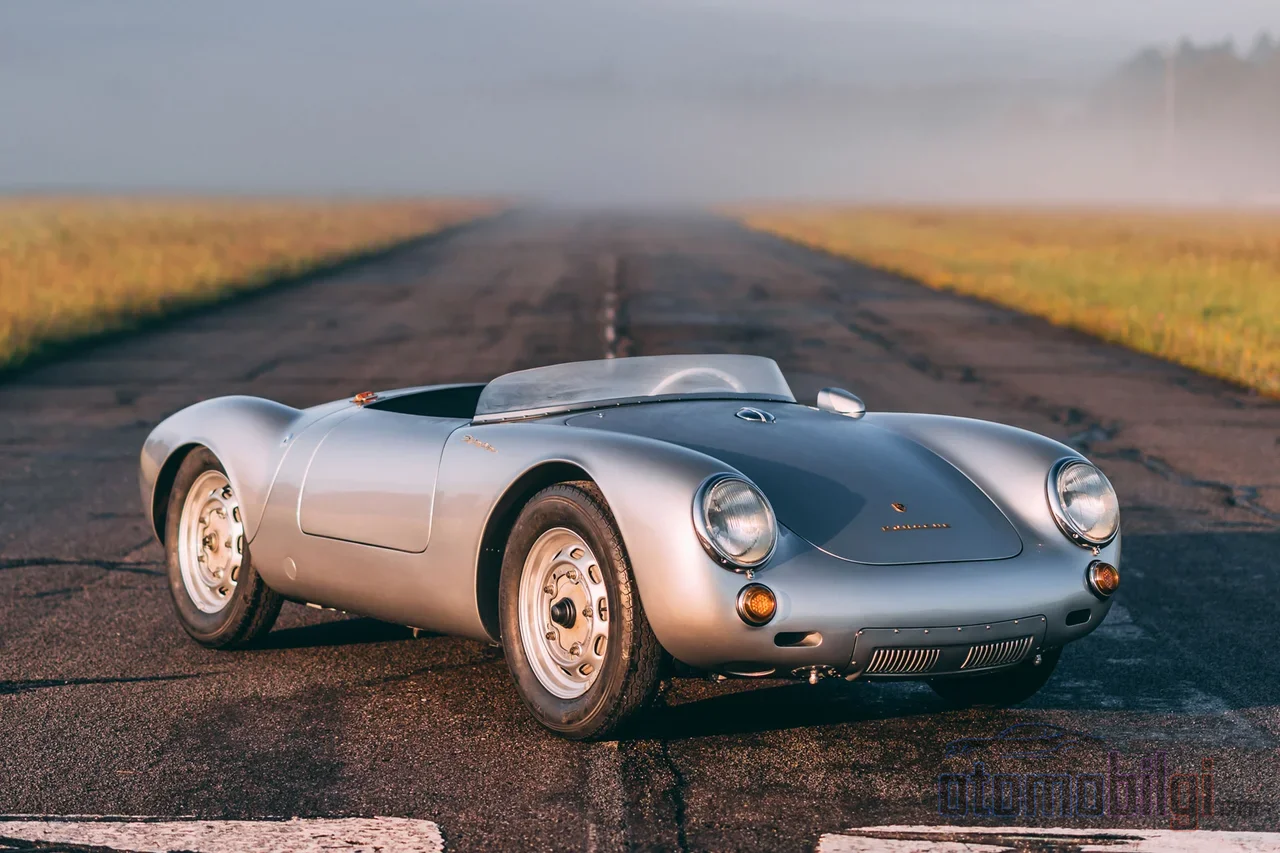
The afternoon of September 30, 1955. At the Cholame junction in California, where routes 46 and 41 meet, a small silver racing car pulls into the path of a Ford. At the wheel is a 24-year-old actor, and written on the door is a name: Little Bastard. That day, the Porsche 550 Spyder began to become the most famous automobile in the world outside the racing circuits. So how did this 550-kilogram, 1.5-liter little monster become both the great hunter of the tracks and a legend of pop culture? The story actually begins long before the tragedy, in the workshops of Stuttgart.
Let me say it from the start: The Porsche 550 Spyder was not adapted from the brand's road cars; it was the first Porsche designed from scratch purely for racing. It was introduced in 1953, only 90 units were produced, and today it is considered the holy grail of collectors. But the real point is this: this car earned its legend on two different stages. The first was the track; the second, entirely unintentionally, was Hollywood.
A Philosophy of Building Light: Small but Deadly
In the racing world of the 1950s, a big engine meant everything. Porsche, however, had neither a V8 nor a massive budget. What the engineers did was change the question: if you cannot increase the power, reduce the weight. The 550 Spyder was exactly the product of this idea: a hand-shaped aluminum body on a lightweight spaceframe chassis. The masters of the Weidenhausen workshop in Frankfurt fitted these bodies one by one. The result? A body weighing approximately 550 kilograms - which is almost half of today's small hatchbacks.
The resulting picture was this: the engine sat in the middle (just in front of the rear axle), an air-cooled Boxer Engine was installed, and this layout followed in the footsteps of the 356/1 prototype of 1948. Compared to the 356, a much more balanced weight distribution was achieved. This mid-engine layout was so spot-on that it became standard in the racing cars of the following decade; Porsche's own 718 was a continuation of the same style.
Highlights
- Porsche's first automobile built purely for racing: only 90 units between 1953 and 1956
- 1,498 cc Fuhrmann engine, 110 hp and a weight of approximately 550 kg
- Over its lifetime, a total of 95 victories in 370 races and 75 class wins
- 5 class victories at Le Mans; the first overall victory at the 1956 Targa Florio
- It became a legend beyond motorsport as well with James Dean's death on September 30, 1955
The Fuhrmann Engine: No Kinship with the 356's Engine
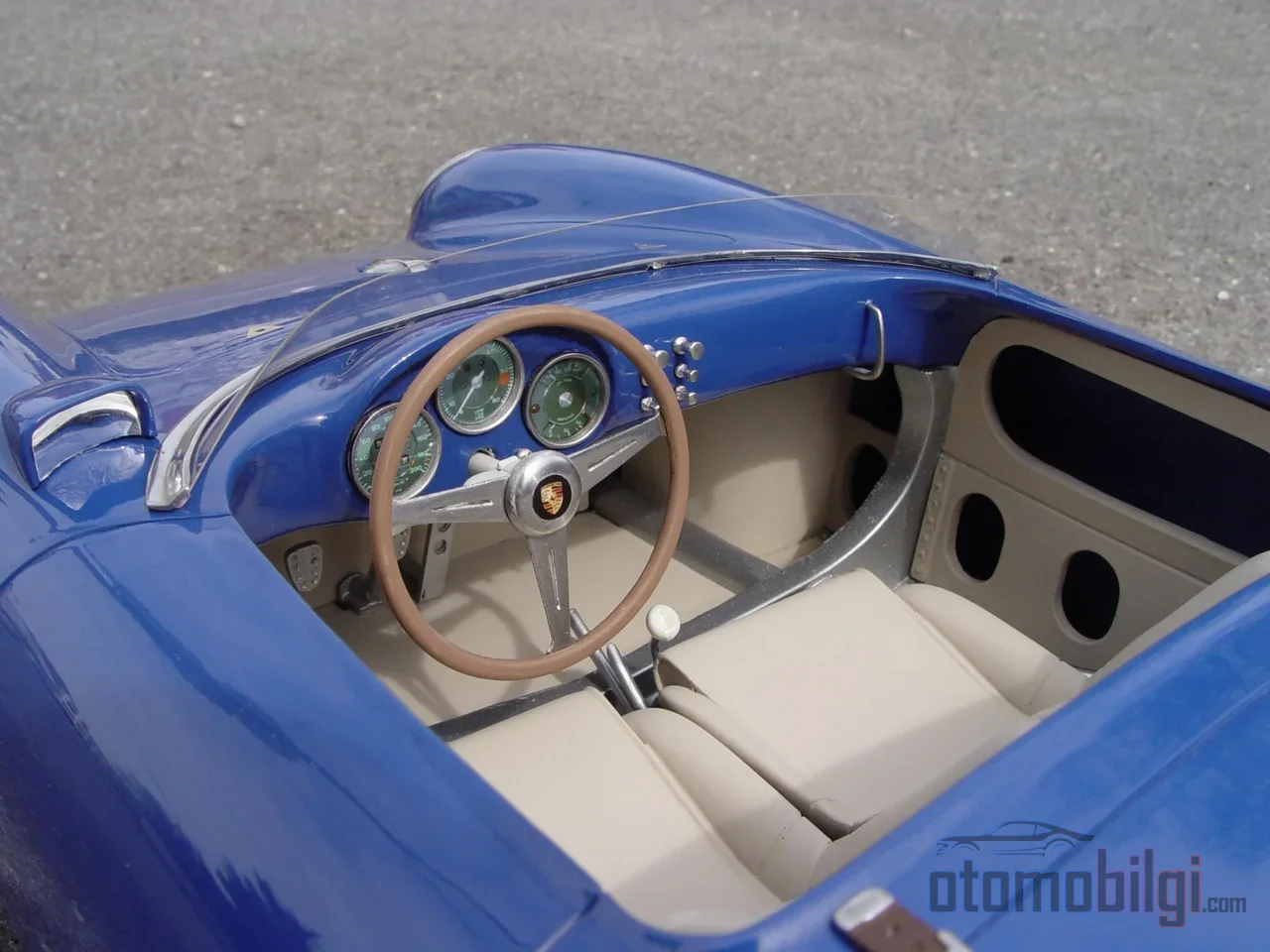
Now let's dive a little into the engine, because the heart of the 550 holds the real surprise. The Type 547 engine inside the car, known as the Fuhrmann, was an entirely new design with nothing in common with the VW-derived unit in the 356. A fully aluminum block, an air-cooled four-cylinder Boxer Engine, and most importantly: dual overhead camshafts per cylinder bank, in other words, DOHC. These camshafts were driven by vertical shafts, and everything about its production was so complex that the engine was an engineering showcase in itself.
What did all this effort achieve? The 356's engine gained roughly twice the power. 110 horsepower in a 550-kilogram car means a power-to-weight feel comparable to today's supercars. Let me make a simple analogy: imagine a marathon runner racing with a backpack on, then watch them run after taking it off. The 550 Spyder, that's exactly how effortlessly it dove into corners.
Porsche 550 Spyder Technical Specifications
| Specification | Value |
|---|---|
| Engine | Type 547 Fuhrmann, air-cooled 4-cylinder Boxer engine, DOHC |
| Displacement | 1,498 cc (85 x 66 mm) |
| Power | 110 hp (81 kW) @ 6,200 rpm |
| Torque | 121 Nm @ 5,000 rpm |
| Transmission | 4-speed fully synchronized (5-speed from 1956), limited-slip differential |
| Weight | Approximately 550 kg |
| Top speed | 220 km/h |
| 0-100 km/h | Not stated by the manufacturer |
| Dimensions (L/W/H) | 3,600 / 1,610 / 980 mm (wheelbase 2,100 mm) |
| Production | 1953-1956, 90 units |
Porsche never published an official value for 0-100 km/h acceleration; in independent measurements the 0-60 mph time is seen at around 8.2 seconds, but it wouldn't be right to present this as manufacturer data. Values such as fuel consumption, trunk capacity and original price were also not disclosed by the manufacturer; James Dean had paid about 7,000 dollars for his car. In later development versions, power was raised to approximately 135 hp.
How Did It Earn the "Giant Killer" Nickname on the Tracks?
May 1953, Nurburgring. The 550's very first race - and an outright win. The three earlier prototypes had been born as coupés with removable hardtops, but the 550-03 ran at the Nurburgring as a roadster. That's how ambitious the starting point of this endeavor was. That same year brought victory in the 1500 cc class at Le Mans along with a class record; speeds exceeding 200 km/h were seen during practice laps on the Mulsanne straight.
Then the legendary Carrera Panamericana in Mexico came into play. A class victory was won in 1953; in 1954 Hans Herrmann finished first in his class and third overall. That victory was so significant that Porsche began naming its subsequent performance packages "Carrera." Yes, every 911 with "Carrera" on its doors today is a descendant of this race. At the 1954 Mille Miglia, Herrmann's slide under the railroad barriers just as they were about to close is one of the most memorable moments in motorsport history. In that era, the works team cars carried spear-shaped team markings on the rear fenders; Herrmann's car, number 41 with the red tail, became famous for this detail.
The overall picture is striking: over its lifetime, 95 victories and 75 class wins in 370 races. Five class victories at Le Mans. With it overtaking much bigger and more powerful cars against four-cylinder 1.5-liter rivals, the 550 earned the nickname "Giant Killer" on the circuits. Names such as Stirling Moss, Ken Miles, Huschke von Hanstein and Hans Herrmann sat at its wheel. Porsche became the first European manufacturer to enter the racing sponsorship arena in North America; first Fletcher Aviation, then Telefunken and Castrol provided support.
The story doesn't end there: In 1956, the 550A arrived with a lighter, three-times-stiffer spaceframe chassis, and with Umberto Maglioli at the wheel it gave Porsche its first overall victory in a major race at the Targa Florio. A total of 40 units of the 550A were produced. The 550 paved the way for the 718 and the successor series carrying the RS Spyder name; this car was the first link in Porsche becoming the most successful manufacturer at Le Mans today with 19 overall victories. Privateer drivers continued racing 550s even after moving on to the 718; the car could be driven from home in the morning, taken to the track, and driven back in the evening. After the 1955 Le Mans disaster, the Carrera Panamericana was never run again, and that era of road racing came to a close.
James Dean and Little Bastard: Tragedy Turns into Legend
Now let's move on to the second scene of the story; this is where the 550 Spyder leaves the motorsport history books and enters pop culture. On September 21, 1955, James Dean traded in his 356 Super Speedster, bought himself a brand-new 1955 550 Spyder (chassis no. 550-0055), and entered the road race in Salinas. He had the name Little Bastard painted on the car. Nine days later, on September 30, he collided with another vehicle at the Cholame junction and lost his life at the age of 24.
After the accident, rumors spread that the car was cursed, and this mythology never faded. In 1958, the death of actor Tom Pittman, who drove off a cliff in a Spyder, fueled the legend. The 550 became one of the most mythologized machines in American automotive history; this story is still baked into the sales of every tribute and replica produced today. Let's be honest here: the sporting part is what the legend earned on the track, while the Dean part is its cultural reflection. When the two come together, the 550 Spyder occupies a unique place.
Why Is the 550 Spyder Still So Valuable Today?
Let the numbers speak: In 2018, a 1958 550A sold at auction for $5.17 million, a record for the model. Considering that only 90 units of the 550 and 40 units of the 550A were produced, it's hardly surprising that it's one of the most sought-after and most frequently copied classics on the market. The Spyder name never died within Porsche; special versions such as the modern Boxster S 550 Spyder and RS Spyder continue to carry this legacy forward.
It remains in the spotlight in 2026 as well. Developed together with Hedley Studios, the 75th. a limited-edition collection piece called the Porsche 550 J, prepared in honor of years of motorsport, was announced; in this road-illegal reinterpretation, beneath the lightweight aluminum body sits a 2.0-liter turbocharged boxer engine with 296 hp and 385 Nm of torque. The Porsche Museum is also showcasing the 550 Spyder among the inspiration sources of the Mission S concept at events in Dubai.
So How Did the Porsche 550 Spyder Become Such a Legend?
The short and clear answer is this: The Porsche 550 Spyder, with only 90 units built, weighing around 550 kg and powered by a 110 hp engine, became a legend on the track as the first dedicated-production Porsche race car, winning class victories at the Carrera Panamericana and Le Mans; And with James Dean's death in 1955, it became pop culture's most talked-about car, beyond the world of motorsport. The lightweight philosophy, the Fuhrmann engine, and the giant-killer character live on in the DNA of every Porsche today.
In my view, the real lesson is this: legends are made not by chance, but by character. And the 550 Spyder's character was never letting its small size bother it. If a car that toppled giants with just 1.5 liters is still worth millions of dollars more than sixty years later, and is even being reinterpreted, then that character is still working.
Sources
- The 8 Porsche race cars that made Le Mans history
- Porsche 550 Spyder - Porsche Newsroom press kit
- Porsche 550 - Wikipedia
- Death of James Dean - Wikipedia
- Porsche 550 - The Story - Stuttcars
- Carrera Panamericana - Type 550
- How Porsche Made Weight Its Superpower - Autoblog
- Porsche 550 Spyder specs, 0-60 - FastestLaps