Why Is the Porsche 356 Considered the Brand's Cornerstone?
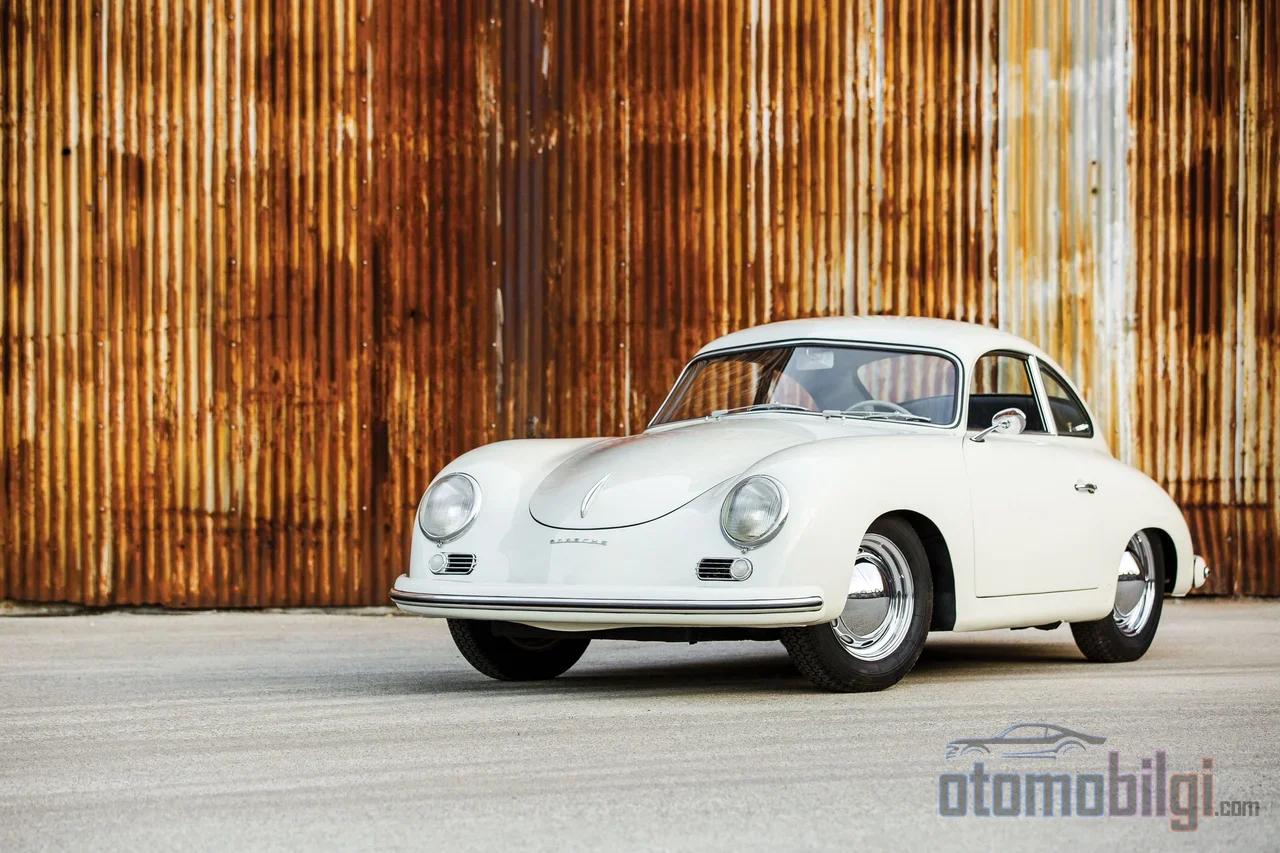
In June 1948, in Gmund, a small Austrian town, a sports car with a hand-shaped aluminum body was registered, entered its first race, and won its class. The brand's name had not yet been announced to the world, the budget was almost nonexistent, and most of the parts came from underneath a beetle, namely the Volkswagen Beetle. So was this humble beginning the very thing that made the Porsche 356 the brand's cornerstone? The answer is deeper than you think: because the 356 is not just a model; it is the first sentence of the Porsche philosophy as we know it today.
Think of it this way: today the company has sports cars that captivate the dreams of hundreds of thousands of people, electric models, and racing successes. Did all of that really emerge from a Beetle skeleton? Yes, and much more. Let us walk through the story of the 356 from beginning to end together.
The First Porsche Born from the Beetle: The Gmund Years
Right after World War II, Ferry Porsche had moved with his team to the town of Gmund in Austria. Completed in 1948, the first prototype, the 356/1, was a tube-framed, mid-engine roadster that relied mechanically largely on Beetle parts. The engine crankcase and some suspension components came from VW; but around them were added entirely new cylinder heads, a new camshaft, crankshaft, intake and exhaust manifolds, and dual carburetors. The result? A figure of 70 hp, more than twice the Beetle's power.
The bodywork was also completely new, and at this critical point a key name was involved: Erwin Komenda. This man, who had also designed the Beetle's body, gave the 356 its elegant, flowing line. In other words, the kinship between the 356 and the Beetle was not in the looks; it was in the bones. Ferry Porsche's approach was also clear: if a small car is powerful enough, it is more enjoyable to drive than an overly powerful large car. Even today, this sentence counts as the brand's DNA.
About 50 cars were produced in Gmund with hand-built aluminum bodies; in 1948 the coupe was priced at 3,750 dollars and the cabriolet at 4,250 dollars. In 1950, production moved to Zuffenhausen in Germany, the bodies were switched to steel, and the Reutter firm came on board as a subcontractor. (Not a small spoiler, but a small detail: Porsche bought Reutter in 1963, and the seating division took the name Recaro, considered legendary today.)
Key Highlights
- Production ran between 1948-1965, with a total of 76,313 units.
- The engine was built on the Beetle-derived crankcase and produced 70 hp: more than twice the Beetle's power.
- At the 1951 24 Hours of Le Mans, the 356 SL won its class; Porsche was the only German manufacturer racing.
- The four-camshaft Carrera engine produced between 130-161 hp in road versions.
- The 356's design language and its rear-engine, air-cooled engineering were carried over directly to the 911.
From Pre-A to 356 C: How Did the Body's Four Phases Unfold?
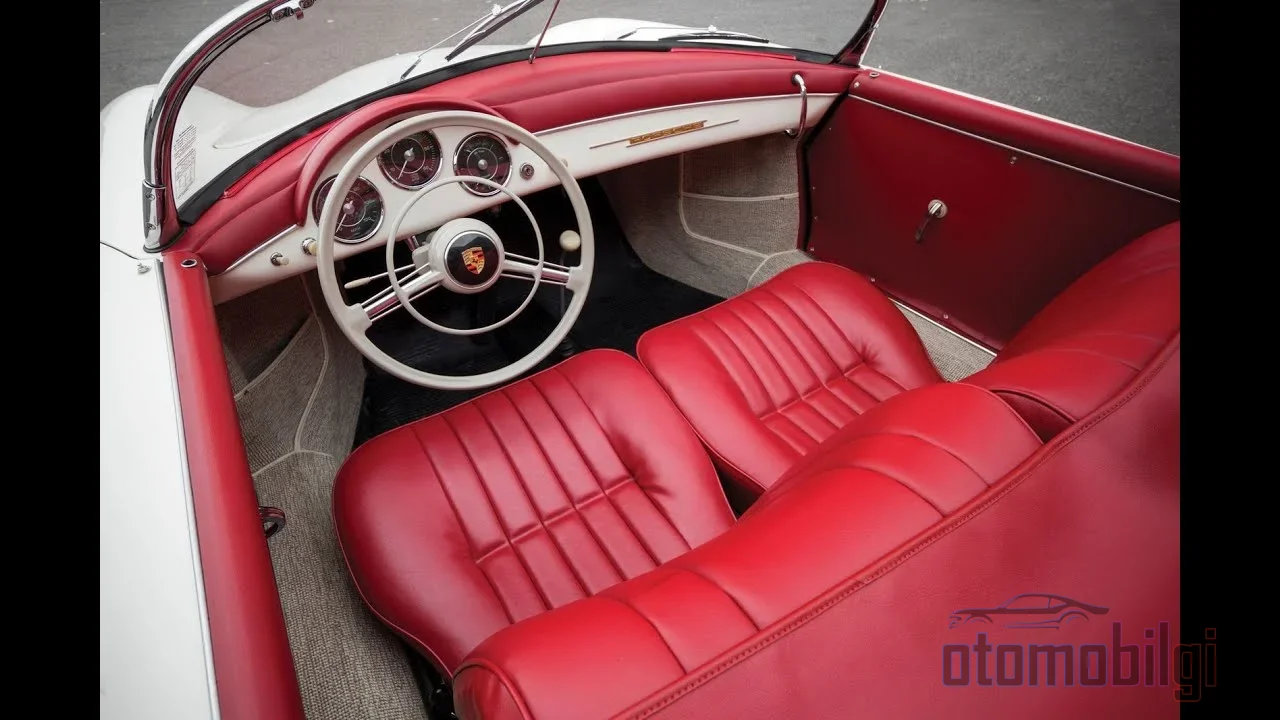
Telling the 356s apart may seem difficult at first glance, but there is actually a logical evolution. The series developed in four generations: Pre-A (1948-1955), 356 A (introduced in late 1955, 1956 model year, until 1959), 356 B (from late 1959 to 1963) and 356 C (1963-1965/66). In total, 76,313 vehicles were produced, and interestingly, about half of them survive to this day. That means one in every two 356s is still alive; this ratio is almost unbelievable in the classic car world.
Some milestones along the series were as follows:
- 1951: The 1,300 and 1,500 cc engines came into play.
- 1952: The V-shaped one-piece windshield began to be used.
- 1953: The 1300 S "Super" arrived, and the 1,100 cc engine was dropped from the lineup.
- Late 1954: At Max Hoffman's insistence, the light and simple Speedster was born; a total of 4,854 units were produced.
- 1963-1965: The 356 C arrived with disc brakes on all four wheels and Pirelli Cinturato tires; the 95 hp SC became the most powerful pushrod Porsche engine ever produced.
There is also a naming grievance: In 1955, the name "Continental" was used in the US, but when Ford objected, the name was dropped a year later, and "European" was briefly used instead. The T5 and T6 body codes of the 356 B, and the T1 and T2 distinction of the 356 A, are among the keys to identifying generations. Production peaked, surprisingly, not in its final year but in 1964: 14,151 vehicles were produced that year. The last 10 vehicles were assembled as convertibles for the Dutch state police in March 1966.
The Carrera Engine: From the Heart of the 356 to the Racetracks
The most legendary part of the 356 is undoubtedly the Carrera engine, introduced in late 1954. Developed by Ernst Fuhrmann, this entirely new unit featured dual overhead camshafts on each cylinder head, in other words, it ran on four cams. If you want an analogy: if a normal engine's cam system is a homeroom teacher, the Fuhrmann engine's is like hiring a separate specialist teacher for each lesson. Revving comfortably above 7,000 rpm, these engines grew from 1.1 to 2.0 liters.
Let's look at the numbers: While the 1,600 cc Carrera produced 136 hp, the 1,750 cc version went up to 161 hp. When the Fuhrmann engine was later enlarged to 2 liters in the 904, it reached 185 hp; the fiberglass-bodied racing version of the 1964 356 C Carrera 2 was said to produce around 200 hp. The road-going Carrera 2, meanwhile, produced around 130 hp. The expensive maintenance of these engines is also part of the legend; only about 140 Carrera variants were produced, making them sought-after and hard-to-find treasures for collectors today.
Proven on the Tracks: The Le Mans Victory and the Abarth Collaboration
The 1951 24 Hours of Le Mans was a breakthrough moment for Porsche. Competing as the first and only manufacturer from Germany, the team entered with the aluminum-bodied 356 SL coupé, which is why it was called "Super Leicht," meaning super light. The duo of Auguste Veuillet and Edmond Mouche won the 751-1100 cc class and finished 20th overall. was. For a new brand, in an Europe where the scars of war had not yet faded, this was an announcement worth its weight in gold.
The collaboration with Abarth, established in the early 1960s, gave birth to the Carrera GTL Abarth coupé based on the 356 B: an aluminum body, a 1.6-liter twin-cam engine and a weight of only 780 kg. This lightweight wolf, producing between 115 and 135 hp, achieved serious success on the motorsport scene. Those who know what weight reduction means, know: less weight means free speed in every corner.
Technical Specifications: How Many HP Is the 356 Today, and How Fast Does It Reach 100?
For the table-loving friends, I have compiled the verified values by engine variant. Keep in mind: 0-100 km/h times vary significantly depending on the engine and model year; that's why it's best to break it down by model.
| Version | Engine | Power | Torque | 0-100 km/h |
|---|---|---|---|---|
| 1950 356 1100 Coupé | 1.1 L Boxer | ~40 kW class | - | 23.5 s (equivalent to 0-100 km/h) |
| 1953 356 America | 1.5 L Boxer | 51.5 kW | 107 Nm | - |
| 356 1500 | 1.5 L Boxer | 55 hp | - | 14.6 s |
| 356 (1,582 cc, twin Zenith) | 1.6 L Boxer | 60 PS | 110 Nm @ 2,800 rpm | - |
| 356 C 1600 C | 1.6 L Boxer | 75 PS | 123 Nm | - |
| 356 SC | 1.6 L Boxer (twin Solex) | 95 hp | - | 0-60 mph ~10-11 s |
| 356 C Carrera 2 (road) | 2.0 L four-cam | ~130 hp | - | - |
| Carrera 1,750 | 1.75 L four-cam | 161 hp @ 7,200 rpm | 171 Nm | - |
In terms of dimensions, there is a 2,100 mm wheelbase, 3,870-4,010 mm length, 1,660 mm width, 1,220-1,320 mm height and a curb weight between 771-1,041 kg. A body that would count as smaller than a hatchback by today's standards was accompanied by incredible agility, as the 780 kg racing version also demonstrated. If the 0-100 figures seem slow to you in terms of speed, remember this: the 356 was never a straight-line speed monster, it was a monster of corners and driving feel.
The post-production story is also beautiful: after the 356 ended, the 912 entered production in April 1965 and used the 356's type 616 engine; approximately 33,000 units were sold. So the heart of the 356 kept beating on the roads even after its own production had ended.
Becoming an Icon: From James Dean to Janis Joplin
In a car becoming an icon, the story matters as much as engine power, and the 356's story is full. It was the favorite of era stars like James Dean; Janis Joplin's 356 made headlines when it sold for 1,760,000 dollars at an auction held in New York in 2015. In 2004, expert evaluations placed the 356 C in 10th place on the list of the best sports cars of the 1960s. placed it in position.
The market situation is variable but always high: as of 2026, there is a range extending from the 150,000 dollar band for a solid coupé to over 550,000 dollars for a perfect Speedster; some valuations even say around 750,000 dollars for a 1950 coupé in good condition. Why is it so valuable? Because timeless simple design, lightness, precise driving and the privilege of representing the birth of a brand all come together in the same car.
Legacy to the 911: Why Is the 356 the Brand's Cornerstone?
Here is the clear answer to that question: As the brand's first mass-production model, the Porsche 356 established the rear-engine, air-cooled, Boxer engine architecture and a lightweight-focused driving philosophy; the 911, introduced in 1963, inherited these foundations with a larger, more comfortable body. The design language and engineering approach were passed down from generation to generation; the 356's basic form was preserved with only evolutionary improvements until the end of production. In other words, the fate of the 911 began to be written in Gmund in 1948.
Today, when you see a 911, you are actually looking at the grandchild of a 356: the same elegant proportions, the same lightweight principle, the same performance focus. Every later model of the brand bears traces of the line drawn by the 356. The art of doing a lot with little, that stubborn entrepreneurial spirit born in the Beetle and reaching all the way to Le Mans, and the "small but well-made" philosophy... Once these are established, they become the character of a brand.
That is why the 356 is not an object of nostalgia; it is an engineering statement. The importance of a cornerstone is understood by what is built on top of it. When you look at Porsche, you see this principle too: the legacy of a series of 76,313 units has carried the world's most passionate automobile story for more than sixty years.