VW Beetle: How Did a Dictator's Project Become the World's Best-Selling Car?
Share This Page
The VW Beetle, officially the Volkswagen Type 1, produced between 1938 and 2003, became the world's best-selling car on a single platform, with 21.5 million units built. Designed as an ordinary family car, this little bug leaped across classes and borders to write the greatest automobile story of the 20th century. So how did a dictator's project turn into a lovable cultural icon? Let me tell you.
Highlights
- 65 years of production life: a single generation from 1938 to 2003
- 21,529,464 units of post-war production; the last car rolled off the line in Mexico on July 30, 2003
- February 17, 1972: it surpassed the record of the Ford Model T
- Rear-mounted, air-cooled four-cylinder boxer engine
- Over its lifetime, it received more than 78,000 technical updates
How Was a "People's Car" Born? The Extraordinary Origins of the KdF-Wagen
Let's be honest: the beginning of this story is not lovable at all. In 1930s Germany, the ruling Nazi government wanted a cheap and simple "people's car" to fill its new highway network. At a hotel meeting in Berlin in May 1934, the vehicle's requirements were clear: it had to carry two adults and three children, and consume no more than 7 liters per 100 kilometers. An air-cooled engine was a must by the logic of the time: rural doctors had no garages, so the car had to be unaffected by coolant freezing.
Ferdinand Porsche took on the design. But interestingly, the basic design idea was not his! The Hungarian engineer Béla Barényi had developed this concept as early as 1925 and had his authorship recognized by a court ruling in 1953. Parts of the answer also came from elsewhere: Paul Jaray's aerodynamic work, Josef Ganz's rear-engined compact car concept, and the ideas of Hans Ledwinka from Tatra. Hitler had even said, after a tour of Czechoslovakia, at a place where Tatras were shown to Porsche: "This is the car for my roads." VW paid the price for those words in 1965 with 1 million DM in compensation to Tatra.
On May 26, 1938, the factory foundation was laid in Fallersleben (today's Wolfsburg) with a giant propaganda ceremony, and the car was given the name KdF-Wagen - short for "Kraft durch Freude," the "Strength Through Joy" organization. A huge team was working behind the scenes: Erwin Komenda drew the body, Josef Kales developed the engine, Karl Rabe was the chief engineer, and Franz Xaver Reimspiess designed the VW logo. Prototypes were born one by one from 1935 onward; in 1937, Daimler-Benz built 30 W30 units, which covered a total of 2.9 million kilometers in testing. Germans joined the campaign of saving five marks a week, but most never saw their car again: war broke out, and more than 330,000 savers lost their money. Pre-war mass production never began; only 210 KdF-Wagens in total could be produced.
How Did a Destroyed Factory Give Rise to a Legend? The Post-War Rebirth
During the war years, the factory mainly produced military vehicles: for the Wehrmacht, the Kübelwagen (Type 82), Schwimmwagen (Type 166) and Kommandeurswagen (Type 87). In 1944, Allied air strikes hit the factory and production stopped. Of the three Porsche 64 "Berlin-Rome" cars Porsche had prepared for racing, two were lost in the war. So looking back at 1945, what remained was a destroyed factory, a brand image tainted by the war, and a project with a dark future.
The most ironic part begins now. The factory was initially to be dismantled and transported to Britain, but British car manufacturers showed no interest at all. The assessment in the official report went exactly like this:
The vehicle does not meet the fundamental technical requirements of a motor car [...] it would be quite uneconomic to produce commercially.
Yes, just imagine how the authors of the report that declared the world's best-selling car "an uneconomic venture" regretted it to the second! The person who kept the factory standing was from the British army: Major Ivan Hirst Hirst convinced the army to place an order for 20,000 vehicles due to material constraints. On April 11, 1945, the town was officially renamed Wolfsburg mass production began on December 27, 1945, and 55 vehicles were produced before the year ended.
Then Heinrich Nordhoff took the stage and production climbed: 9,878 in 1946, approximately 19,244 vehicles in 1948. On August 6, 1955, the millionth Beetle came off the line; in 1959, annual capacity reached 700,000. In 1962, VW held 34.5% of the West German car market, and in 1965, 48.6% of the country's production. The "uneconomic venture" had become equal on its own to half of its country's automobile industry.
What Made the Beetle So Durable and Cheap?
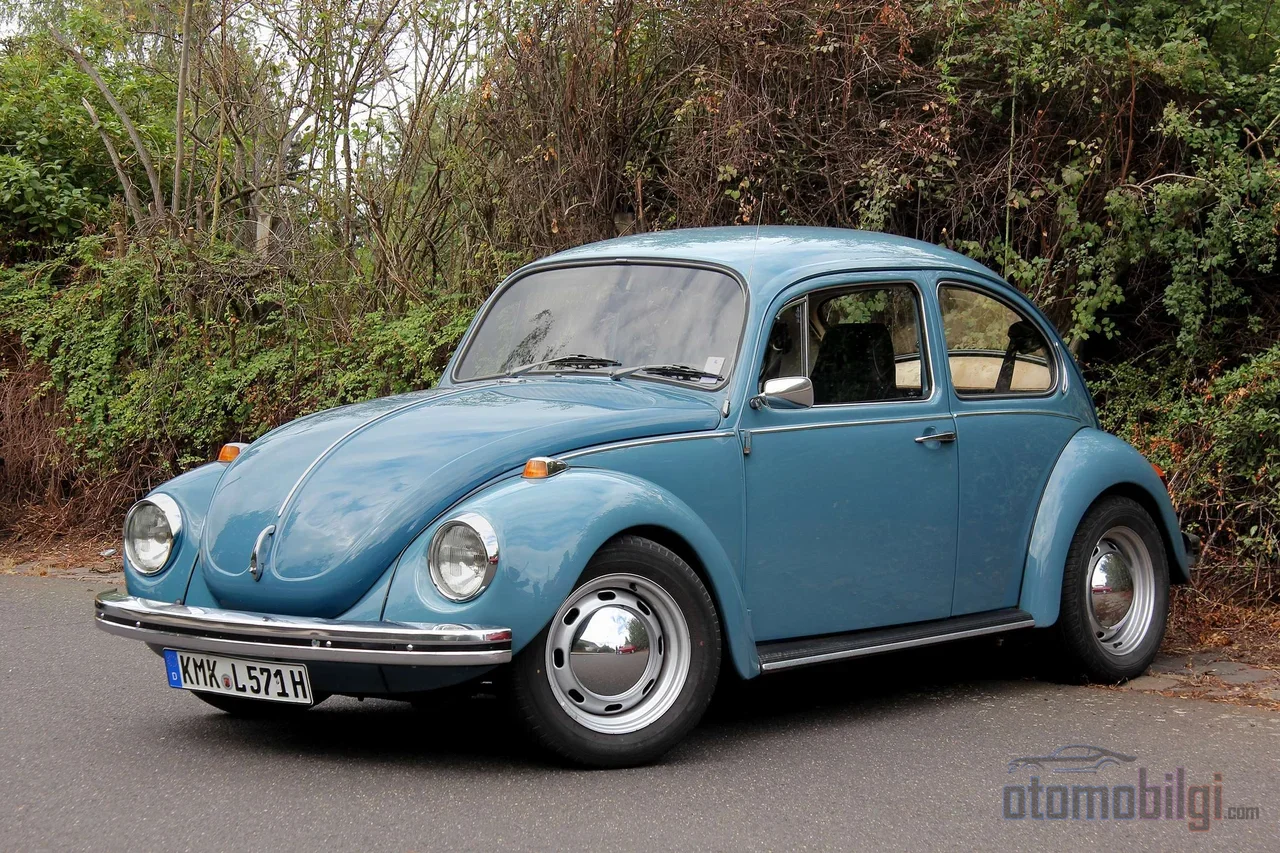
Now let's turn to the technical side, because the Beetle's success was no accident - it was engineering. The layout concept was simple: rear-engine, rear-wheel drive, air-cooled four-cylinder boxer engine. The pistons of the boxer engine work horizontally opposite each other - think of two boxers throwing punches. Thanks to this layout, there was no need for a radiator, water pump, freezing, or overheating. The engine was so simple it could be maintained on its own, and it gave itself away with its famous rumbling sound.
The weight resting on the rear engine increased traction especially on slippery surfaces; its unconventional rounded body also served aerodynamics (drag coefficient Cd=0.48). The body was attached to an almost flat platform chassis with a central tunnel by just 18 bolts - replacing a damaged part was far cheaper than repairing the whole car, as with today's one-piece unibody bodies. All four wheels had torsion bar independent suspension. Moreover, the VW engine was so robust that there are even stories claiming it was tested in the air, beyond use on land and in water!
Most remarkably, the design barely changed throughout its lifespan, but VW produced more than 78,000 applied an update. Most were about exterior details, color, or lighting; some brought new engines and systems. So for 65 years you think you're looking at the same "bug," but you're actually facing a creature that keeps evolving. The "Beetle" name was also a nickname that was late to become official: derived from the German "der Käfer," the name only entered official use in 1968; before that, models were referred to by codes such as 1200, 1300, and 1302.
"Think Small": The Campaign That Changed Advertising History
Come 1959, the Beetle met a brand-new tactic in the American market: the "Think Small" campaign prepared by the DDB agency. The names who designed the ad were Helmut Krone and Julian Koenig, and what they did threw all the rules of the era out the window. In the image, the Beetle was in the distance, surrounded on all sides by empty space - whereas the ads of the time were full of screaming pages packed to every last centimeter. The campaign was printed in black and white, started with a single word, and spoke with wit.
The cleverest move was using negative perception as a weapon: they took everything that belittled the car and turned it into headlines like "Think Small" and "Lemon." As the reader laughed, they fell in love with the car. This minimal and humorous approach positioned the Beetle as the "smart alternative" and made the car part of the counterculture in America. We wouldn't be exaggerating if we said the ad overthrew the era's conservative advertising mindset rather than selling the car.
Herbie and Popular Culture: How Does a Car Become an Object of Affection?
It wasn't just engineering and advertising that sold the Beetle; what truly made people love the car was popular culture. In 1968, Disney's The Love Bug brought to the silver screen a 1963 model Beetle race car with the number 53, signature racing stripes, and feelings: Herbie. This live-action comedy starring Dean Jones, Michele Lee, and Buddy Hackett turned a humble Beetle into a racing hero who won everyone's heart with his personality, loyalty, and "underdog" charm. With sequels, spin-offs, and TV productions, Herbie became a full-fledged pop culture icon.
In the same period, especially from 1968 onward, the Beetle began to be portrayed as a symbol of freedom, individuality, and counterculture. Just think: a car born as a Nazi project becomes the hippie movement's favorite vehicle a generation later. Few places in history can make such a sweet joke!
21 Million and a Long Journey Coming to an End
The Beetle was the target of everyone who wanted to break records, but the Beetle broke its own records. On February 17, 1972, with 15,007,034 units, it surpassed the Ford Model T to become the best-selling car of all time and held that throne for 25 years. Production was spread across 20 different locations. The last official Beetle in Europe was the 1985 model; classic production continued in Mexico and Brazil. Mexican production in Puebla had begun in 1967.
| Milestone | Date | Meaning |
|---|---|---|
| Factory foundation, the name KdF-Wagen | May 26, 1938 | The project officially begins in Wolfsburg |
| Resumption of mass production | December 27, 1945 | The first 55 vehicles under British administration |
| The one millionth vehicle | August 6, 1955 | The peak of the Nordhoff era |
| The Model T record is broken | February 17, 1972 | World leader with 15,007,034 units |
| The last official model in Europe | 1985 | Production moved to Latin America |
| The last classic Beetle | July 30, 2003 | The 21,529,464th vehicle rolled off the line in Puebla |
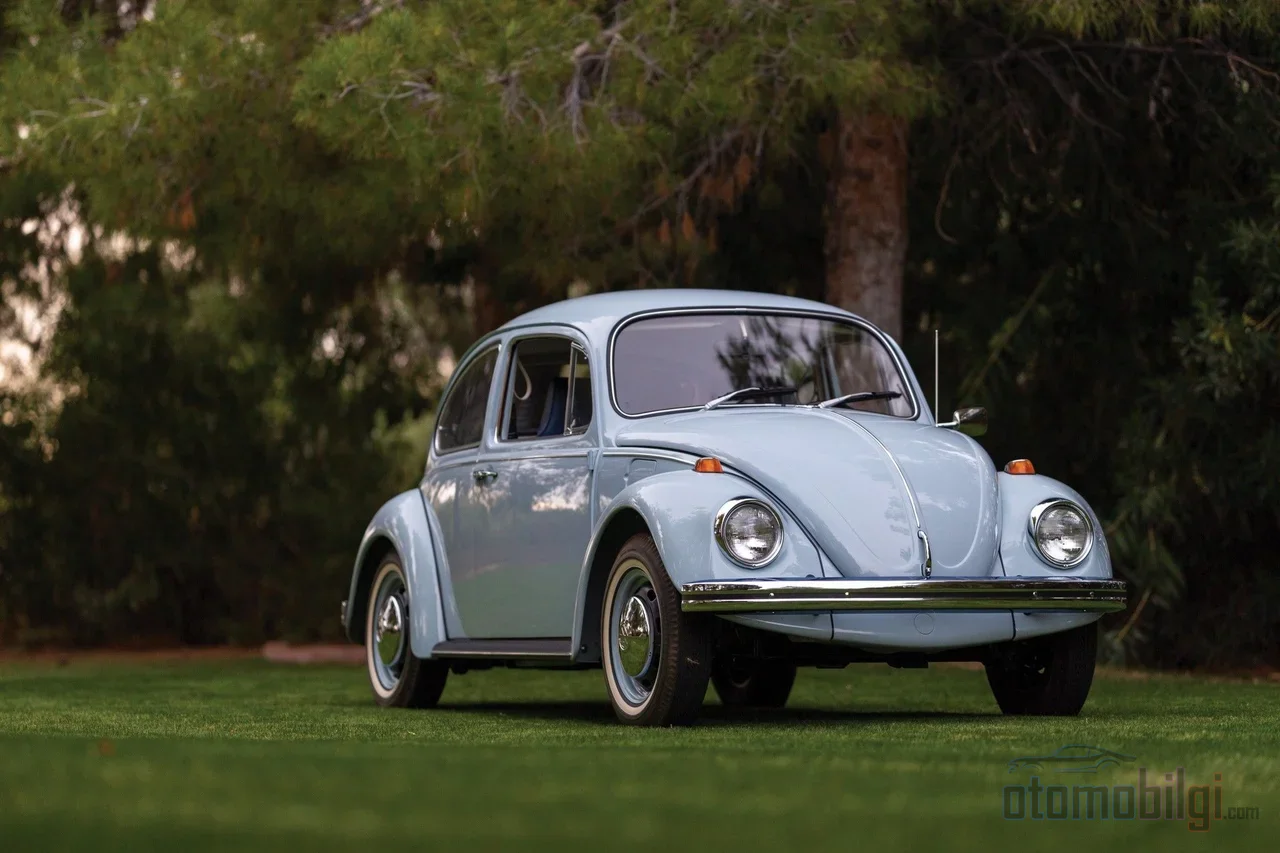
The finale closed the car's story with a stage worthy of a round number: the vehicle that came off the Puebla line on July 30, 2003 - the 21,529,464th vehicle - was the last classic Beetle produced after the war. The final batch of 3,000 vehicles was sold under the name "Última Edición"; it was pale blue in color and labeled as a 2004 model. So the farewell of a people's car was also in the hands of the people.
New Beetle: The Nostalgia That Returned in 1998
In fact, the story was rewritten once again in 1998. The New Beetle took the stage with retro lines that reduced the original's "three arches" geometry into a modern design, along with cheerful colors - but this time it was not rear-engined: it was front-engined, front-wheel drive, and now there was a trunk at the rear. Handling was far better than the original, safety and performance equipment was modern, and the 1998 model attracted great interest. The humor in the advertisements was also preserved. Of course, it was always debated whether the model sold on nostalgia or genuine charm; its question that reached young buyers was talked about for years. But the result was clear: the Beetle name breathed again in 1998, on top of a 21-million-unit legacy.
Conclusion: The Legacy of a Bug
The Beetle's story, in my view, is the most twisted and most beautiful curve in automotive history. It was designed as a propaganda project, was branded "an uneconomic venture," and then went on to be sold for 65 years all around the planet, crossing classes and countries. It was simple, repairable, characterful, and universally charming. It proved that the passion for cars can have a heart independent of the laws of physics. If it were you, which generation of this 21-million-unit bug would you take to the park? My answer is obvious - let it be the Herbie with stripes!
Sources
- Volkswagen Beetle
- 1937 to 1945 – Founding of the Company and Integration into the War Economy - Volkswagen Group Chronicle
- VW Beetle, the real miracle - Volkswagen Newsroom
- Beetle (Käfer) 1600/1600i (1970–2003) - Volkswagen Newsroom
- Last classic VW Beetle rolls off the line | July 30, 2003 - History.com
- Volkswagen Beetle in Mexico
- Volkswagen Beetle Last Edition (2003) - netcarshow
- Think Small
- Herbie
- The Love Bug - Britannica
- Volkswagen New Beetle
- New Beetle design - VW Media
- Ferdinand Porsche and his creatures - sfcriga
- The "People's Car" - LitHub