How Did the Aston Martin DB5 Transform From an Ad Car Into a James Bond Legend?
Share This Page
The Aston Martin DB5 is a legend: a British grand tourer introduced in 1963 as an updated version of the DB4, capable of 233 km/h with its 4.0-liter six-cylinder engine, and from the Goldfinger (1964) film onward, James Bond's vehicle of choice and one of the most famous cars in the world. And here's the funny part: this car wasn't born a legend, it be ca me one.
Highlights
- Only 1,059 units were produced between 1963 and 1965
- 4.0-liter engine 282 horsepower, top speed 233 km/h
- For Goldfinger, 4 DB5s were used, one of which is still missing as of 2021
- The Bond connection boosted sales, and the Corgi model became the best-selling toy of 1964
- A well-maintained example today fetches over $600,000, while Bond-associated cars sell for millions of dollars
Let me ask you a question: at what moment does a car become an icon? Is it the engine, the design, or does it come down to who owns it? The story of the DB5 shows that the answer to this question can be all three at once, but the real deciding factor is the third one. Because technically, this car wasn't a revolution from scratch. But when cinema touched it, everything changed.
A Humble Beginning: The DB4, All Grown Up
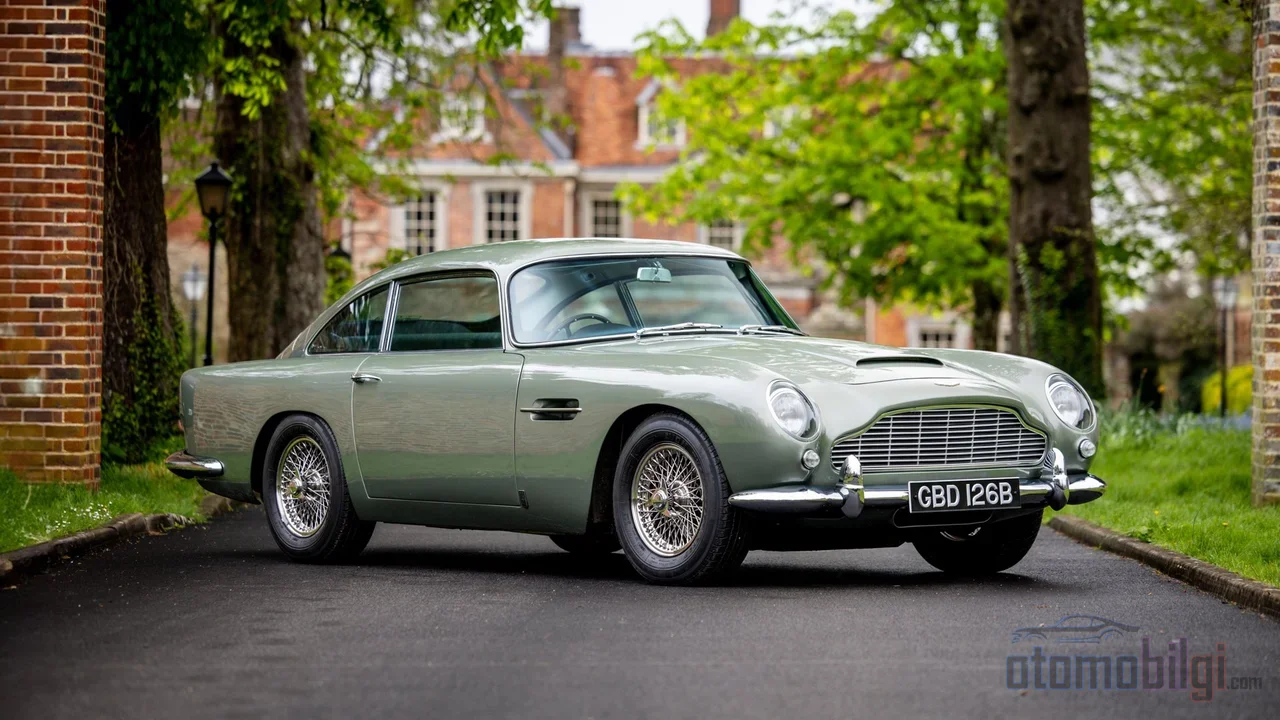
Let's start with the name first, because even though most people don't know it, it fits perfectly: the "DB" abbreviation comes from the initials of David Brown, who bought and grew the company in 1947. Yes, the founder's name really was David Brown. It sounds like an energy company, but let it be - it suited them well.
The DB5 was introduced in 1963 and was actually a natural evolution of the final series of the DB4 - by no means a design from scratch. The lines are the same; everything, including the covered headlights in the bodywork, evolved gradually from forms first seen on the DB4GT. The design belonged to the Italian workshop Carrozzeria Touring Superleggera; the designer was Federico Formenti. Production took place at the Newport Pagnell factory in England. So the engineering was British, the lines Italian - perhaps the secret of its aristocratic character lies in this mix.
The company wasn't in a pretty picture at the time. Aston Martin came to the brink of bankruptcy many times in its history; in 1932 it faced serious financial troubles due to the Great Depression, and it was precisely this financially struggling company that David Brown bought in 1947. So the DB5 was the hopeful new model of a company recovering from disaster. Who would have known that one day it would become the most famous car in world cinema... Oh, sorry, world-famous.
What's Under the Hood?
Let's get into the technical details, because even the numbers here are cool. The engine was an enlarged aluminum version of the 3.7-liter unit from the DB4: a 4.0-liter (3,995 cc) inline six: 282 horsepower of power, 288 lb-ft of torque. Top speed: 145 mph, or 233 km/h, and 0-60 mph takes 8 seconds. Think of it this way: more than 60 years ago, a car with an aluminum body hand-formed over wooden molds was doing 233 km/h. You can't even do that in city traffic today.
The body was made of magnesium-aluminum using the Superleggera technique - meaning as light as possible, and as expensive as possible. Standard equipment included electric windows, a dual fuel tank, chrome wire wheels, and (yes, really) even a fire extinguisher. The gearbox was initially a 4-speed manual, later a ZF 5-speed came along; those who wished could opt for the Borg-Warner 3-speed automatic.
The price announced at the 1963 Frankfurt Motor Show was 4,175 pounds - a fortune for those years. For performance-hungry buyers, there was the DB5 Vantage version: with three Weber carburetors and revised cam profiles, it produced 325 horsepower. Only 65 units of the Vantage coupé were produced. Additionally, 123 convertibles and only 13 shooting brakes were built; the first shooting brake prototype was prepared for David Brown himself, while the rest were coupés converted by Harold Radford. In short, each version was produced in small numbers, and everything produced in small numbers appreciated over time.
| Feature | Value | |
|---|---|---|
| Production years | 1963-1965 | |
| Total production | 1,059 units | |
| Engine | 4.0 L inline-six | |
| Power | 282 bhp (Vantage: 325 bhp) | |
| Top speed | 233 km/h | |
| 0-60 mph | 8 seconds | |
| Price at the time | £4,175 | |
| Versions | 65 Vantage coupé, 123 convertible, 13 shooting brake |
Why Did James Bond Drive an Aston Martin DB5?
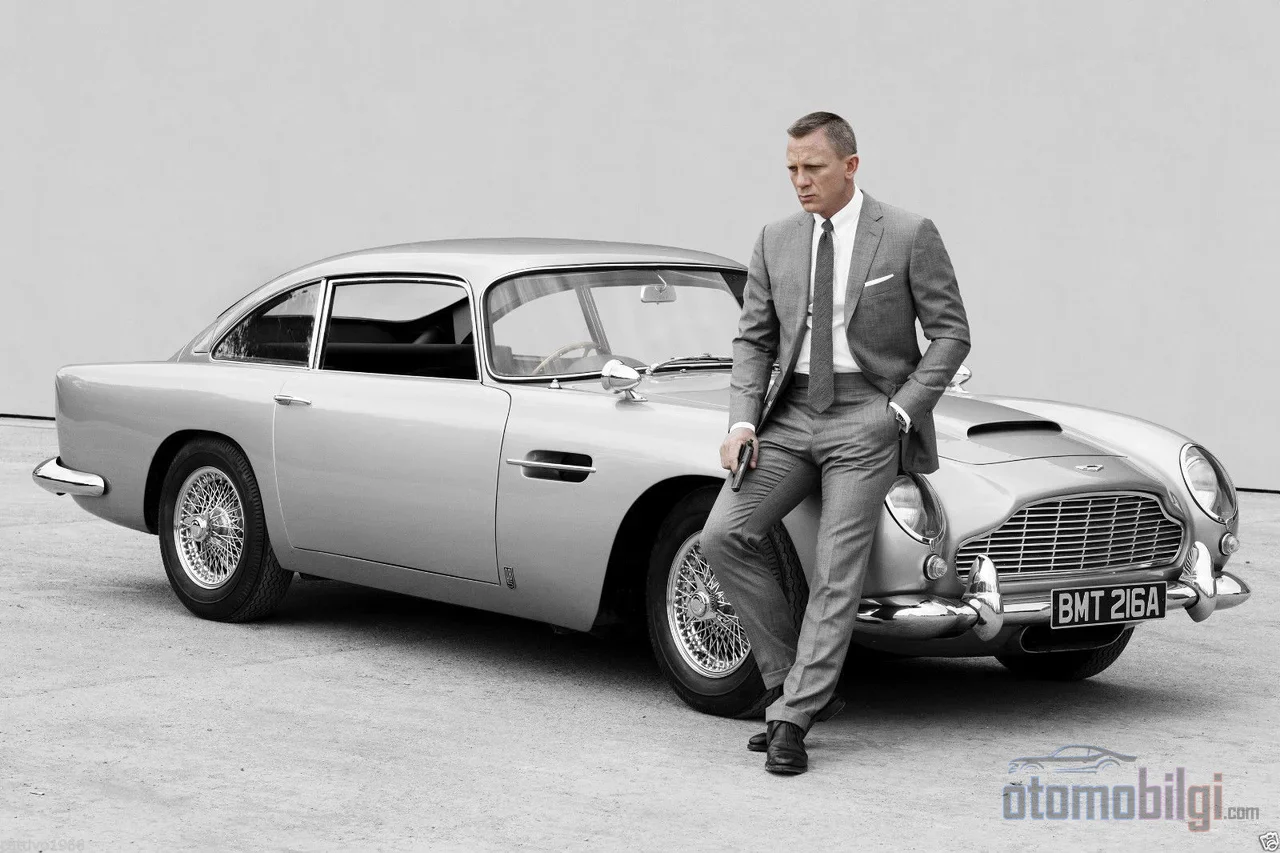
Here is the turning point of the story, and believe me, it seems more like fiction than real life. In Ian Fleming's Goldfinger novel, Bond's car was actually an Aston Martin DB Mark III. During the adaptation to film, effects expert John Stears persuaded Aston Martin to bring the story's hero - the brand-new DB5 prototype - onto the film's screen. Consider the company's financial situation: the offer "Would you use my car in your film?" was a gold-mine opportunity for a brand that couldn't find an advertising budget.
A total of 4 DB5s were used for Goldfinger: two for filming, two as promotional vehicles. Interestingly, the first filming car was the film's original prototype, painted in Dubonnet Red, and had previously been used in a series called The Saint. Its weapons were later removed and sold, replaced with fakes; it appeared in Cannonball Run in 1981, and in 1997 it was stolen from a garage in Florida. As of 2021, it is still missing. The possibility that one of the world's most famous cars has simply vanished seems incredible to me every time.
The second filming car was a gadget-free driving car; it was sold at auction in 2010 to Harry Yeaggy for 4.6 million dollars . One of the promotional vehicles is on display today at the Louwman Museum in the Netherlands, while the other found a buyer in 2019 for 6.4 million dollars . Four cars in a film, legends worth tens of millions of dollars today. If that's not called an "investment," what is?
Q's Equipment: What Comes Out of It?
Now for the real fun. The DB5 in the film was technically as packed as a cave bear, and its list of equipment is the kind that will still make you smile today:
- Hidden behind the front indicator lights, .30 caliber machine guns
- An ejector seat (like the revenge of seats gifted in traffic)
- Tire slashers
- Rear-deployed bulletproof screen
- Rotating three different license plates rotating license plate system (LU 6789, 4711-EA-62 and BMT 216A)
- Smoke and oil spray system
Today you read stories about hardware that doesn't fit on a phone's memory card, but in 1964 they fitted a machine gun and an oil pump into a car, and millions of people loved it. After Goldfinger, the DB5 was crowned "the world's most famous car," its sales increased, and Corgi Toys' die-cast model became the best-selling toy of 1964 . Just imagine: 1,059 cars were actually produced, but there were hundreds of thousands of them in millions of children's rooms.
A 60-Year Screen Partnership
The DB5-Bond relationship didn't stay confined to one film; it turned into a friendship that defied the years on both sides. The car also appeared in later films: Thunderball (1964), GoldenEye (1995) - the car there even had a champagne cooler - Tomorrow Never Dies (1997), Casino Royale (2006, but this time it was the villain's car, wow), Skyfall (2012) and Spectre (2015). For No Time to Die (2021), eight replica stunt cars were built, and their engines weren't taken from the BMW M3 - sorry, they were M3-engined, let me write that correctly: M3-engined. One of these stunt cars sold for 2.92 million pounds at the "Sixty Years of James Bond" charity auction in London in 2022.
The celebration isn't just empty talk: Aston Martin crowned this 60-year partnership with a special model, the Q by Aston Martin DB12 Goldfinger Edition. Dressing a modern car in a legend born on a film set 60 years ago - it shows that even the brand itself knows how precious the story is. And the sweetest irony is this: the Newport Pagnell factory started producing the DB5 again in 2020 with the DB5 Goldfinger Continuation project. With original suppliers ZF and Connolly Leather, only 25 cars were built; each had a 290-horsepower 4.0-liter engine and genuinely working smoke, oil and screen gadgets. The price? Around 2.75 million pounds. That's a car at 650 times the original's price - time really is money.
How Much Is the DB5 Worth Today? Its Place in the Collector Market
Let's look at the market, because the numbers are part of the story too. A significant portion of the 1,059 cars was lost over the years to accidents, rust and fires; no one knows for certain how many are still standing today. That's why every surviving car is treasured like a work of art. When you glance at recent auction results, the picture looks like this:
- A well-preserved 1965 DB5 Drophead Coupe is worth around 1,150,000 dollars; the latest auction result was 1,255,280 dollars
- A 1965 DB5 sold for 792,500 pounds at the 2026 Woodcote Park auction
- A DB5 Shooting Brake went for 1,357,500 dollars; in 2019, another shooting brake set the record for the most expensive shooting brake independent of brand at 1.765 million dollars
- Cars with a Bond history are in a league of their own: in August 2019, a Bond DB5 sold for 6.4 million dollars gone, and another was offered at auction with a 4-6 million dollar estimate
- In sales listings, clean examples are going for between 749,995 and 1,350,000 dollars
And then there's that sweet comeback story that spans all of Anatolia, that is, the whole world: In December 2025, Aston Martin restored a rare 1965 Vantage in Newport Pagnell - one of 39 produced - with 2,500 hours of work. The car had been bought used by its owner in 1973 for 900 pounds and its estimated value today is 1 million pounds. A hundred years ago, if you wanted to leave your grandchildren a good future, buying a car was the most practical advice we could give. That's a bit of an exaggeration, but not by much.
What About the Engineering? DB5 or Jaguar E-Type?
To be honest, the answer to whether the DB5's iconic status came from an engineering revolution or from cinema is: cinema. It's still debated in the sports car world; some say "the DB5 is a cultural icon but the Jaguar E-Type is far more beautiful," while others describe the DB5 as "a less raw, more refined grand touring experience with British aristocracy." If you ask my opinion: if the E-Type is a treat for the eyes, the DB5 is a feast for the story. Its engine was enlarged from the DB4's, and its design was developed in stages - technically not a "revolution from scratch." But cinema chose it, dressed it in legend, and from that point on no technical comparison mattered anymore.
This is actually one of the most beautiful lessons in automotive history: what makes a car a cult icon owes as much to the story that gives it life as to the metal itself. Aston Martin's decision to open its doors to cinema at a time when it was emerging from bankruptcy went down in history as much as - perhaps more than - its engineering. Neither the engine nor the speed figures are what make the DB5 extraordinary; what makes it extraordinary is that after entering the credits of a film, it could never be forgotten again. And let me ask you: which car will still be talked about 60 years from now? My money is on the DB5. Perhaps one day even the lost Dubonnet Red will be found and another final scene will be written into the story. Who knows?
Sources
- Aston Martin DB5: A Journey Through History
- Aston Martin DB5
- Aston Martin DB5 production resumes - Aston Martin Media
- Q by Aston Martin DB12 Goldfinger Edition - Aston Martin Media
- Aston Martin DB5 | James Bond 007
- Aston Martin DB5 (Bond Car) - Spy Museum
- 1965 Aston Martin DB5 - Hagerty Valuation Tools
- Buyer's Guide to the Aston Martin DB5 - Sports Car Market
- 1965 Aston Martin DB5 | The Woodcote Park Auction 2026 - RM Sotheby's
- Aston Martin DB5 Market - Classic.com
- This 1965 Aston Martin DB5 Vantage Could Fetch $1M - Robb Report
- James Bond Aston Martin DB5 Offered - Sports Car Digest
- Why Does James Bond Drive An Aston Martin? - Motor1
- Aston Martin Celebrates 60 Years of James Bond Legacy - Hemmings
- 1963 Aston Martin DB5 - Classic Driver
- The Aston Martin: From the DB1 to DB7 - HowStuffWorks
- Past Models - Aston Martin