How Did the Nissan Skyline GT-R R32 Become Godzilla?
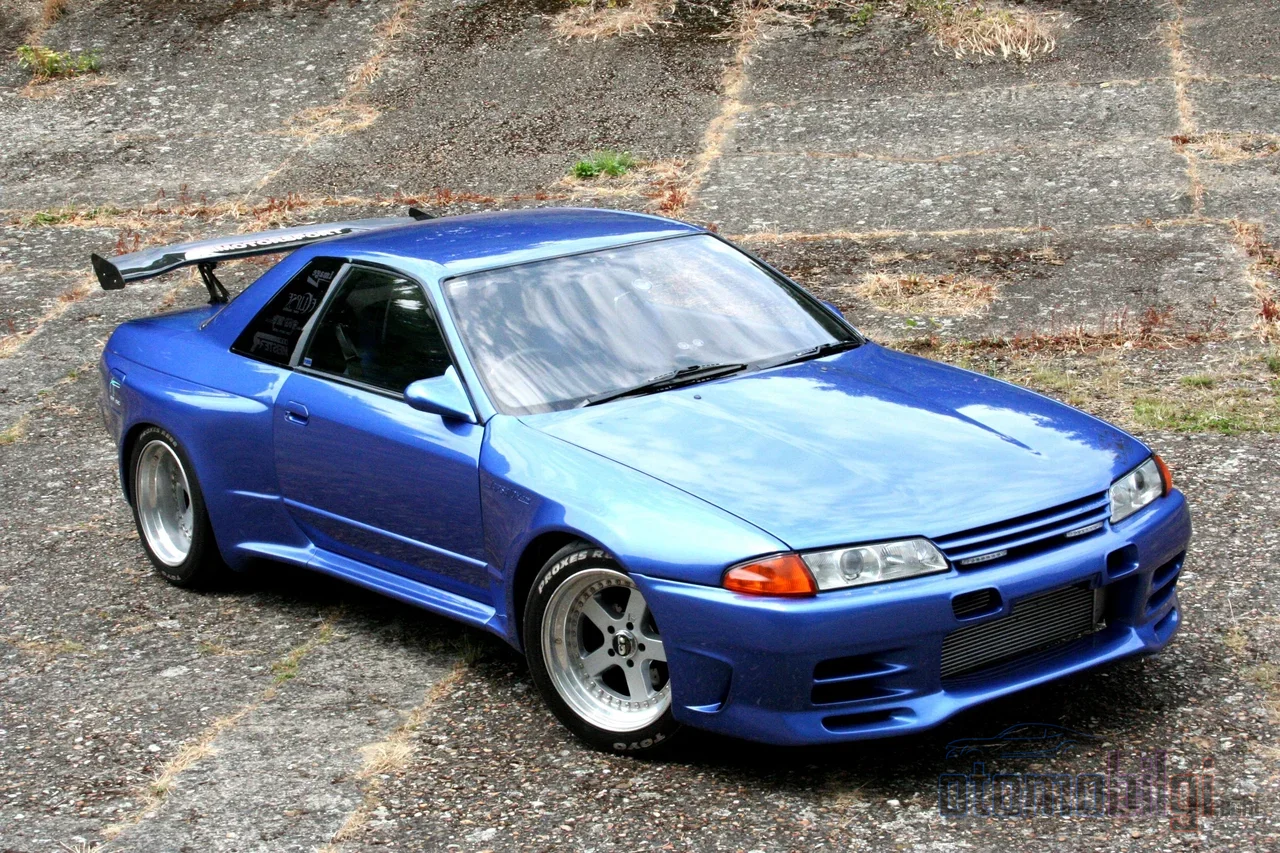
In 1989, a Japanese car arrived at Australia's legendary Bathurst 1000 circuit and dropped like a bomb into the Ford-Holden battle everyone was expecting. The result? Victories won by laps, records broken, and furious spectators. The Australian press was so awestruck by this car that they gave it a monster's name: Godzilla. So how did the Nissan Skyline GT-R R32 go from a Japanese coupe to the most feared racing machine in automotive history? Buckle up, because this story features a secret Porsche, an impossible statistic, and a domination that effectively banned its rivals.
The GT-R name actually goes back to 1969. But the R32 GT-R was the return of that name after a full 16-year hiatus. The eighth-generation Skyline was introduced in May 1989, the GT-R version arrived three months later, and official production began on August 21, 1989. Nissan's goal was not simply to place a sports car as a replacement for the R31 GTS-R; it was to build a weapon that fit perfectly within Group A racing regulations.
The Engineering Game: Reading the Group A Rulebook
By now, a question has formed in your mind: Why did they choose a 2.6-liter engine instead of a 3-liter one? The answer is hidden in the racing rulebook. Group A equivalence rules calculated the displacement of turbocharged engines with a multiplier, so the RB26's 2.6-liter turbo engine counted as 4.3 liters. Combined with all-wheel drive, Nissan found a combination that fit perfectly into the sweet spot of this class. In other words, from day one this car was designed for the track; the road version was almost a byproduct.
And the sweetest detail of the whole affair: During development, Nissan approached Porsche to buy the legendary 959. Porsche refused, but Nissan found a way, and a 959 was used in the R32's development work anyway. Imagine: the birth of a Japanese monster bears the traces of a German supercar.
Highlights
- Entered 29 races in Japan and won all 29, plus 4 consecutive JTCC championships
- Victories at the 1991 and 1992 Bathurst 1000 earned the Godzilla nickname from the Australian press
- Officially rated at 280 HP with the RB26DETT engine, 0-60 mph in 5.2 seconds
- A total of 43,937 units produced between 1989 and 1994
- US market range in 2026 is approximately 35,000-65,000 USD
RB26DETT and ATTESA E-TS: The Monster's Two Hearts
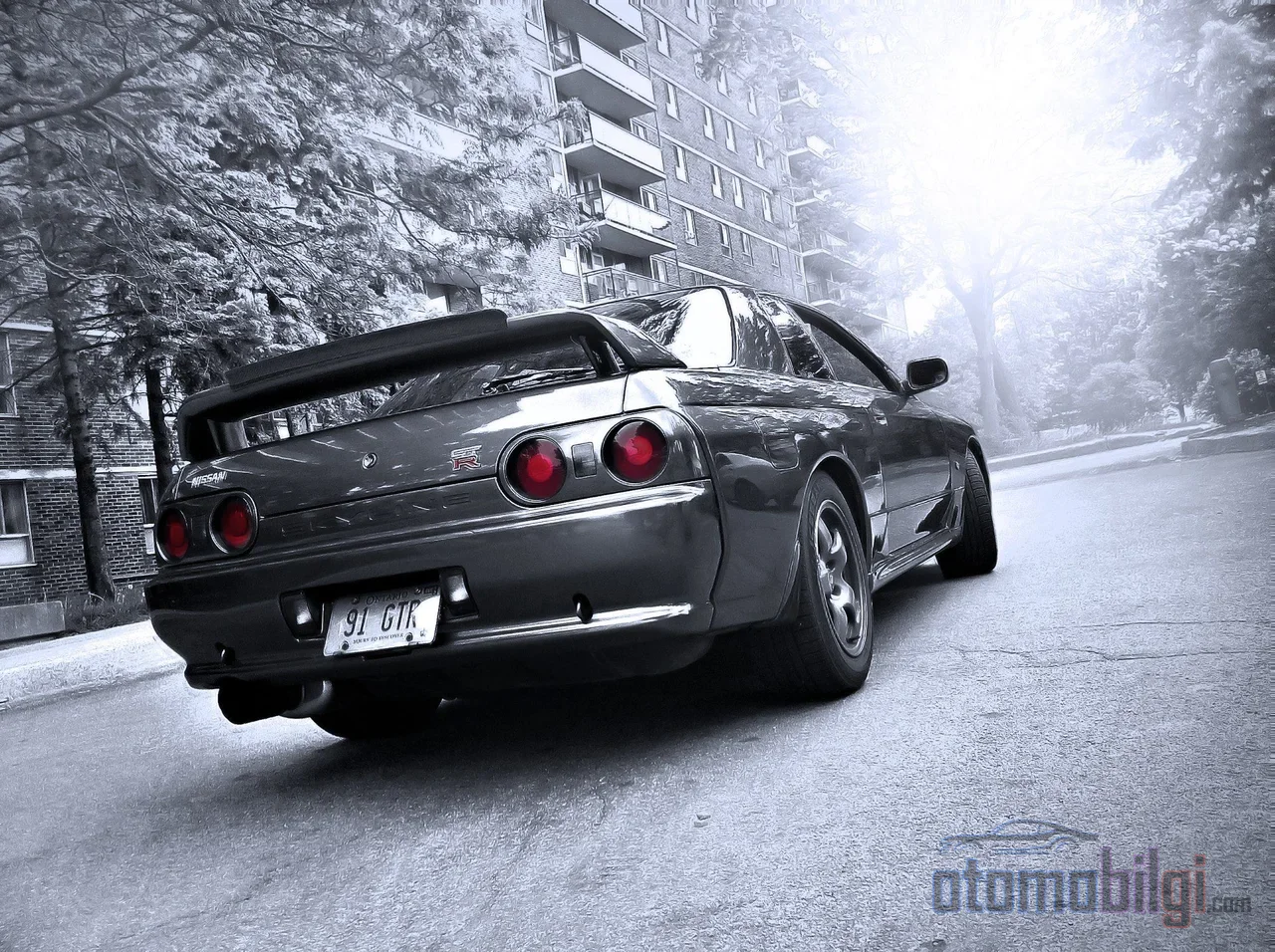
When you pop the hood, you're greeted by the RB26DETT: a 2.6-liter (2,568 cc), twin-turbo, inline-6 engineering masterpiece. Cast iron block, aluminum cylinder head, a mass of approximately 273 kg. Official figures: 280 HP @ 6,800 rpm and 352 Nm of torque @ 4,400 rpm. But there's a secret here: Due to a gentleman's agreement among manufacturers in Japan, power figures were capped at 280 hp, and it is widely believed that actual output was higher. In other words, the numbers were modest on paper, but underneath it all was a complete monster.
The truly magical part is the ATTESA E-TS all-wheel drive system. Let me explain: In normal driving the car behaves like a classic rear-wheel-drive, and you enjoy it as a rear-wheel-drive sports car. But the moment the rear wheels start to slip, an electronic-hydraulic clutch kicks in and sends torque to the front; roughly, when needed, close to a quarter of the power share goes to the front wheels. Nissan drew inspiration from the Porsche 959's all-wheel-drive logic while developing this system. And with the addition of the HICAS system, which steers the rear wheels through corners, a car weighing around 1,500 kg suddenly started mocking the laws of physics.
Nissan Skyline GT-R R32 Specifications
| Specification | Value |
|---|---|
| Engine | RB26DETT, inline 6 cylinders, twin turbo |
| Displacement | 2,568 cc |
| Power | 280 HP @ 6,800 rpm |
| Torque | 352 Nm @ 4,400 rpm |
| Compression ratio | 8.5:1 |
| 0-60 mph (0-96 km/h) | 5.2 seconds |
| Quarter mile | 13.7 seconds @ 100.5 mph |
| Production count | 43,937 (1989-1994) |
As for some values such as fuel consumption, trunk capacity and top speed, they were not disclosed by the manufacturer; neither Nissan nor period records have officially shared this data. But let's be honest, who's curious about Godzilla's trunk capacity anyway?
Apocalypse on the Track: 29 Races, 29 Victories
The picture in Japan was like a cinema film. Between 1990 and 1993, the R32 GT-R entered the All-Japan Touring Car Championship, raced 29 times and won all 29. Four consecutive championships. The rivals were so overwhelmed that some had to flee to a higher class. Imagine a car that chased its rivals off the track - that's the R32.
The winning streak wasn't limited to Japan. The 1991 Spa 24 Hours, the Macau Guia races and, of course, Australia: the 1991 and 1992 Bathurst 1000 victories along with the 1991-1992 Australian Touring Car championships. Gibson Motorsport's duo Jim Richards and Mark Skaife started the 1991 Bathurst from pole position and won by a lap, breaking the race record that had stood since 1984; that record remained theirs until 2010. In racing versions, power rose to the 550-600+ bhp level.
The Australian story also has a bittersweet side. In 1992, CAMS raised the car's minimum weight to 1500 kg and mandated F1-style pop-off valves, reducing engine power from 640 bhp to approximately 450 bhp. Gibson Motorsport went as far as the courts, but the outcome didn't change. The Group A era closed and the R32 was effectively sidelined from competition. In other words, Godzilla was silenced by being banned; that's probably the biggest compliment the series ever paid. The victory after the red flag at the 1992 Bathurst, the crowd's reaction and that tense podium went down as a legendary chapter in Australian motorsport folklore; that race also carried the sorrow of losing 1967 Formula 1 champion Denny Hulme.
How Did the Godzilla Nickname Come About?
Here is the answer to the article's main question, in its rightful place: The Godzilla nickname was given by the Australian press, left bewildered by the car's overwhelming domination in Group A; the nickname is generally credited to the Australian magazine Wheels, which is believed to have coined it first. The logic was simple: this Japanese monster was devouring everything in its path on the track, just like the giant monster in the movies. For a country used to the Ford-Holden tribal rivalry, this foreign arrival had a devastating impact, both sportingly and emotionally, and the nickname went global in no time.
The beautiful part is that this domination also carried a commercial strategy: by the classic formula of the marketing world, win on Sunday, sell on Monday. As the R32 won on the track, it became the stuff of legend in the showrooms.
The Birth of an Icon in JDM Culture
The R32's rise was not limited to the track. As it appeared in productions like The Fast and the Furious, Initial D, Wangan Midnight and Shakotan Boogie, and in game series like Gran Turismo, Need for Speed and Forza, it conquered the hearts of the generation raised on video games. Especially in the US, where import rules kept it out of reach for years, the R32 remained an unattainable JDM dream, which only fueled its forbidden mythology. The sport compact magazines of the era declared it Japan's supercar, a wolf in sheep's clothing. Underground racing clubs like Mid Night Club were also among the circles that fed the Skyline legend. Nissan's own fan base made its allegiance clear: fans voted the R32 the best NISMO race car of all time.
Godzilla in the Collector Market in 2026
So what does this monster cost today? As of 2026, R32 GT-R prices in the US are roughly in the USD 35,000-65,000 range; verified auction sales range from USD 35,344 to USD 120,617. The Bring a Trailer average jumped roughly 41% in a single year, from USD 36,339 in 2023 to USD 51,297 in 2024. In Australia, the average of recorded sales is AUD 82,518, while in the UK and Europe the average range is 25,000-40,000 pounds. By comparison, only 5,003 units were produced in its first year; total production was 43,937, with 1,396 units of the V-spec version. Scarcity is rising, and so is demand.
At the very top of the collecting world, there is a whole different league: documented, authentic period Group A chassis find buyers at prices approaching seven figures. Buyers have two critical checkpoints: matching-number engine and properly functioning ATTESA/HICAS systems. Australian-delivery cars with Gibson Motorsport connections also command a premium. And the legend proves it is not dead: in 2024, 1991 and 1992 cars, restored to their original color schemes, returned to the track at the Adelaide Motorsport Festival.
The Short Answer: Why Is the R32 Called Godzilla?
Let's wrap it up. The R32 GT-R earned the nickname Godzilla from the Australian press because of its crushing dominance in Group A racing; faced with the 1991-1992 Bathurst victories and margin-of-victory wins, a helpless press deemed this Japanese monster that crushed everything on the track worthy of the name of the giant creature from the cinema. On the engineering side, the RB26DETT engine and the ATTESA E-TS all-wheel drive system inspired by the Porsche 959 delivered 29 victories in 29 races and four championships; rivals could only stop it by changing the rules. A banned monster is unforgettable. And thanks to a generation that grew up with video games, the R32 rose as the uncrowned king of JDM culture even after its racing career was over.
Never forget it in your next chat with a GT-R enthusiast: Godzilla was not a marketing slogan. It was a nickname earned in blood, with winning margins and the signatures of its rivals.