How Did the Honda NSX Become a Daily-Usable Supercar?
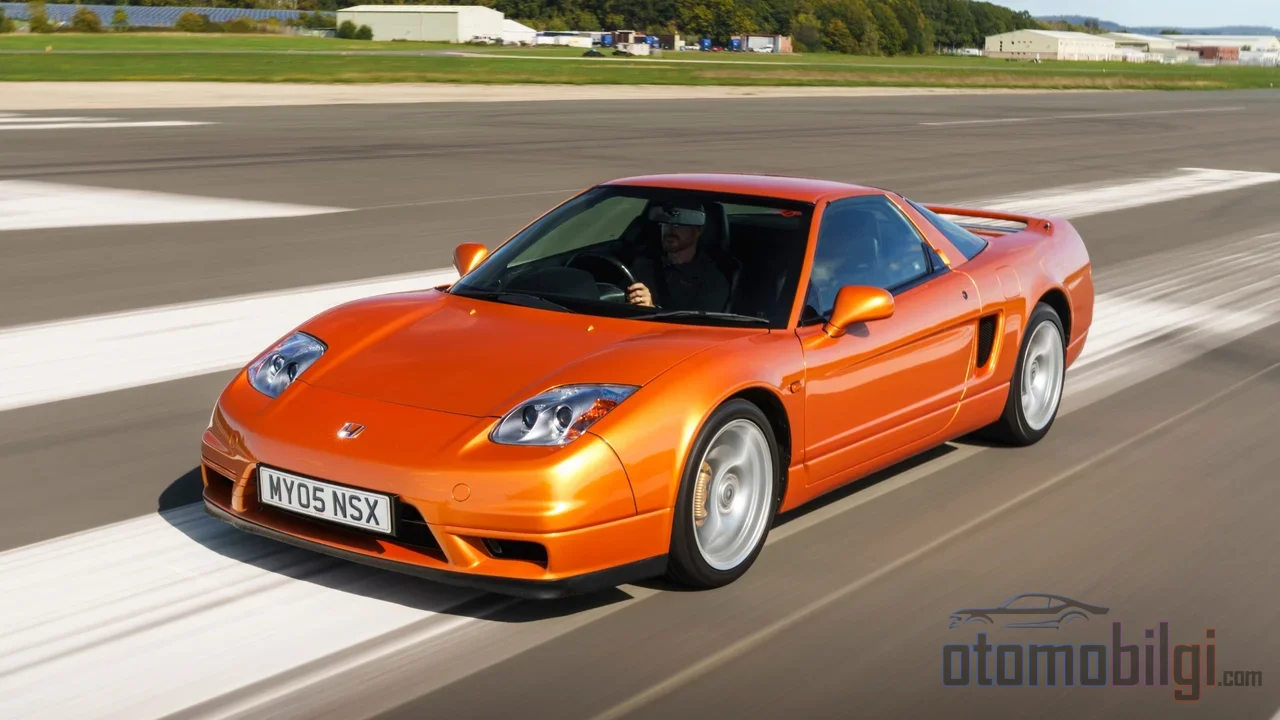
February 1989, Suzuka circuit. The fastest man in the world gets into a Honda prototype, does a few laps, and then says something: this car is a bit fragile. That sentence is the very moment that split supercar history in two. Because Honda's NSX project, which began as a challenge to Ferrari, transformed into a completely different vehicle after that feedback - and the result was the first supercar that could comfortably be driven to work every day. So how did a Japanese manufacturer pull this off with an aluminum body and the experience of a legend? Let me tell it from the beginning.
How Did Honda Stand Up to Ferrari?
The story actually goes back to 1984. That year, Honda prepared a concept together with Pininfarina under the name HP-X: a mid-engined sports car carrying a 3.0-liter V6 engine at the rear. The goal was clear - to match, or even surpass, the performance of the V8 Ferrari models of the era. But Honda's trump card wouldn't just be speed: on top of that would come the reliability Ferrari couldn't offer, and a much more reasonable price.
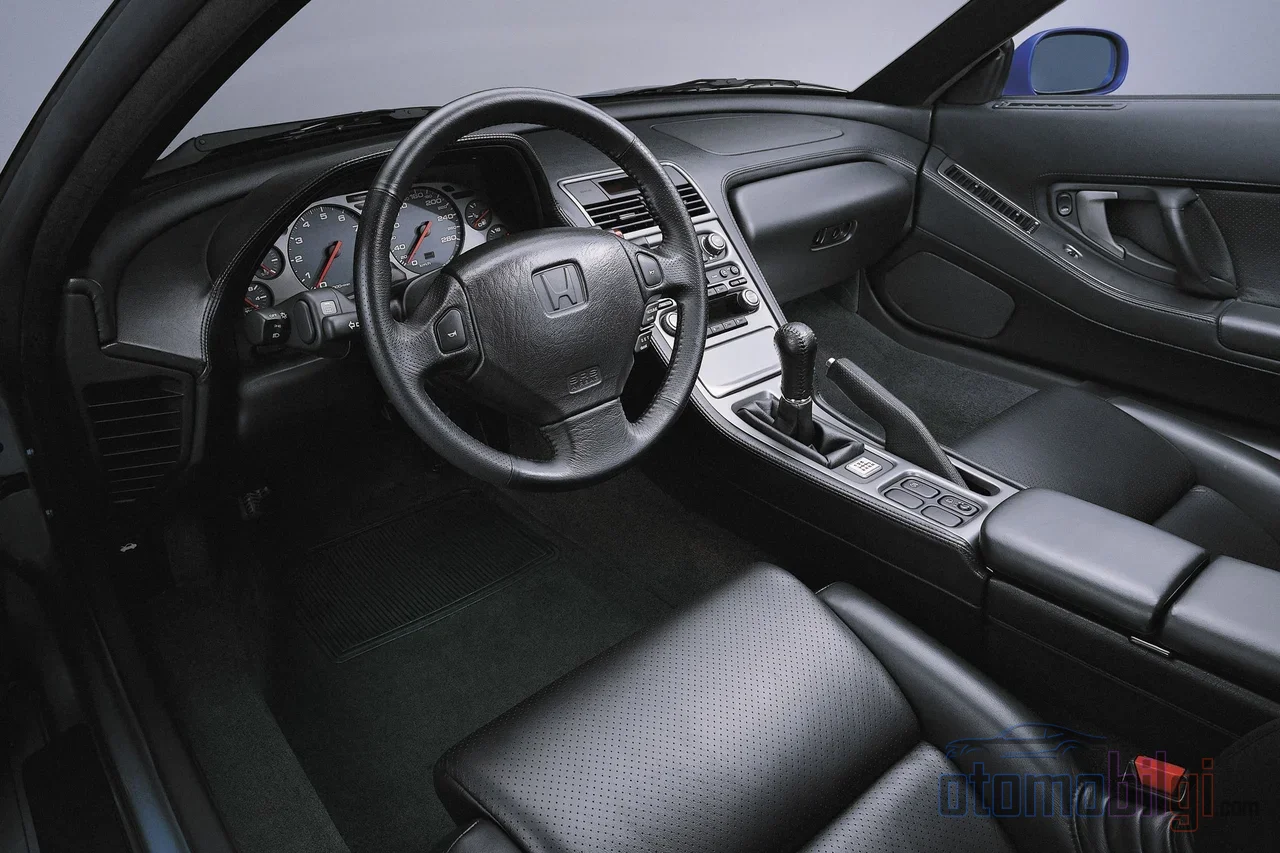
The project quickly became serious. According to Honda's own archive narrative, the team got to work in January 1984 with fundamental research on a new drivetrain completely different from the front-wheel-drive architecture in the Civic and Accord. In February 1984, a rear-wheel-drive test vehicle with the engine mounted underneath was prepared using the first-generation Honda City. The official development process began in the fall of 1985. At this stage, the concept took the name NS-X: New, Sports car, eXperimental - that is, a new, experimental sports car. The design was undertaken by the team led by Masahito Nakano; when I tell you the cockpit was inspired by the F-16 fighter jet, I think you'll now understand how seriously this car was taken.
There's a fun detail among it all: NS-X was actually not considered as the name to be released to the market. But the prototype attracted so much attention worldwide that Honda stuck with the name; the hyphen was dropped and the car became the NSX. The first presentation was made around the Chicago Auto Show on February 9, 1989, and production driving began in 1990.
Highlights
- The NSX was the world's first mass-produced car with an all-aluminum body.
- After Ayrton Senna's feedback, body rigidity was increased by 50%.
- Performance similar to the Ferrari 348, at less than half the price.
- The first generation was produced between 1990 and 2006, with a total of fewer than 20,000 vehicles.
- The first titanium connecting rods in series production, and VTEC technology.
The Aluminum Body: A First, Bolt by Bolt
Now let's get to the technical side - but don't worry, I'll explain it with an analogy. The NSX's body was a structure made of extruded aluminum alloy, much like a bicycle frame. Until that day, no manufacturer had ever brought a completely aluminum monocoque body into series production. The problem Honda had to solve wasn't just weight savings: producing bodies from aluminum at production scale and with the same quality in every vehicle was an engineering exam in itself. Indeed, even the chassis and suspension of the first-generation car were built with this lightweight metal alloy.
In return, the engine did not sit idle either: The aluminum-block VTEC V6 producing 270 hp was paired with titanium connecting rods, used for the first time in series production. Imagine - building a series-production sports car with aerospace-grade materials back in those years. The enthusiasm of Honda's engineers on this subject was so great that they plotted the sports cars of the 1980s on a graph formed by the power/weight and weight/wheelbase axes, like a galaxy, and aimed for the NSX to break away from this cluster and approach the Formula 1 region.
What Did Senna Say at Suzuka?
Here is the best-known part of the story. In February 1989, Ayrton Senna was in Japan to test Honda's Formula 1 car. The engineers made a request of him: would you evaluate this new NSX prototype at Suzuka? Senna drove some laps, got out of the car, and when asked about the prototype as a series-production vehicle, he said it felt somewhat fragile.
This may sound like a simple impression, but it had a bombshell effect on the engineering team. When the body is not rigid, every response coming through the steering and suspension becomes blurred; that feeling of direct connection between the driver and the car was being lost. For a driver like Senna, who felt every response of his car at his fingertips in the final meters of a corner, this was not something that could be tolerated.
The Honda team raised the rigidity targets in April 1989 and moved part of the testing to the Nurburgring - problems that did not emerge on Suzuka's smooth asphalt would reveal themselves on the rugged circuit of the Alps. At the end of eight months of uninterrupted work, body rigidity was increased by 50%, and Senna's input also led to a redesign of the suspension. Today, the NSX's famous balance is largely the product of this intervention.
What Was the Result Against the Ferrari 348?
So how did the whole thing ultimately look on paper? The NSX performed almost neck-and-neck with the 348, Ferrari's small supercar of the era: both completed 0-60 mph acceleration in about 5.7 seconds, and the top speed difference was only a few kilometers per hour. The real difference lay in price and usability.
| Honda NSX | Ferrari 348 | |
|---|---|---|
| 0-60 mph | ~5.7 s | ~5.7 s |
| Power | ~270 hp | ~300 hp |
| Top speed | ~270 km/h | ~275 km/h |
| Price | Less than half the price | Significantly higher |
| Service | Routine Honda service | Requirement for specialist service |
Moreover, the 348 was known for its harsh ride and unforgiving handling as its limits were approached; the NSX, on the contrary, carried a character that inspired confidence in the user. Authorities also add that the emergence of the NSX prompted Ferrari to re-examine its approach to quality. In other words, Honda was shaking things up not only on the speed stage, but also in the debate over what a supercar should be.
How Did What We Call the Everyday-Usable Supercar Come to Be?
This is where the philosophical side of the story begins. European supercars of that era saw comfort and ergonomics as the price of performance: a cramped cockpit, frustrating controls, a new adventure every morning. The NSX, on the other hand, arrived with a comfortable, ergonomic cockpit and a smooth ride. As Jon Ikeda of Acura also stated, before the NSX it was assumed that supercar performance came at the cost of a comfortable interior and everyday usability; the NSX shattered that notion. The NSX was the first vehicle to bring supercar performance into daily life.
If you ask who believed this: even Gordon Murray, the designer of the McLaren F1. Murray used the NSX as his daily car while developing the legendary F1, and it is known that the NSX philosophy influenced the McLaren F1. In other words, the man who drew one of the most extreme hypercars of all time fed his brain with an NSX every day. The fact that the idea of a daily supercar was first voiced within Honda in the mid-1980s confirms this: the concept was not a later marketing invention; it was the project's starting point.
From Senna's Garage to Hollywood
Senna's connection with the NSX was not limited to the development process. Honda provided him with a 1991 NSX for his personal use in Portugal; the car passed to different owners in the following years, and its last owner in the UK used it until May 2016. It is also referred to as the only road car Senna contributed to during its development - meaning the NSX was not just a sponsorship deal, but a genuine driver's project.
The popular culture side is not empty either. In Marvel's 2012 film The Avengers, Tony Stark's car was a modified NSX roadster designed by Dave Marek. There is even recent news: in October 2026, the car was put up for an online auction for charity. Even a movie hero's choice sums up the NSX's philosophy - smart, practical, and yet just as fast.
The Second Generation and the NSX's Legacy
The first generation's journey was not easy: in 1997 it moved to a 3.2-liter V6, in 2002 it received a facelift with fixed headlights, and production ended in December 2005. In total, fewer than 20,000 units were produced - which is one of the details that makes it a collector's favorite today.
The second generation arrived with a completely different character: it was designed and manufactured in Marysville, Ohio; it combined its 3.5-liter twin-turbocharged V6 engine with three electric motors, producing 573 hp and a nine-speed dual-clutch transmission. The farewell version, the NSX Type S, was introduced in August 2021, reaching 602 hp; it was limited to 300 units in the US, 30 in Japan, and 15 in Canada. Production was fully completed in November 2022.
So what about its legacy? The path the NSX opened is clear: the aluminum body has become a commonplace engineering practice today, and the idea of an accessible, daily-usable supercar is a design principle that almost every manufacturer applies today. Every sports car praised today for being comfortable yet fast carries the trace of the prototype that a driver lapping Suzuka in 1989 found fragile. Not a bad legacy, is it?
Sources
- Honda NSX - Wikipedia
- Acura Marks 30 Years Since Debut of Iconic NSX Supercar
- The NSX / 1990 - Honda Global Heritage
- Acura NSX Chronology
- History of the Honda NSX - NSX Club UK
- All-Aluminum Body - Acura
- Testing Honda NSX - A Tribute to Life
- Honda NSX aluminum body and milky way chart
- Ayrton Senna's NSX Hits the Block - Hagerty
- Honda Built The World's First Daily Supercar