Toyota AE86 and Its Undeniable Place in Drift Culture
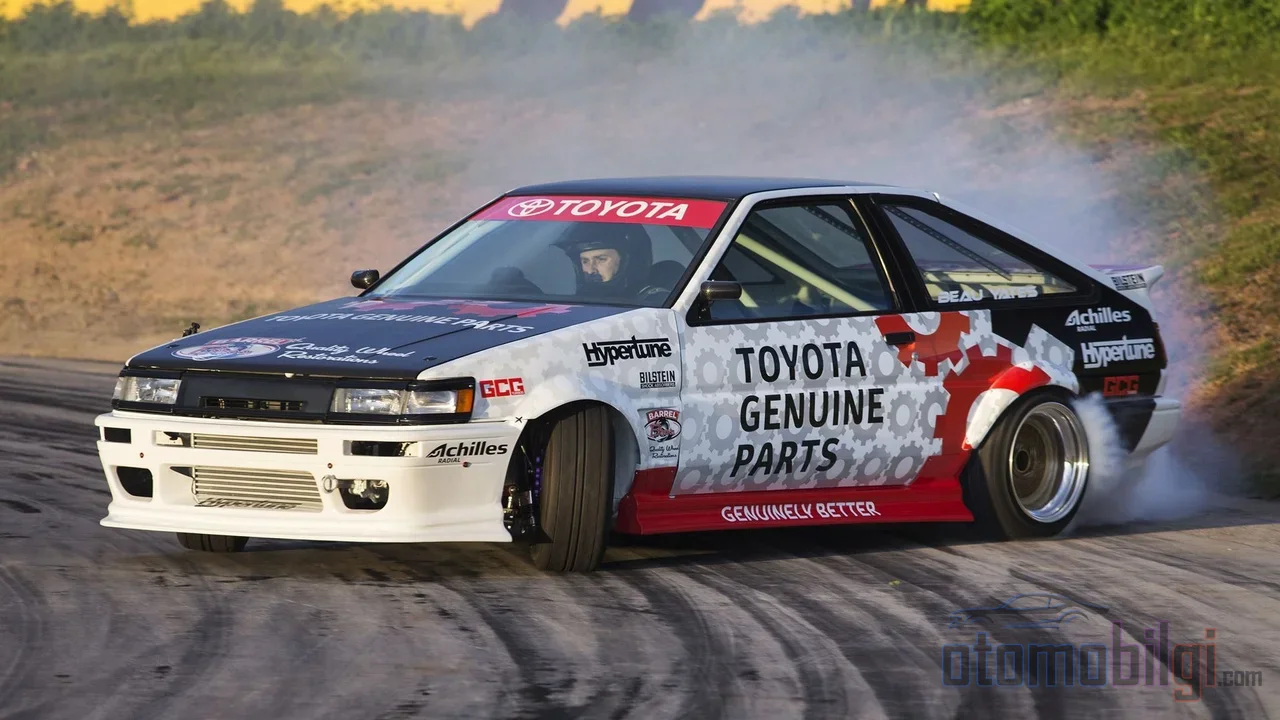
How was it possible for a 130-horsepower coupe that emerged from an ordinary Corolla dealership in the early 1980s to become the symbol of drift culture on Japan's mountain roads? Sounds crazy, right? We're talking about a Corolla, mind you; that Corolla used for grocery shopping and treated as a family car. But that's exactly why the story is so beautiful. Because the AE86 is a legend that won with intelligence, lightness, and driving pleasure rather than big engine power. If you're ready, let's head to the mountains and chase this story.
What Is the AE86: Corolla's Rebellious Twins, the Levin and Trueno
First, let's clarify the names, because half of the confusion comes from here. AE86 is actually a chassis code: It refers to the rear-wheel-drive coupe versions of the Toyota Corolla Levin and Sprinter Trueno. What's the difference between the two? Very simple: The Levin has fixed headlights, while the Trueno is the version with retractable pop-up headlights. The Levin was sold at Toyota Corolla dealerships, while the Trueno was sold at Toyota Auto dealerships; both came with two-door notchback and three-door hatchback body options.
Production started in 1983; the launch in Japan was on May 12, 1983, and the series ended with the arrival of the front-wheel-drive AE92 Levin in May 1987. A short life of four years, but it was more than enough for this car. There were three main trim levels in the Japanese market: the GTV, with stiff, super-tuned suspension and manual transmission only; the more comfortable GT APEX, which retained the performance equipment; and the base-level GT. In January 1986, the GT APEX Black Limited special series arrived, limited to 400 units; with its gold Trueno emblem and orange-stitched interior, it was, according to Toyota, the Trueno's farewell series.
Let's also clarify one detail right away: The AE85 and AE86 are often confused. The AE85 is the more modest sibling, with a 1.5-liter carbureted SOHC engine (83 PS, later 85 PS). Swapping the engine doesn't change the body's identity; even if you install a 4A-GE in an AE85 body, that car won't become an AE86. The difference between these two means a significant price gap in collector prices.
Highlights
- The 1.6-liter 4A-GEU engine produced 130 PS at 6,600 rpm and approximately 149 Nm of torque in the Japanese market.
- Production period 1983-1987; the Levin had fixed headlights, the Trueno pop-up ones.
- The JDM dry weight was only around 940-960 kg.
- In 1986, Chris Hodgetts won the British Saloon Car Championship twice in a row with the AE86.
- In 2026, a driver-grade AE86 trades in the US in the range of 25,000-45,000 dollars.
Little Money, Lots of Fun: The 4A-GE Engine and Lightweight Body Formula
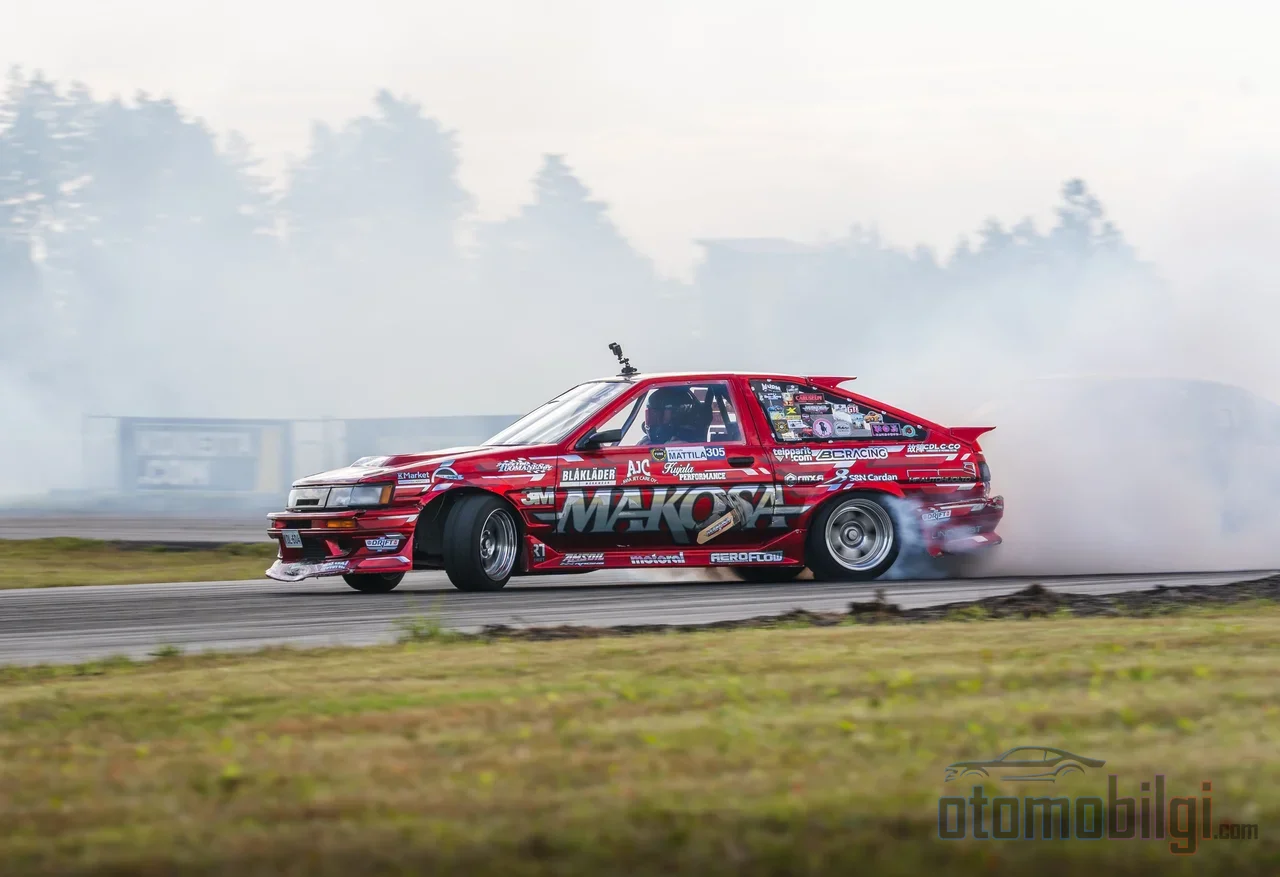
So why is this car so special? The answer in one word: balance. Imagine holding a body weighing approximately 940-960 kg (according to Toyota's JDM data, the Levin GTV was 940 kg and the GT APEX 960 kg; the GT models were even lighter), with MacPherson struts up front, a live rear axle with Panhard rod suspension, and a weight distribution close to 50:50. Add a lively naturally aspirated engine to that, and you get a beautifully balanced driving machine. Just like a good bicycle: the lighter and more balanced you are, the faster you can go.
At its heart lies the legendary 4A-GEU: an engine with 1,587 cc, dual overhead cams (DOHC) and four valves per cylinder, 16 valves in total. This unit, carrying belt-driven camshafts, was equipped with the T-VIS variable intake system and EFI-D injection; Yamaha Motor played a major role in the cylinder head development. Power? In Japan, 130 PS @ 6,600 rpm and 15.2 kgfm (approximately 149 Nm) of torque @ 5,200 rpm. The figures vary by market: the US Corolla GT-S produced 112 hp, while the catalyst-free European Corolla GT produced 124 PS. These differences stem from measurement standards and emissions regulations; so the figures should not be confused with one another.
The braking side was honestly sorted too: all AE86s had ventilated discs at the front, the GTV and GT APEX had discs at the rear, plus an optional LSD (limited-slip differential). In May 1985, an optional ECT-S four-speed electronically controlled automatic was added to the GT and GT APEX; the GTV remained manual to the very end.
The Touge Mountains: Where Drift Was Born
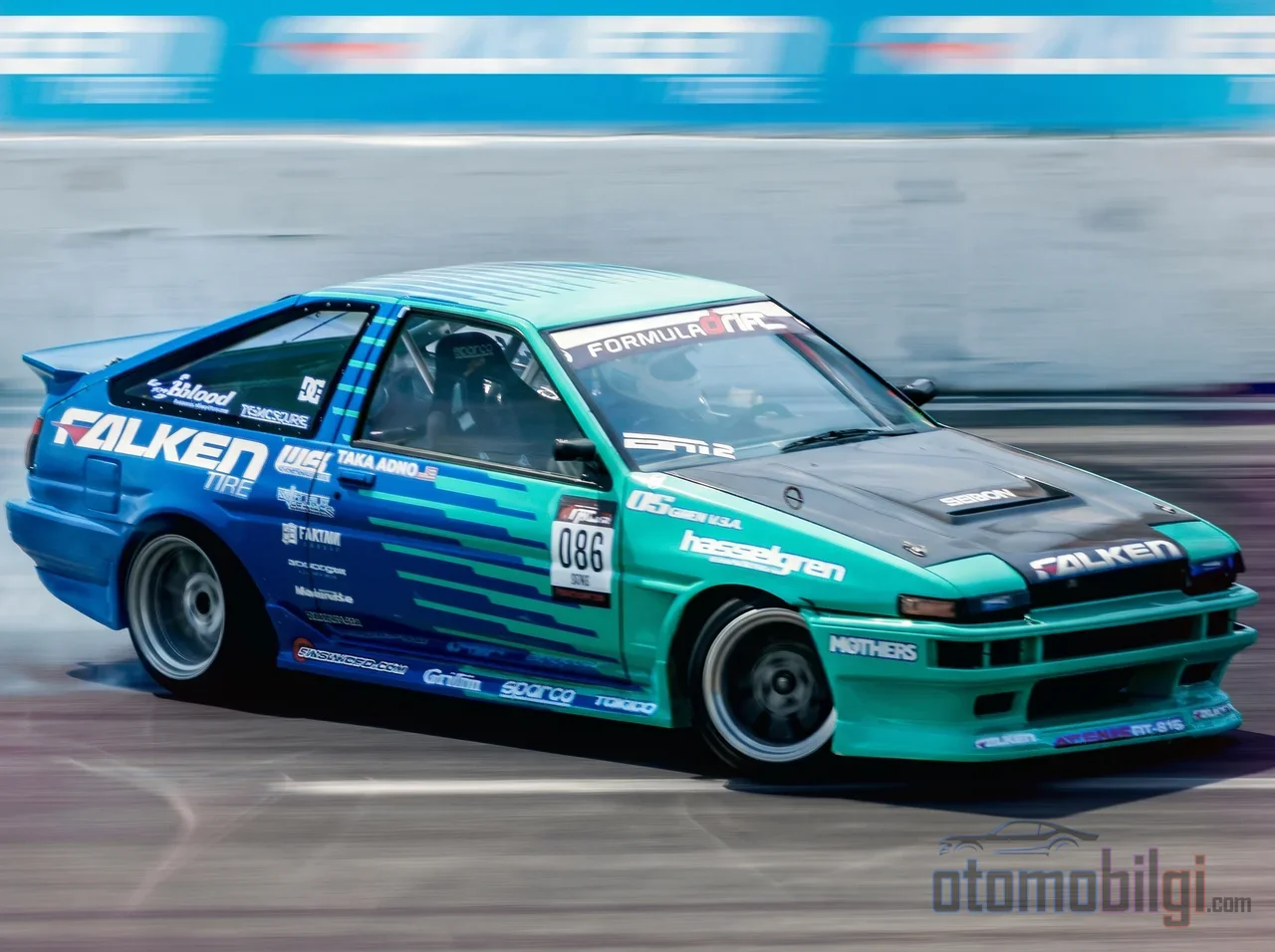
Now we come to the most exciting part of the story. Seventy percent of Japan's land was mountainous, and in the 1970s-80s these mountain passes, or touge, were the playground of street racers known as hashiriya. The aim here was to clip corners quickly; and one way to take corners as fast as possible was to slide the car in a controlled manner. Drift was born on these very mountains, night after night, and through the Option magazine, which began publishing in 1981, and video cassettes, it came down from the mountains and spread across the world.
The AE86 truly began to shine on this scene. Why? Because it was cheap, lightweight, rear-wheel drive, and its naturally aspirated engine responded instantly to the throttle. This was the way to cross the mountain pass quickly without paying big money or buying big engines. The philosophy of less is more is the entire identity of the AE86.
Drift King Tsuchiya and the Fuji Days
In this story there is a name that cannot be skipped: Keiichi Tsuchiya, the Drift King. Tsuchiya began his AE86 racing career with the 1984 Fuji Freshman Race, and by his own account won his first six races in the 86 class, eight races in total. He earned the Drift King nickname during those Fuji days, although he had actually already drifted a Nissan Sunny before the 86. In 1987, magazines and tuning garages produced videos showcasing his drifting skills; one street driving video nearly cost him his racing license. Tsuchiya later rose to become technical supervisor of a popular racing program. So it would not be wrong to say that the AE86 didn't teach him drifting, but it gave him legendary status.
A Serious Contender on the Track Too
Only mountains and streets? Of course not. It raced in the 1984-85 N2 one-make series; in 1986-87, Chris Hodgetts won the British Saloon Car Championship twice in a row with the AE86; in 1985, Per Eklund achieved overall victory in Group A of the British Open Rally Championship. In the mid-1980s it battled against Skylines and Starions in the All Japan Touring Car Championship. Having a remarkably well-balanced chassis earned it the love of both track and rally drivers.
Initial D: Pop-up Headlights, Tofu and a Generation's Passion
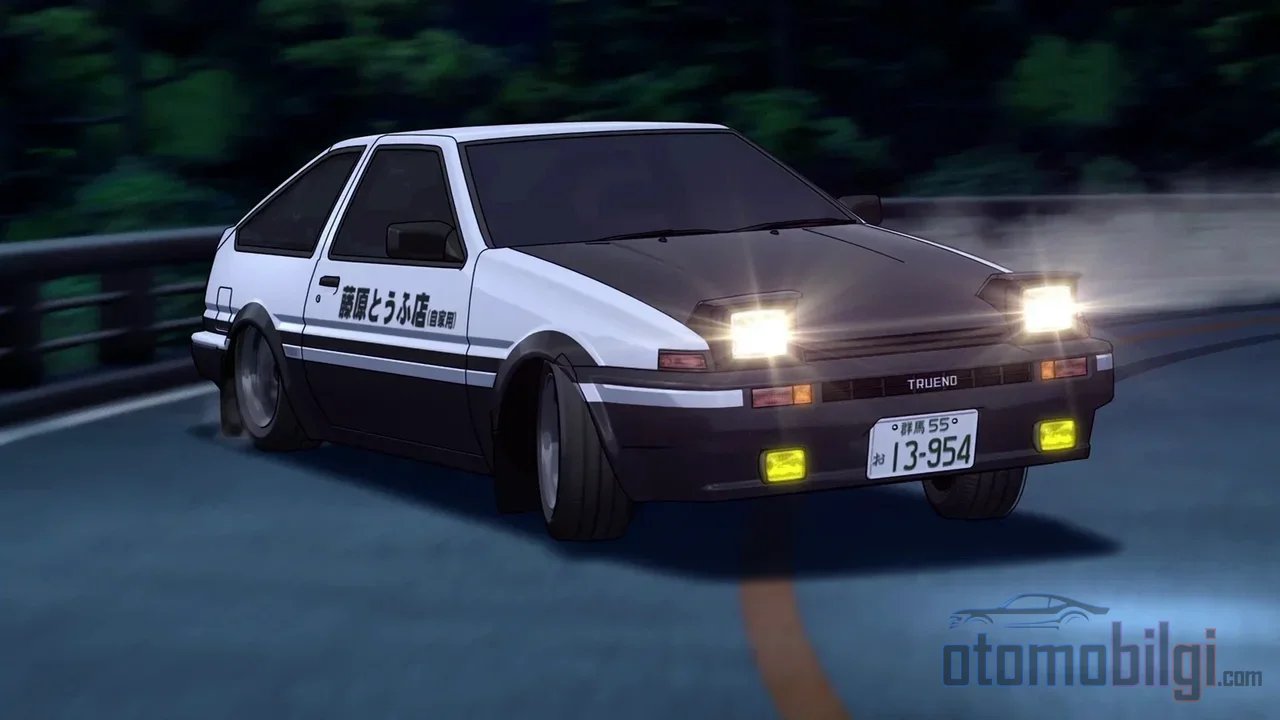
The biggest reason the AE86 became not just a car enthusiasts' favorite but a global icon was, without doubt, the Initial D manga and anime first published in 1995. The hero of the story's tofu delivery car, driven day and night through mountain passes, was precisely an AE86 Trueno. The Hachi-roku (eight-six in Japanese) boom started from there, and the series, which ran from 1995 to 2013, created generations of drift enthusiasts. In the 1990s, the AE86 became the poster car of the movement called drifting; the combination of VHS tapes and Initial D cemented its legendary status.
Let's be honest here, because this detail matters: The AE86 did not invent drifting. Drift, as a technique, already existed in the mountains and with other cars long before it. The AE86's success lay in being the most accessible, most balanced and most charismatic carrier of this culture. Even Toyota directly gave its affordable new sports car the name 86 when introducing it in 2012; lightweight, simple and an easily driftable rear-wheel-drive coupe was the very reference point it aimed for.
Toyota AE86 Technical Specifications Table
| Specification | Value (JDM, Toyota data) |
|---|---|
| Engine | 1.587 cc 4A-GEU DOHC 16-valve, naturally aspirated, EFI |
| Power | 130 PS @ 6,600 rpm (Japan, gross rating) |
| Torque | 15.2 kgfm, approximately 149 Nm @ 5,200 rpm |
| 0-100 km/h | Official factory value not disclosed by the manufacturer; independent measurements range between 7.8-9 seconds |
| Consumption | Official factory value not disclosed by the manufacturer; approximately 8-10 L/100 km in practice |
| Length | 4,180-4,205 mm (depending on body) |
| Width / Height | 1,625 mm / 1,335 mm |
| Wheelbase | 2,400 mm |
| Curb weight | Approximately 940-960 kg (GTV/GT APEX, Toyota JDM data) |
| Trunk capacity | Not disclosed by the manufacturer |
A small note about the figures: Japanese factory weights may appear lower than the actual fully equipped and fueled car; so these values should be read for comparison purposes. The difference between the 128 hp figure circulating in the US market and Toyota's 130 PS also stems from a difference in scale and labeling. Independent measurements give a range of 185-195 km/h for top speed.
A Collector's Legend: AE86 Prices in 2026
For a car once sold in a range of roughly $4,500-6,500 (the AE85 GL started at 1,060,000 yen and the three-door GT APEX reached 1,548,000 yen), the current point is truly striking. While $25,000-30,000 was paid for a clean, unmodified AE86 in 2023, as of 2026 a level of $50,000-65,000 is being discussed at auctions. In the US, driver-grade coupe-bodied examples go for $25,000-45,000; JDM-imported Trueno hatchbacks $40,000-70,000; If they are restored or low-mileage originals, they fall in the 80,000-130,000 dollar range. In the third quarter of 2026, the median sale price reached 20,000 dollars; that means an increase of roughly 47.6 percent compared to the second quarter. It is now a car that is neither cheap nor easy to find.
Toyota is also aware of this legacy: Under the GR Heritage Parts program, spare parts production for the AE86 began on November 1, 2021; by February 2026, 29 part numbers had been produced, and that month orders were opened for the cylinder head and bottom-end assembly. The parts are produced for a limited time and sold until stock runs out.
How Did It Give Birth to Drift Culture? Short Answer
So let's give a clear answer to the question in the title: The AE86 gave birth to drift culture not by inventing it, but by making it accessible to everyone. With its lightweight body, rear-wheel-drive layout, near 50:50 weight distribution, and lively naturally aspirated 4A-GE engine, it opened the door for budget-minded ordinary drivers to master mountain passes; Keiichi Tsuchiya's victories at Fuji and Initial D's global spread turned this recipe into a legend.
If you see one today, it's worth stopping to take a look. Those pop-up headlights are not just a Corolla's; they are the symbol of an era when less was more and driving skill was everything. So, what's your favorite drift car? In my opinion, half of your answer is hachi-roku, admit it.
Sources
- Toyota AE86 (1983-1987) Buyer's Guide
- The AE86 Toyota Corolla Levin/Sprinter Trueno
- Toyota AE86
- Initial D: Bringing Japan's Drifting Culture from the Mountains
- Master of the Touge: The Evolution of the AE86
- Toyota AE86 Values Continue to Climb in 2026
- Toyota AE86 Buyer's Guide 2026
- How The Toyota AE86 Accidentally Started Everyone's Obsession with Drifting