How Did the BMW 3 Series Become the Benchmark for Sporty Sedans?
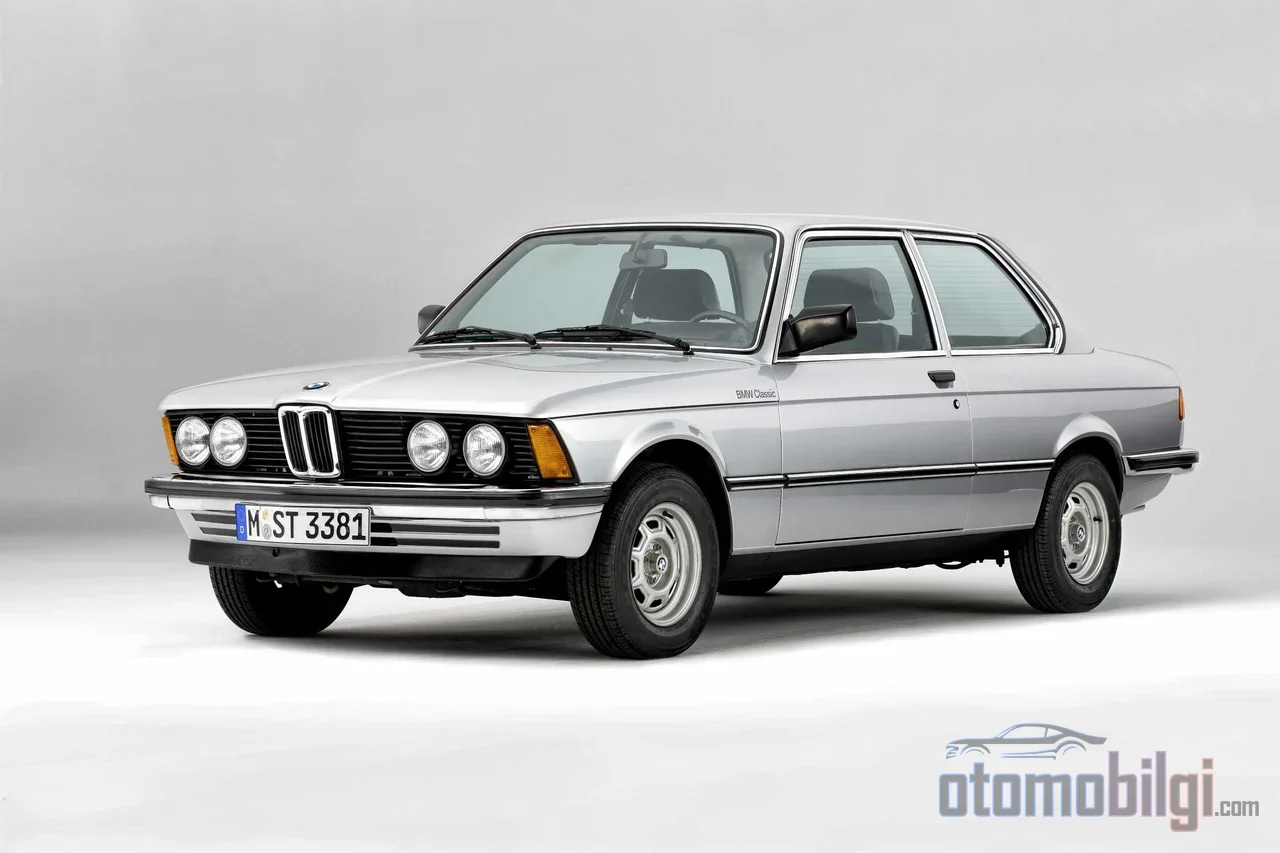
Just imagine: A car being unveiled in a stadium in Munich, in the midst of Olympic excitement. Nobody knows it yet, but the machine that appears will be the first name that comes to mind when "sporty sedan" is mentioned for the next half century. When the BMW 3 Series was born in 1975 under the E21 code, nobody foresaw this. So how did this car go from being just a model to becoming the measuring stick - the barometer - of an entire segment? Let me tell this story from the beginning, because it is truly a mind-blowing story!
1975: The E21 Is Born, Inheriting the 02 Series' Legacy
Behind every legend there is a precursor. The precursor to the 3 Series was the 02 Series, launched in 1966. It was, in fact, a lighter and more agile two-door version of the Neue Klasse 1500 formula that had driven BMW's post-war recovery. In other words, BMW already had a winning recipe in hand: a lightweight body, rear-wheel drive, and that famous connection between driver and car. The E21 was introduced to the public at Munich Olympic Stadium in July 1975 and took this recipe to the next level. It was produced in Munich until December 1983.
Even the naming was a revolution for its time. The numbering logic that began with the 5 Series in 1972 - the first digit for the model class, the rest for engine displacement - was carried over to the 3 Series; then came the 6 Series in 1976 and the 7 Series in 1977, completing the hierarchy. It was this move that architected the orderly model naming system we are used to today. At the design helm was the influence of Paul Bracq, BMW's design director from 1970 to 1974: the forward-tilted kidney grille, the Hofmeister kink on the C-pillar, and the quad round headlights on six-cylinder models. The Design Museum London counts the E21 among the 50 cars that changed the world; no exaggeration needed - that list is a serious club.
Highlights
- The first 3 Series, the E21, was introduced at Munich Olympic Stadium in July 1975.
- The 143 hp 323i that arrived in 1978 fit six cylinders into a compact body and became a milestone for the segment.
- The E30 M3 (1986) was born as a homologation model for touring car racing.
- As of 2027, the 3 Series reaches its 8th generation and its 51st year; for the first time, it comes with an electric version.
The Driver-Oriented Cockpit: Why Is It Still Talked About?
The detail about the E21 that surprised me the most is this: the instrument panel and console were angled about 7 degrees toward the driver. Do you know what this means? The car serves the driver, not the other way around. At the time, many cars had their console sitting in the middle, in a void; the E21, however, seemed to say "you are the one driving, everything is at your fingertips." Forward thinking, right? This driver-focused cockpit principle still lives on in every BMW cockpit today.
Another nostalgic clue: the gauge layout - fuel, speed, revs, water temperature - was copied not from the 1972 model year, but from the 1936 model BMW 328. In other words, the brand was creating a new class while referencing its own roots. Carrying a car's DNA like this was the first sign of becoming an icon.
Engine and Suspension Recipe: The Same Formula, For Decades
Now let's talk a bit technical, but with a simple analogy: The 3 Series' success is like the recipe for a delicious cake. The same ingredients, the same order, consistency. The chassis had MacPherson struts at the front, semi-trailing arm type independent suspension at the rear, rack-and-pinion steering, and rear-wheel drive. The rear suspension geometry even created a tendency to oversteer at the limits - though it looked like a flaw, it actually made the car lively and responsive. If a reader question comes in: "Is the 3 Series truly sporty, or is it just marketing?" The answer lies in this recipe; the older generations were about 360 kg lighter and genuinely engaging.
At launch, on the engine side there was only the M10 SOHC four-cylinder: about 90 PS in the 316, 98 PS in the 318, 109 PS in the 320, and 125 PS in the 320i with Bosch K-Jetronic injection. The real turning point came in 1977: the compact inline-six M20 engine was introduced, and in 1978 the first fuel-injected six-cylinder flagship 323i took the stage - 2.3 liters, 143 PS, 0-100 km/h in 8.7 seconds, and a top speed of 190-200 km/h. Fitting a smooth inline-six into a compact sedan body is considered a milestone for the segment. On the transmission front, there were the 4-speed Getrag 242, the close-ratio 5-speed Getrag 245 from 1976 onward, and the 3-speed ZF 3HP22 automatic options.
At the 1977 Frankfurt Motor Show, alongside the M20-powered variants, four-wheel disc brakes, a 25% limited-slip differential, and a close-ratio 5-speed "dogleg" sport transmission were also added as options for the 323i. If you're curious about the E21's dimensions: A 2,563 mm wheelbase, approximately 4,355 mm in length, and a weight between 1,020 and 1,180 kg. In other words, a car that looks almost like a toy next to today's 3 Series, but precisely because of that, is agile.
The Racing Stage and America's Six-Cylinder Longing
The 3 Series' sporting identity was proven not only on the road but also on the track. The BMW 320, which raced in Group 5 in 1977 - that flying brick nicknamed the "Flying Brick" - was developed in just 12 weeks with a Formula 2-based engine of about 302 hp from BMW Motorsport and was run by the McLaren team in IMSA. Its first victory came in 1977 at Zolder with Marc Surer; it won the Macau Guia races in 1981 and 1982. Pulling off such a show with a street sedan was worth its weight in gold for the image.
One more interesting detail: Only the 320i was sold in the US market, because the M20 six-cylinder could not pass US emissions rules. The US versions had big fender flares, sealed-beam headlights, and a thermal reactor - later a catalytic converter. The disappointment of American collectors who never got to see the 323i is still talked about in the collector market today. In Europe, meanwhile, the sporty 320iS S Package (Recaro seats, stiffened suspension, LSD) was produced in 1981, with only 2,500 units made. There was no factory cabriolet; the targa-style Baur TopCabriolet conversion was done between 1978 and 1981, with a total of 4,595 units produced.
E30, E46 and M3: The Road to Cult Status
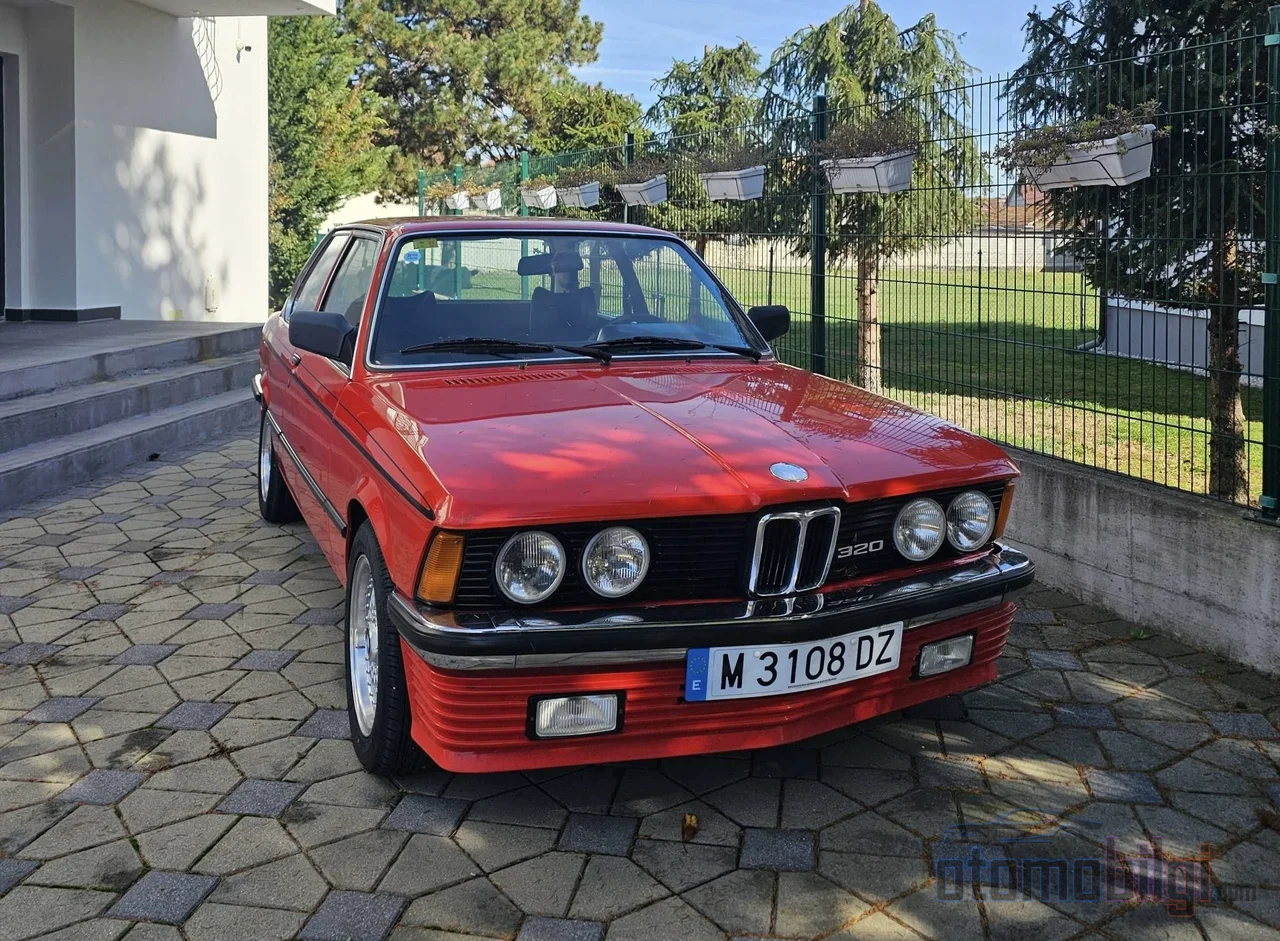
The E30, which arrived in 1982, is described as a pop culture icon of the eighties and nineties and became the face of the BMW brand for a generation. Its design language influenced the E36, the E46 and today's 3 Series. Then came the legend: The E30 M3 was born in 1986 as a homologation model for touring car racing - meaning it had to be sold on the road in order to race, and it was this very requirement that created perhaps the most beloved M car in history. The following E46 M3 (2000), with its lightweight construction and high-revving naturally aspirated inline-six, is seen by many as a return to the virtues of the E30 and is debated as the pinnacle of the M3 story. The E90/E92/E93 generation of 2007, meanwhile, became the first 3 Series with a series-production V8 (the S65 engine). On enthusiast forums, the "E30 or E46?" debate still rages on: one side champions simplicity and the joy of driving without electronic aids, while the other points to the peak M3.
| Generation | Period / First Year | Notable Features |
|---|---|---|
| E21 | 1975–1983 | The first 3 Series; the 143 PS 323i in 1978 |
| E30 | 1982–1994 | Pop culture icon; homologation M3 (1986) |
| E46 | 2000 | The pinnacle of the high-revving six-cylinder M3 |
| E90/E92/E93 | 2007 | The first series-production V8 3 Series (S65) |
| 8. generation | 2027 | Neue Klasse platform; the first fully electric i3 50 xDrive |
How to Become a Benchmark: Why Do Rivals Use the 3 Series as a Reference?
For a product to be a benchmark, meaning a measuring stick, means that its rivals mention it in their own press briefings. The 3 Series' overall driving balance, precise steering and sharper throttle response are frequently highlighted as strong points against the Audi A4 and Mercedes C-Class. Indeed, in one comparison test, the F30 328i beat seven rivals, including an all-wheel-drive Audi, with 5.6 seconds in the 0-60 mph sprint and 14.2 seconds @ 97.8 mph in the quarter mile. In the history of the sports sedan, the 3 Series did not become an icon overnight; it earned that position over decades by representing the balance of performance, luxury and technology. The standard answer is already this: The 3 Series continues to be the sports sedan standard - an athletic chassis plus a luxurious cabin. Whether it is still a benchmark today is debated, but doesn't the very fact that it is debated prove its position?
2027 and Beyond: Can an Electric 3 Series Still Be a Sporting Sedan?
The latest chapter of the story may be the most exciting one. With the 2027 model year, the 3 Series moves into its 8. generation on the Neue Klasse platform and, for the first time, offers both gasoline and fully electric powertrains: 437 hp turbocharged inline-six in the M350 xDrive, and 463 hp in the electric i3 50 xDrive. The standard turbocharged four-cylinder delivers 255 hp. But note this: 2027 may be the final year for the M3 in its current format - the M3 has thrilled drivers for a full 40 years, and with the new generation M features are becoming more accessible.
There is a real tension here: the purity of the first rear-wheel-drive 3 Series - pure, analog - is still a benchmark for modern M cars. With electrification, the "sport sedan question" is being redefined - will this formula pass the test in the post-internal combustion era? I believe yes, because the real secret of the 3 Series is not its engine, but its consistency: a cockpit that leans toward the driver, a balanced chassis, and a recipe renewed with every generation but never forgotten.
So let me summarize: The BMW 3 Series became the measure of sport sedans because, since its birth, it chose to do one thing well - combining driving pleasure with everyday usability in the same body. That sedan introduced at a stadium in 1975 is still, even 51 years later, the benchmark its rivals are measured against. Do you think the electric i3 can take over this crown? I am eagerly waiting to find out!
Sources
- BMW 3 Series (E21) - Wikipedia
- 45 years ago: The launch of the first generation of the BMW 3 Series - BMW Group PressClub
- The new BMW 3 Series - BMW Group PressClub
- BMW M3 - Wikipedia
- The BMW M3 E46 - BMW M Magazine
- 2027 BMW 3 Series Revealed - CarBuzz
- 2027 BMW 3-Series: What We Know So Far - Car and Driver
- Is the BMW 3 Series Still the Benchmark Premium Sport Sedan? - BMWBlog
- 1975 BMW E21: The First 3 Series - DreamBMW Heritage
- 2027 BMW M3 - Edmunds