Why Is the BMW 2002 Considered the Ancestor of Modern BMWs?
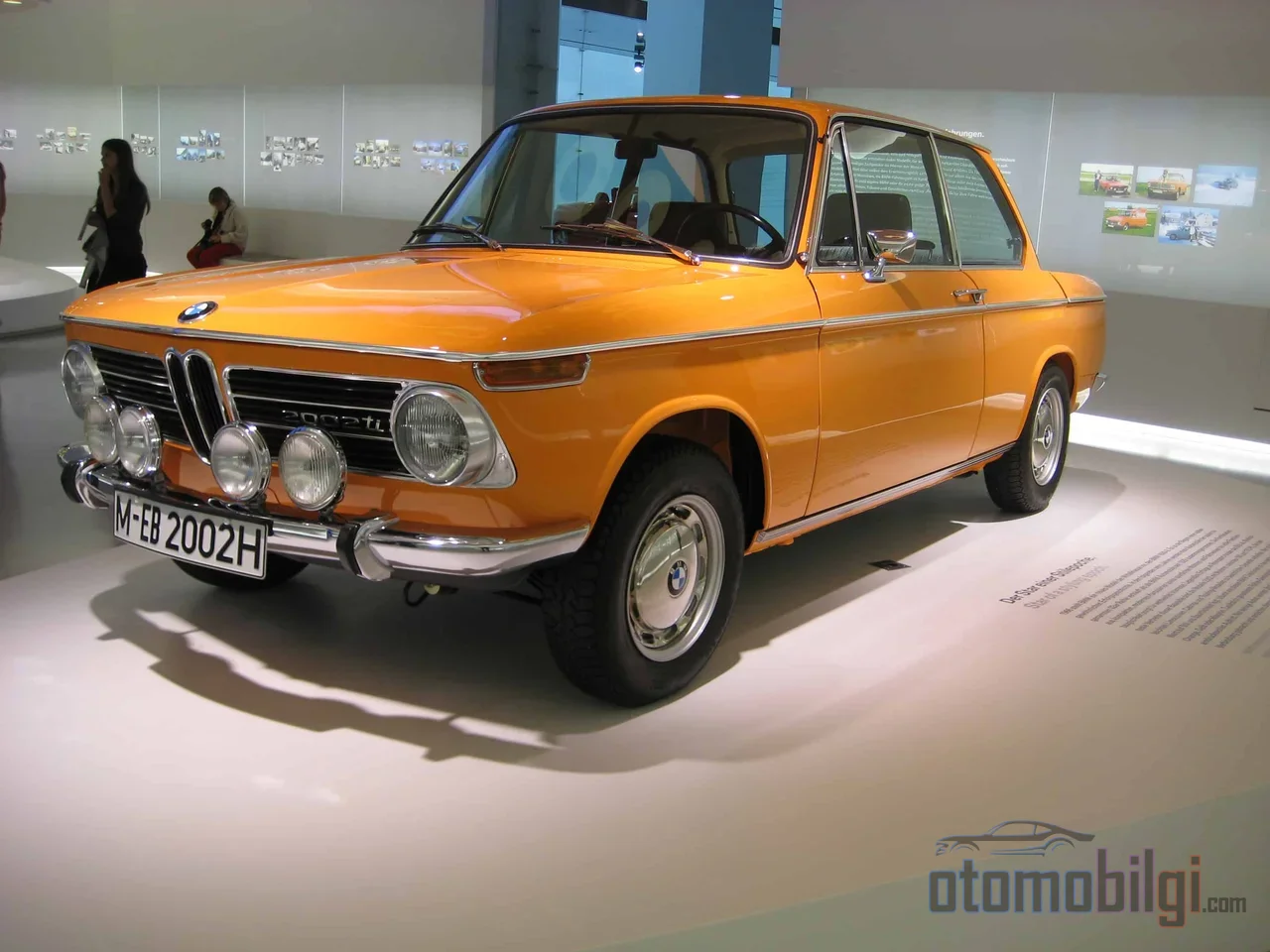
Just think about it: In the early 1960s there was a brand called BMW, but it was not yet the "absolute joy of driving" brand we know today. What's more, the company was teetering on the edge of bankruptcy. Then in 1962 came a sedan family called the Neue Klasse, meaning New Class, and after it, in 1968, a small two-door bomb with a two-liter engine under its hood: the BMW 2002. So how did this little car prove the brand's identity and become the direct ancestor of today's 3 Series, the dream car of millions? That is exactly where the story begins.
Neue Klasse: The Sedan That Saved BMW
At the end of the 1950s, BMW's situation was far from bright. At one end of its product range were luxury cars of 2 liters and above, and at the other end were economy cars with motorcycle engines and motorcycles; in the middle, meaning the class where it actually needed to sell, there was nothing in the 1.5-2 liter segment. In 1960, when Herbert and Harald Quandt made a major investment in the company and acquired a controlling stake, the Neue Klasse project began. Fritz Fiedler took charge of the project, Eberhard Wolff worked on the chassis, Wilhelm Hofmeister on design, and Alex von Falkenhausen on the engine side. In other words, a rather ambitious team.
The first result was the BMW 1500, introduced at the Frankfurt Motor Show in September 1961; series production started in October 1962. At the heart of the car was the M10 four-cylinder OHC engine (known as the M115 at the time), tilted 30 degrees to the right from vertical. The 1.5-liter base version produced 80 hp. These are modest figures on paper, but the result was spectacular: BMW broke even in 1962, sales rose by 47 percent in 1963, and for the first time in 20 years the company paid a dividend to its shareholders. In short, the Neue Klasse was the series that truly saved BMW.
This series also has an aesthetic legacy: The Neue Klasse coupes, the 2000 C and 2000 CS, introduced the Hofmeister kink to the automotive world, which we would see on almost every BMW from that day on. That small kink at the top corner of the C-pillar is still one of the details that makes a BMW recognizable as a BMW at first glance.
The 02 Series and the 1968 BMW 2002: Two Liters, Two Doors
The Neue Klasse sedans were successful, but BMW noticed something: if they applied the same formula to a shorter, lighter, two-door body, the result would be a far more fun car. In 1966, the Neue Klasse platform was shortened and the 02 Series was born; the first model was the 1600-2. Then in 1968, the real star took the stage: BMW placed the 2.0-liter inline-four engine under the 1600's hood, and out came the BMW 2002. The logic behind the name is also simple: a two-liter engine and a two-door sedan.
Looking at the numbers, you understand why 1968 saw something so special. A lightweight body, engine at the front, rear-wheel drive, and a naturally aspirated engine producing 100 hp / 157 Nm. Its 0-100 km/h acceleration falls in the 11-12 second range depending on the source (the 1974 US catalog gives 10.9 seconds, while other tests measure values close to 12 seconds), with a top speed of around 167 km/h. Slow by today's standards? Maybe. But the formula is so right that the rear-wheel-drive compact sports sedan concept is still being produced with the same logic today.
Highlights
- 1968 BMW 2002: 100 hp, 157 Nm, 0-100 km/h in about 11-12 seconds
- 1973 2002 Turbo: Europe's first turbocharged production car, 170 hp and 240 Nm
- 2002 Turbo 0-100 km/h in just 7.0 seconds, top speed 211 km/h
- The 2002's formula led directly to the birth of the 1975 BMW 3 Series
- Only about 1,672 units of the 2002 Turbo were produced
02 Series Technical Specifications: 2002 and 2002 Turbo
| Specification | BMW 2002 (1968) | BMW 2002 Turbo (1973) |
|---|---|---|
| Engine | 2.0 L naturally aspirated inline-4 (M10) | 2.0 L turbocharged inline-4 (M10, 1,990 cc) |
| Power | 100 hp (74 kW) @ 5500 rpm | 170 hp (125 kW) @ 5800 rpm |
| Torque | 157 Nm @ 3500 rpm | 240 Nm |
| 0-100 km/h | 11-12 s (depending on source) | 7.0 s |
| Top speed | 167 km/h | 211 km/h |
| Production volume | High volume across the 02 Series as a whole | About 1,672 units |
The Turbo's engine features a KKK-brand turbocharger and Kugelfischer fuel injection. So in 1973, BMW became the European manufacturer that first brought turbo technology to the roads by turning an ordinary family sedan into a supercharged monster.
2002 Turbo: Europe's First Turbocharged Series Production Car
At the 1973 Frankfurt Motor Show in September, BMW introduced the hottest version of the 02 Series: the 2002 Turbo. This car was Europe's and BMW's first turbocharged series production car. Production began in January 1974; meaning the show debut and the start of production happened on different dates, and it's worth noting this distinction.
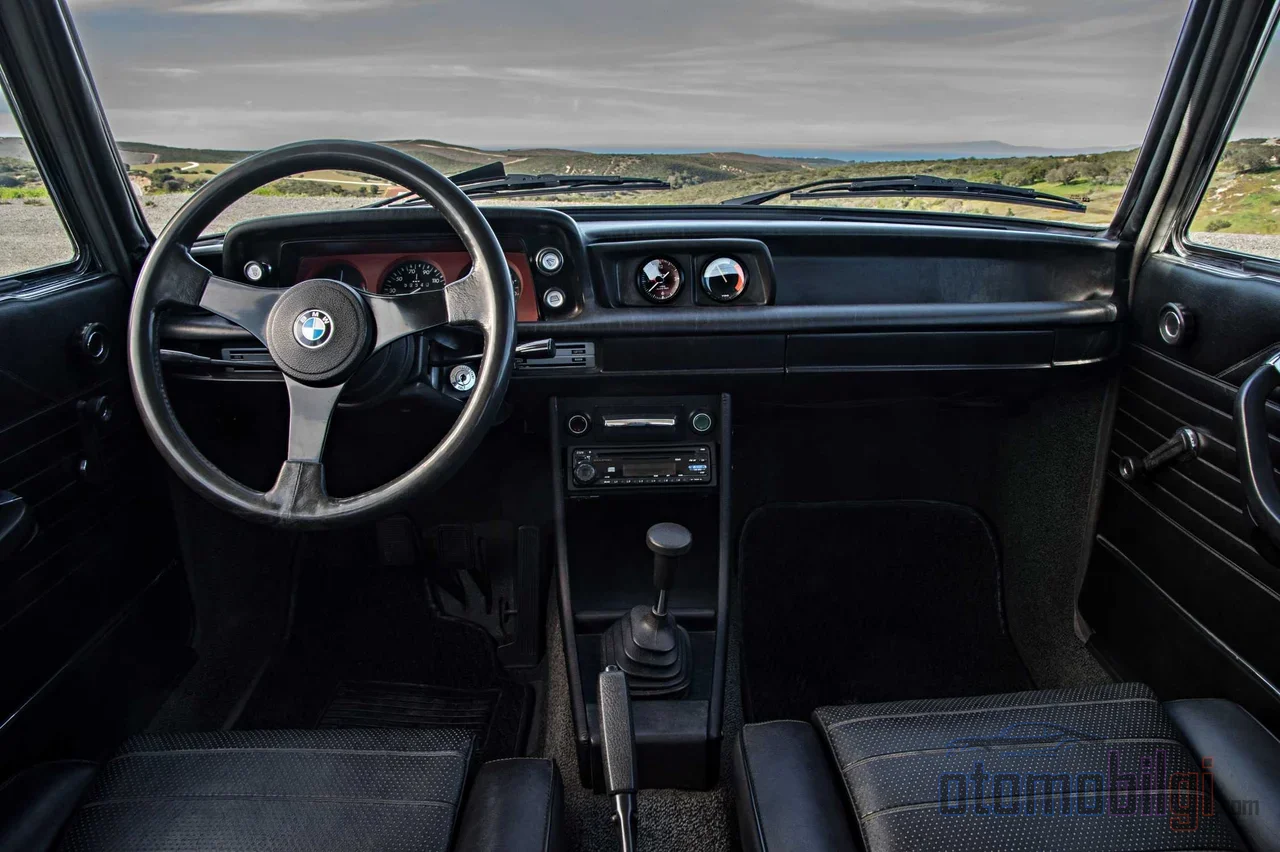
When you think of its performance, imagine you're living in the early 1970s: 170 hp, 240 Nm, 0-100 km/h in just 7.0 seconds and a top speed of 211 km/h. Sport seats and a sport steering wheel in the interior add to the package. But the Turbo's story isn't just about speed.
The car's mirror-writing decoration, meaning reversed logos and lettering on the front, sparked so much controversy that the matter was officially discussed in the German Bundestag. The fact that a car's body lettering was debated in parliament shows just how extreme an example of the flashy spirit of the 70s it was. The result wasn't commercially brilliant:
Commercially, the result isn't brilliant: Because of the 1973 oil crisis, sales remained low, and only around 1,672 units were produced. it wasn't sold in the US market. Looking back today, this rarity is the biggest factor that makes the car legendary for collectors. On the Track and in America:
On the Tracks and in America: How It Became a Legend in 2002
Success in motorsport
The proof of the 02 Series was tested not only on asphalt but also on the track. The 1800 TI/SA from the Neue Klasse family won the 1965 24 Hours of Spa touring car race, while the 2000 TI won the 1966 24 Hours of Spa; Hubert Hahne won the 1966 European Touring Car Challenge (Division 3) title with the 2000 TI. In 2002... wait, the model is the 2002. In its day it competed in races and rallies around the world and virtually dominated sedan racing in Europe; a 2002tii achieved a notable success in Austria. These races and the 2002 also played a key role in the founding story of BMW's motorsport division, M.
Conquering America
The two-door 1600-2 received great acclaim in the American automotive press and sales gained momentum. The 2002 changed public perception of the imported sport sedan concept; it made BMW the favorite of enthusiasts. So much so that in 1975 BMW of North America took control of US distribution into its own hands. If I said that the success of this little two-door in the USA underlies the brand's global power today, I would not be exaggerating.
The Birth of the BMW 3 Series: Heir to the Formula
So how did the 2002 meet its end? In fact, it did not die; it passed the torch. BMW discontinued the model in 1975 because a new star was being born: the first 3 Series, coded E21. The E21 brought new design conventions with its four separate headlights and driver-oriented angled dashboard controls, but its philosophy was entirely that of the 2002: a lightweight body, front engine, rear-wheel drive, a driving-focused compact sport sedan. Even with the 2002 Hommage concept it produced, BMW celebrates this heritage; it clearly states that the original 2002 transformed into the world-famous 3 Series and that the 3 Series remains the most important car in the model lineup.
In 2026, the BMW Group celebrates the 60th anniversary of the 02 Series with an official retrospective, which is proof of this: The road to the 3 Series, with the 1600-2, 2002, 2002 Turbo, Cabrio and Touring models, stands at the center of the brand's own historical narrative.
Today's Collector Favorite: 2002 Values
Now for the current side of the coin. According to Hagerty data, the typical value of a 1974 BMW 2002 sedan is about 20,400 dollars; the most recent auction took place on November 3, 2026, for 15,330 dollars. According to the 2024 annual price report, the average price of 2002 models reached about 22,813 dollars with an increase of roughly 5 percent; one segment rose 18 percent to 39,488 dollars, while in other categories the average climbed to 26,206 dollars. In June 2026, a 2002 Tii sold in the USA for 71,000 dollars. The trend is clear: good examples are gaining value, and US prices are tracking stronger than Europe's.
Its reflection in popular culture also continues: in the 2026 Collector Edition series, even a miniature model of the BMW 2002 is changing hands among collectors. The fact that even a toy model of a car is in demand may be the sweetest proof that its legacy has continued uninterrupted for 60 years.
Why Is the 2002 Considered the Ancestor of the Modern BMW?
I can now give a clear answer to the question. With its lightweight two-door body, front-engine and rear-wheel-drive layout, and balanced chassis, the BMW 2002 was the first car to prove BMW's "luxury sport sedan" identity in a compact package; this formula directly became the blueprint for the 3 Series, born in 1975 and today the heart of the brand. So when you get in a 3 Series today and enjoy the drive, the DNA of that feeling behind the wheel was written in that little two-door of 1968. With the 2002 Turbo, the brand launched its turbo revolution and made BMW the enthusiasts' brand on tracks and in the US. The 2002 is not just a model, it is the birth certificate of the modern BMW.
Sources
- BMW 02 Series celebrates 60 years
- The BMW 2002 turbo - BMW M
- BMW New Class
- BMW 02 Series
- The 1968 BMW 2002 Whispers its Way Into History - Car and Driver
- 1974 BMW 2002 Base Value - Hagerty
- BMW 2002 (1968-1975) specs - AutoEvolution
- Whispering Bomb: The BMW 2002 - Classic Motorsports
- 2024 Annual Price Report 2002s - bmw2002faq forum
- Six Generations Of BMW 3 Series, One 2002 - BimmerLife