How Was the Chevrolet Camaro Legend Born?
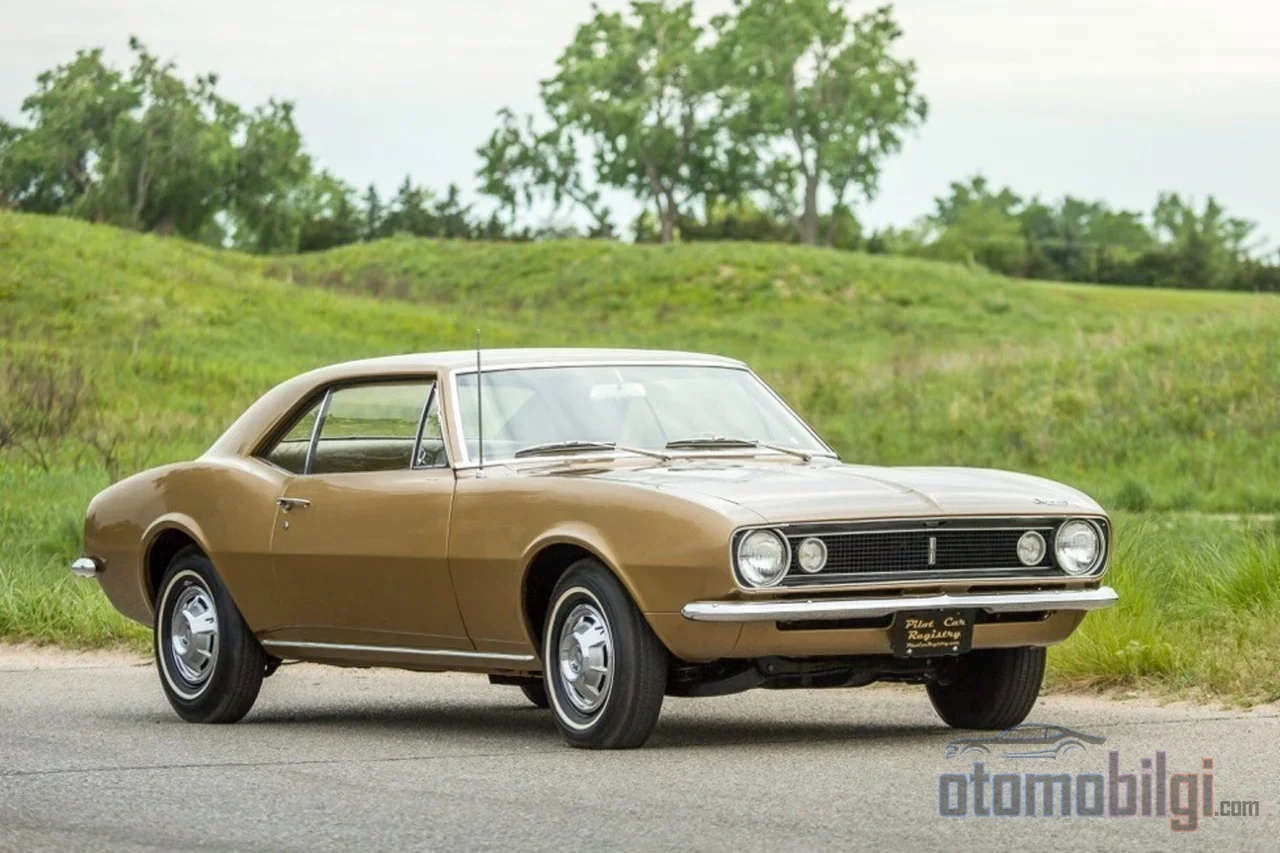
On the night of September 26, 1966, a strange press conference is taking place at the Statler-Hilton Hotel in Detroit: 14 cities are connected by telephone lines, and journalists are listening to Chevrolet general manager Pete Estes through their headsets. Then a single word drops into the air: Camaro. Journalists ask what it means; and Chevrolet's answer becomes one of the most brazen marketing sentences in automotive history: a small, vicious animal that eats Mustangs. A car with no birth story like Ferrari's, resting on no noble heritage, bearing a name that is nothing more than a slang word pulled straight out of the dictionary. So was this "Mustang-eating animal" truly born, or had Chevrolet simply arrived far too late against Ford's two-year head-spinning success? The answer lies hidden in the birth story of the 1967 Camaro.
The Mustang Fury: Why Was Chevrolet Late?
First, let's clarify the picture: With the Mustang in April 1964, Ford had created an entirely new segment and reached sales of over one million units. It was as if a classmate had set off running alone at the start of the year and was heading toward the finish line. Chevrolet was not sitting idle either, but the cards in its hand were not working: the Corvair Monza. Its rear-engined, unconventional layout was both incompatible with Chevrolet's big V8s and had been overshadowed by the safety debates of that era. It was now clear that it could never reach the Mustang's sales volume.
So Chevrolet returned to the classic recipe: front engine, rear-wheel drive. Just as the Mustang borrowed parts from the Ford Falcon, the Camaro fed off the Chevy II Nova. From April 1965 onward, the automotive press was already speaking of a Mustang hunter with the codename Panther. Chevrolet responded to these rumors with an extremely creative jab: in June 1966, telegraphs signed by journalists went out, mocking a fictional society dedicated to erasing panthers from the automotive world. Two days later, on June 28, at history's first live multi-city press conference, the real name of project code XP-836 was announced.
Highlights
- The Camaro was introduced on September 26, 1966 and went on sale on September 29, 1966; the first production car rolled out of Norwood, Ohio on August 11, 1966.
- The first generation was built on the F-body platform shared with the Pontiac Firebird.
- The official power of the Z/28 was stated as 290 hp; the actual figure is claimed to be close to 400 horsepower.
- The first-generation Z/28 scored 21 wins in 37 races in Trans-Am.
- In the 1967 model year, 220,906 Camaros were sold.
F-Body: A Platform Born from Scratch
The engineering side of the story is actually its most underrated part. The Camaro was the first fruit of the all-new rear-wheel-drive GM platform it stood on, called the F-body, and this platform was developed concurrently with the Pontiac Firebird. In other words, Chevrolet built not just a single car, but an architecture serving two brands at once; and because it shared architectural resources, it was both fast and economical.
Body options were a 2+2 layout hardtop coupe and a convertible. Although the Camaro borrowed parts from the Nova, it was a car with its own character, a bit wider and heavier than the Mustang but with a more modern suspension geometry. The first production car rolled out of the Norwood, Ohio factory on August 11, 1966; press previews were held in Detroit on September 12 and in Los Angeles on September 19, and it reached dealers on September 29, 1966.
So What Does "Camaro" Mean?
The story of the name is a lesson in itself. Chevrolet marketing manager Bob Lund and GM vice president Ed Rolett found the word camaro in a 1936-printed French-English dictionary with its slang meaning: friend, pal, comrade. The word's closest relative in French is "camarade". So the car's real name means friend; as for "a small vicious animal that eats Mustangs," that was a joke Chevrolet executives gave to journalists, and it was so popular that even today it is told as if it were the primary meaning. In his presentation, Pete Estes also presented this emphasis on friendship as part of the car's personality: the Camaro was supposed to have a relationship with its owner like the friendship of a good friend.
First Generation Engines and Versions: SS and Z/28
Here is where the heart of the story beats. The 1967 Camaro came with six different engines: 230 and 250 cu in inline-sixes and 302, 327, 350 and 396 cu in V8s (the 307 joined the lineup in later years). If you say "I'm just cruising, buddy" to the base engine, you get 140 hp; but when it comes to the SS package, the picture changes.
SS 350: The Standard of the Muscle Camaro
The SS 350, with its 350 cu in (5.7 liter) water-cooled cast-iron V8, produced 295 hp @ 4800 rpm of power and 380 lb-ft @ 3200 rpm of torque. By the SAE gross figures, the period measurement standard of its time, these were serious numbers; in its first year, the Camaro challenged the Mustang not only with style but also with a well-calibrated power lineup.
Z/28: The Legend Secretly Born for the Racetrack
The real legend, however, was the Z/28 package, which quietly went on sale in December 1966. This package had a single purpose: to meet the homologation requirements of Trans-Am racing. Inside was a special 5.0-liter (302 cu in) V8, which Chevrolet had developed according to the displacement limits required by racing regulations. The stripes on the hood and trunk could be removed for free, and special rally wheels were standard; the car carried a weight between 2,950-3,150 pounds (approximately 1,340-1,430 kg).
The most interesting detail was the claimed power: Chevrolet gave an official figure of 290 hp for the Z/28, and it is claimed that this figure was deliberately kept low for insurance and race classification purposes, with the real output being close to 400 horsepower. In period tests, the Z/28's 0-60 mph acceleration was measured at 6.9 seconds and the quarter mile at 14.85 seconds. Speaking as a high school student: these figures, achieved with 1966 technology, still command respect.
| Version | Engine | Power | Torque | Note |
|---|---|---|---|---|
| Base 230 | 3.8 L inline-six | 140 hp @ 4400 rpm | 220 lb-ft @ 1600 rpm | Entry level |
| 250 | 4.1 L inline-six | 155 hp | Not disclosed by the manufacturer | Option |
| SS 350 | 5.7 L V8 | 295 hp @ 4800 rpm | 380 lb-ft @ 3200 rpm | SS package |
| SS 396 | 6.5 L V8 | 350 hp @ 5200 rpm | 415 lb-ft @ 3400 rpm | Big-block option |
| Z/28 | 4.9 L V8 | 290 hp (officially stated) | 290 lb-ft (officially stated) | Actual output claimed to be ~400 bhp |
A small honesty note: The 396 cu in engine had two different tunes, 350 hp and 375 hp, and whether the SS 396 was more powerful than its 350 cu in cousin depended on its setup. As for figures like 0-100 km/h, fuel consumption and trunk volume, there is no reliable manufacturer-stated primary value; the most honest answer for these cells is "not stated by the manufacturer."
The Pony Car War: Could the Camaro Beat the Mustang?
The segment the Mustang created suddenly got crowded in 1967: Camaro, Firebird, Cougar and then the other Detroit players... The pony car market virtually turned into a competition arena. The rivalry between the Camaro and the Mustang is considered the greatest and most enduring rivalry in American automotive history; even the 50-year sales charts show these two names pushing each other forward.
So, did the Camaro win the first round? Let's look at the sales figures: In 1967, 220,906 units, in 1968, 235,147 units, and in 1969, 243,085 units. There was an upward trend over three years, but the Mustang's million-unit pace from its first two years was never quite matched. In other words, the Camaro could not overtake the Mustang; but it proved that it was the market's most serious rival and would be a lasting icon in the segment. Convertible production was not neglected either: In 1968, 20,440 open-air versions were produced (8.7 percent), and in 1969, 17,573 units (7.2 percent).
On the tracks: Trans-Am and Roger Penske
The Camaro's racing record is the least known but most impressive part of its origin story. Avoiding the establishment of an official factory team, Chevrolet formed an unofficial factory-backed Trans-Am team with racing legend Roger Penske. The first-generation Z/28 entered a total of 37 races, taking 21 wins and 28 podiums in the 1967-1969 Trans-Am seasons; the 1968 and 1969 championships came with Mark Donohue at the wheel. Donohue also took a class victory at the 1968 12 Hours of Sebring. In 1970, Jim Hall's Chaparral team replaced Penske.
So the Z/28 was not just a marketing trick; it was a race car proven on the track. Today, finding a good first-generation Z/28 has become a hunt in itself for collectors.
In Hollywood: Bumblebee and Thousands of Films
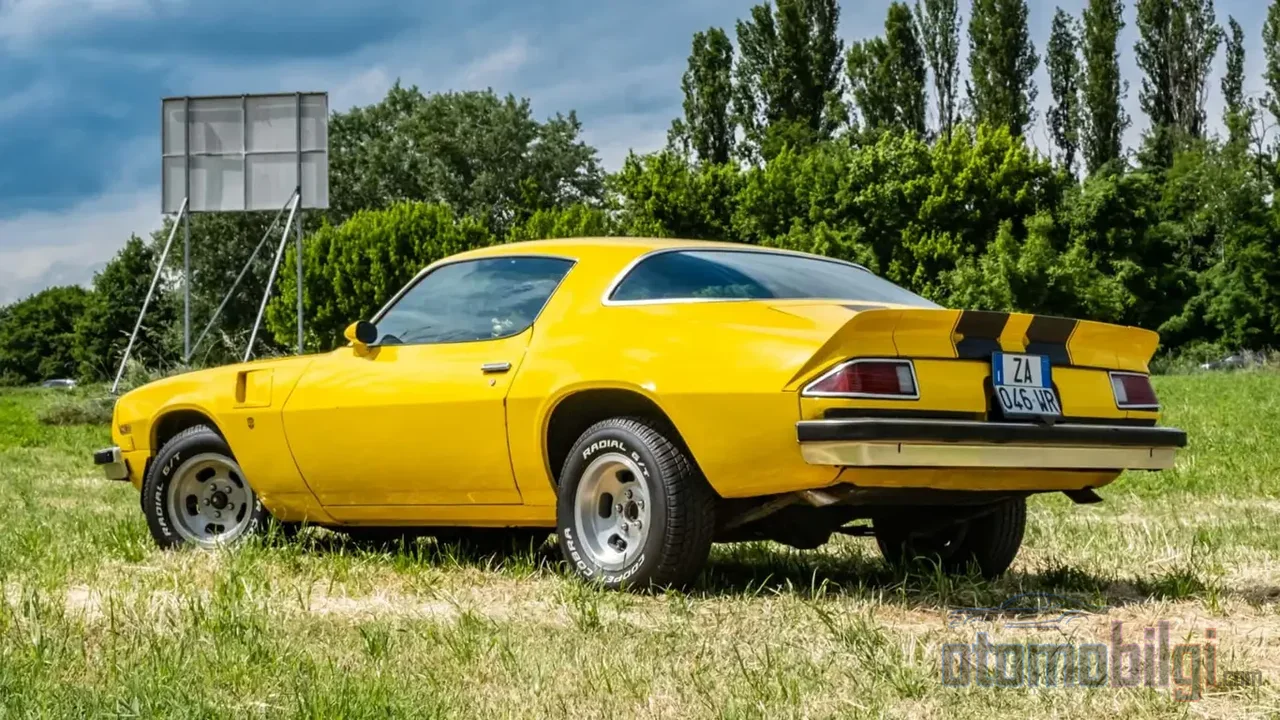
There is also a cultural measure to a car being considered an icon, and in that regard the Camaro is the class's most diligent student. It has appeared in thousands of films since 1967, but the real explosion came in 2007: In Transformers, the Bumblebee character first transformed into a worn-out 1976 Camaro, then into a fifth-generation concept. In the sequel films, a modified fifth generation, then in 2014 a modified 1967 Camaro and a sixth-generation concept, and in 2017 a modified 2016 Camaro flowed across the screen. From that day on, the Camaro became a pop culture phenomenon.
It served as the Indianapolis 500 pace car nine times - in 1967, 1969, 1982, 1993, 2009, 2010, 2011, 2014 and 2016; between 1975 and 1989 it was the official car of the International Race of Champions series, becoming the first American car to replace the Porsche Carrera RSR.
A Legacy of Six Generations: Where Did the Camaro Go?
Briefly, the generation map: 1st generation 1967-1969, 2nd generation 1970-1981, 3rd generation 1982-1992, 4th generation 1993-2002, 5th generation 2010-2015 and 6th generation 2016-2024. F-body production was halted for the first time in 2002 due to slowing sales and the deterioration of the sports coupe market. The fifth generation, carrying the design cues of 1969, returned to the production line in Oshawa, Ontario on March 16, 2009, and won the 2010 World Car Design of the Year award; the sixth generation was named MotorTrend Car of the Year in 2016. In NASCAR, Austin Dillon won the 2018 Daytona 500 with the ZL1, and in 2020 Chase Elliott brought the Camaro its first NASCAR championship; in 2023, it took part in the 24 Hours of Le Mans with the Garage 56 project, with a crew of Jimmie Johnson, Jenson Button and Mike Rockenfeller.
The series ended production with the 2024 model year in December 2023; in 2024, sales in the US remained at just 5,859 units. With six generations, racing championships, a film career and nine Indianapolis 500 pace car duties, the Camaro transformed from a mere answer born in the Mustang's shadow into a legend that stands on its own. In the dictionary, the name meant "friend"; and that is exactly what the Camaro became for automotive history.
Sources
- Chevrolet Camaro
- Chevrolet Camaro (first generation)
- Tested: 1967 Chevrolet Camaro SS 350 - Car and Driver
- 1967 Chevrolet Camaro Fact Sheet - Over-Drive Magazine
- Chevrolet Camaro 1967-1969 - Engine Factory
- 1967, 1968, 1969 Chevrolet Camaro Z-28 - HowStuffWorks
- Lights, camera, action: The 9 best movie Camaros - Hagerty
- Famous Chevrolets in Movies and TV Shows - Craig Smith Chevrolet