How Did the Pontiac GTO Start the Muscle Car Era?
Share This Page
In the final months of 1963, an engineer in Detroit is squeezing a giant V8 engine into his company's mid-size family car, despite the rules the company itself had written. Upper management had not allowed it, and even motorsport was banned. But once that car was given an Italian name, one of the greatest acts of madness in American automotive history began. That name: Pontiac GTO. So how could a single option package ignite an entire era all by itself? Let me tell you, because this story is truly insane.
GM's Engine Ban and the $295 Loophole
To understand the story, you first need to know the rule. In 1963, General Motors issued a directive officially banning all of its divisions from participating in motorsport. That meant no more factory-backed racing. On top of that, there was a rule about engine size: you could not put an engine larger than 330 cubic inches (approximately 5.4 liters) in a mid-size car. Imagine a basketball coach banning his own team from recruiting tall players. Yet Pontiac managed to slip right under this rule.
Pontiac's trump card was a loophole in the exact wording of the rule. The rule imposed a restriction on engines; but Pontiac offered the big engine for the Tempest as part of an option package. In fact, this was not even the first time the brand had bent the rules: the Tempest -based 326 V8 sold the previous year was called the 326, as its name suggested, but was in fact 336 cubic inches; because under GM's regulations, no compact vehicle could be fitted with an engine larger than the Corvette's 327. They sold it by making the engine look smaller than it was. Pontiac was clearly skilled at this kind of thing.
The brain behind this plan was John Z. DeLorean, Pontiac's chief engineer and general manager at the time. Yes, that DeLorean - long before the DMC-12, the silver car in Back to the Future. During his tenure as Pontiac's general manager, DeLorean was known as the man who turned the brand toward the young, and he is considered the person most responsible for the birth of the GTO. According to the official account reflected in GM News, he was both the person who proposed the project and the one who came up with the name.
The Giant Engine That Fit in the Tempest: The GTO's Technical Description
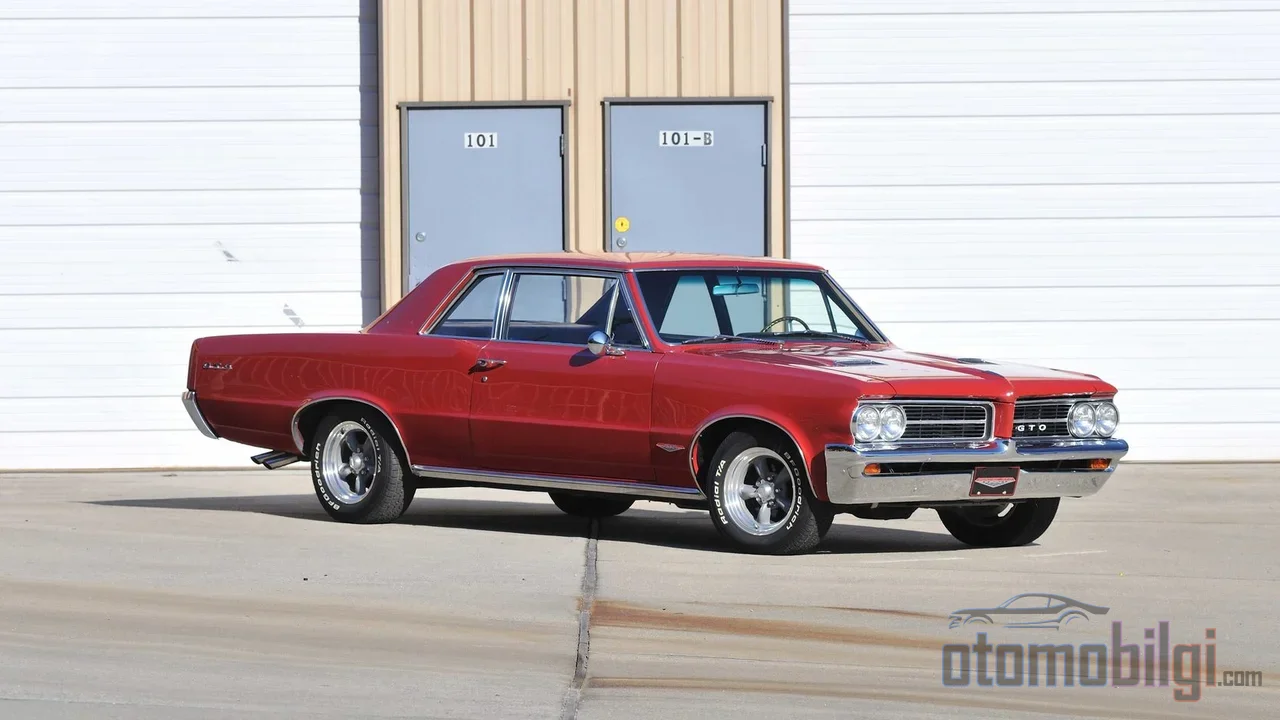
So what exactly was the GTO? Surprisingly simple: an option package sold for the Pontiac Tempest in the 1964 model year. The remarkable part is this: The Tempest was completely redesigned that year, moving up from its small size to the mid-size A-body platform. The wheelbase became 115 inches (2,900 mm), and the length 203 inches (5,200 mm). This growth was critical, because the body was now wide enough to carry a big engine. You could think of it as a growth spurt that arrived at exactly the right time.
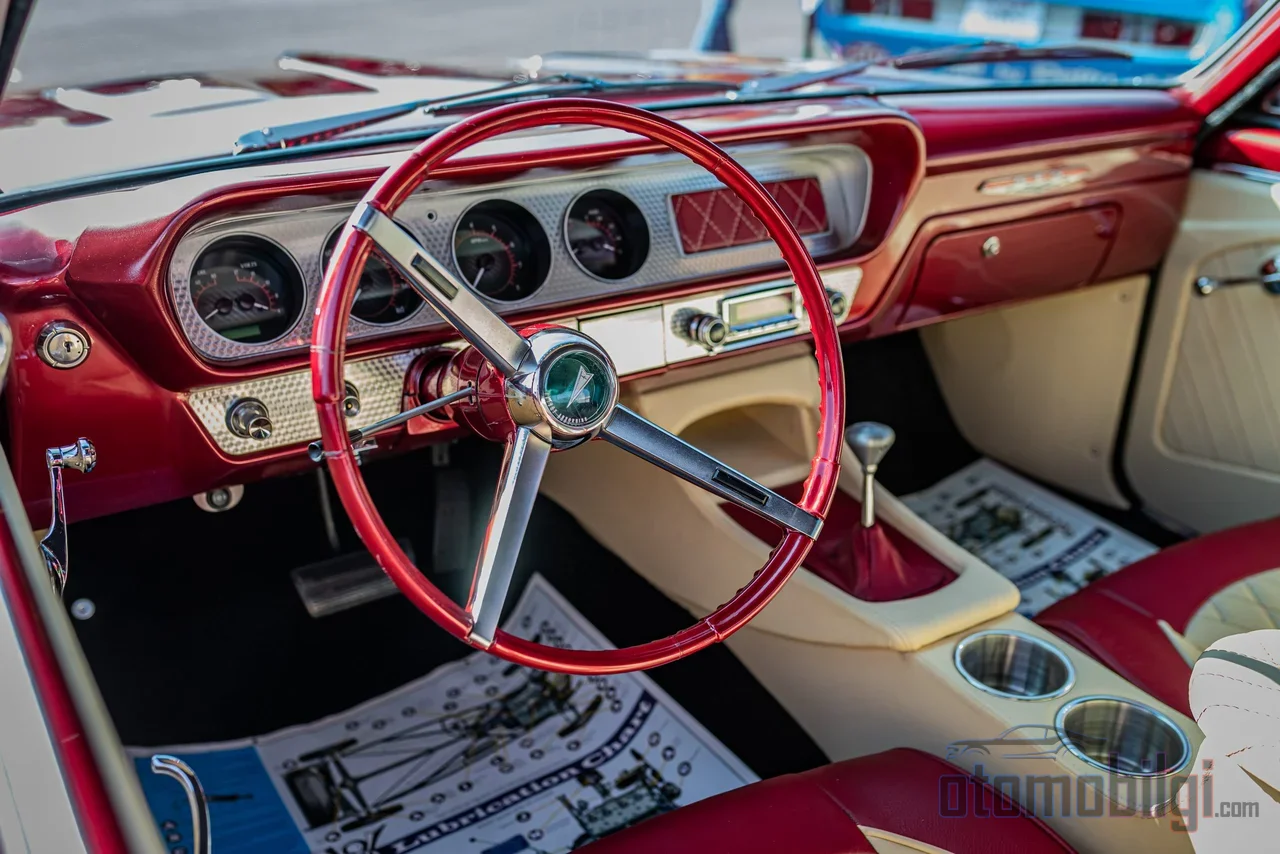
On the engine side, Pontiac installed the 389 cubic inch (6.4-liter) V8 taken from the standard full-size Grand Prix in place of the Tempest's standard 326. There were two power levels: 325 hp with a four-barrel carburetor, and 345 hp with the famous Tri-Power setup of three two-barrel carburetors. Small variations between these figures across sources are normal, because horsepower was announced back then under different measurement standards (SAE) depending on the period; what is clear is that in 1964 the 389 engine was standard, and among the options there was also a four-speed manual transmission with a Hurst shifter. That shifter was almost mandatory equipment for racing enthusiasts.
| Feature | Value |
|---|---|
| Year introduced | October 1, 1963 (1964 model year) |
| Base | Pontiac Tempest / LeMans, mid-size A-body |
| Engine | 389 cu in (6.4 L) V8 |
| Power | 325 hp (4-barrel carburetor) / 345 hp (Tri-Power) |
| Wheelbase | 115 inches (2,900 mm) |
| Option package price | Approximately $295 |
| 1964 sales | 32,450 units |
Even the name GTO has a story of its own: Gran Turismo Omologato, meaning in Italian "a grand turismo homologated for racing". This designation, given by the FIA to race-approved production cars, was an open nod to Ferrari's famous 250 GTO. Pontiac itself had no such homologation; according to some, the GTO actually represented the opposite of homologation, because while the norm was to build a small number of road cars for racing, the GTO was a road car outright. So the name was a bit daring, a bit tongue-in-cheek - but did it work? Very much so.
Highlights
- The GTO was introduced on October 1, 1963 as an option package for the Tempest.
- Despite GM's ban on mid-size engines, it received a 389 cu in (6.4 L) V8.
- While Pontiac expected 5,000 sales, it sold 32,450 units.
- The name is short for Gran Turismo Omologato and a salute to the Ferrari 250 GTO.
- In the fall of 1964, the song G.T.O. reached number 4 on the Billboard chart.
Expecting Five Thousand, Selling Thirty-Two Thousand
Here is one of history's most beautiful miscalculations. For the 1964 model year, Pontiac expected to sell 5,000 GTOs. The result: 32,450 units. That is exactly six times the expectation. Think of it this way: you expect 50 people at a high school event, and 300 people show up to fill the venue. That was actually the reason for top management's unease about DeLorean's risky idea - they feared it wouldn't sell. The opposite happened.
Sales started slowly at first but climbed quickly, exceeding 32,000 in the first model year. More importantly, sales increased every year for the next two years. These numbers proved something to GM's top management: the big engine in a mid-size body formula was exactly what young Americans wanted. And once the door was opened, the competitors didn't come through the door - they climbed through the window. Oldsmobile hastily released the 442 performance package for the F-85/Cutlass, and the following year Buick launched the Skylark GS; both raced to grab a share of this booming market along with the Chevrolet Chevelle SS. The fuse of the muscle car war had been lit by the GTO.
The Tiger: Marketing That Sold an Attitude to the Youth
A good car isn't enough; you also need a good story. Pontiac's story seemed to have come straight out of a zoo: The tiger image was almost everywhere in GTO advertising, and the campaign ran uninterrupted from 1964 to 1966. This image, rooted in the 1963 Tempest and the new 326 engine, took hold so firmly that it went beyond ads alone: A special exterior paint promotion called Tiger Gold was born (limited to roughly 100 vehicles), and Royal Pontiac released a drag package called the GeeTO Tiger for racing enthusiasts. For 1965, Pontiac did not hold back on marketing hype: To tell the GTO story, the commercial film used a real, live tiger.
The real genius here was whom they were selling to. DeLorean, together with Jim Wangers, the key figure in marketing, aimed to introduce this car to a new generation of young Americans and show them what "driving for fun" meant. Muscle car ads of the 1960s were not selling transportation; they were selling an attitude to young men with a bit of money and something to prove. In today's language, the advertising was marketing feelings, not product features. In 1966, the team reinforcing the GTO's "tiger" identity and associating buyers with freedom and power was part of the same strategy.
Meanwhile, the target audience was not as narrow as you might think: In 1965, the car was also marketed to middle-aged sports car enthusiasts. But the name the public gave the GTO was different: the Goat. This nickname was born long before today's use of "GOAT" (greatest of all time) - fans seemed to have predicted the future status in advance.
A Song, a Slogan, and an Era Chasing the Beat
Do you know the measure of how deeply a car embeds itself in pop culture? Having its own hit song on the radio. Only months after the GTO's launch, a song called "G.T.O." with lyrics by John "Bucky" Wilkin was written and recorded first by Ronny and the Daytonas, and then by the Beach Boys. In September 1964, it reached number 4 on the Billboard Hot 100. Amid the surf music and beat craziness, a car was playing for the top of the charts.
GM's own promotional language was no slouch either: The GTO was portrayed as a device that compressed time and space. In other words, what was being sold was not speed, but the feeling of freedom that speed gave. And the GTO did not stop: In 1967, the 389 was replaced by the 400 cu in V8. In the second generation spanning 1968-1972, the design moved to a more fluid and aggressive line; one of that generation's iconic details was the flexible Endura front end painted in the body color. In 1969, the The Judge was introduced as a GTO option: special decals, two different Ram Air 400 engine versions, and a rear spoiler. The initial plan was a plain muscle car to rival the stripped-down Plymouth Roadrunner sold for under $3,000; when the plans changed, DeLorean preferred to create a GTO variant instead. As Wikipedia also emphasizes, the GTO is remembered today as "the defining muscle car of the 1960s."
Was the GTO Really the First Muscle Car?
Now let's get to the snarky part, because this debate never ends on car forums. Some trace muscle car origins all the way back to the 1920s; for some, the real beginning is the 1949 Oldsmobile Rocket 88, for others the 1955 Chrysler 300, and some champion the 1961 Impala SS 409. Also in the same year, 1964, the Ford Mustang hit the market - so the question "then why the GTO?" is quite fair. Because the GTO sold 32,450 units against an expected 5,000 for 1964, and it is widely credited with starting the muscle car era; while there are minor disagreements among experts, the essence boils down to this: The GTO combined a big engine with a mid-size chassis and offered this formula to the masses in series production at an affordable price. The predecessors were the idea; the GTO was the wave that turned that idea into a movement. The Mustang would go on to create its own class, called the "pony car"; the GTO's recipe was different and more raw: displacement, power, youth.
A Legacy That Never Grows Up
Over its ten-year production life, the GTO transformed from an option package into a cult icon. Ask young people today, and many know the GTO either from the tiger commercial, from its "Goat" nickname, or as an early work by the creator of the DMC-12. But its real legacy is this: DeLorean and his team saw an opportunity left behind the rulebook and dared to seize it. A $295 option package launched a car craze that would last a decade, a youth image as popular as a music genre, and a competition war that sent rivals in Detroit scrambling into action in panic.
My favorite detail is still this: a car that sold six times its expected figures was born inside a corporate giant that was trying to draw its boundaries from the start. Sometimes the biggest ideas come precisely from where nobody would give permission. If it were you, would you have followed the rules, or would you have opened the hood of the Tempest?
Sources
- A device for shrinking time and space - GM News
- Pontiac GTO - Wikipedia
- Pontiac Tempest - Wikipedia
- 1964 Pontiac GTO - Automotive Heritage Foundation
- The GTO Origin Story - Hagerty
- Pontiac's Tiger-themed Marketing Campaign - PontiacV8
- Pontiac's Famous 1965 GTO Tiger Commercial - Mac's Motor City Garage
- Muscle Car Advertising of the 1960s - Classic Cars Arena
- 1964 Pontiac GTO: The Definitive Resource Guide - Muscle Cars Illustrated
- Muscle Car Madness - Audrain Automobile Museum