Volvo P1800: How Scandinavian Elegance Became an Icon?
A white sports car with ST1 on its license plate, splitting the lanes in two on the coastal road. The man behind the wheel is Simon Templar, aka The Saint. That scene on TV screens instantly turned Sweden's most conservative carmaker into a worldwide phenomenon. So where did this car come from? What's more, the most striking part of the story is this: the person who drew the design was a Volvo child that Volvo itself refused to accept for years. Let me tell it from the beginning, because this story is far more complicated and far more entertaining than the story of a sports car.
It All Started With a Failed Fiberglass Attempt
Volvo's sports car adventure flopped the first time it tried. In 1953, founder Assar Gabrielsson had seen the Chevrolet Corvette in America, been impressed, and said Volvo should have a fiberglass-bodied counterpart too. The result was the P1900. The car went so badly that only around 67-68 units in total could be produced, and the project was scrapped. What Volvo's boss at the time, Gunnar Engellau, thought about this was very clear: he believed he could solve the car.
But Volvo still needed a stylish sports car to be able to compete, especially in the American and European markets. In 1957, the project flared up again, and this time an interesting name entered the picture: Helmer Petterson. This man had been an engineering consultant for Volvo in the 1940s as the person responsible for the PV444, and he was the driving force pushing the project. But the real surprise is this: the person who drew the car was Helmer's own son, the young Pelle Petterson, who was working as a designer in Italy at the time. What's more, Pelle had made the drawings without his father's knowledge. Imagine a son casting a shadow over his father's project with his signature - what a twist of fate, a perfect TV series script!
Highlights
- The Volvo P1800 was produced between 1961 and 1973; a total of 47,492 units rolled off the shelves.
- The design belongs to Pelle Petterson; Volvo only officially admitted this in 2009.
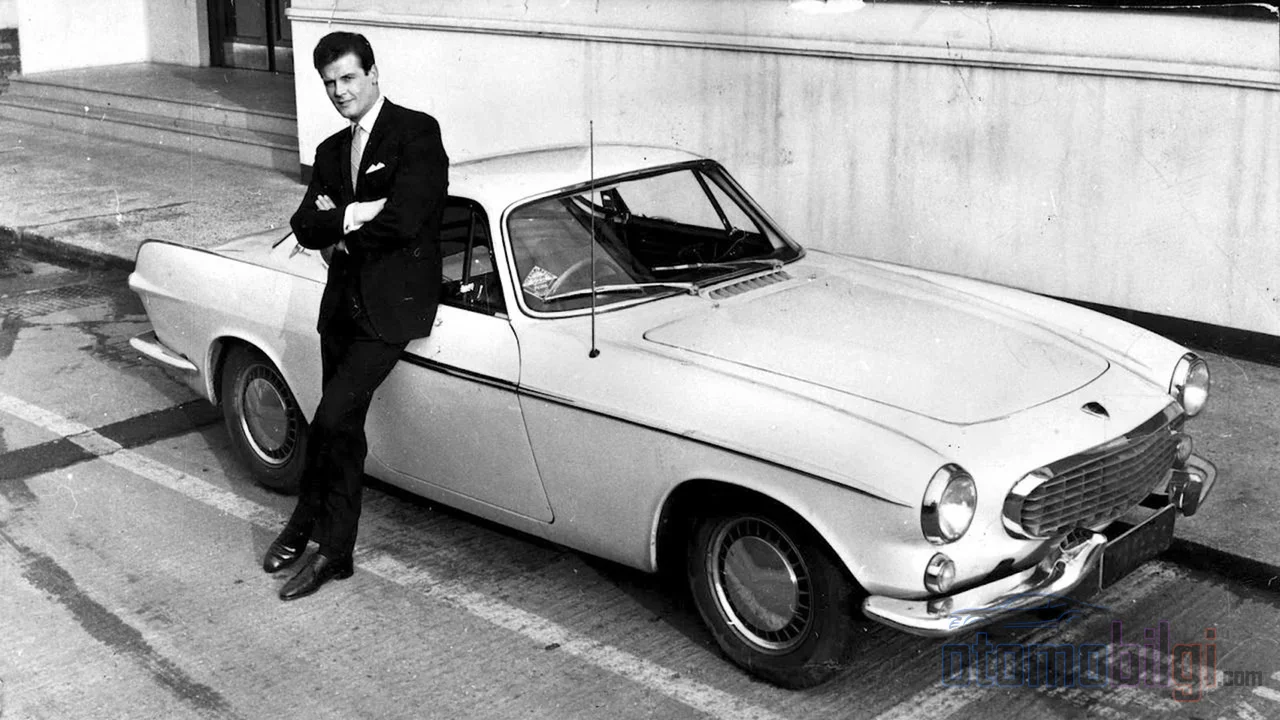
- Roger Moore's white 1962 P1800 in the The Saint TV series made the model a world star.
- Irv Gordon's 1966 P1800S holds a Guinness record with its mileage exceeding 3.25 million miles.
- Production was first carried out at Jensen in England, then moved to Gothenburg in 1963.
The Italian Curtain Over the Design: Who Drew This Car?
Here is the most stubborn part of the story. Pelle Petterson made his drawings under the supervision of Pietro Frua; Frua's studio was at that time affiliated with the Italian legend Carrozzeria Ghia. So the young designer was certainly trained at a very good school. But Volvo insisted for years that the design belonged to the Italian Frua. Why? There is a striking detail behind it: When Volvo's boss Engellau learned that the design he liked had been made by Pelle, Helmer Petterson's son, he got angry. Besides, they preferred to present it as if it had been drawn by an outside master rather than one of their own.
This dispute lasted a full 46 years. Pelle Petterson's design was only officially acknowledged by Volvo in 2009. The car was almost 50 years old in 2009, and it finally bore its father's name as it deserved. Meanwhile, here's another interesting detail: Pelle never designed another car for the rest of his life; he drew boats, mopeds, lawnmowers, golf equipment. But he put his signature on just one car, and that signature became an icon. Going down in history with a single car - not a bad career goal, right?
How Did a Car Planned to Be Built in Italy End Up in England?
This is one of the confusing questions: the car was an Italian design, planned to be built in Italy, yet not a single day of its life was it produced in Italy. The initial plan was to give production to Karmann. In December 1957, Helmer Petterson had already taken the first prototype by truck to Karmann's Osnabruck facility in Germany. But Karmann didn't get the job. According to some accounts, Volkswagen blocked it by threatening to terminate the Karmann-Ghia contract; according to an alternative account, Karmann itself gave up due to Volkswagen's order boom. Which one is true is still not clear. Offers were also received from NSU, Drauz and Hanomag, but none of them worked out.
Volvo even came close to abandoning the project entirely. When it seemed Volvo wouldn't produce it, Helmer Petterson found support from two finance companies and considered buying the components directly from Volvo and marketing the car on his own. And at that very moment, a leaked press release changed the game: Volvo was forced to acknowledge the project's existence. Sometimes a leak can save a car's life.
The Jensen Years: A Troubled Start in England
Eventually, production was handed to England. The body presses came from Pressed Steel, a subcontractor of Jensen, at its Linwood plant in Scotland; assembly was carried out on the Jensen Motors line in the town of West Bromwich, England. The first production P1800 rolled off this line in September 1960. The Jensen contract was for 10,000 vehicles, and this was a far bigger job than the company had ever undertaken. But problems emerged immediately: sloppy paint, ill-fitting seals, defective Scottish bodies... The contract was terminated early after 6,000 vehicles. It's a bit ironic that the door seals of a car that looked like an Arabian stallion at first glance were trembling, but that's what happened.
In 1963, production moved to Volvo's Lundby plant in Gothenburg, and the vehicle's name was changed too: it was now the 1800S - the S stood for Sweden. The car had finally come home, and quality improved as well. The first official public unveiling had already taken place long before: it took the stage at the Brussels Motor Show in January 1960.
Engine and Technical Development: What Lies Beneath a Quiet Legend?
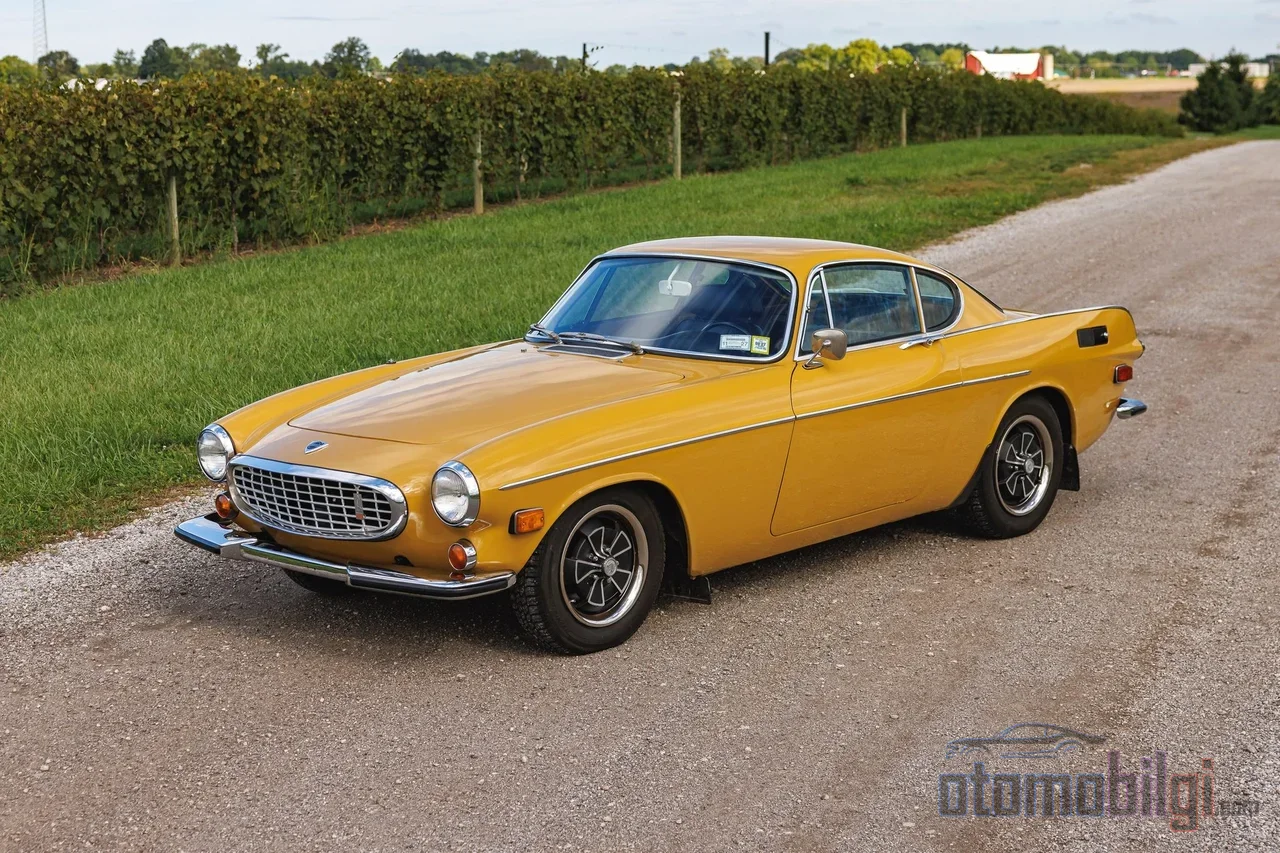
The P1800's positioning was also interesting: when marketing this car, Volvo didn't call it a "sports car"; it was presented as a "grand touring car," meaning a comfortable passenger vehicle for long journeys. In a way, Volvo was a cautious yet elegant choice, as if it were afraid of the sports car. The mechanical underpinnings came from the reliable Volvo Amazon/122 series - Italian-inspired design, Swedish solidity on all four wheels. Think of it this way: the body and soul are a work of art, while the engine and transmission are the family's reliable great-grandfather.
| Variant | Year | Engine / Power | Notable Feature |
|---|---|---|---|
| P1800 (Jensen) | 1961-1963 | B18, 100 hp | Assembled in England, M41 transmission |
| 1800S | 1963-1969 | B18 → 115 bhp | Production moved to Sweden; overdrive option |
| 1800E | 1970-1972 | B20B, fuel-injected 130 bhp | About 190 km/h; first 1800 with four-wheel disc brakes |
| 1800ES | 1972-1973 | 125 bhp | Shooting brake body, all-glass tailgate |
The numbers back this up too: while the non-overdrive versions reached about 193 km/h, the fuel-injected 1800E did 0-100 km/h in about 9.5 seconds. Quite serious performance for the mid-1960s. In 1972, the final variant took the stage: the 1800ES. This time not a classic coupé, but a shooting brake with an all-glass, frameless tailgate - that is, an elegant body between a hatchback and a coupé, also suitable for carrying loads. When Coggiola's and Frua's far more futuristic prototypes were deemed too outlandish, interior designer Jan Wilsgaard's simpler "Beach Car" proposal was accepted. Frua's audacious prototype still stands in the Volvo Museum today, and its name is "Raketen", meaning Rocket.
The Saint: How a TV Series Broke Sales Records?
Now we come to the part of the story that everyone knows. In 1962, the series The Saint began on British ITV. Simon Templar, played by Roger Moore, drove like a fictional modern-day Robin Hood, and a vehicle worthy of carrying him was being sought. Jaguar was offered the chance to feature the Jaguar E-Type in the series, but Jaguar declined - it wanted to prioritize its own Mark X model. Volvo gladly accepted the offer, and even charged a fee on top of it. Even today I cannot imagine it: Jaguar rejecting an offer led to Volvo gaining a lifelong brand image. Sometimes a yes, and sometimes a no, changes history.
The car in the series was a white 1962 Volvo P1800 with the license plate ST1, and this car became an inseparable character of the show. Sales increased noticeably. Roger Moore loved the job so much that he bought himself a special P1800 in the same white color as the car in the series; he drove this car both in front of the cameras and on the roads of England. There is even one more interesting detail: Sweden's future king Carl Gustaf chose a P1800 as his first car after getting his driver's license in 1966. Being the first car of a future king - could there be greater honor for a brand? The story continued in later generations as well: In Stargate SG-1, Samantha Carter had a silver-gray 1963 P1800; The 2023 Goosebumps series also featured Justin Long's character with a red 1800ES.
The World's Highest-Mileage Car: The Story of Irv Gordon
Now let me tell you the craziest part of this story. A schoolteacher from the town of East Patchogue, New York, Irv Gordon, bought a brand-new 1966 Volvo P1800S in April 1966. Then he never changed that car again. In 1987, the car passed 1 million miles. In 2002, 2 million miles - and that year he even appeared on TV. In September 2013, in Alaska, the car went past 3 million miles. And in 1998, the Guinness record was officially certified: the highest certified mileage in non-commercial use by its original owner. At that time the record stood at 1.69 million miles, but Irv didn't stop.
When Irv Gordon passed away in 2018, his car had covered approximately 3.25 million miles (about 5.23 million kilometers) on its 52-year journey. That means circling the Earth 130 times - with the same steering wheel and the same person on every lap. When we consider that a car was able to accompany a person for so long, it's hard not to understand why Volvo's reputation for durability runs so deep.
Why Did the Volvo P1800 Become an Icon? What Is the Legacy Like Today?
Here is the answer to the question we asked at the very beginning. The Volvo P1800 was actually never the fastest or the most expensive sports car. Three things came together to make it an icon: first, Pelle Petterson's elegant, softly contoured, timeless body. Second, its appearance on screens around the world through The Saint - such a natural integration of a brand into popular culture is a rare stroke of luck. And third, a living legend like Irv Gordon proving the car's reliability before everyone's eyes. Even Volvo's own official museum describes this car as a sports car developed to strengthen the brand's worldwide image and a strategy that succeeded. So it's not just a beautiful car - it's the triumph of a deliberate strategy.
The design language was also inherited by its descendants. The 1800ES's all-glass rear hatch was reinterpreted in the later Volvo 480 and C30 models; traces of this line were even seen in concept cars. In the modern era, the P1800 has not been forgotten either: Cyan's "P1800 Cyan" restomod, which brought the classic body together with modern engineering, received wide coverage in the automotive press. On the collectors' side, things are heating up; the values of fully restored examples are rising, and cars in good condition fetch serious sums at auctions. In short, a production run of 47,492 units has long refused to stay confined to its boxes. Do you think this car only began to receive the respect it deserved after 60 years? I think yes - and that's exactly why it's still being talked about.